






.jpg)
The David Gareji Desert, renowned for its rock-hewn monasteries and fresco-adorned churches and chapels, is located approximately sixty kilometers southeast of Tbilisi.
The Lavra there is the main and oldest monastery in the David Gareji Desert. It was founded in the 6th century by St. David himself, one of the most brilliant representatives of Georgian monasticism. St. David was a member of a group of missionaries - the so-called “Thirteen Assyrian Fathers,” who came to Georgia to consolidate the Christian faith in the region. Some of the monasteries they founded in the 6th century served as important spiritual and cultural centers throughout the Middle Ages, the David Gareji monasteries being the most outstanding among them.
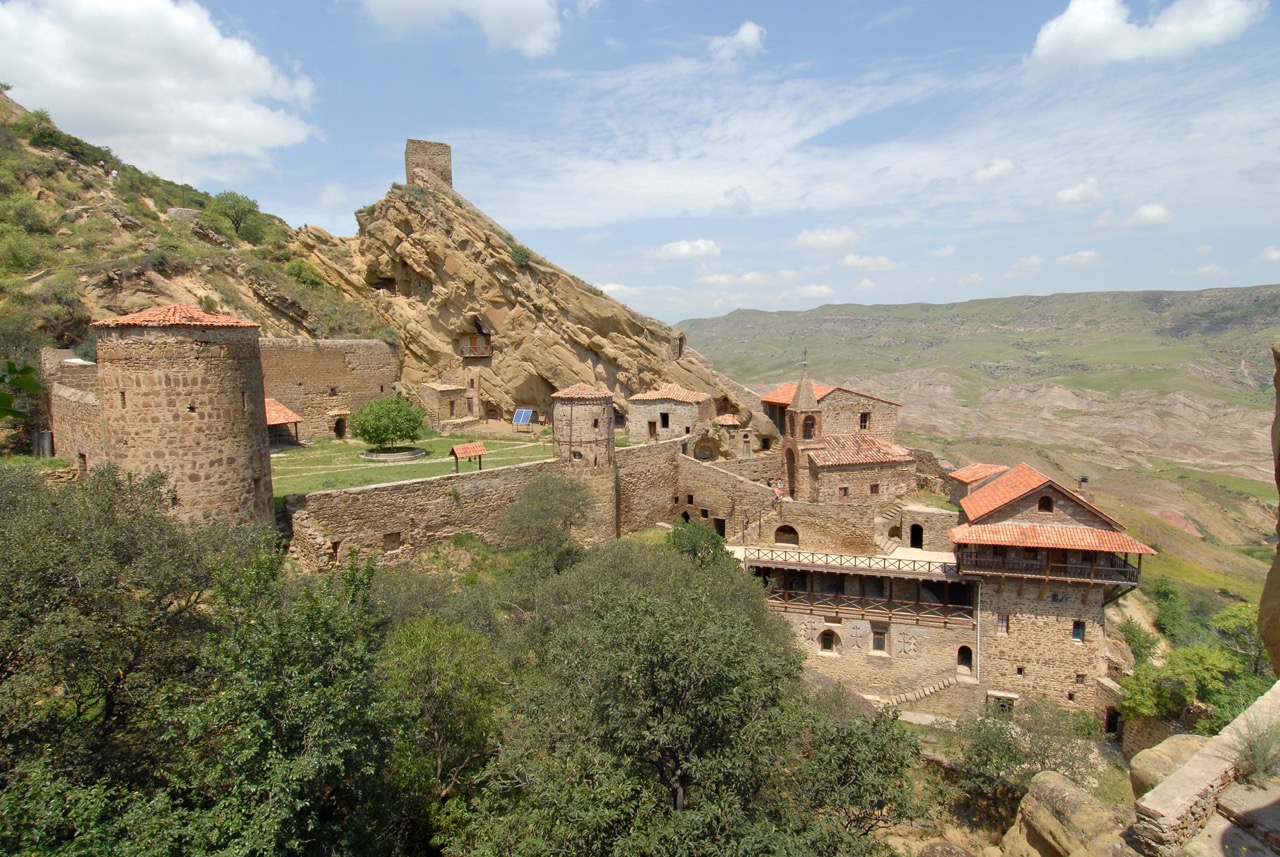
The Lavra of St David of Gareji, 6th - 21st century
The David Gareji complex, as the largest monastic union, at various times included more than twenty monasteries, among them Sabereebi, Mravaltskaro, and Tsamebuli, which emerged in the 9th-10th centuries, Udabno in the 10th- 11th centuries, and Bertubani and Kolagiri in the 12th-13th centuries. The three main monasteries founded during the lifetime of St. David - the monastery of the Mother of God, called Dodorka, Natlismcemeli, the monastery of John the Baptist, and the Lavra itself, are still active today.
Numerous churches and chapels, both carved into rock and built, as well as monks' cells, a refectory, water collection and irrigation systems, and defensive structures (walls and towers) of different times have been preserved in the Lavra.
The most revered place in the monastery, and in the David Gareji Desert in general, is the Church of the Transfiguration. It was carved into the rock during the lifetime of St. David, by the order of Bubakar, a pagan ruler who converted to Christianity on witnessing a miracle performed by the saint. This is the church that St David and St Lucian, his disciple, made into their eternal abode. In it, the most important holy relic - the Stone of Grace, was kept, which, according to legend, was brought from Jerusalem by St. David. As it is believed to carry a third of the grace of the Holy City, this may explain the great number of pilgrims who have visited this holy site over the past fourteen centuries.
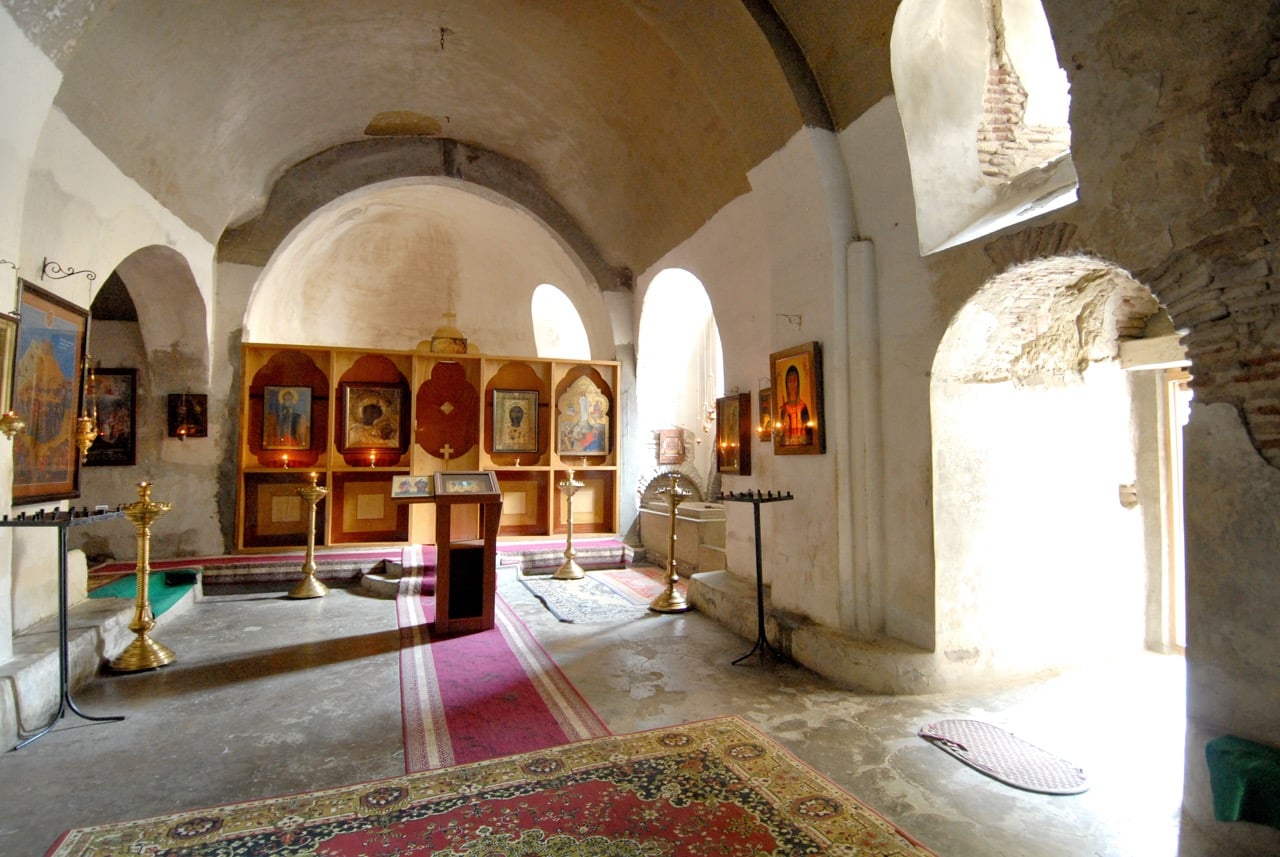
Church of the Transfiguration, 6th - 19th century, interior
Few caves from the 6th- 8th centuries, from the time of the monastery's foundation, have survived in the Lavra in their original form, since over the centuries they were constantly remodeled. Almost all of them today represent formless, tiny spaces, devoid of any architectural features. Presumably, the Church of the Transfiguration commissioned by Bubakar also had the appearance of a natural cave.
In the mid-9th century, another famous monk - St. Hilarion, whom the Greeks called Iberian (Georgian), expanded the Church of the Transfiguration and turned it into a single-nave structure with a chamber in the north, modeled on the design of the main church of the Lavra of St Sabbas the Sanctified in the well-known Palestinian monastery. Later, the church was altered again. The most recent changes were made in the early 19th century. It seems the Church of the Transfiguration became a prototype for the Gareji builders – seeing the main church of each monastery boasting the same vaulted space and a chamber added to the north.
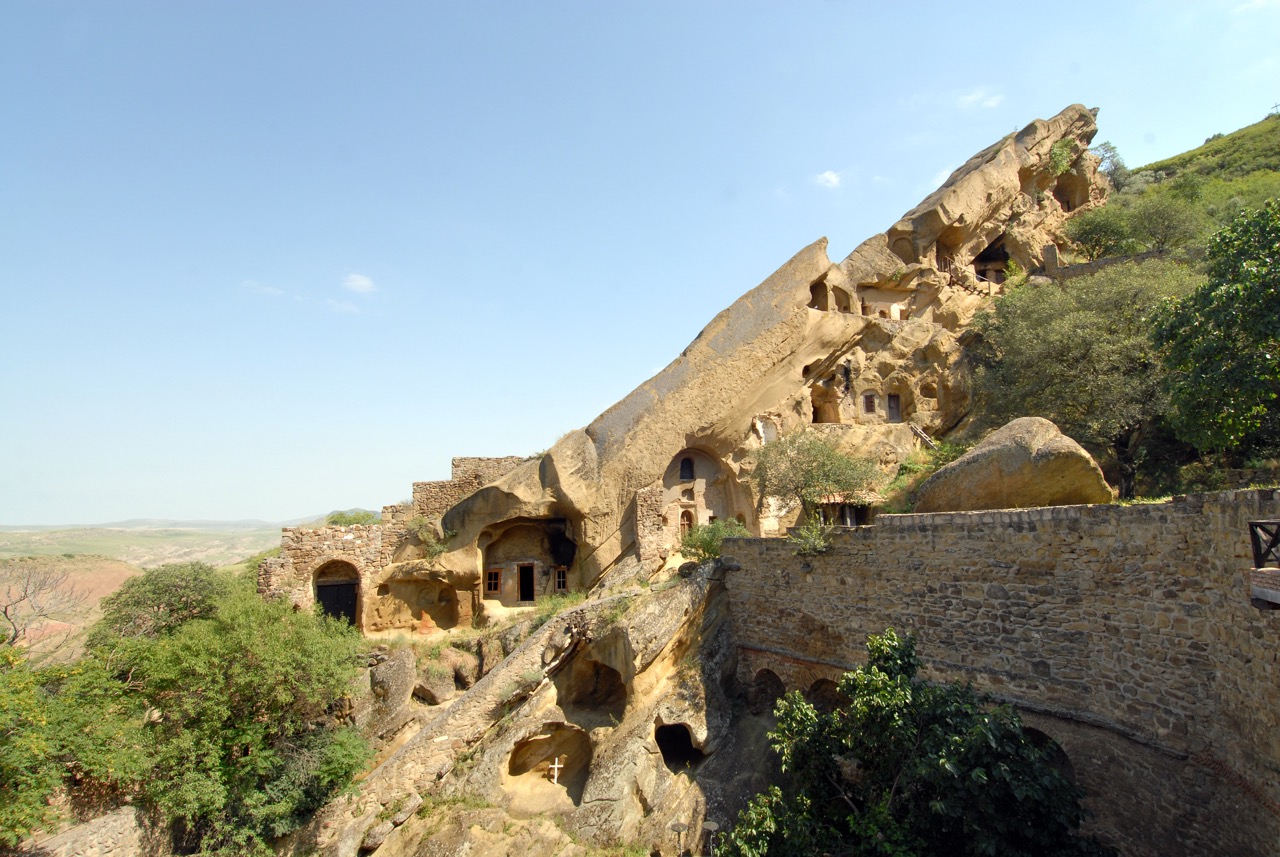
Caves in the southern part of the Lavra
In the southern part of the Lavra is the skete of St. Hilarion the Iberian - a group of caves consisting of a small church with an adjacent refectory and monks' cells. These caves, as well as the Church of the Transfiguration, and other spaces from the 9th-10th centuries, clearly demonstrate the Gareji builders' fascination with elements borrowed from the repertoire of ‘built’ architecture of that time - primarily, the pilasters and arches that divide the spaces of the single-nave churches.
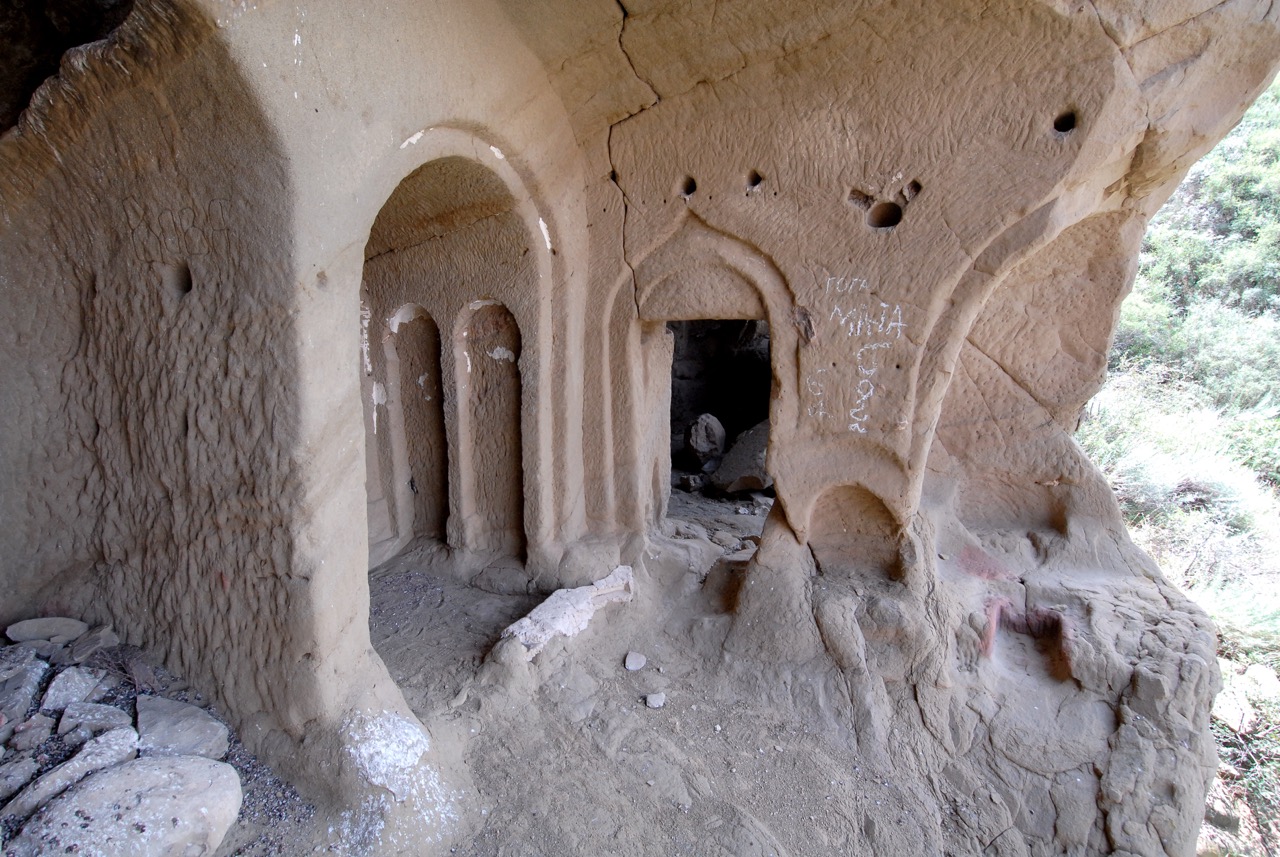
The same interest in elements of ‘built’ architecture can be observed in the partially destroyed, once vast, single-nave Church of St John the Theologian, dated to the 12th century. The ruins of this church are the only remains in the Lavra from the 11th - 13th centuries, the era of the greatest flourishing and most creative upsurge of monasteries under royal patronage.
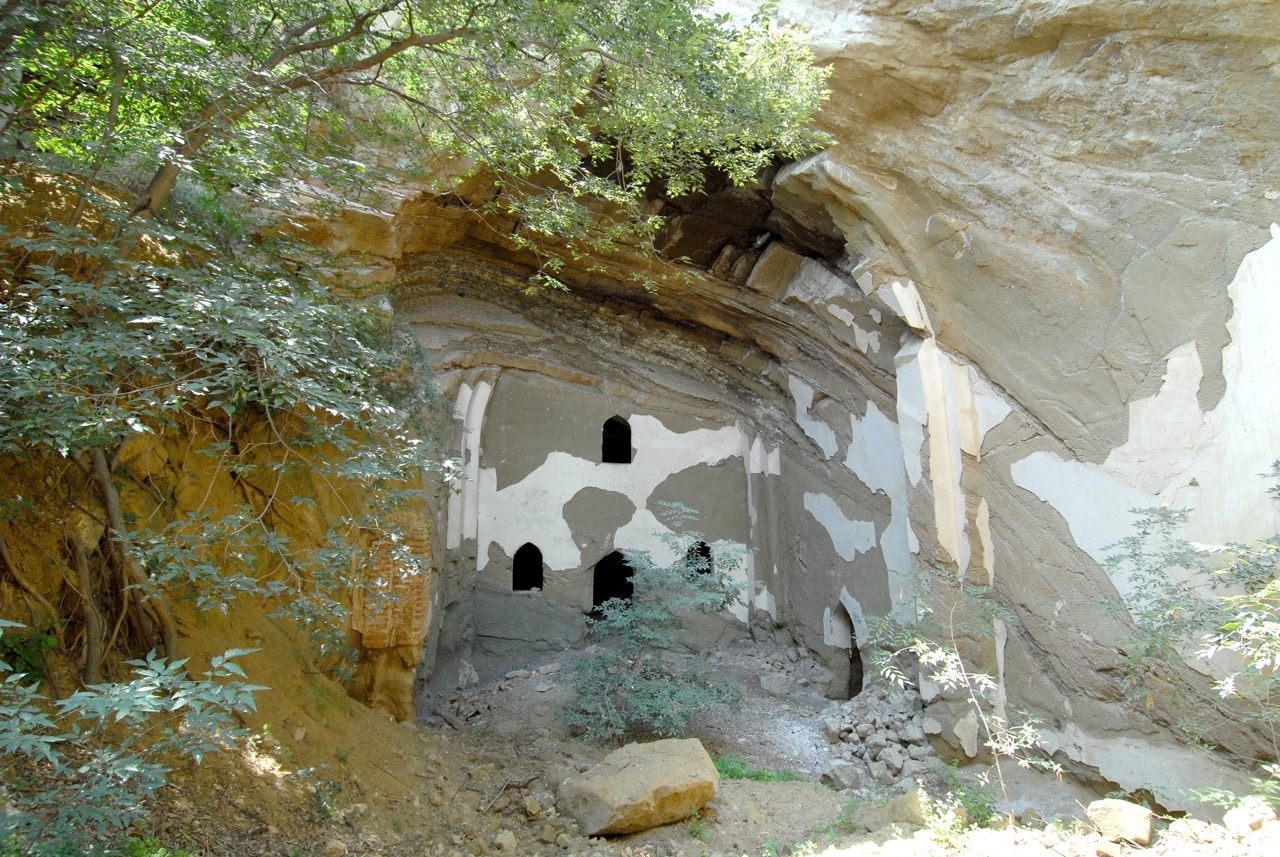
Church of St John the Theologian, 12th century
Little is known about the Lavra of the 14th-16th centuries, nor about Gareji overall. It is only evident that the historical events of the late 13th and 14th centuries - the Mongol dominance and, later, in 1616, the most devastating invasion by Persian Shah Abbas I - led to the complete decline of the David Gareji monasteries.
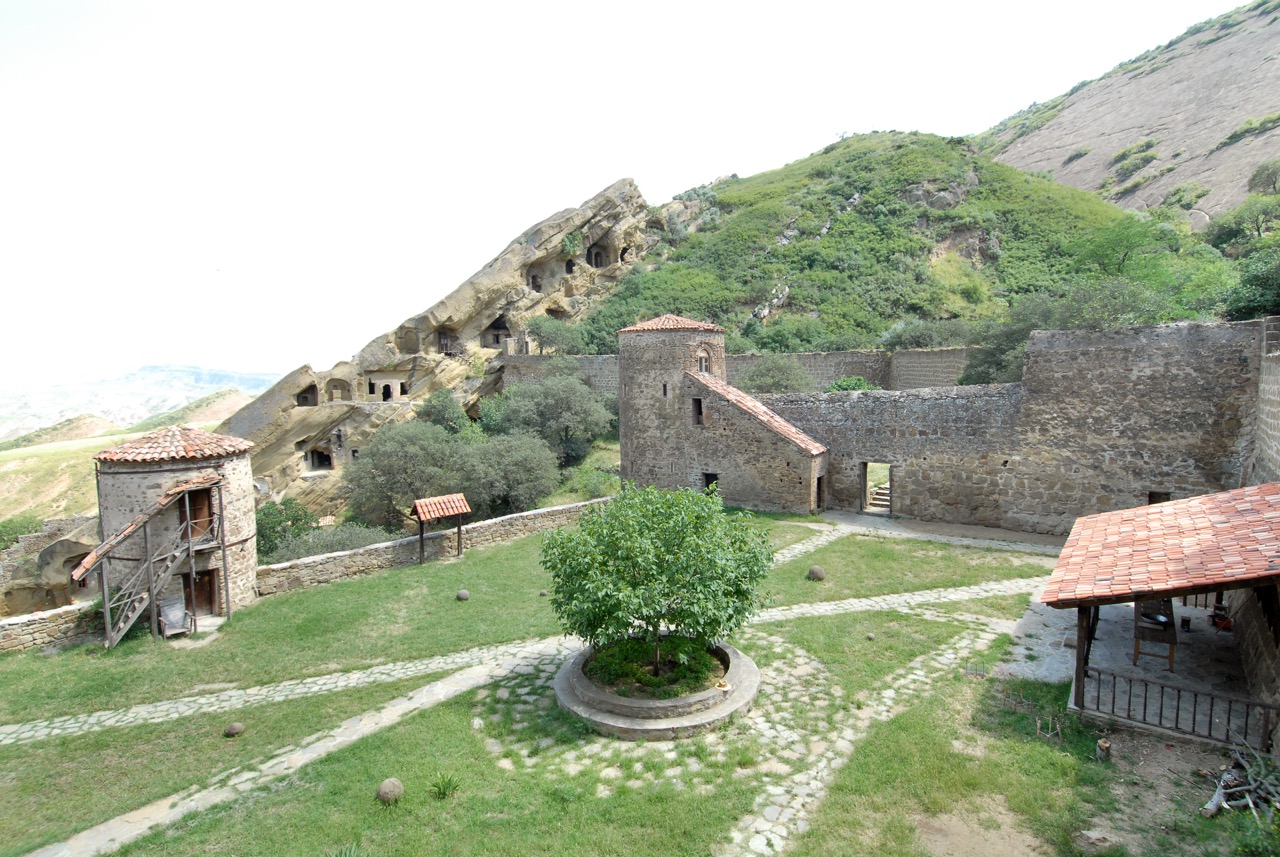
Upper courtyard of the Lavra
Revival of the Lavra began at the end of the 17th century. Presumably, it was at this time that it acquired its present appearance. In the 18th century, defensive walls and towers were built, their architectural forms - the outlines of arches, framing of entrances - made characteristic of those of late medieval Kartli and Kakheti. At the same time, the Church of the Dormition of the Mother of God was carved out, and in the early 19th century, the Church of St. Nicholas was built.
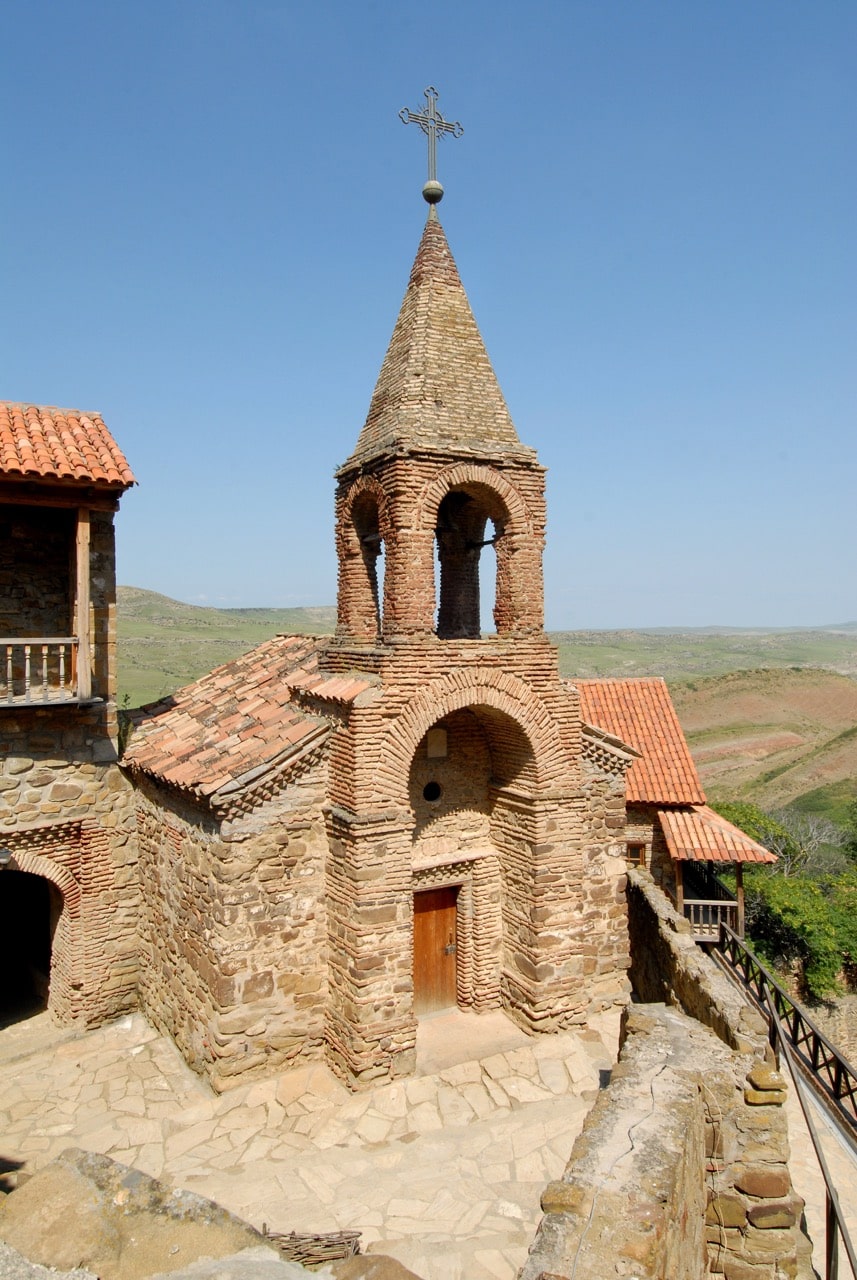
Church of St Nicholas, early 19th century
Numerous cells of that time are easily recognizable by their abundant decorations. Stucco, gilding, glass panels and painting were used for the cell of King George XII and the so-called Alexander Tower. In their decoration, the influence of both Eastern-Islamic and European art is evident, which is one of the characteristics of Georgian culture of that period.
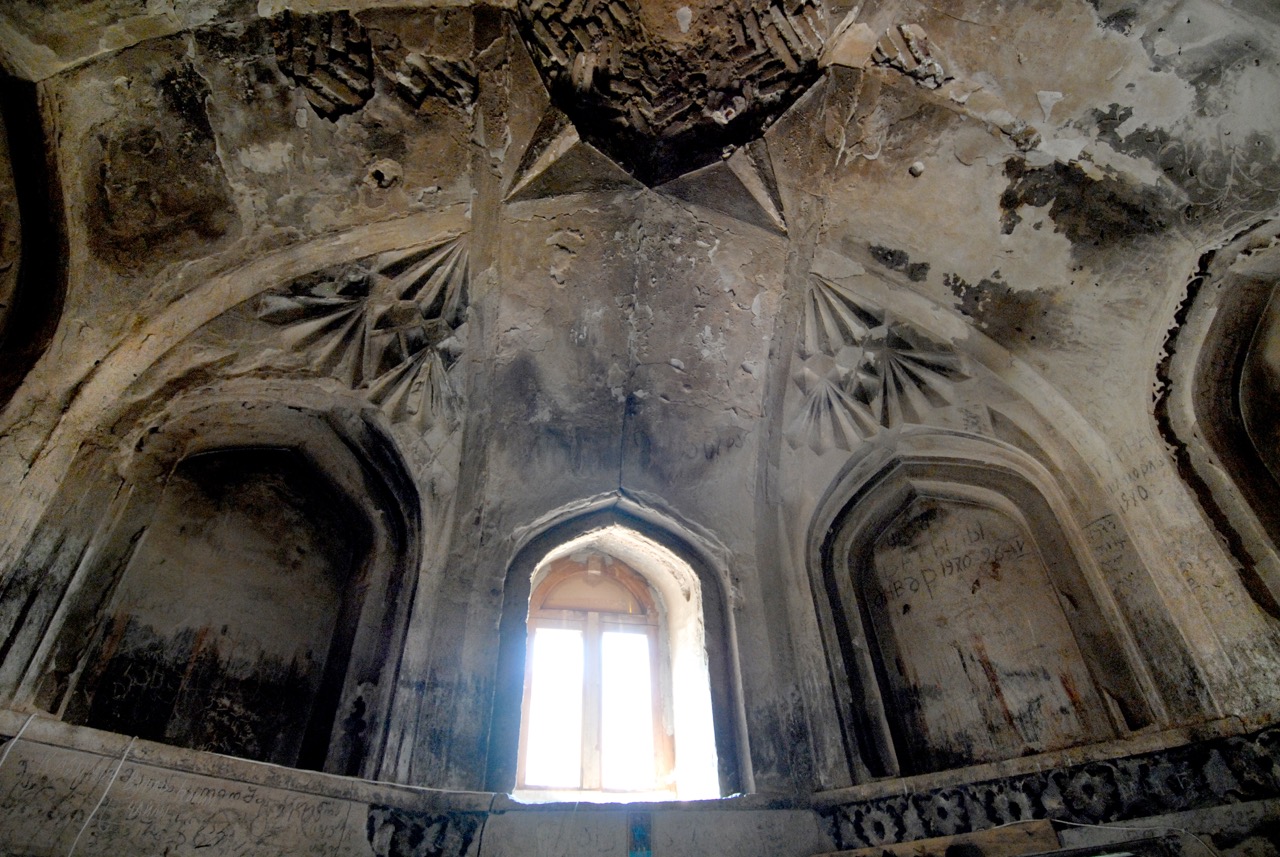
Alexander Tower, Interior decoration, late 18th century
However, despite all these efforts, the grave circumstances of the time took their toll on the monastery, and in 1919, the Lavra ceased to exist. Monastic life was restored here only in the late 1980s.