.jpg)

.jpg)







 Share this article
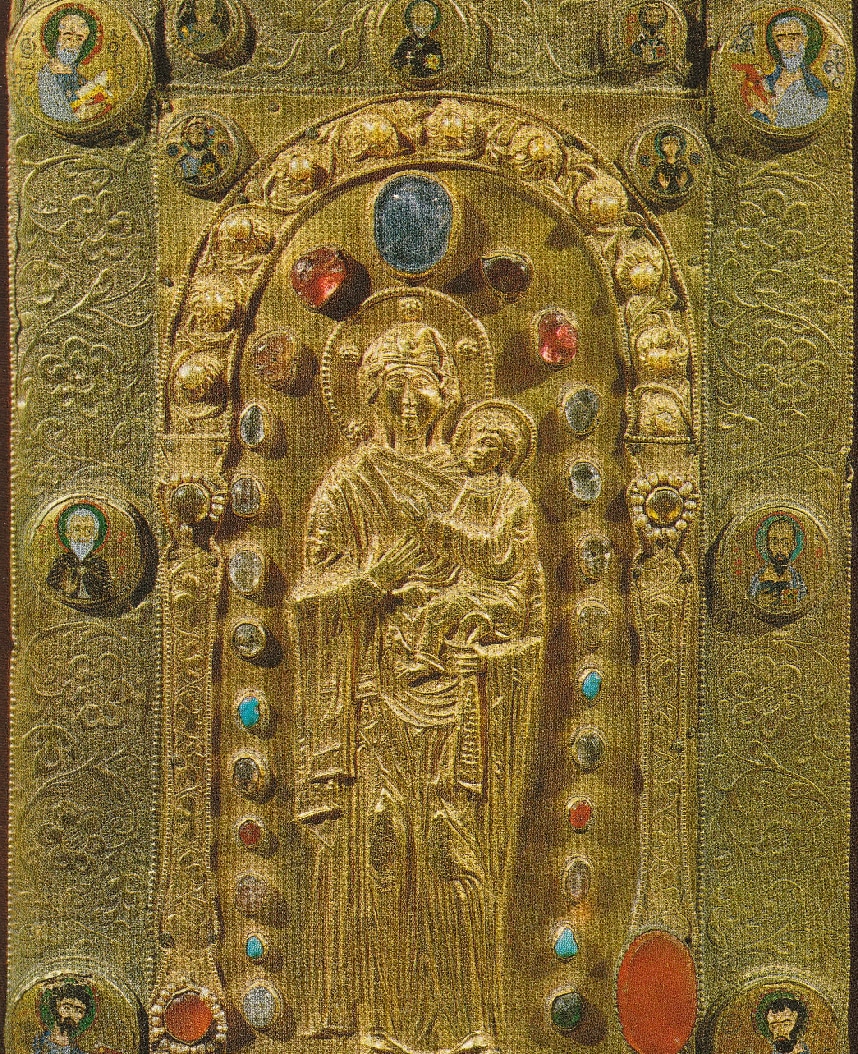
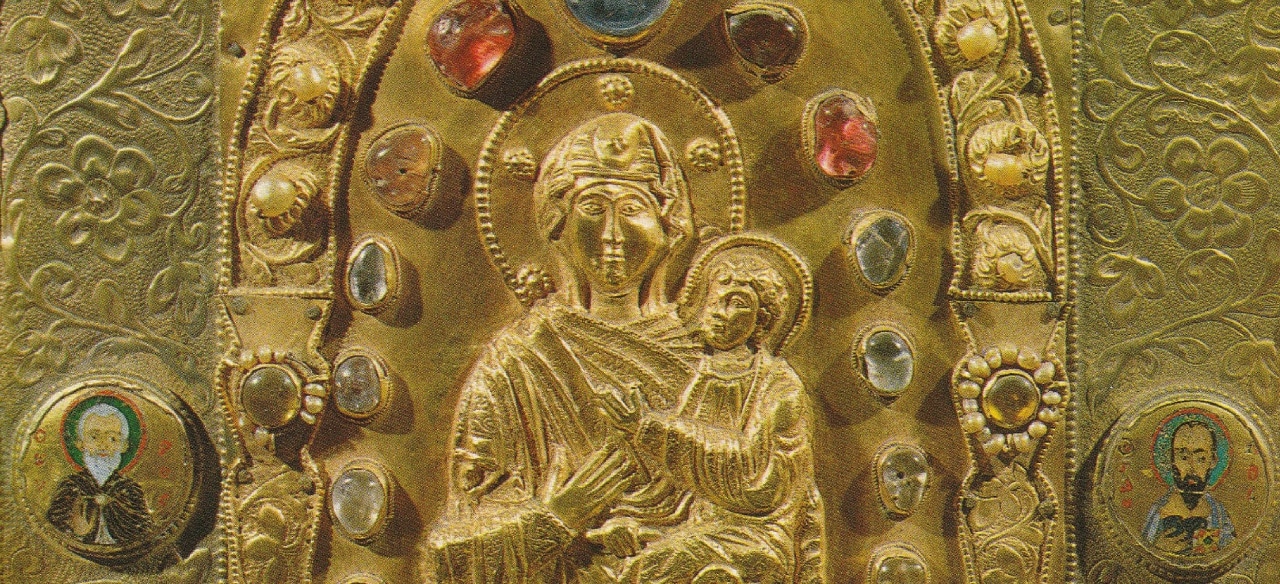
The veneration of the Mother of God in Georgia spans many centuries. The perception of the Mother of God as the protector of humankind is further deepened by the belief that she is the patron saint of the Georgian land.
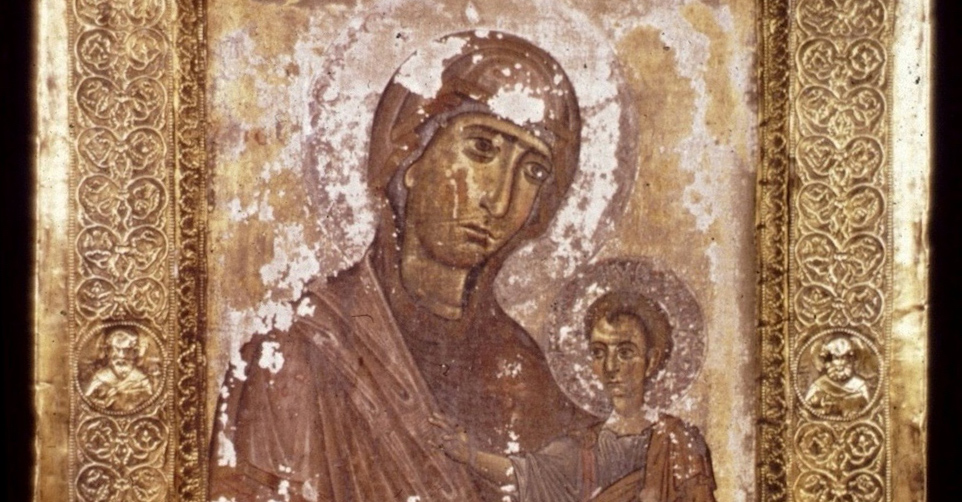
In medieval Georgian art, images of the Mother of God are remarkable for their richness and diversity. Georgian artistic tradition made a unique contribution to the interpretation of Marian themes. Her image appears across various branches of art, and repousse icons present several iconographic types, including the enthroned Mother of God with the Child, the Hodegetria, and the Orans.
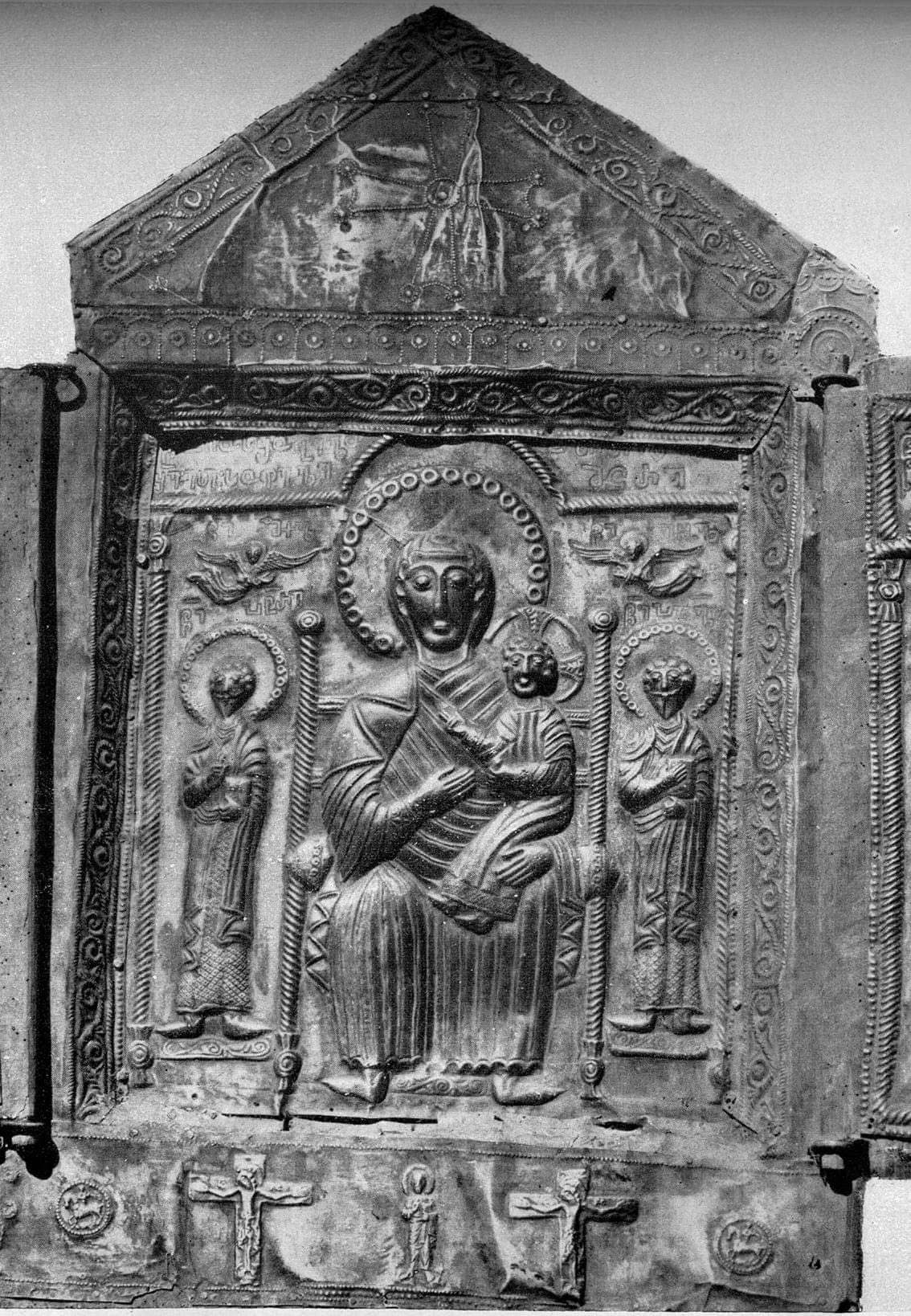
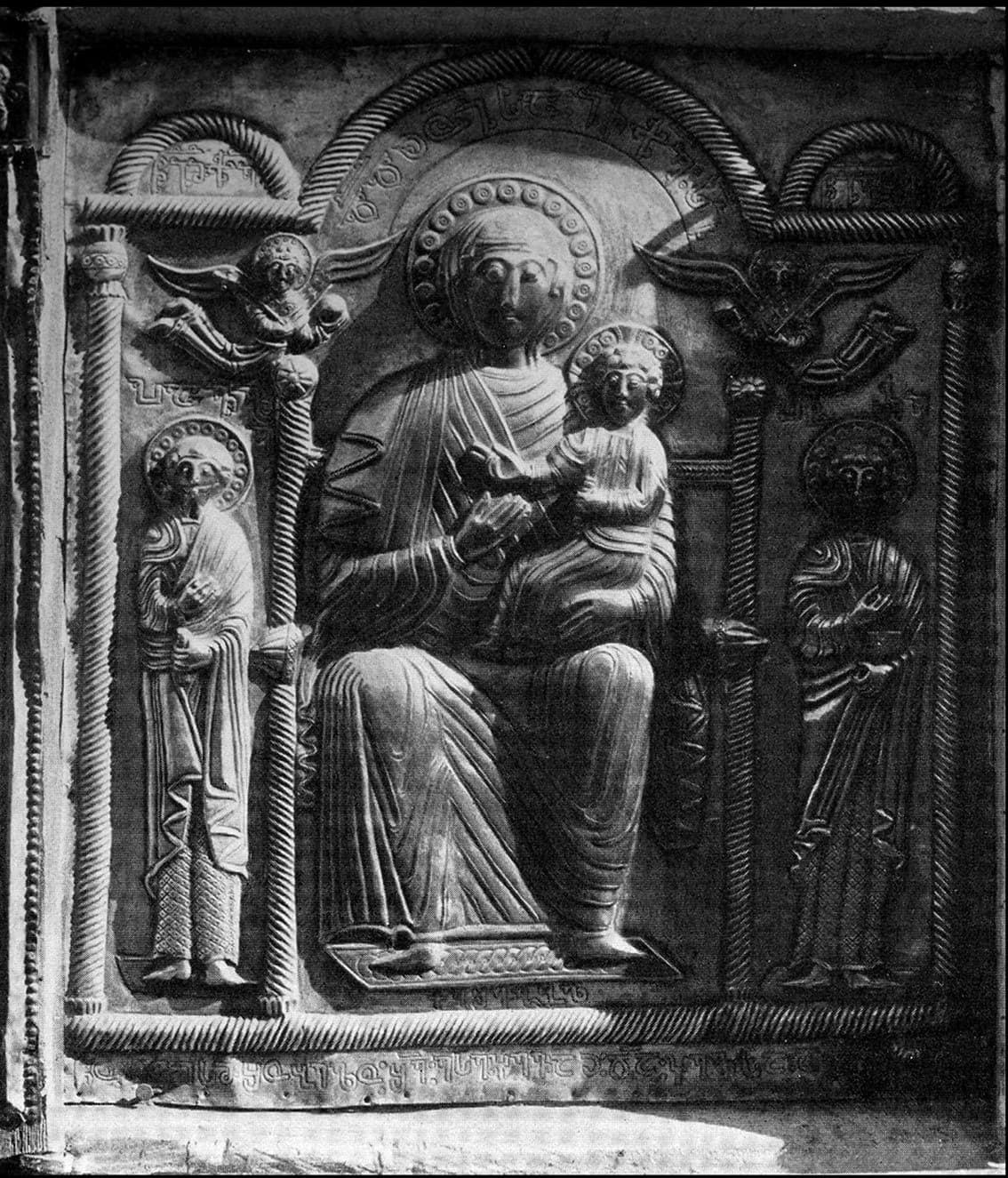
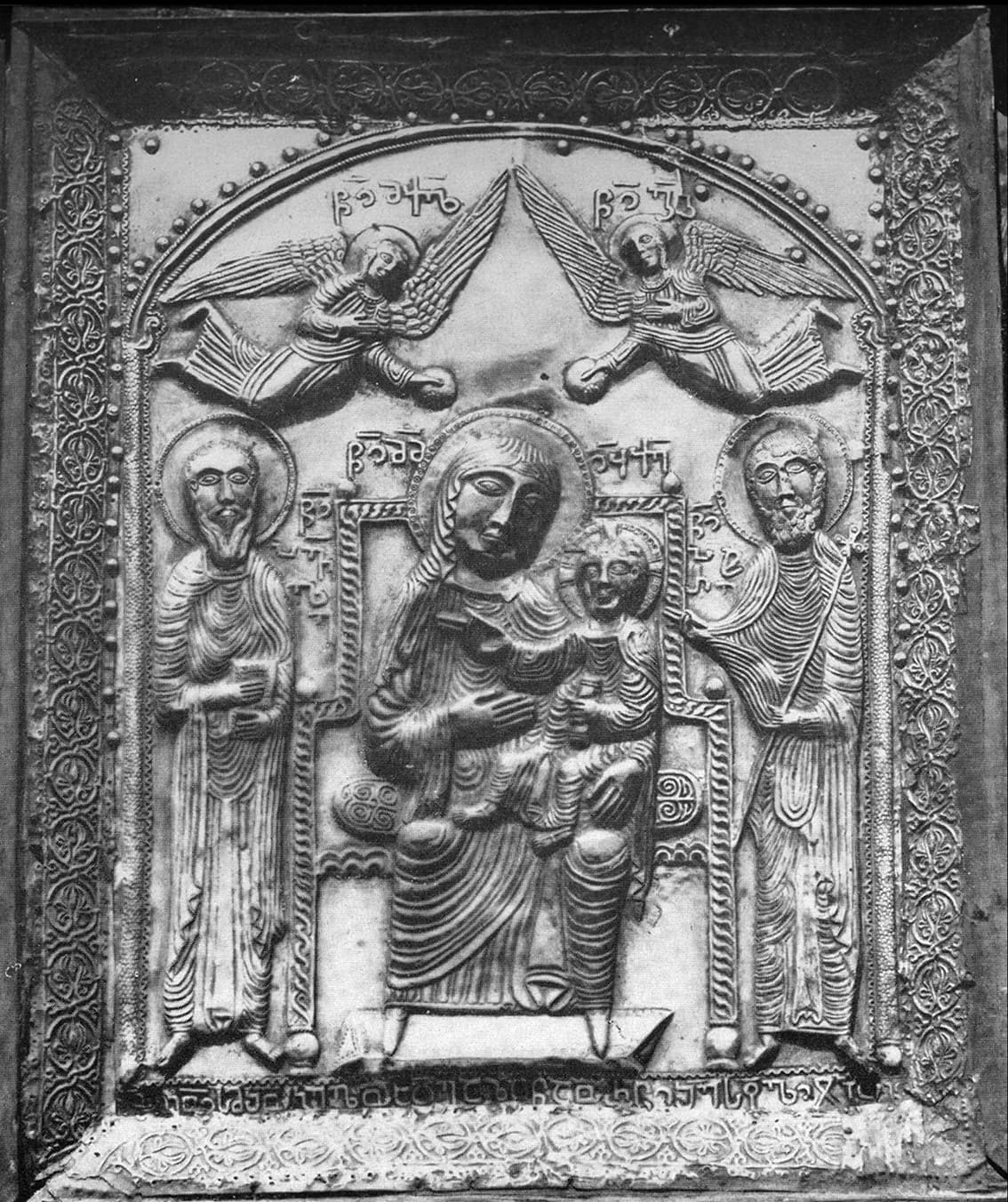
The earliest Georgian repousse icons of the Mother of God date back to the 10th century. Particular attention should be given to several Hodegetria icons created in Svaneti and placed in the central panels of silver triptychs from Chukuli, Chikhareshi, and Jakhunderi. In these works, the enthroned Mother of God is flanked by archangels and the head apostles Peter and Paul. Such compositions strongly emphasize the concept of Mary as the Queen of Heaven.
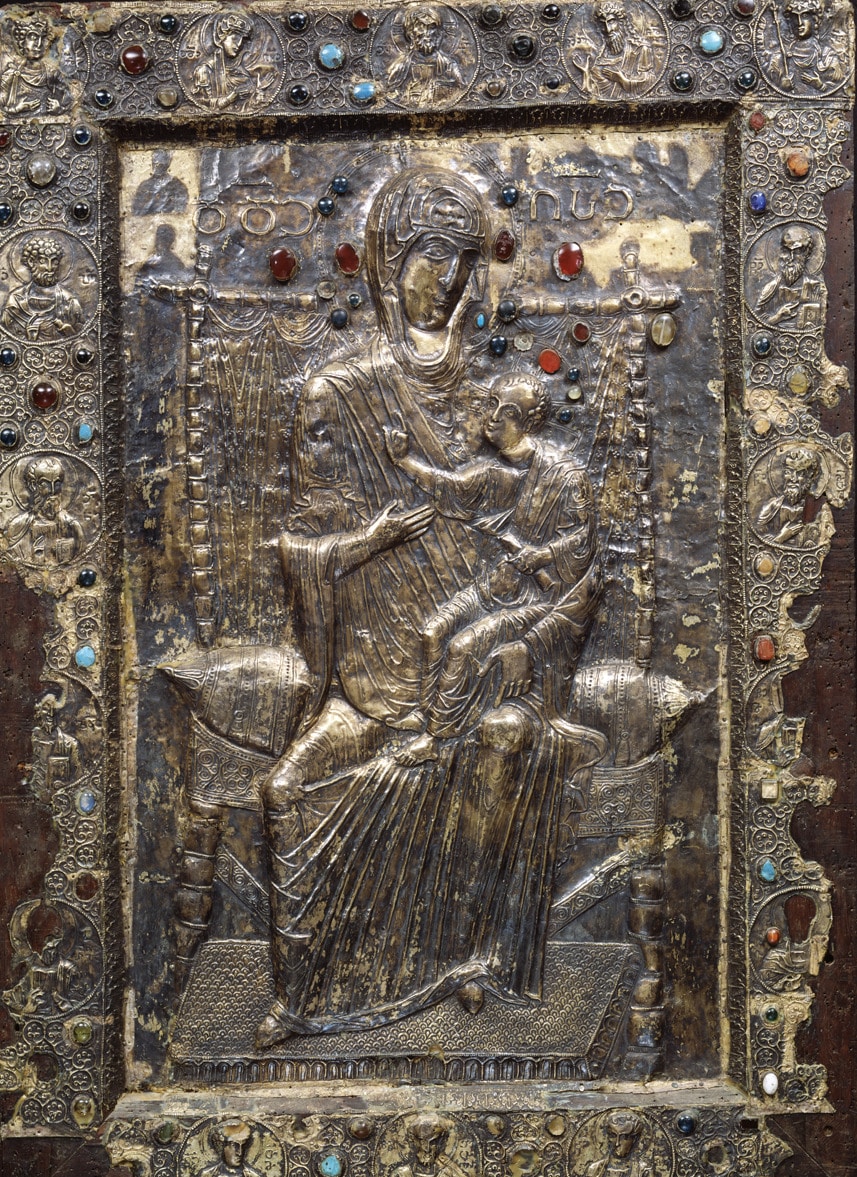
Among the repousse icons of the early 11th century, the silver icon from Tsageri preserves a striking image of the Mother of God. The icon makes a powerful impression through its monumentality and sculptural modeling of form. This depiction of the Mother of God is distinguished by emotional depth and harmonious balance. The frame is adorned with medallions; five along the upper border form a Deesis composition, while the remaining medallions contain half-length figures of the Evangelists and various saints.
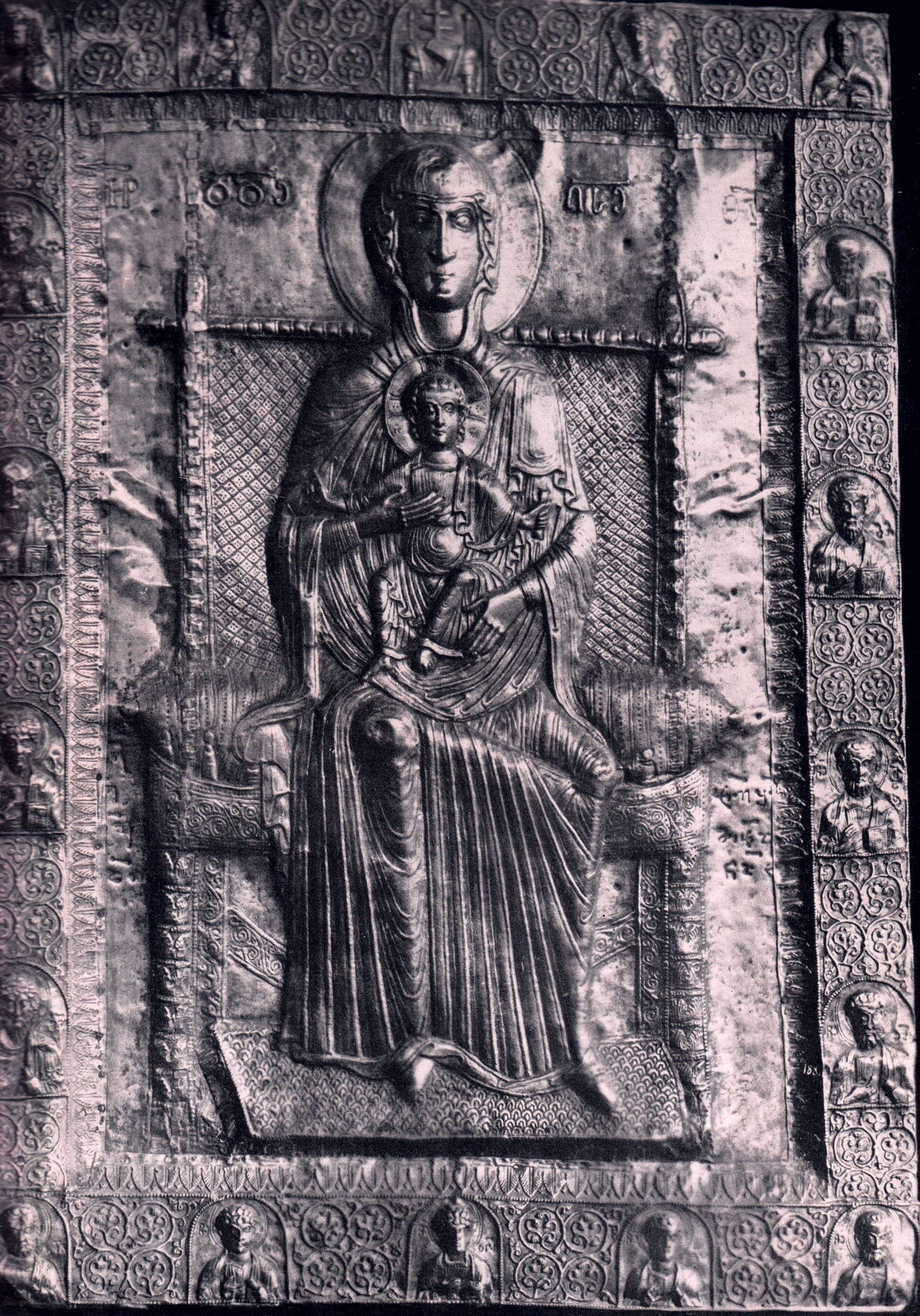
The Chukuli icon of the Mother of God, created in the same period, shares many similarities with the Tsageri icon. Although their compositional structures are comparable, they differ significantly in artistic expression and emotional intensity. The Chukuli icon is distinguished by the severity and grandeur of Mary’s face compared to the Tsageri image. Notably, the Georgian inscription accompanying the image of St. Mary appears alongside a Greek inscription, indicating the influence of a Byzantine prototype on the icon’s creator.
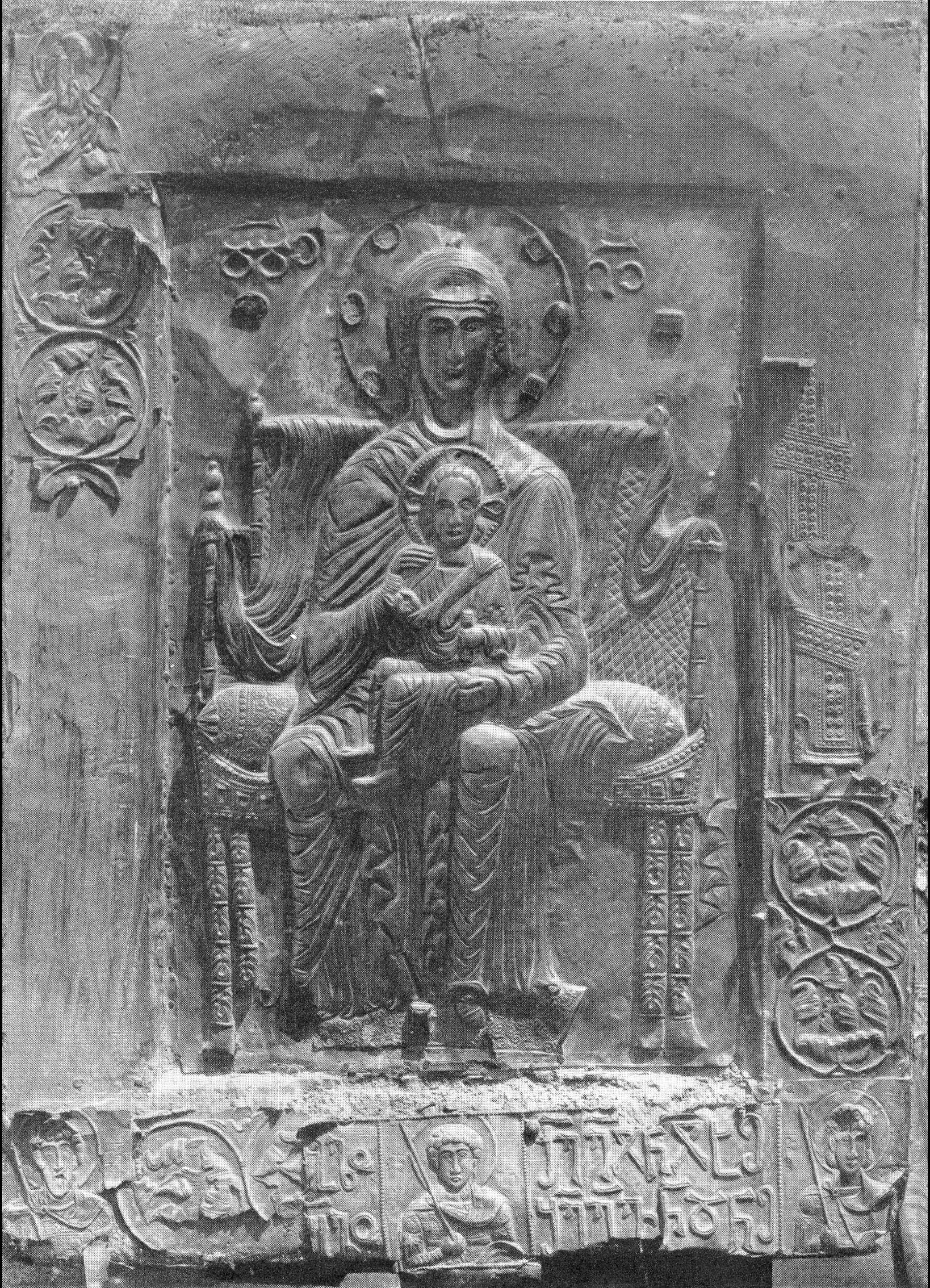
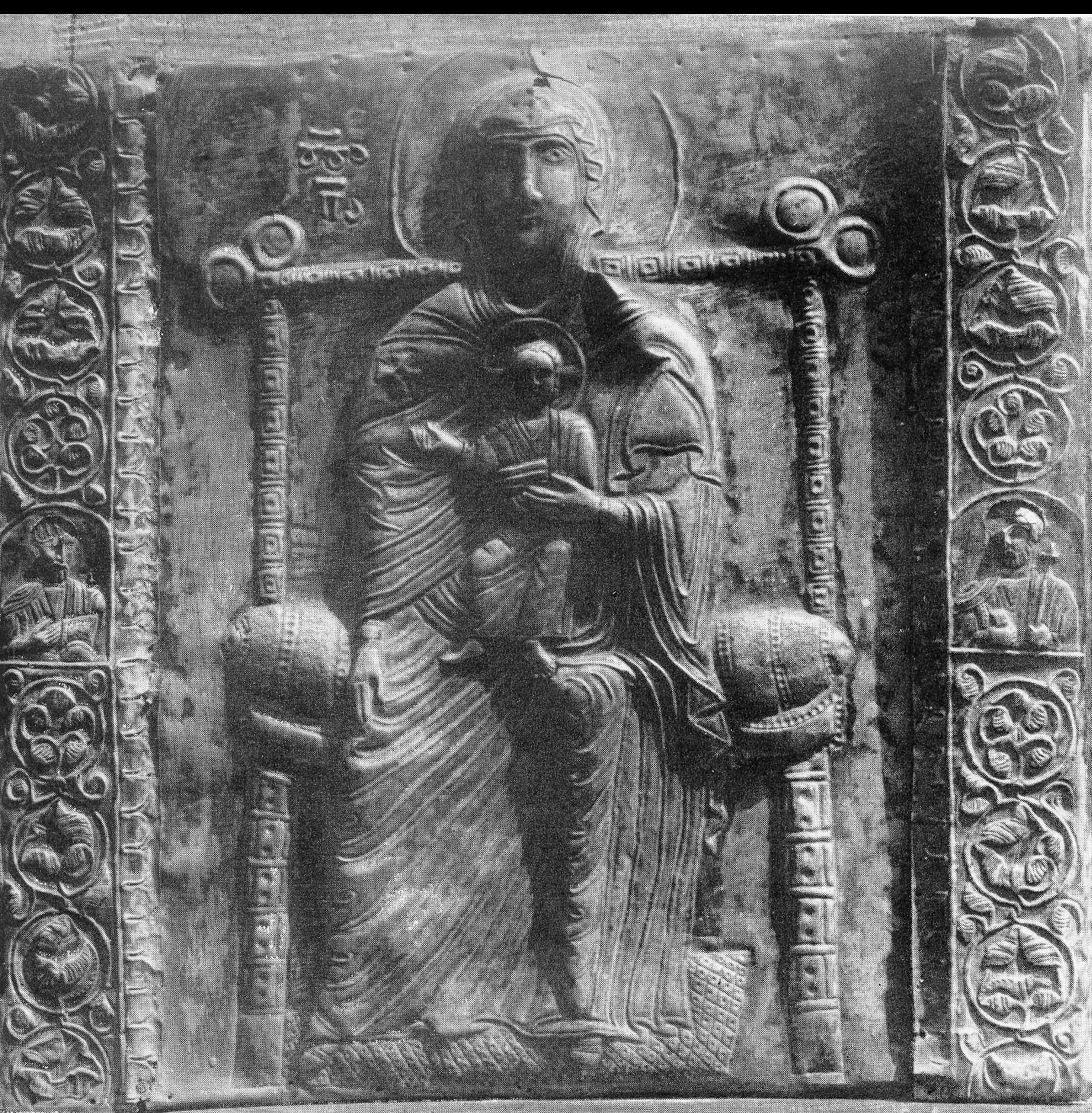
The silver repousse icons of the Mother of God from Labechina and Sakdari belong to the same group. These works, unified by a shared compositional scheme, allow us to form an understanding of the individual and creative approaches of Georgian goldsmiths working within the established boundaries of canonical iconography.
The depiction of the standing Mother of God with the Child is comparatively rare in Georgian repousse icons. The earliest example of such an icon in Georgia is the 10th-century gilded bronze Hodegetria from Martvili Monastery, a Byzantine work distinguished by exceptional artistic skill. The same monastery also preserved a golden copy of this icon, produced in the 11th century by a Georgian master. This represents a rare instance in which a Byzantine bronze original and its local replica were kept together within a single monastery.
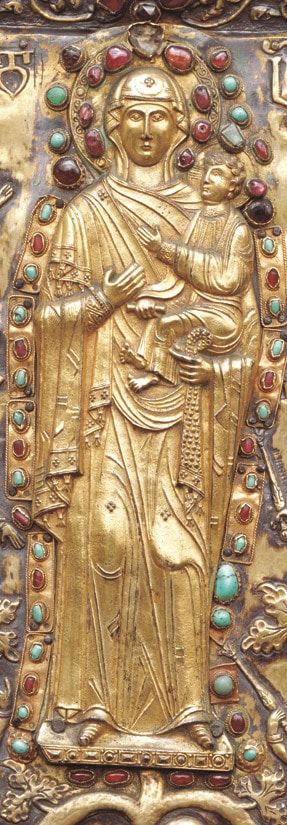
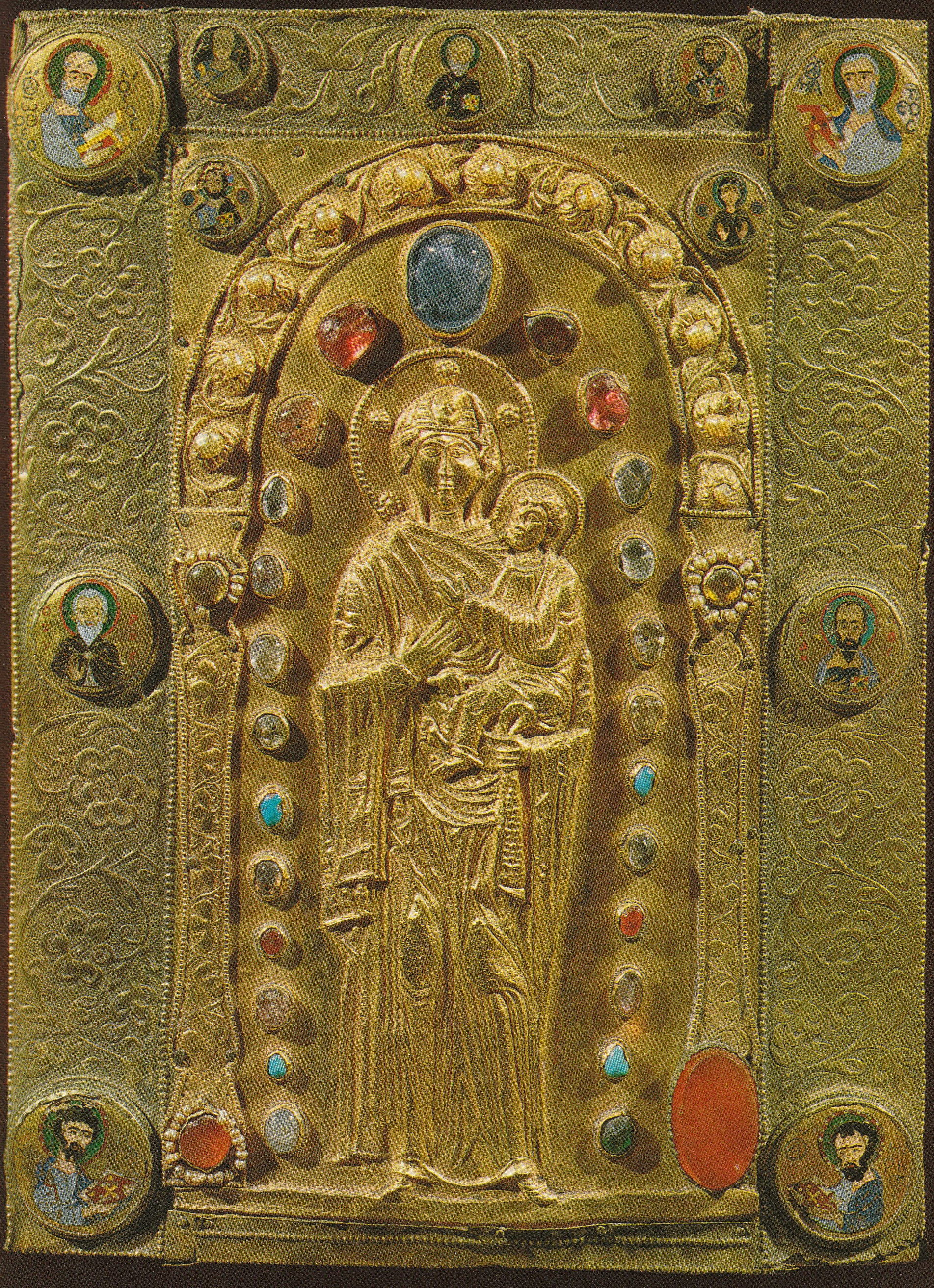
The repousse icon of the Martvili Mother of God retained its significance for centuries. As a mark of particular veneration, in the 18th century, it was incorporated into an enamel-adorned icon placed at the center of a large triptych, commissioned by Metropolitan Gabriel of Chkondidi, and richly embellished with precious stones, enamel, and gold.
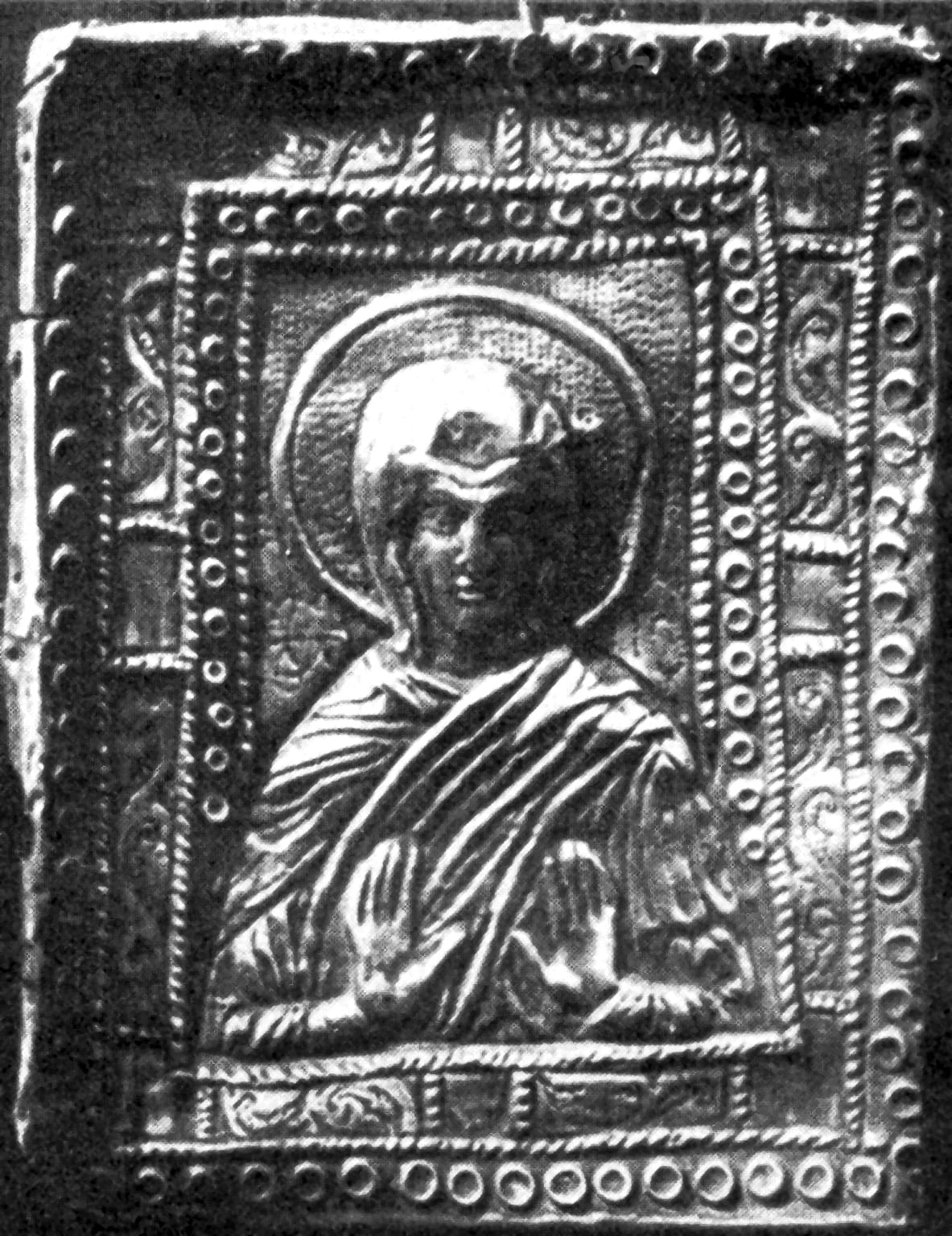
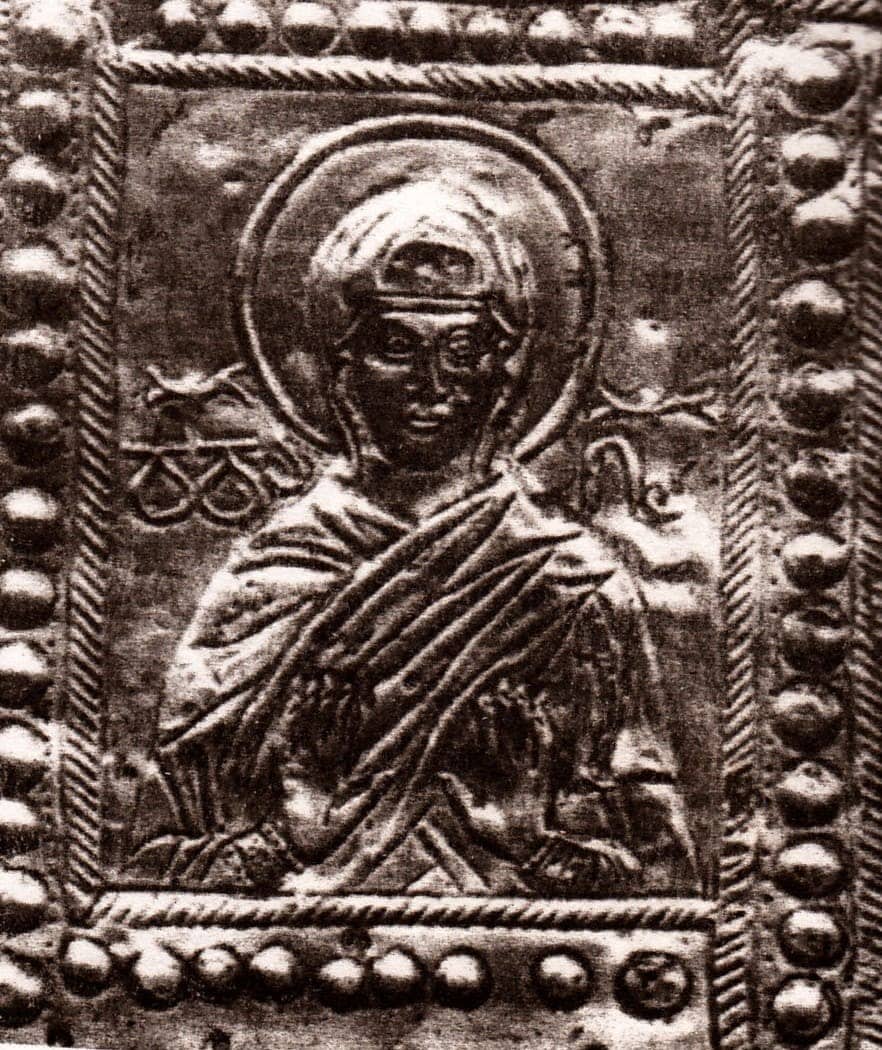
In the 10th–11th centuries, small silver icons of the Mother of God, known as the Small Orans ("The Intercessor"), were widespread in Georgia and intended for private devotion. These icons depict a half-length figure of the Mother of God with her hands outstretched in prayer before her chest, symbolizing her intercession for humankind. Particularly common in Svaneti, these small silver icons carried strong protective and patronal significance.
The wide variety of repousse icons of the Mother of God demonstrates that Georgian art developed in close dialogue with the great Christian centers. Georgian goldsmiths were well acquainted with the full range of Christian iconographic traditions, and, working within canonical frameworks, created sacred images of the Mother of God, distinguished by exceptional artistic refinement.