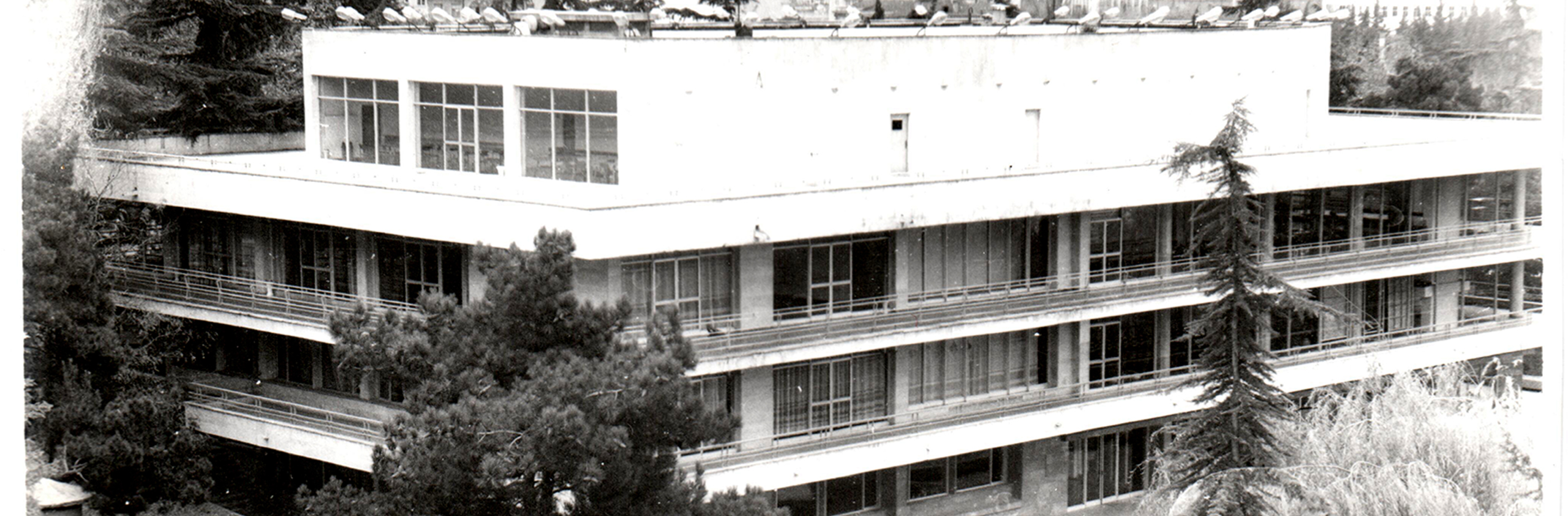
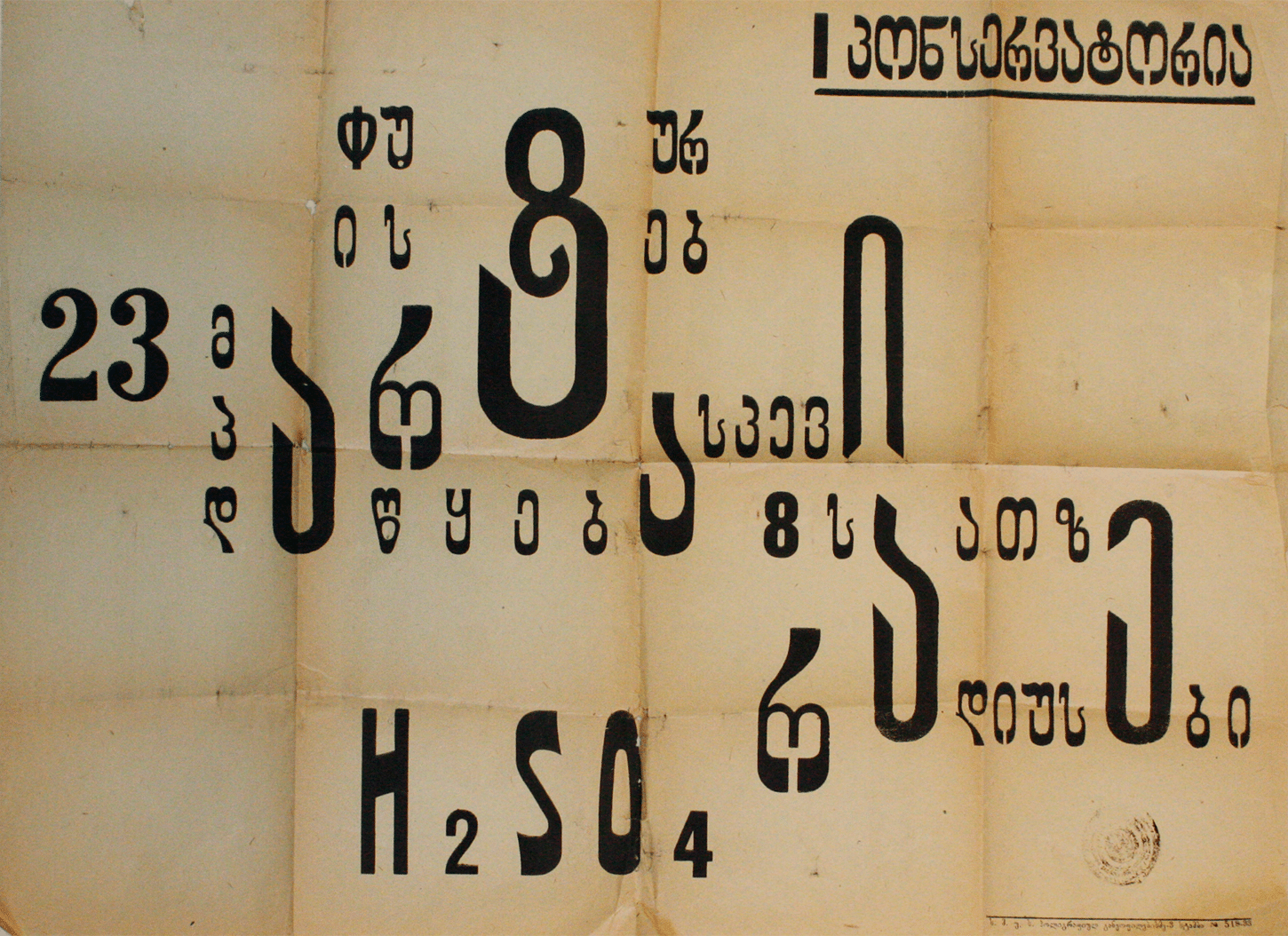



Nini Palavandishvili (ნინი ფალავანდიშვილი) is a freelance curator, researcher, and writer. The focus of her research lies on Mid-century modernist architecture, monumental and decorative art, their role in a time of creation, and current interpretations. In collaboration with the Georgian National Committee of the Blue Shield, Nini has worked on the Conservation and adaptation plan for the Tbilisi Chess Palace and Alpine Club building (supported by the Getty Foundation in 2018- 2020). She writes for international publications, is an author and editor of several books, and curator of interdisciplinary projects.
Her recent publications include:
Building Socialist Georgia (Ed. N. Palavandishvili and I. Kurtishvili), Goethe Institut Georgia, 2022
Mosaics of Soviet Period in Georgia (Ed. N. Palavandishvili), Tbilisi: Sulakauri Publishing, 2019
Tbilisi-It’s Complicated (Ed. N. Palavandishvili, D. Chigholashvili, M. Splint), Eindhoven: Onomatopee, 2019
Art for Architecture - Georgia. Soviet Modernist Mosaics from 1960 to 1990 (Ed. N. Palavandishvili, L. Prents), Berlin: Dom Publishers, 2018
Tbilisi Chess Palace and Alpine Club, in Between Caucasus and the Black Sea. Architecture in Georgia (Ed. Adolph Stiller), Vienna: Mury Salzmann, 2018
Ministry of Automobile Roads, in SOS BRUTALISM. A Global Survey (Ed. O. Elser, P. Kurz, P. Schmal), Zurich: Park Books, 2017
In 1973, “in May, sport lovers of the city received a wonderful present – the Chess Palace, which was opened by the queen of chess, four-time world champion Nona Gaprindashvili herself.”
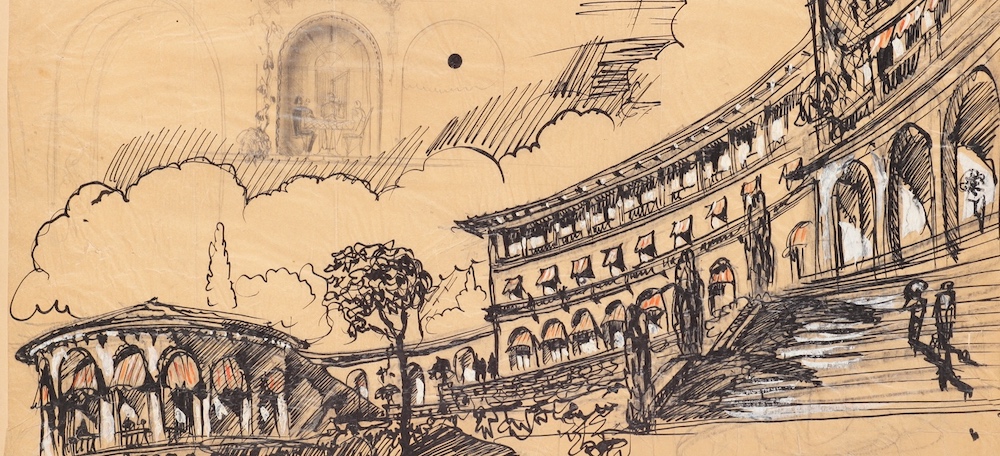
Lado Alexi-Meskhishvili is one of the most outstanding architects, whose creative work has left a significant mark on Georgia, particularly in Tbilisi. Alexi-Meskhishvili was destined to work during a very interesting time period. He obtained his architectural education in Georgia (1933-1939), at the then Faculty of Construction at the Georgian Polytechnical Institute named after Kirov.
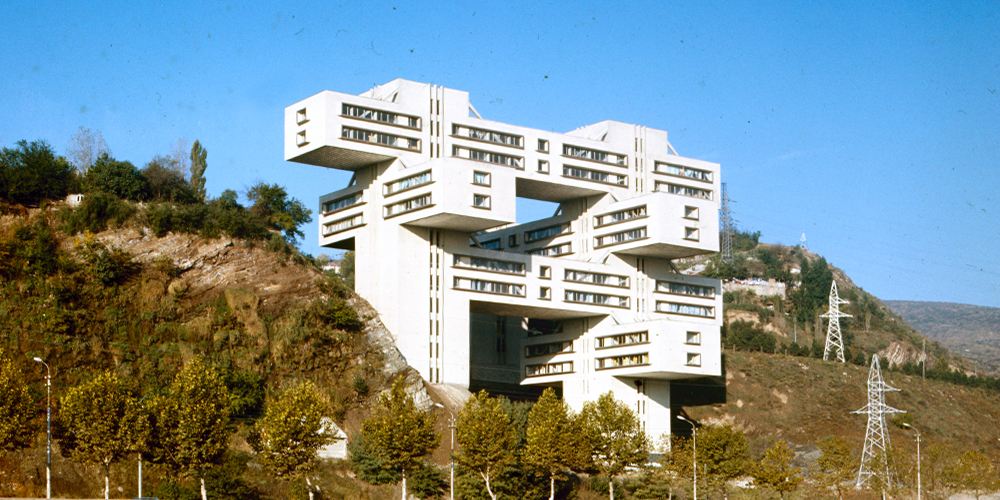
The building of the former Ministry of Automobile Roads of Georgia, which is currently the Bank of Georgia Headquarters, has weathered the test of people’s opinions and, most importantly, of time. Today, this building serves as an advertisement for Georgia on the world map of twentieth-century architecture.
We use cookies!
When you visit a website that uses cookies, these cookies will get placed on your device. Cookies can contain information about actions you take on the page. The information is specific to you and the website you visited. For more visit our Privacy Settings.