.jpg)






 Share this article
Ushguli is the highest inhabited settlement, not only in Upper Svaneti, but in the whole of the Caucasus. It is located at 2400 m. above sea level, at the base of the Shkhara mountain, in the narrow gorge of the River Enguri.
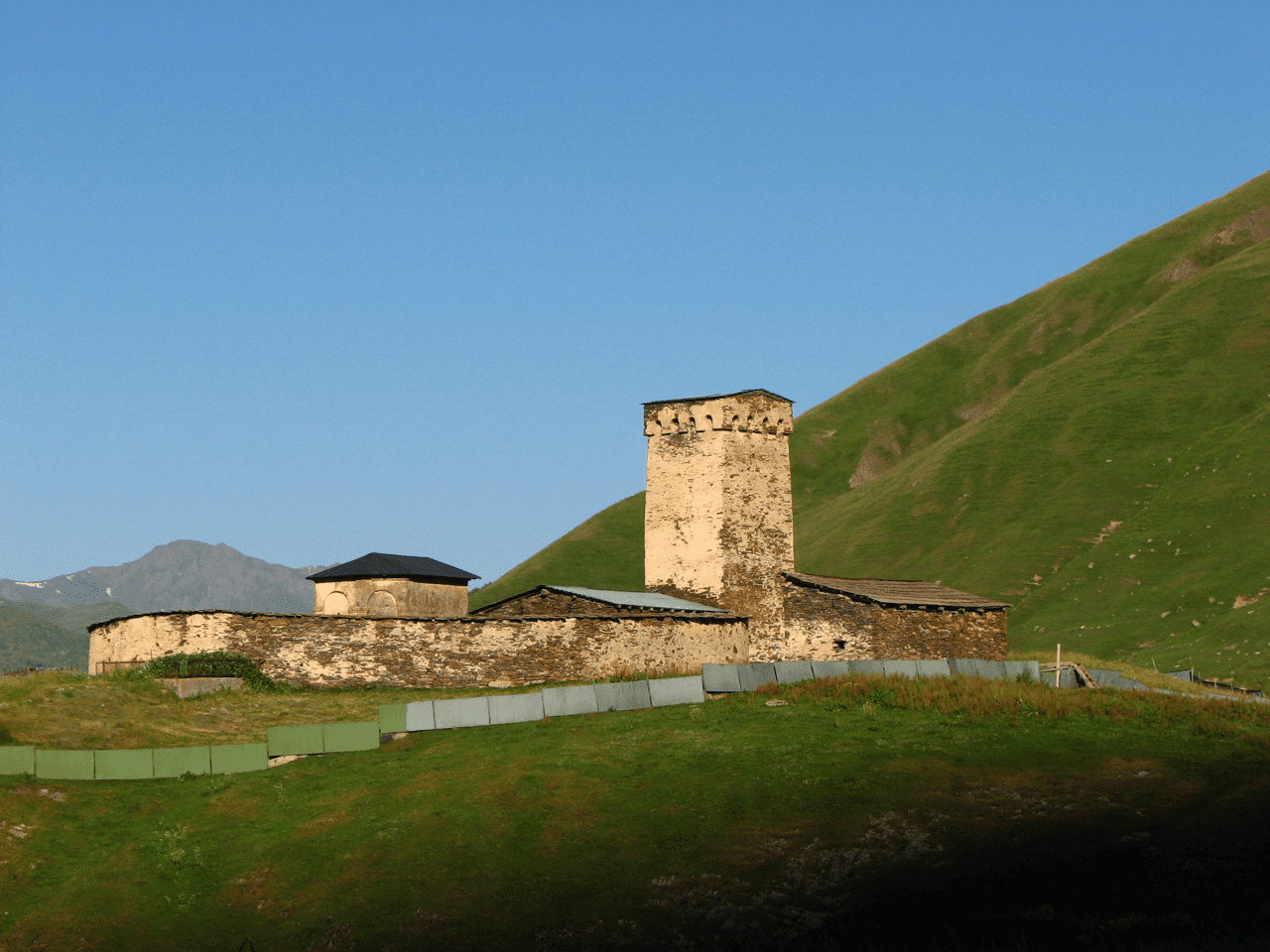
Lamaria, the Church of the Virgin Mary, stands on a hill just outside the village of Zhibiani—one of several communities that make up Ushguli in Upper Svaneti. The church complex, also featuring a slate tower, is surrounded with fortification walls.
Dating back to the 10th century, the church is a single nave structure with a projecting apse and decorative blind arches. Built from finely cut tuff stones, it also features an ambulatory to the south and west sides. Unlike other church buildings in Svaneti, the arches on the facades of the Lamaria church are adorned with simple curved ornaments.
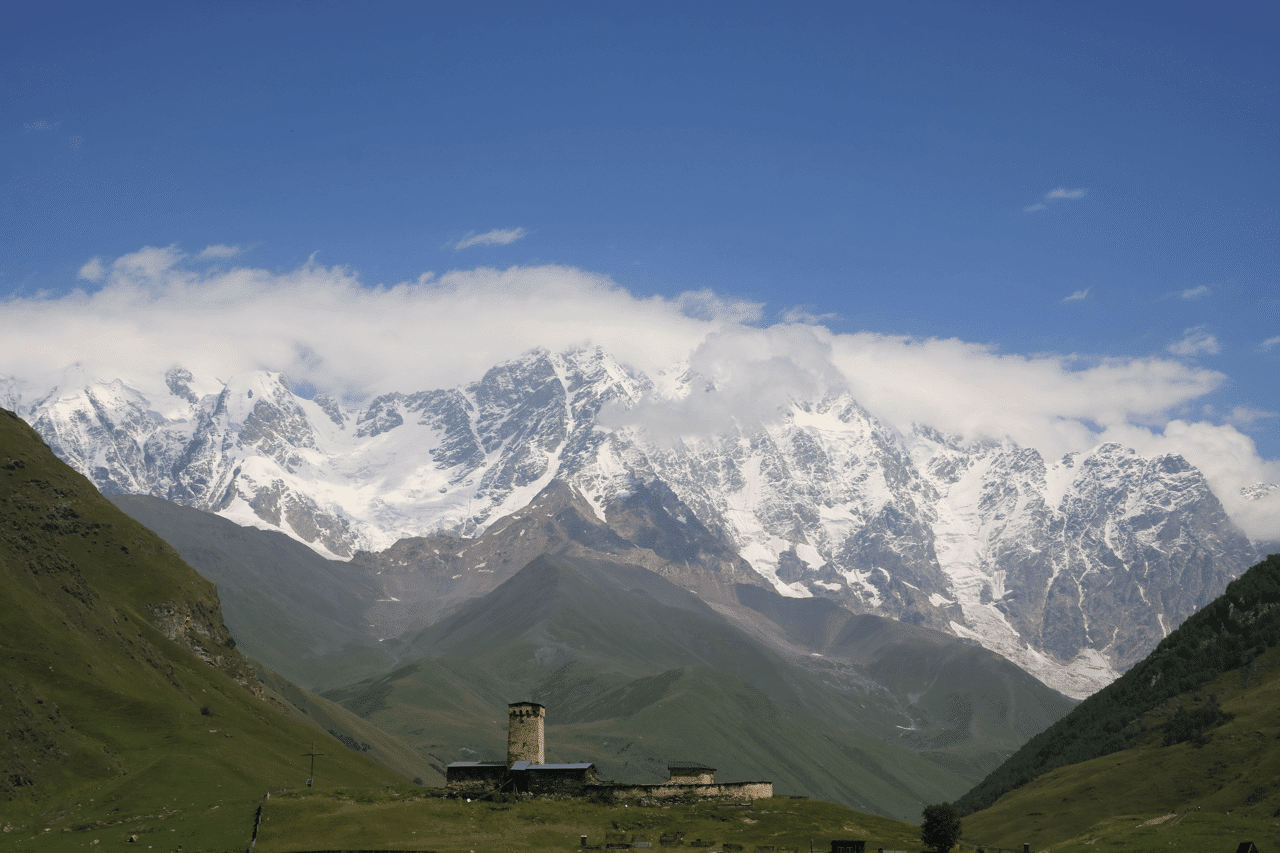
The Lamaria church, one of the most revered sacred sites in Svaneti, sits beautifully against the dramatic backdrop of Mount Shkhara—the highest peak in the region. The entire architectural ensemble of Lamaria is a striking sight, especially with the snowy mountain towering behind it.
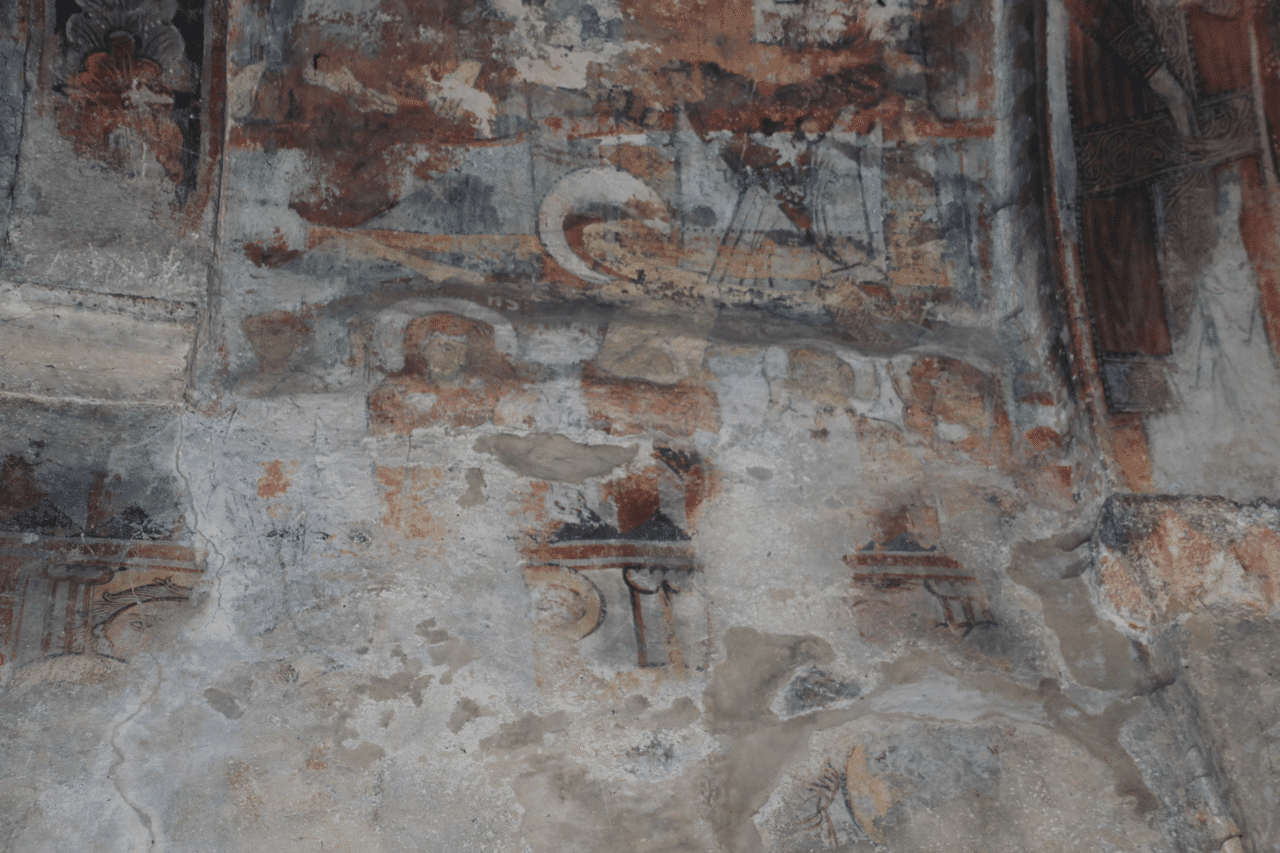
Inside, the Lamaria church has preserved a remarkable range of murals from different periods. In the 10th c., the chancel barrier was decorated with ornamental aniconic painting. Later, around the turn of the 10th and the 11th cc., the interior walls were covered with figurative frescos, a number of which are still visible today, peeking through the layers of later additions.
Among them is the scene of the Crucifixion on the north wall. It features a unique detail: the Virgin Mary, in a gesture of intense mourning, touches her head rather than her cheek—a dramatic variation from traditional iconography. The facial features reflect those typical of Svaneti paintings: a low forehead, an aquiline nose, and wide, expressive eyes.
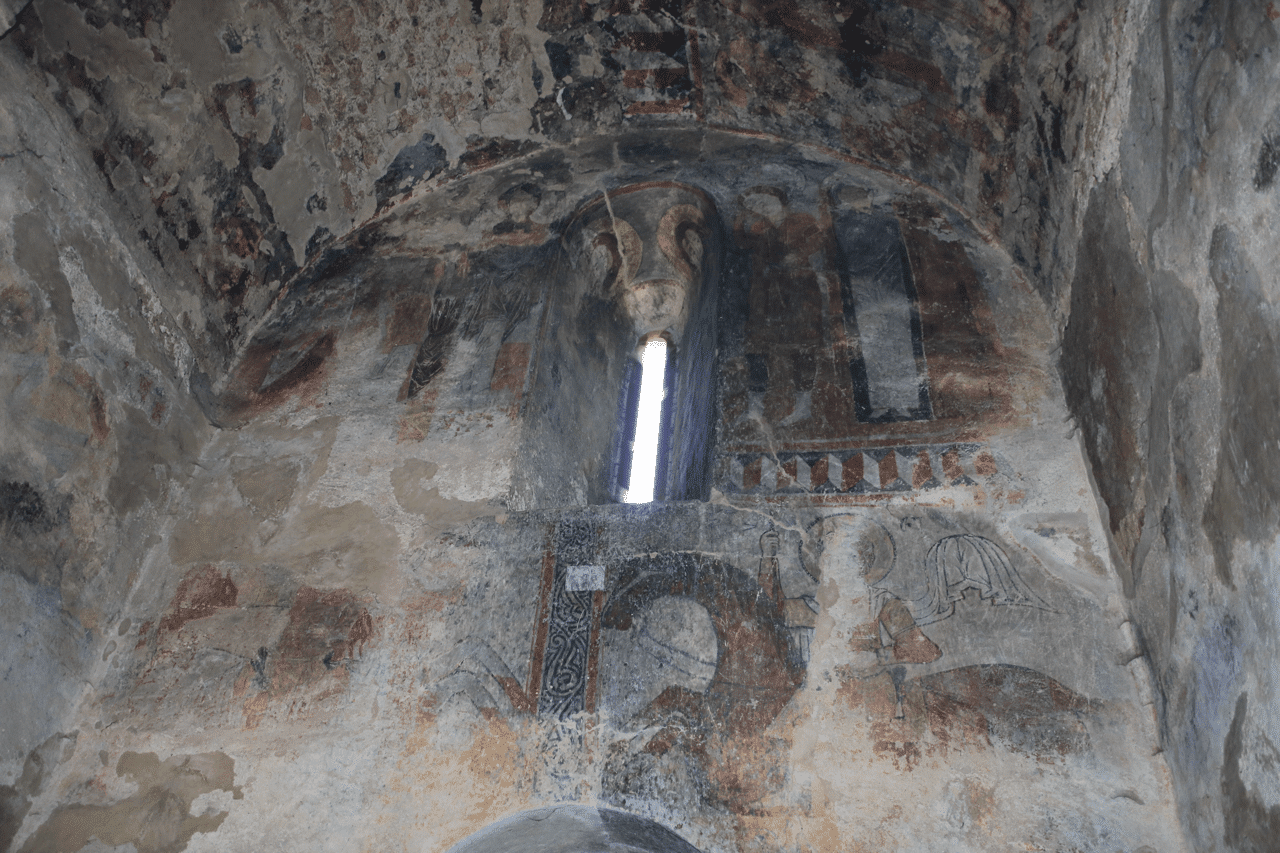
The next phase of decoration in the Lamaria church dates to the 12th c. On the west wall, the figures of two equestrian warrior saints—St. George and St. Theodoros—face each other to either side of the window. This composition was especially beloved in Svanetian church art, and remained a popular motif from the 9th to the 18th century.
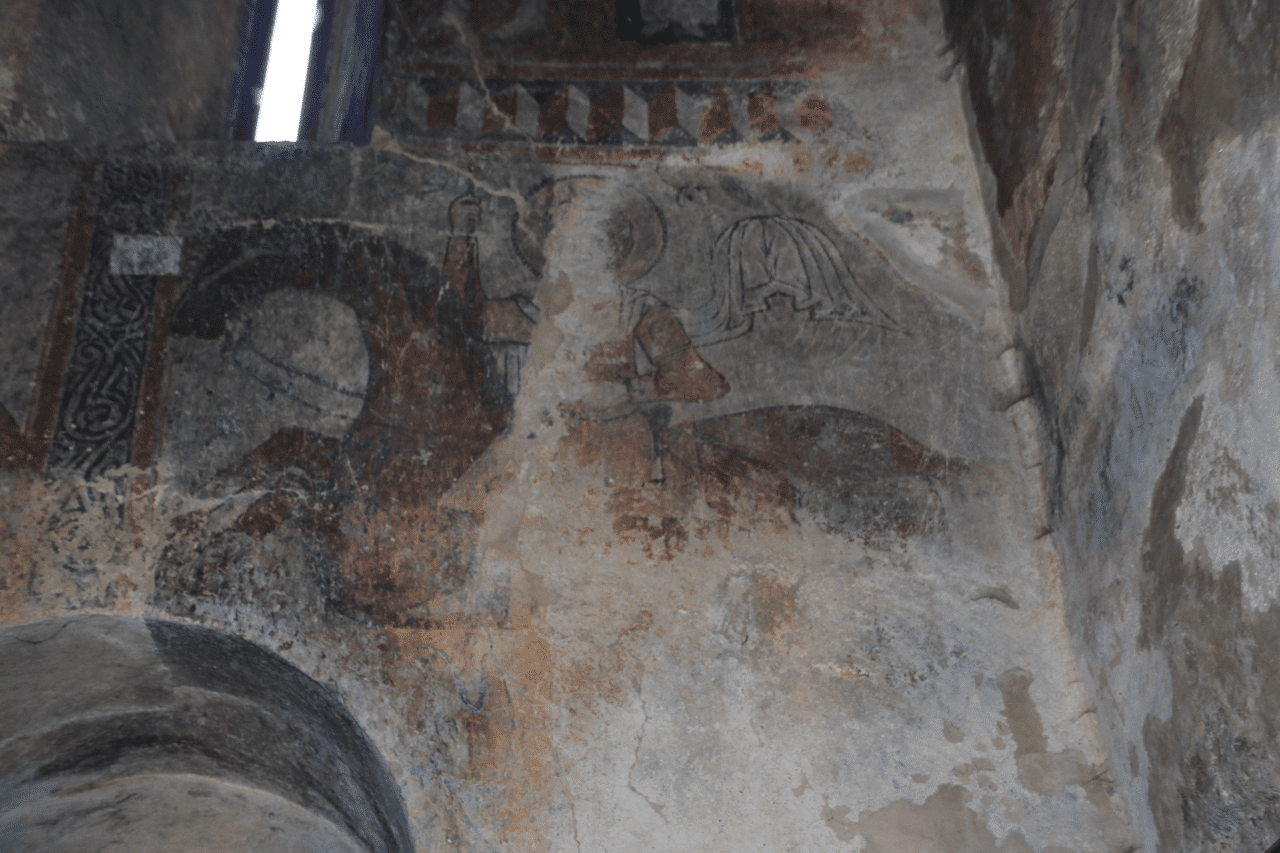
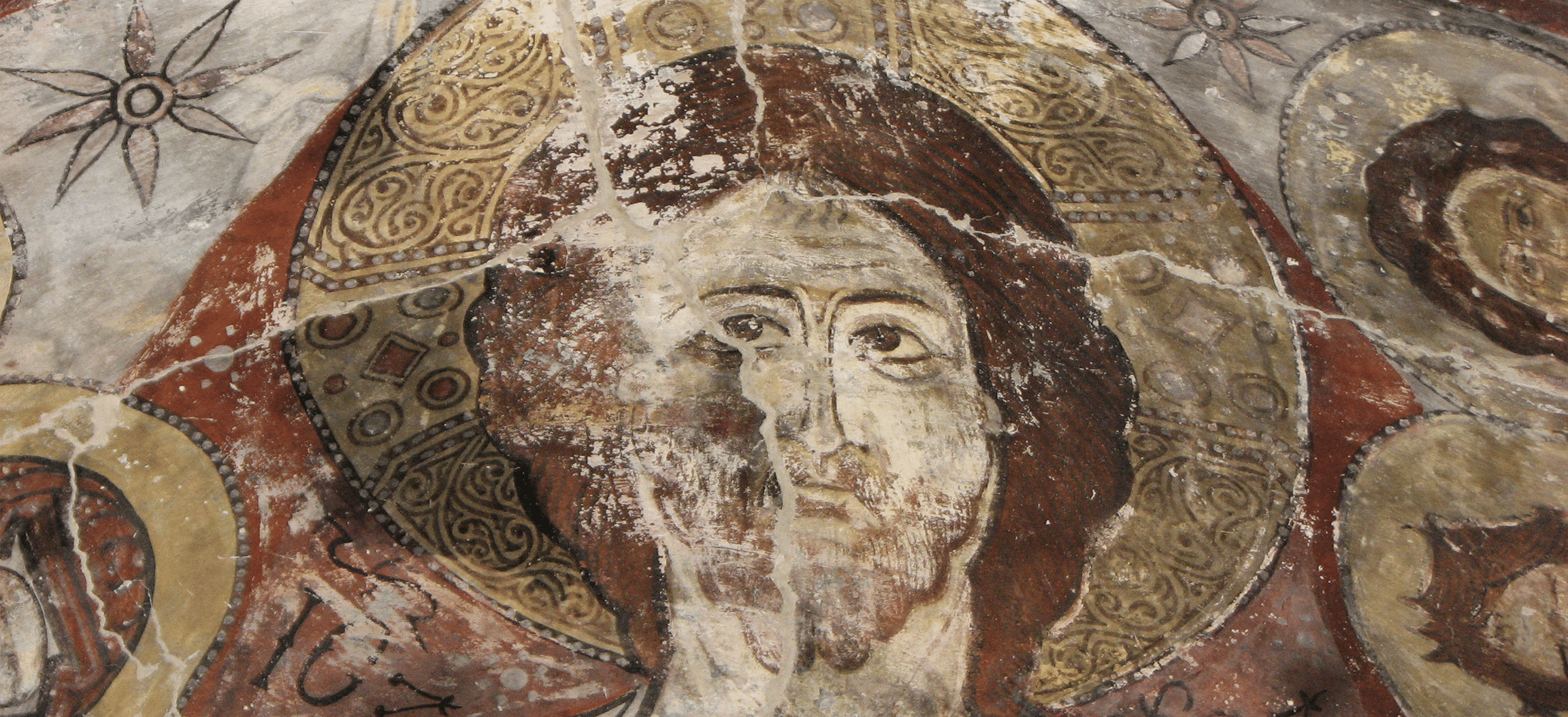
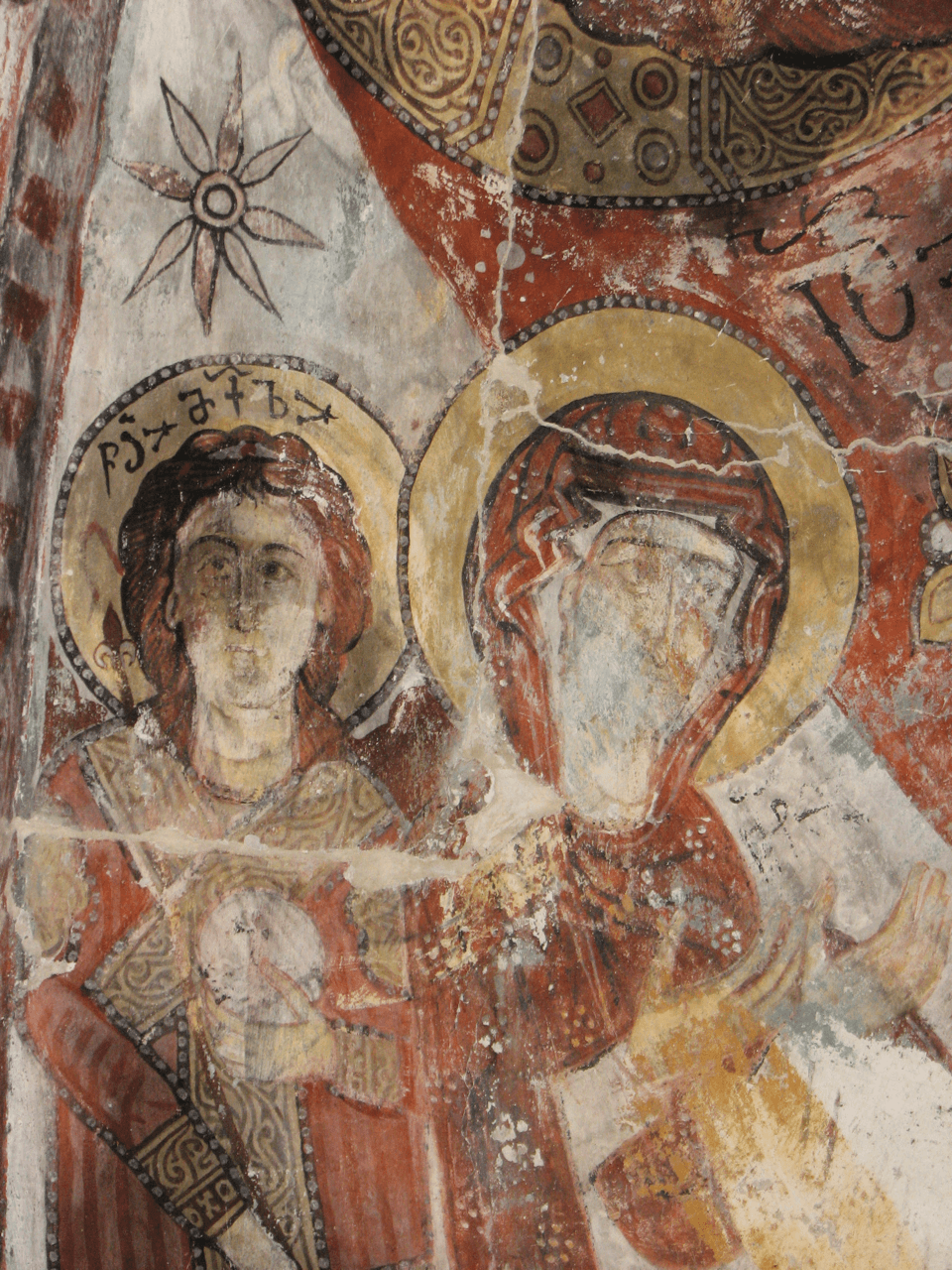
Finally, in the 13th c., the entire interior of the church was richly decorated with murals, many of which have survived—particularly in the sanctuary, on the walls, and in the vault. In the apse is a traditional composition of the Deisis, featuring the Archangels, angels, and cherubs and seraphim.
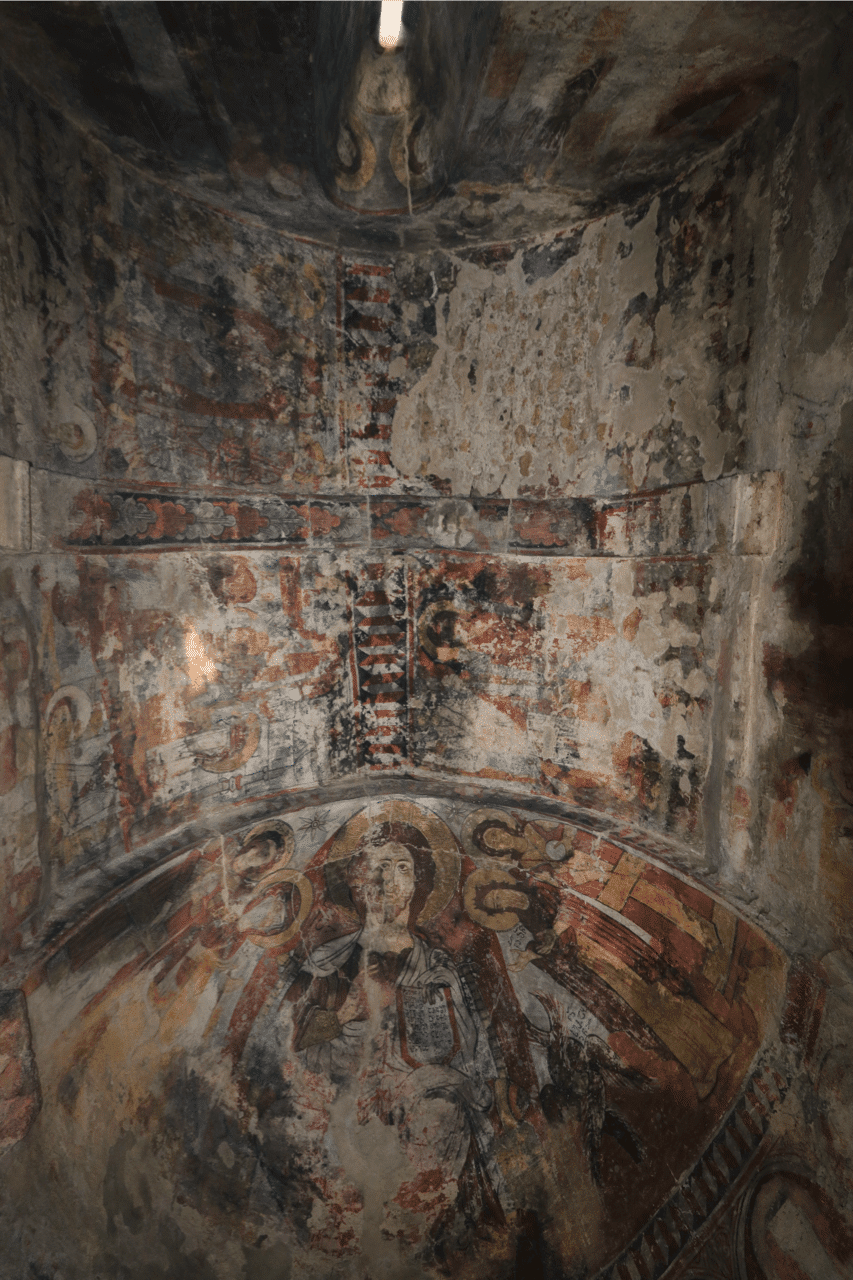
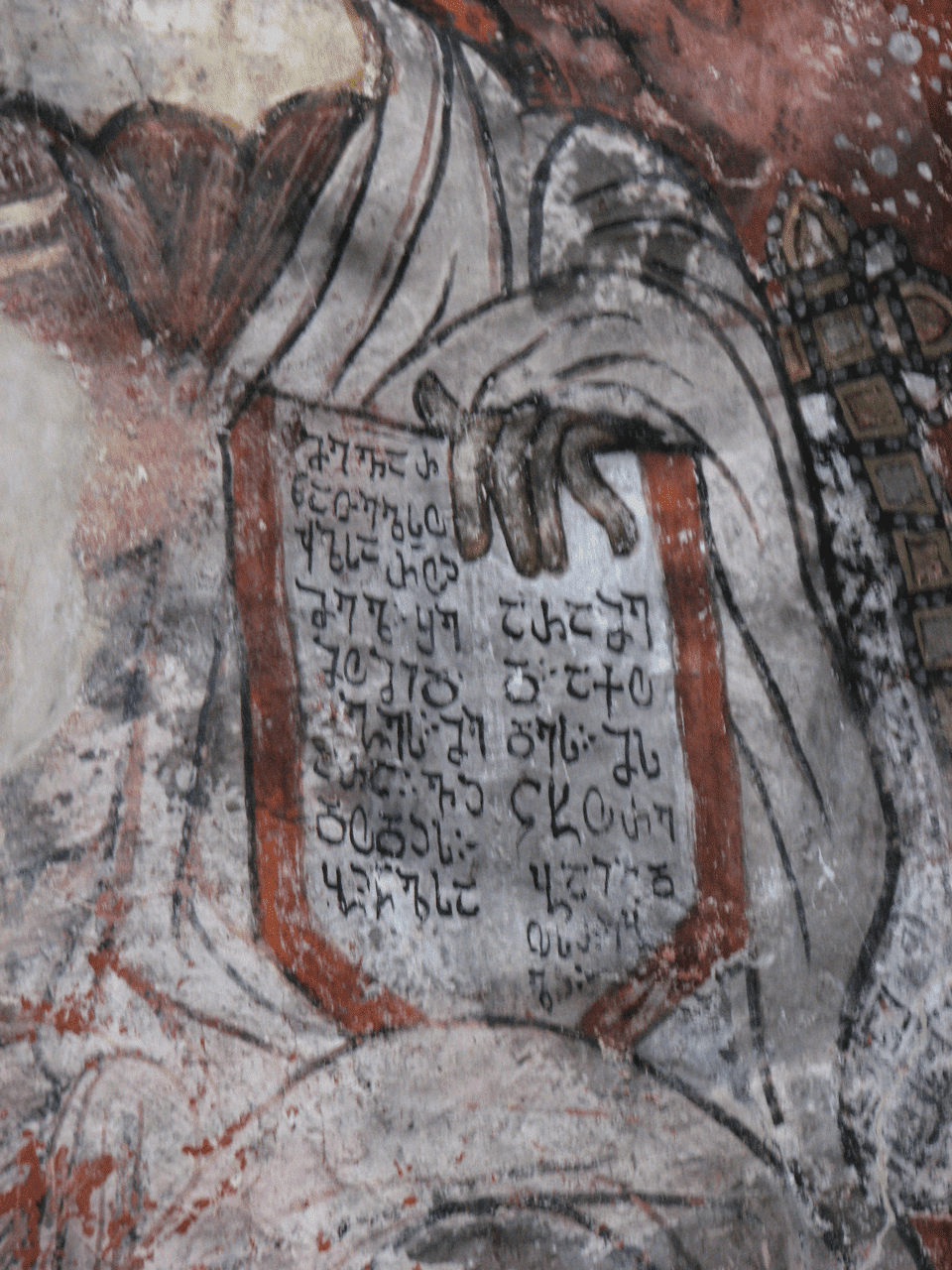
The figure of Christ is surrounded with a red mandorla. He blesses with his right hand and holds the opened Gospel in his left. The text of the Gospel (John, 8:12) is written in the old Georgian Asomtavruli script, as are all the inscriptions in the Lamaria church.
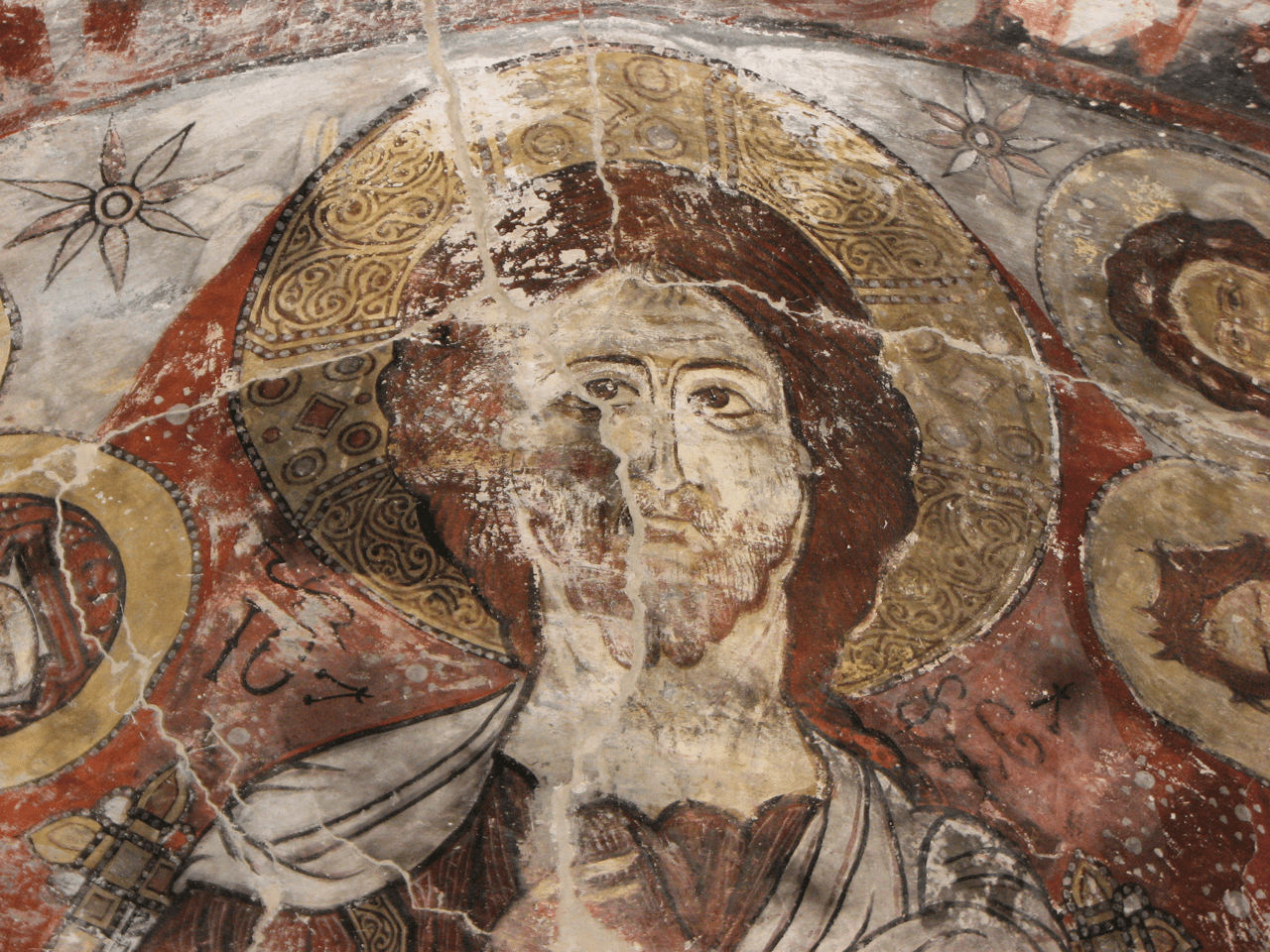
Above Christ’s head, stars are painted, while his halo is decorated with a floral pattern. In many places, inscriptions appear inside the haloes, such as on those of the Archangels. The Archangels wear imperial vestments, showing their importance. The faces of the Virgin Mary and John the Baptist are especially expressive.
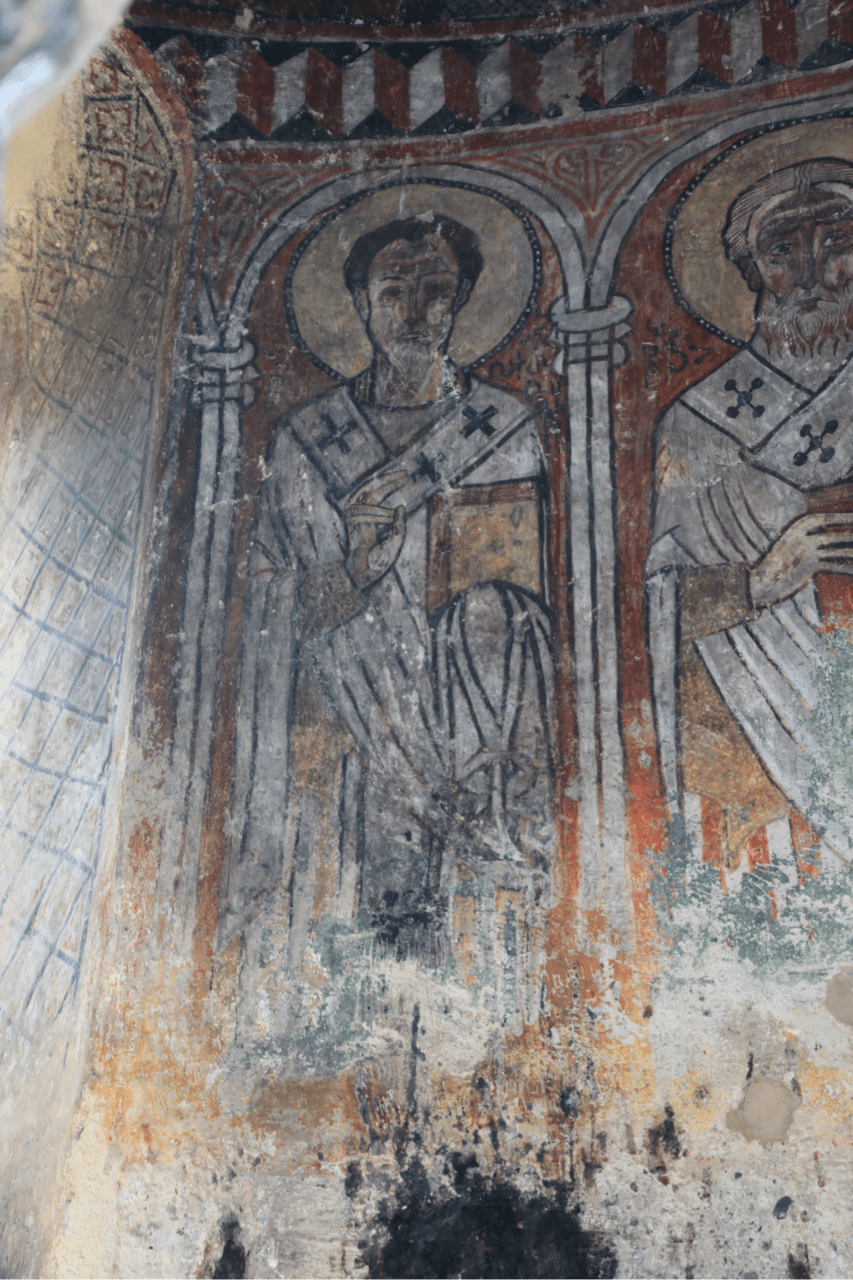
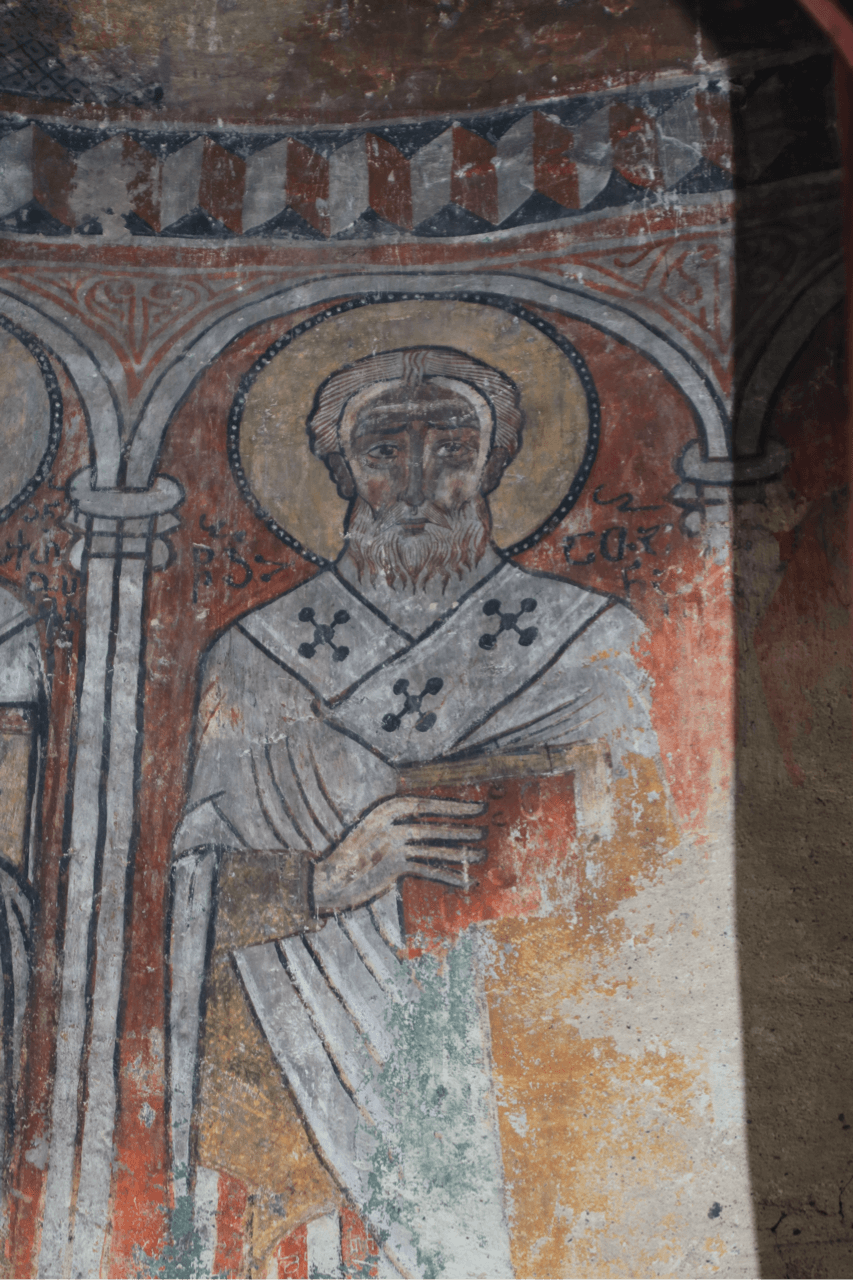
In the lower tier, the Holy Bishops are represented under a decorative arcade. They are shown standing frontally, each holding scrolls or books, with inscriptions identifying them. One striking detail is the background color under the arches—an intensive orange-red, while in the conch the background is made up of gray and red ochre.
Several scenes of the Christological cycle are preserved on the walls and the vault of the Lamaria church: The Annunciation, the Nativity, the Transfiguration, the Raising of Lazarus, the Entry into Jerusalem, and, it is believed, the Dormition of the Virgin. In many instances, the fragments of earlier layers are visible under the 13th c. painting.
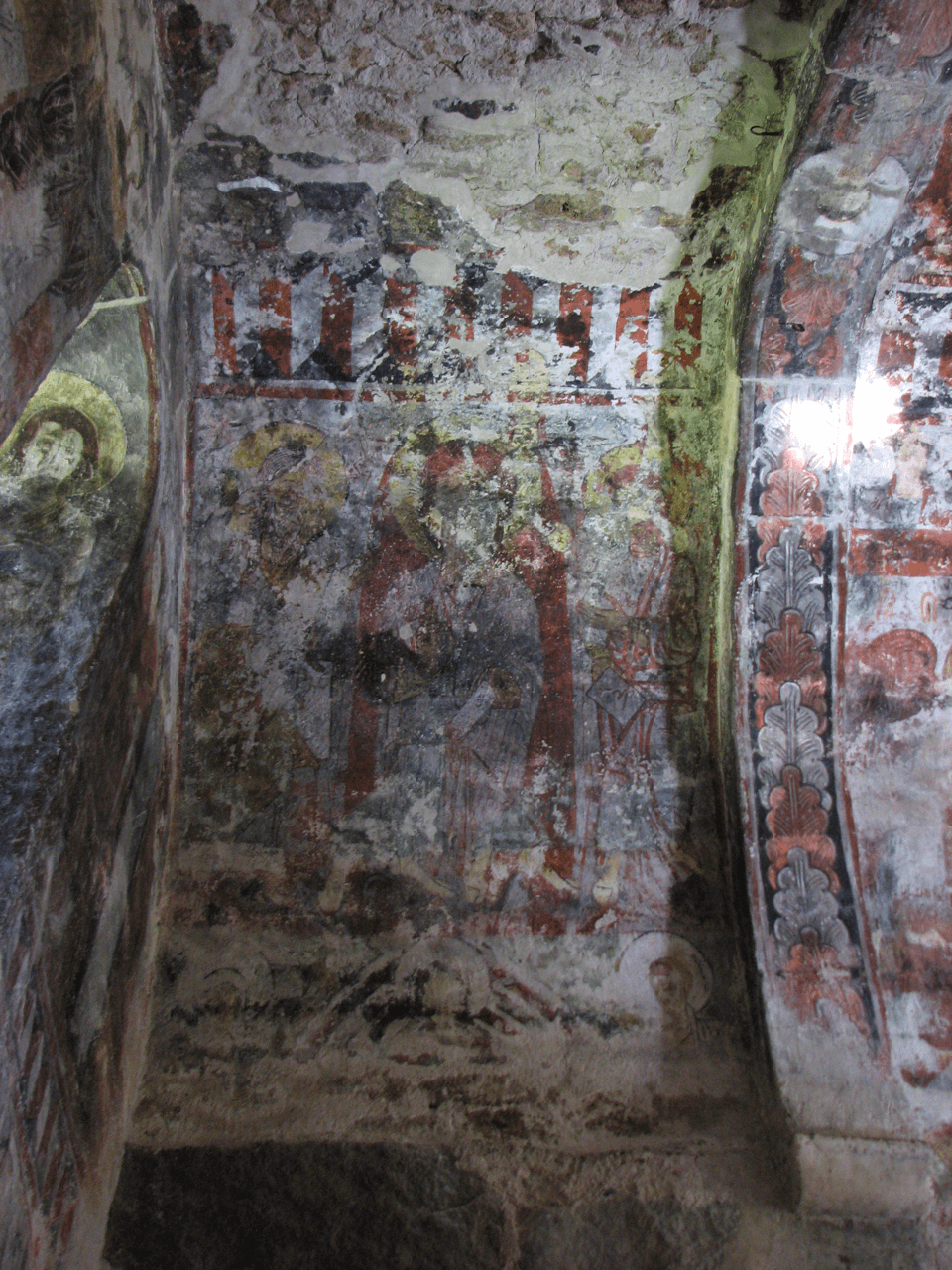
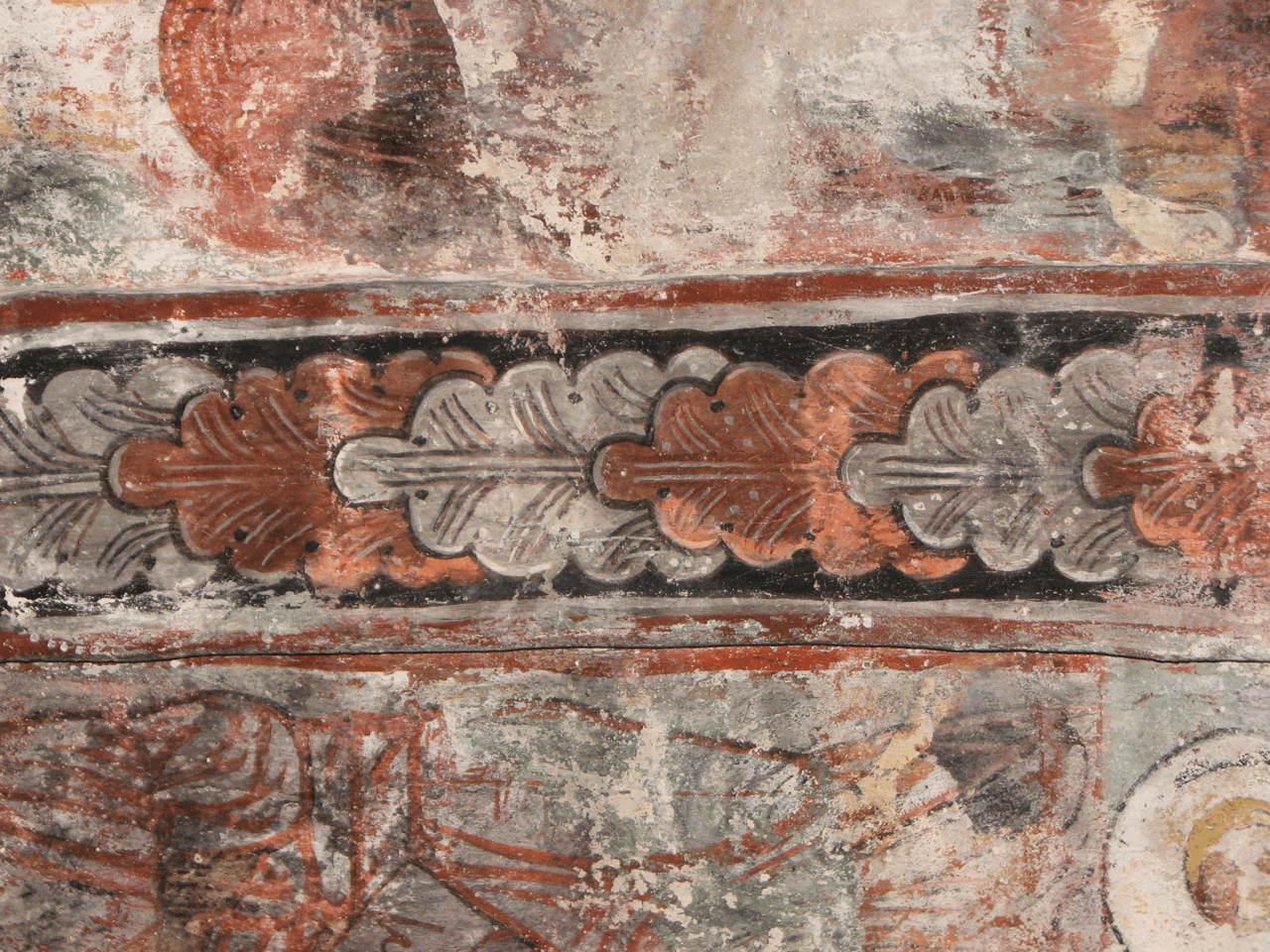
These murals are remarkable for their expressive style and impressively vivid, luminous colors. The decorations on the vault show a repeating oak leaf motif, a characteristic trait of the 12th c. murals created by the royal painter Tevdore.
Many graffiti have been preserved on the walls—prayers for salvation, written at different times by pious visitors, the earliest of them dated to the 11th c.; some featuring the names of historical persons, such as Ioane Suani and Roman Natiani.
The Lamaria church is a special place of worship for the entire Svaneti region. Annually, on August 28th, a grand feast is celebrated there to honor the Virgin’s Dormition.