




 Share this article
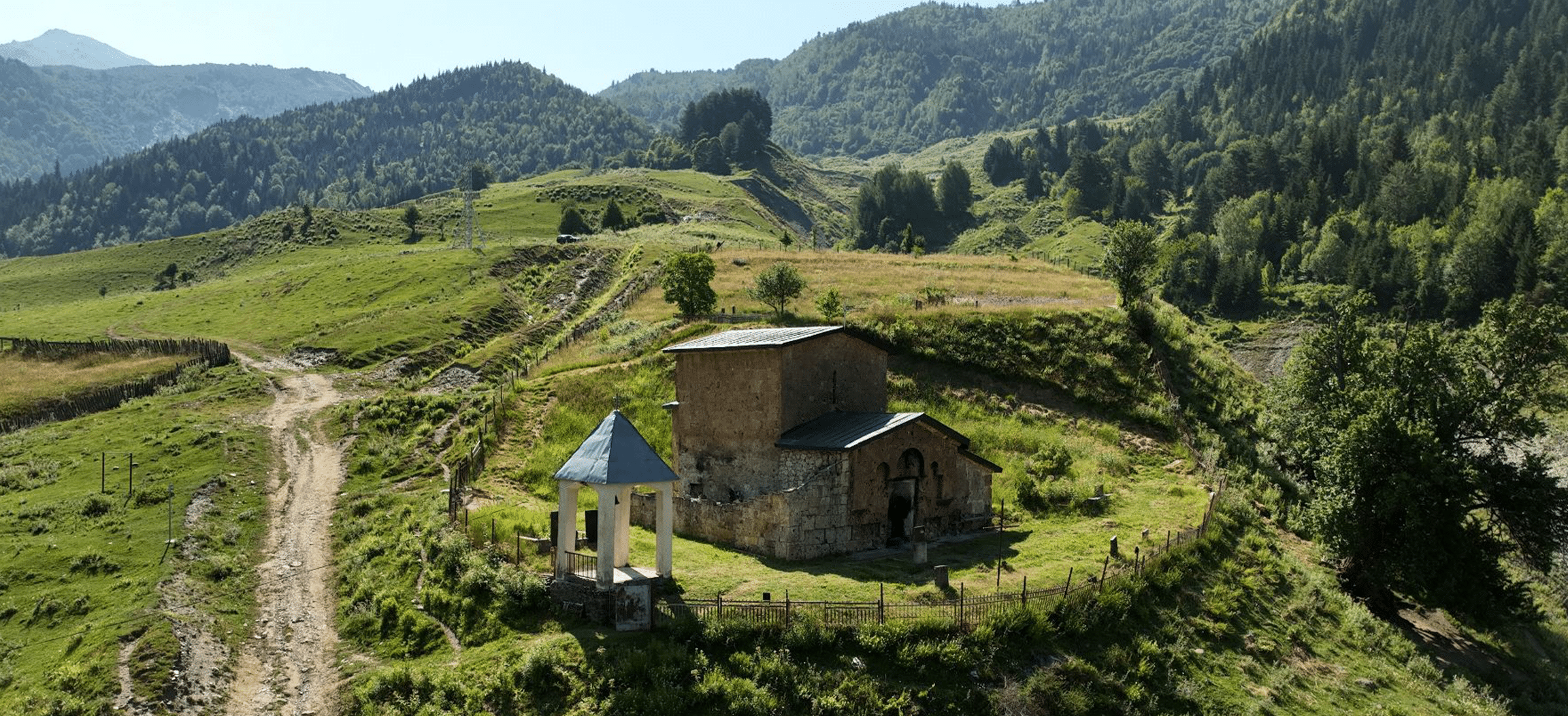
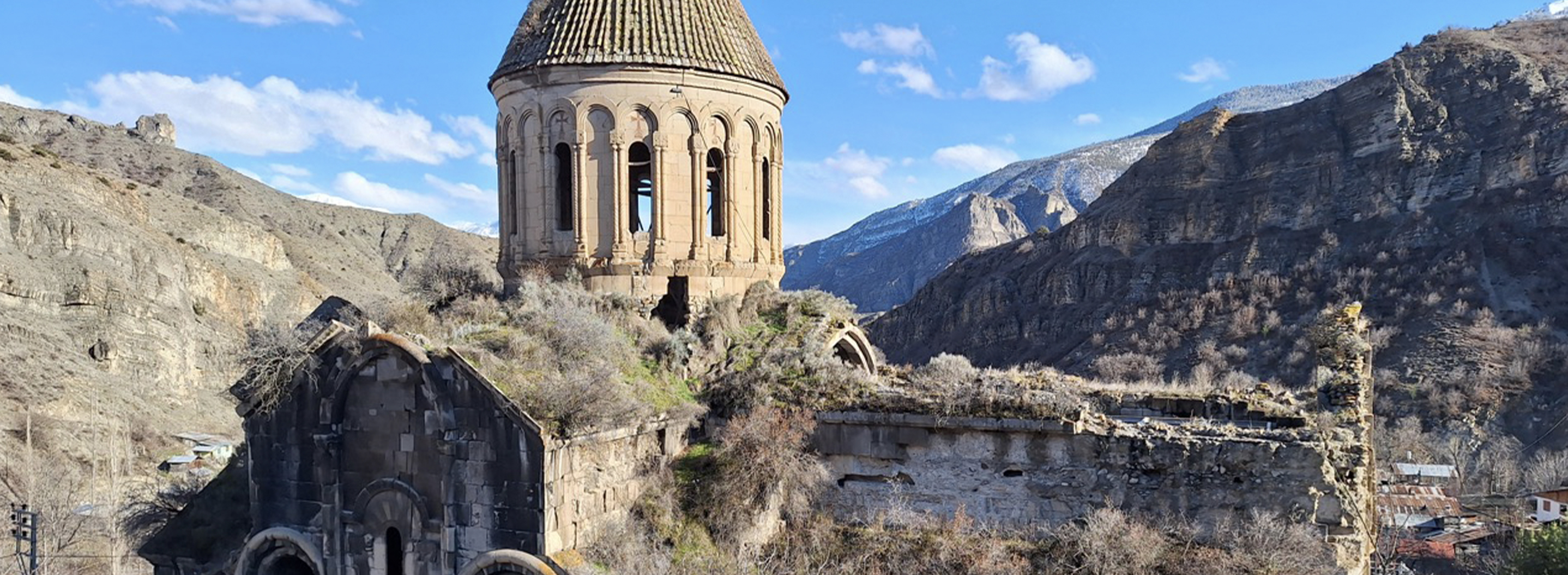
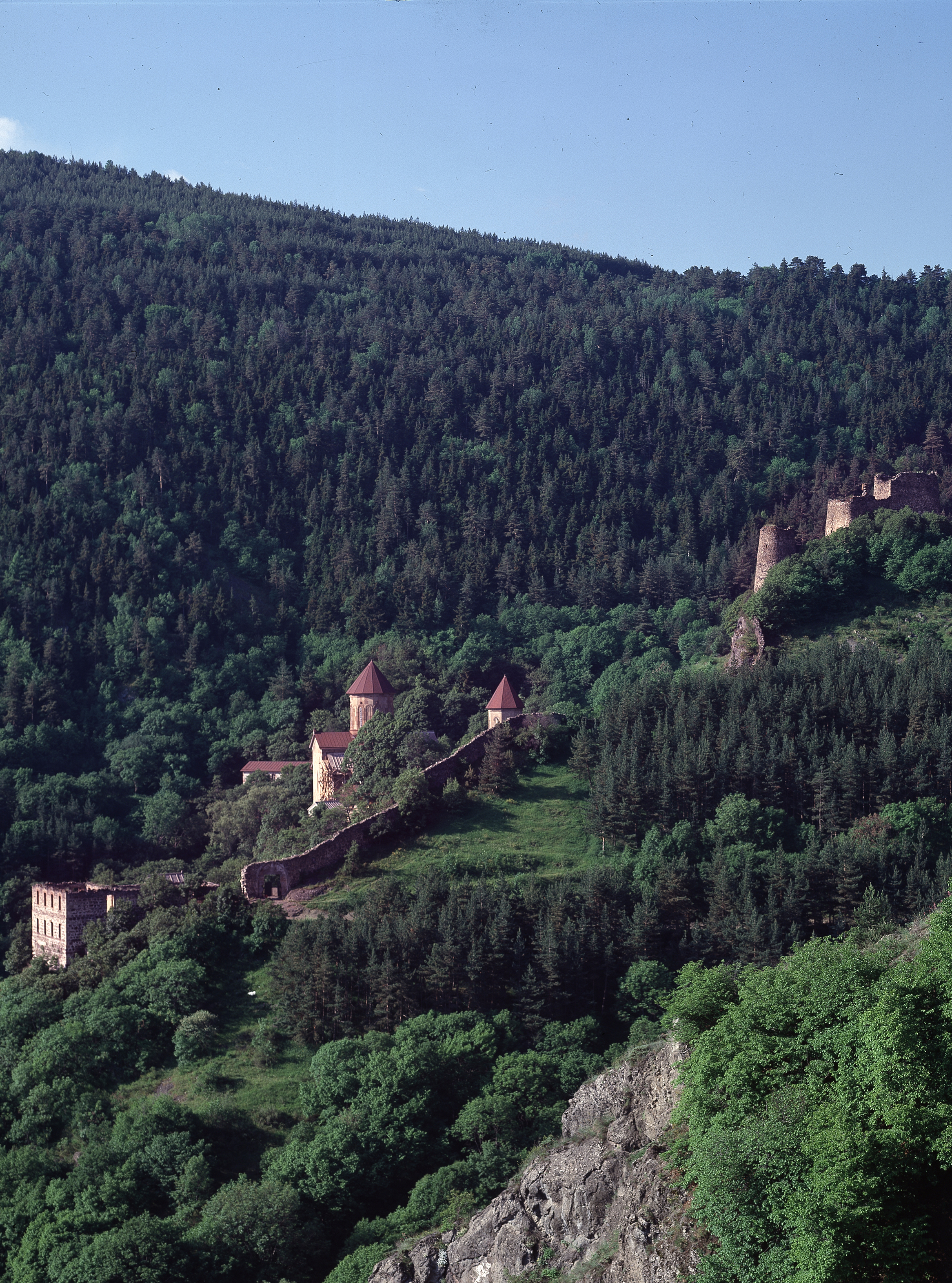
Chvabiani is one of three villages in the community of Muzhal-Mulakhi, not far from Mestia, in the Svaneti region. The Church of the Savior is located on a hill, overlooking the village.
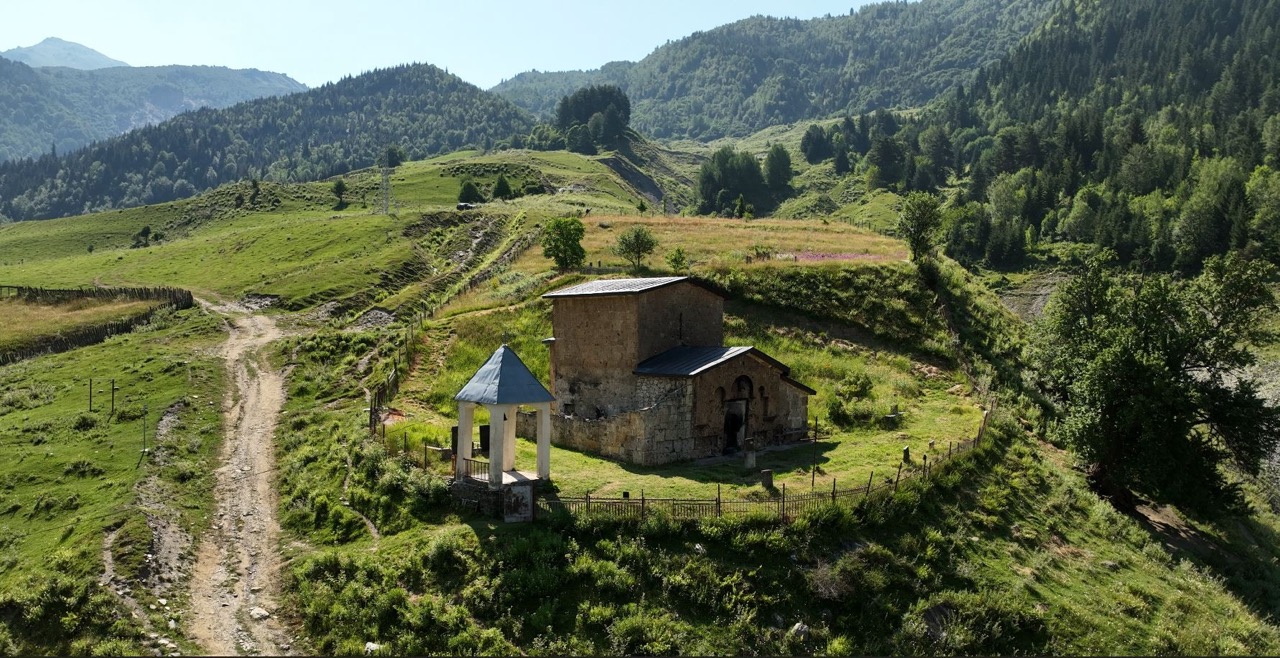
Chvabiani, Church of the Saviour, 10th c., general view
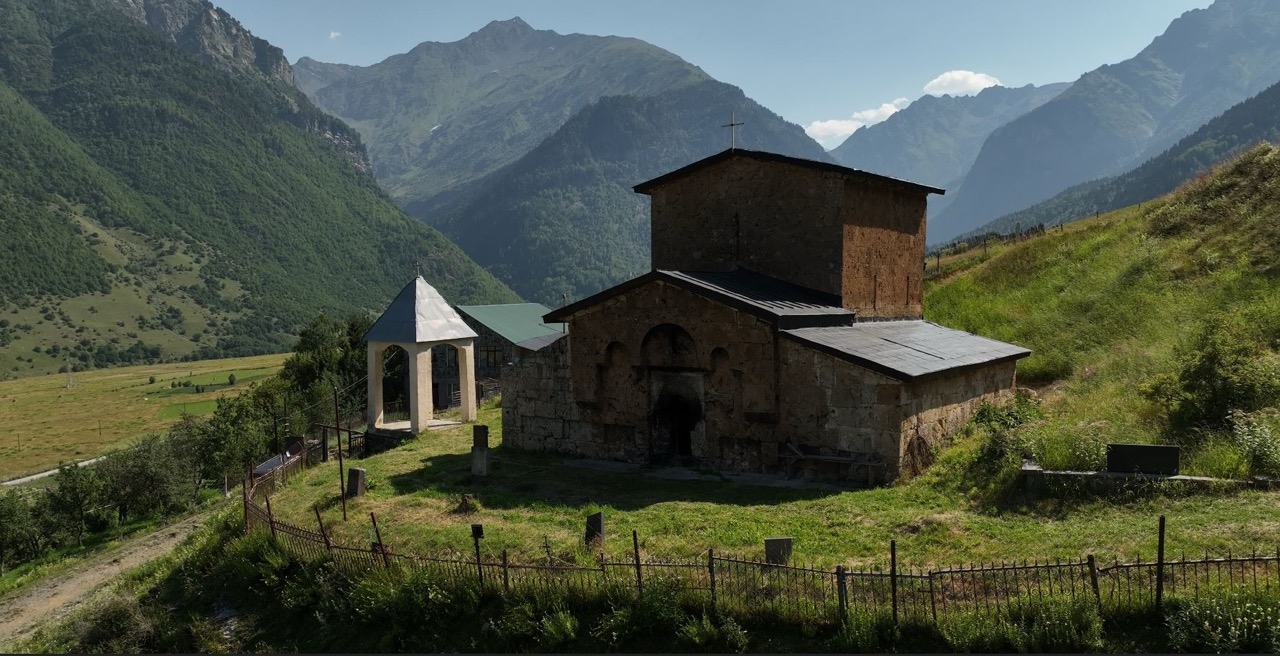
Chvabiani, Church of the Saviour, 10th c., western facade
The church is dated to the 10th c. and is built of well-cut ashlar. It is a single nave church with a projecting apse and an ambulatory. The western façade is decorated with thick blind arches that imbue the small building with an air of monumentality. The sanctuary is separated from the hall by a five-arched chancel-barrier.
The frescos of the Chvabiani church are among the most beautiful and impressive, and count as one of the earliest examples of mural painting in Svaneti, dating back to the late 10th c.
According to the tradition of 9th -10th c. art, the oldest frescos adorn only the sanctuary of the church. Other parts of the painting were executed in the 12th -13th cc.
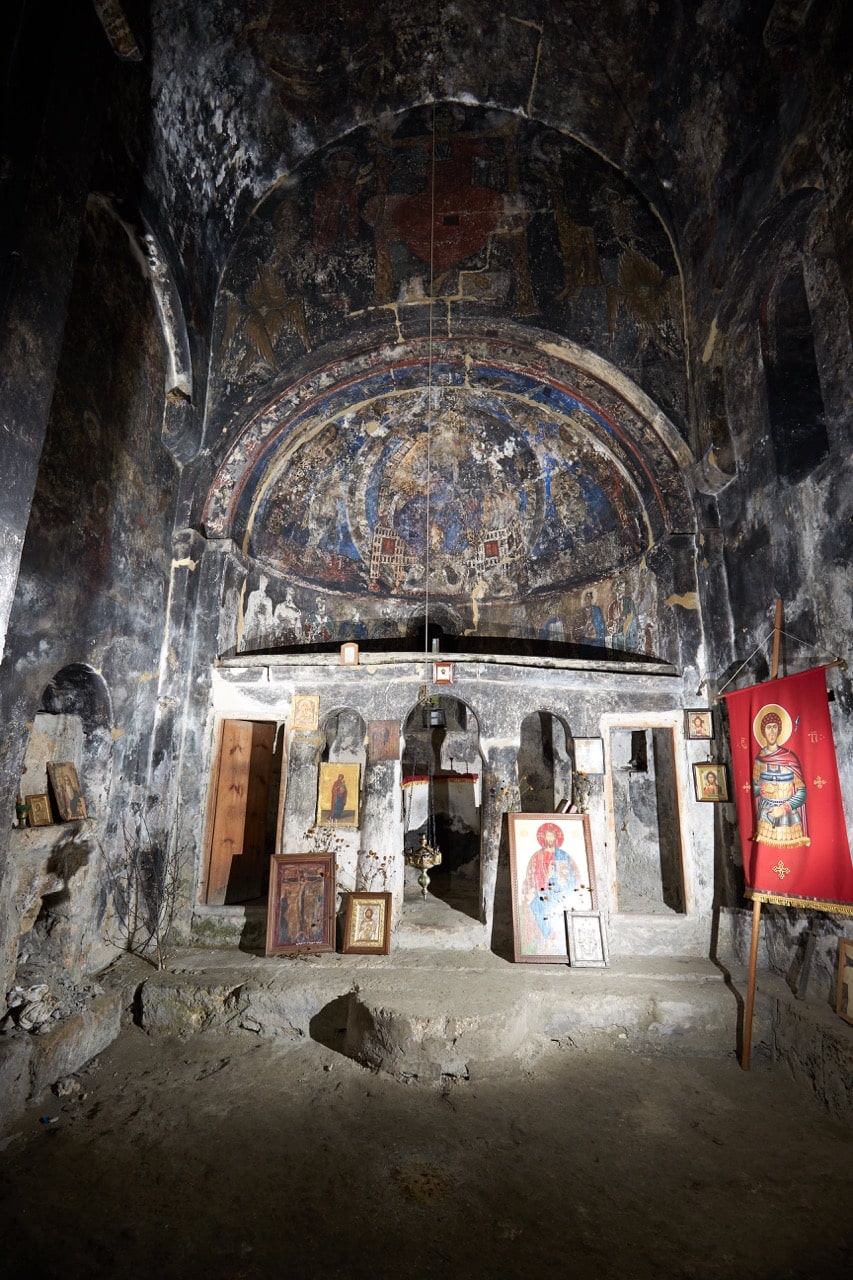
Chvabiani, Church of the Saviour, interior, sanctuary and chancel-barrier
There is a grand composition of the Majestas Domini (the Glory of the Saviour) in the conch. The enthroned figure of Christ is surrounded by a host of angels and two archangels on each side, wearing imperial vestments.
Further, based on the visions of the Prophets, there are representations of the seraphim and the tetramorph standing on wheels enveloped in flames. Between the legs of the throne and the figures of the celestial host are several words in Georgian from the angelic prayer of Trisagion (Sanctus, Sanctus, Sanctus).
In the apex of the conch God’s hand is depicted, blessing, alongside the sun and moon. Two pairs of angels in flight are represented over the mandorla surrounding the figure of the Enthroned Christ. Christ blesses with his right hand, and with his left holds the open Gospel with traditional verses from John (8:12). In this painting, the idea of the Glorification of Christ is tightly linked with the prophetic visions of the Second Coming.
Like many other Georgian, and especially Svan, paintings, the figure of Christ occupies the majority of the conch, pushing the figures of the archangels to the edges of composition and thus assigning the figure of Christ with special grandeur and solemnity. The form of the throne in Chvabiani has many traits in common with the 10th c. paintings found in the Gareji monastery.
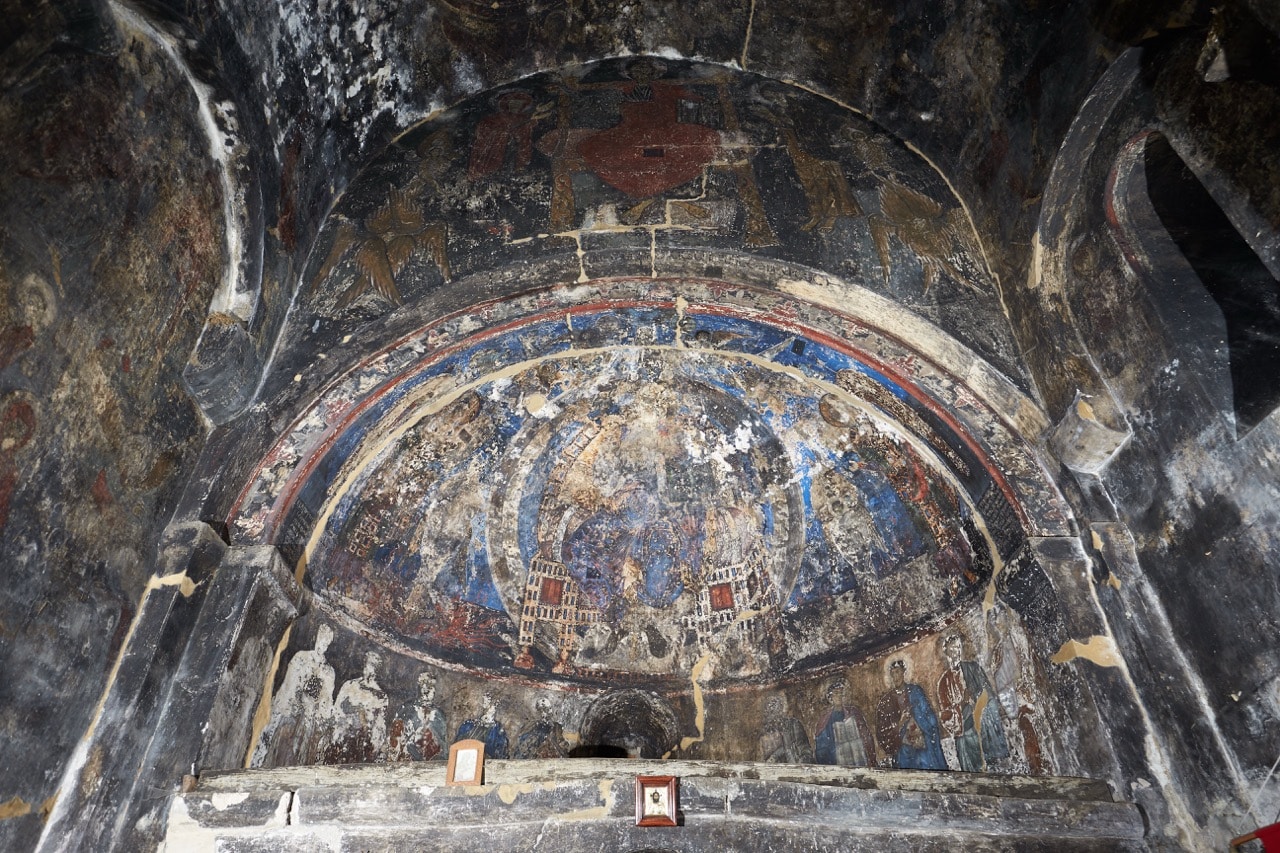
Chvabaini, Church of the Saviour, Majestas Domini, painting in the conch, 10th c.
The back of the throne has a semi-circular form that repeats the outlines of the mandorla and comprises several layers of differing colors. The throne is adorned with numerous precious stones, among them shining red vermilion, which is used for the imperial garments of the archangels and the flames of the wheels. The background is completed with a brilliant lapis lazuli and is decorated with numerous stars. This lapis lazuli is the most impressive feature of these murals.
The composition as a whole gives the impression of stained glass or enamel, and is imbued with a particular characteristic of light and color.
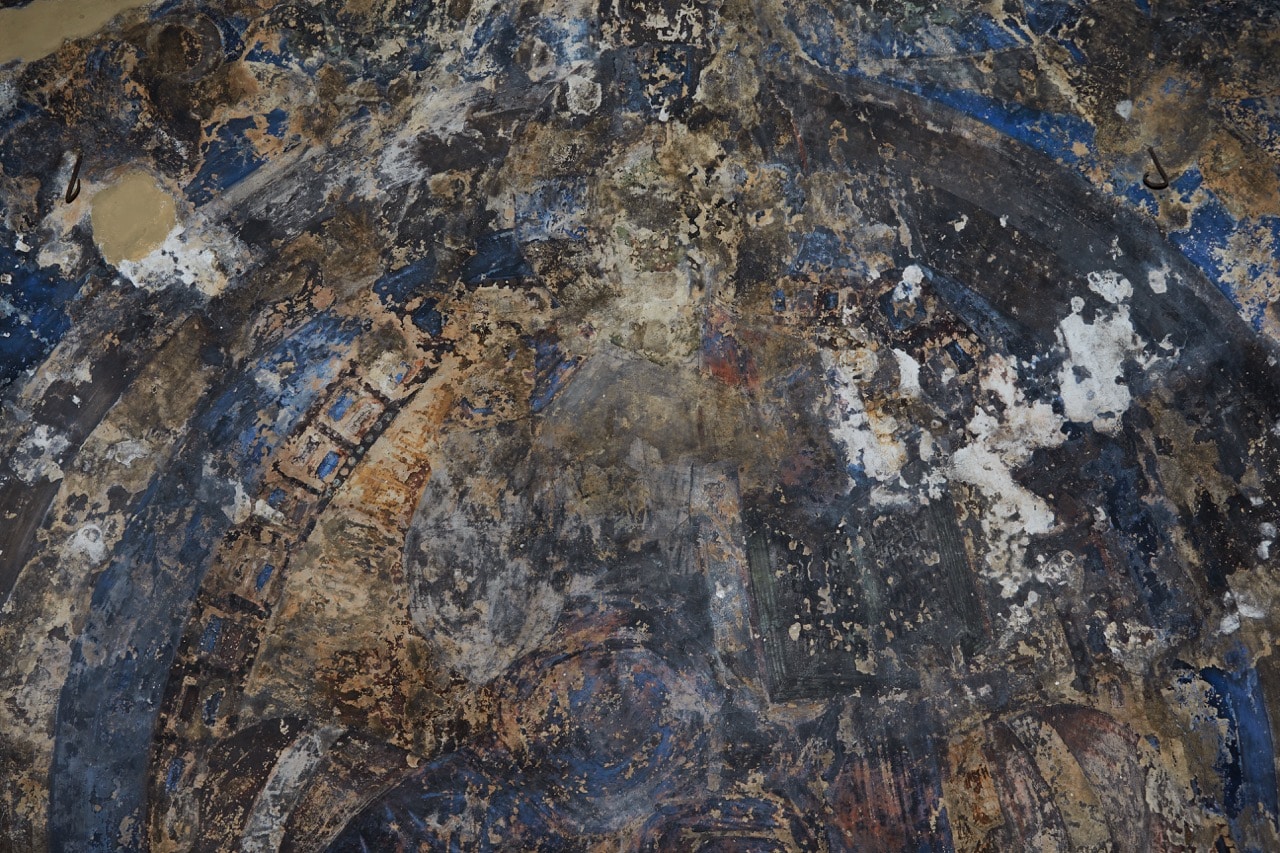
Chvabiani, church of the Saviour, figure of Christ, 10th c.
The artistic rendering of the sanctuary painting reveals a high-level master. The drawing of Christ’s vestments is classical, with a graceful and refined flow, soft lines, and gentle movements.
Unfortunately, the face of Christ is damaged, and it is difficult to describe the character of His modeling. What is clear, nonetheless, is that the painter was trained in the central regions of Georgia
The tier under the conch features a row of Apostles, and traces of later repainting (most likely in the 18th c.). On the eastern wall over the sanctuary is an image of the Deisis, executed in the 13th c., which also bears evidence of having been repainted.
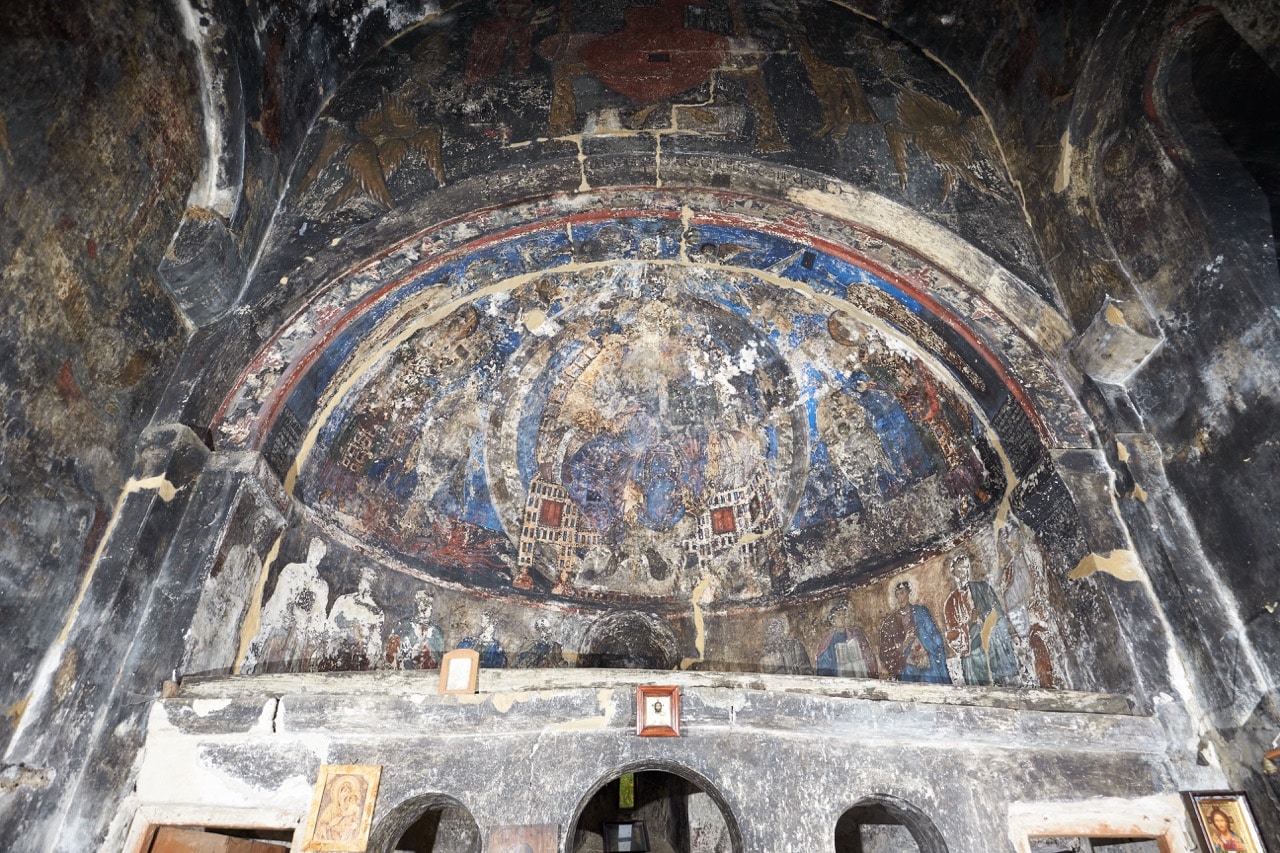
Chvabiani, Church of the Saviour, Saint Apostles, second tier of painting, 12th c.
The representation of the Deisis over the composition of Majestas Domini in the conch enhances the theological idea of the Second Coming. The composition comprises the figures of angels and the celestial host – the cherub and seraphim. This part of the painting, even under the later repainting, clearly dates to the 13th c.
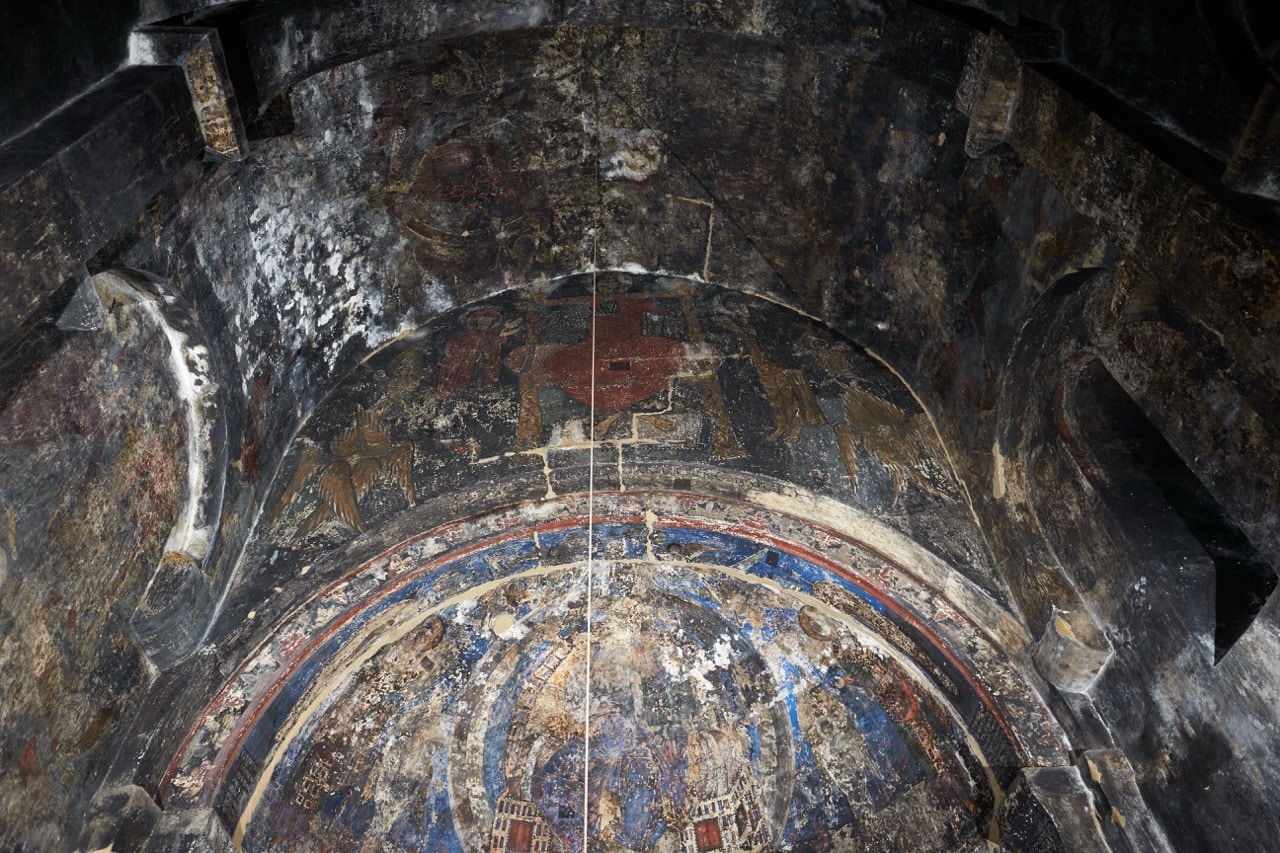
Chvabiani, Church of the Saviour, Deisis, 13th c.
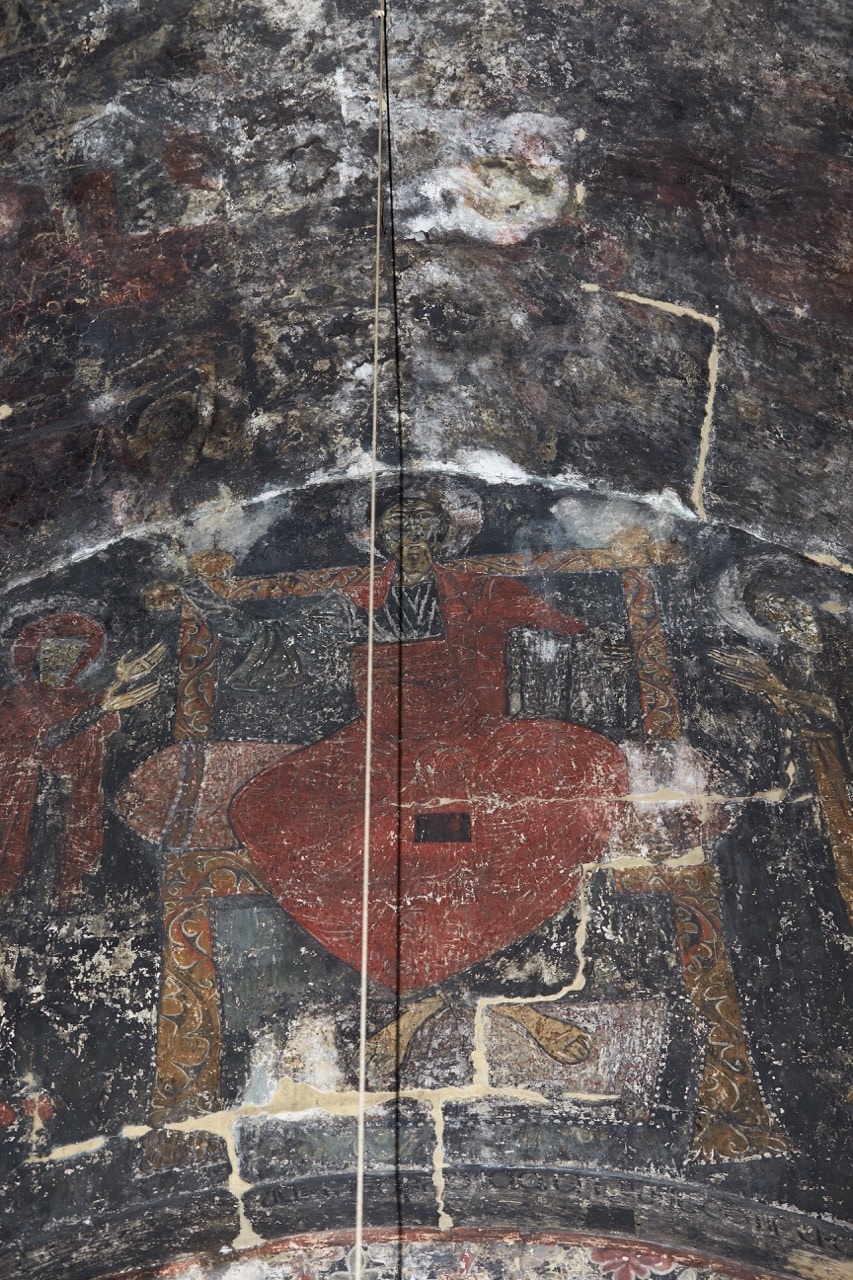
Chvabiani, Church of the Saviour, Deisis, fragment, 13th c.
Numerous inscriptions are preserved in old Georgian Asomtavruli script, and include the names of the commissioners of the church (Amrola, Michael, Lazare), and the period of execution: during the reign of King Bagrat III. This attests to the dating of the church and the sanctuary murals as works of the 10th c.
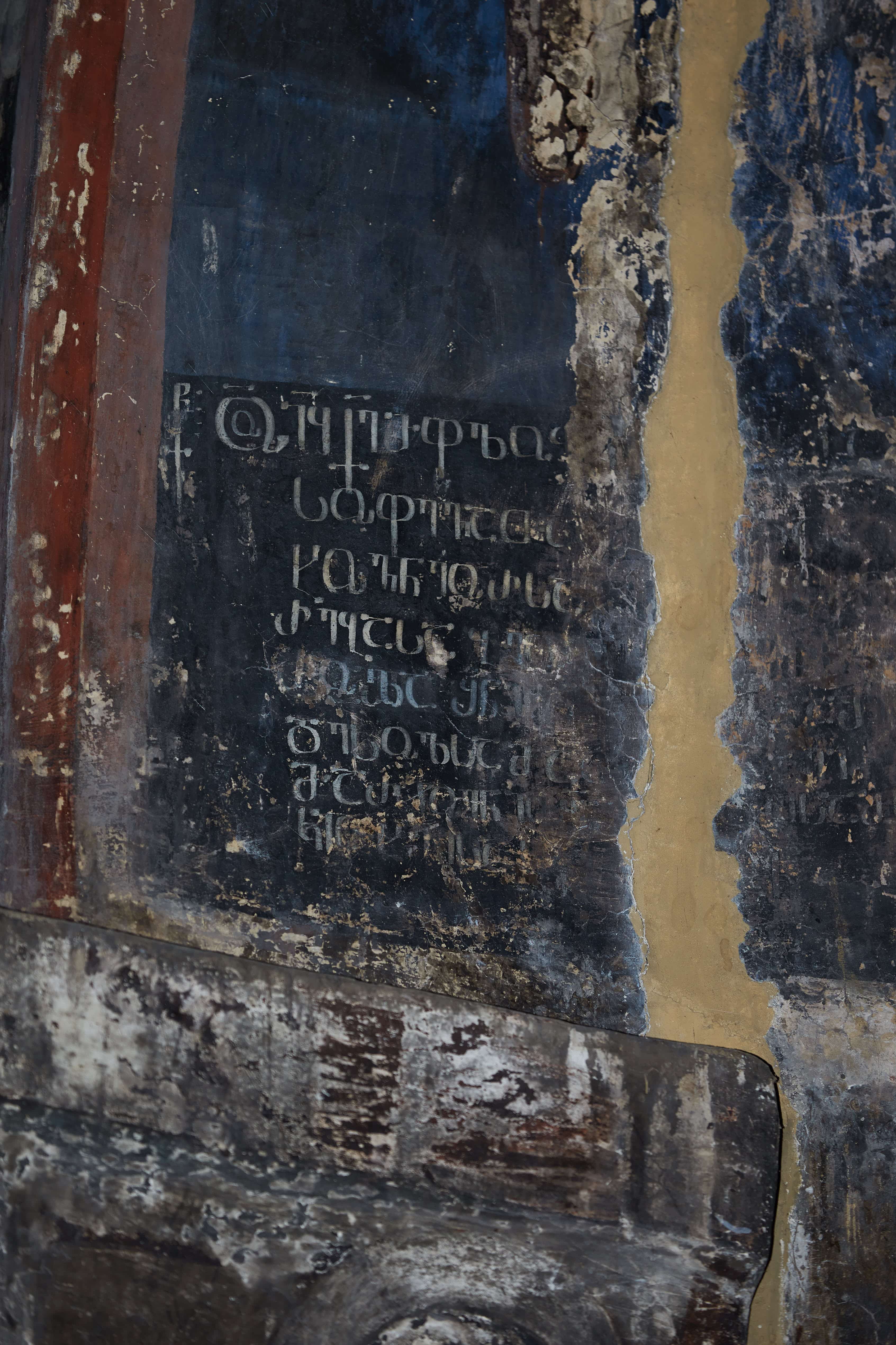
Chvabiani, Church of the Saviour, commissioners’ inscription on the pilaster of the sanctuary. 10th c.
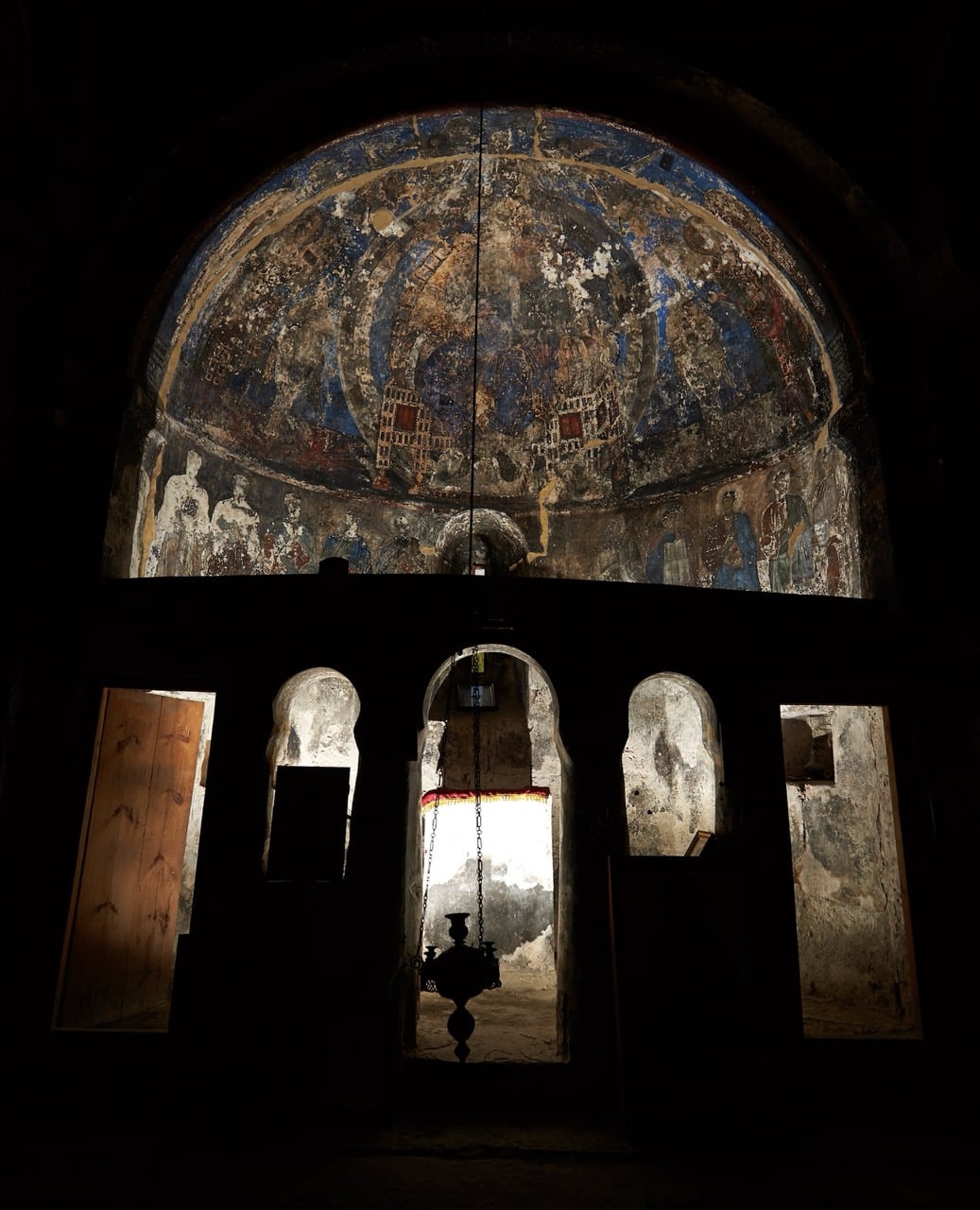
Chvabiani, Church of the Saviour, view towards sanctuary
Differing from other contemporary paintings in Svaneti, the Chvabiani frescos are distinguished by particularly refined drawing techniques, elegant proportions, and wonderful coloring, the likes of which cannot be seen elsewhere in Svanetian painting. This alone reveals the high mastership of the painter, and presumably his awareness of the leading trends of Georgian mural painting in the central regions.