




 Share this article
In 2024, the Dimitri Shevardnadze National Gallery hosted the exhibition "Beyond the Homeland." The project was initiated by the Chardin Gallery, which showcased the work of four Georgian émigré artists—Mikheil Bilanishvili, Felix Varlamishvili, Vera Pagava, and Vano Enukidze. Although each artist reached Paris by a different path in the early 20th century, France ultimately became their second homeland. Their lives and creative legacies diverged in many ways, yet the exhibition once again demonstrated how significantly émigré artists contributed to the development of Georgian modernism. Notably, each artist’s work has a unique link to Georgian culture. Several of the displayed pieces were shown to the public for the first time.
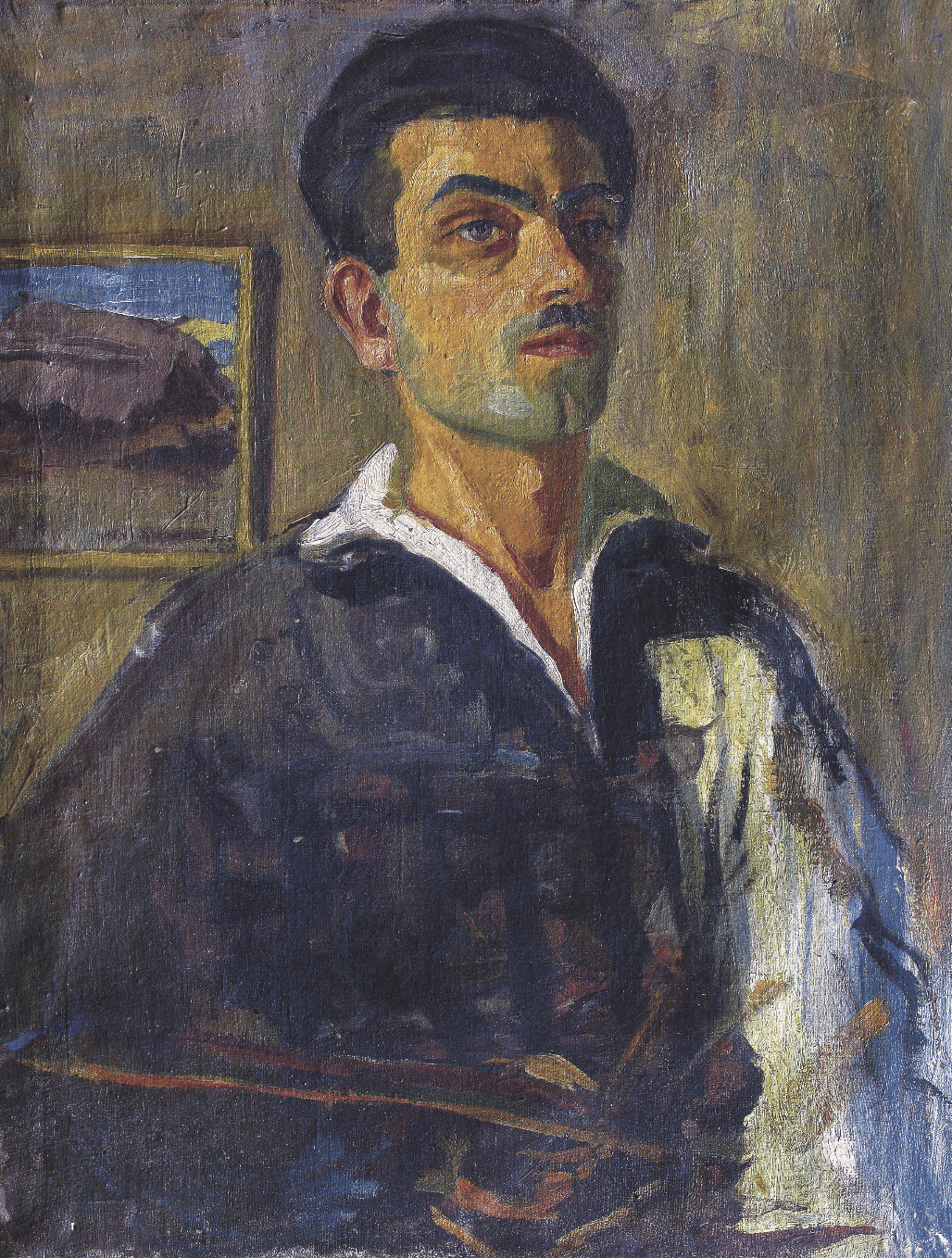
Self-Portrait. Oil on canvas. Art Museum of Georgia. 85x65 cm. 1920s
One such exhibit was Mikheil Bilanishvili's Still Life, which was discovered and purchased by a Georgian art collector in Paris just a few years ago. As a result, another important work by this lesser-known immigrant artist found its way to Georgia.
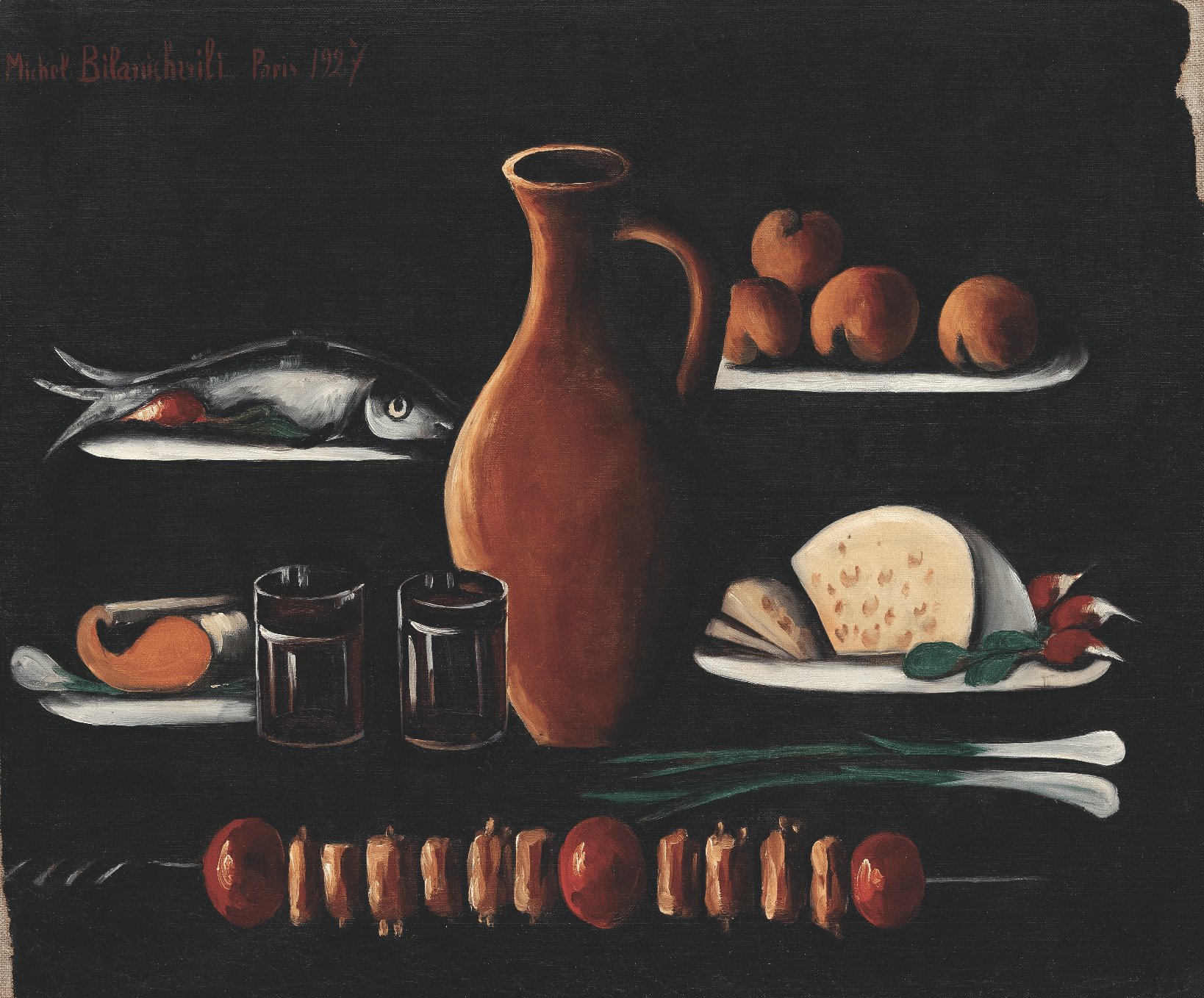
Georgian Still Life. Oil on canvas. Private collection. 60x72 cm. 1927
Mikheil Bilanishvili's artistic legacy, known to us today, comprises a total of 8 paintings and 12 graphic sketches. It is noteworthy that his portraits and landscapes from the Paris period, housed at the State Museum of Art, are of such high artistic quality that they have been featured in nearly every exhibition of contemporary Georgian painting. Consequently, Mikheil Bilanishvili’s name is well-known. However, little is known about his personal life.
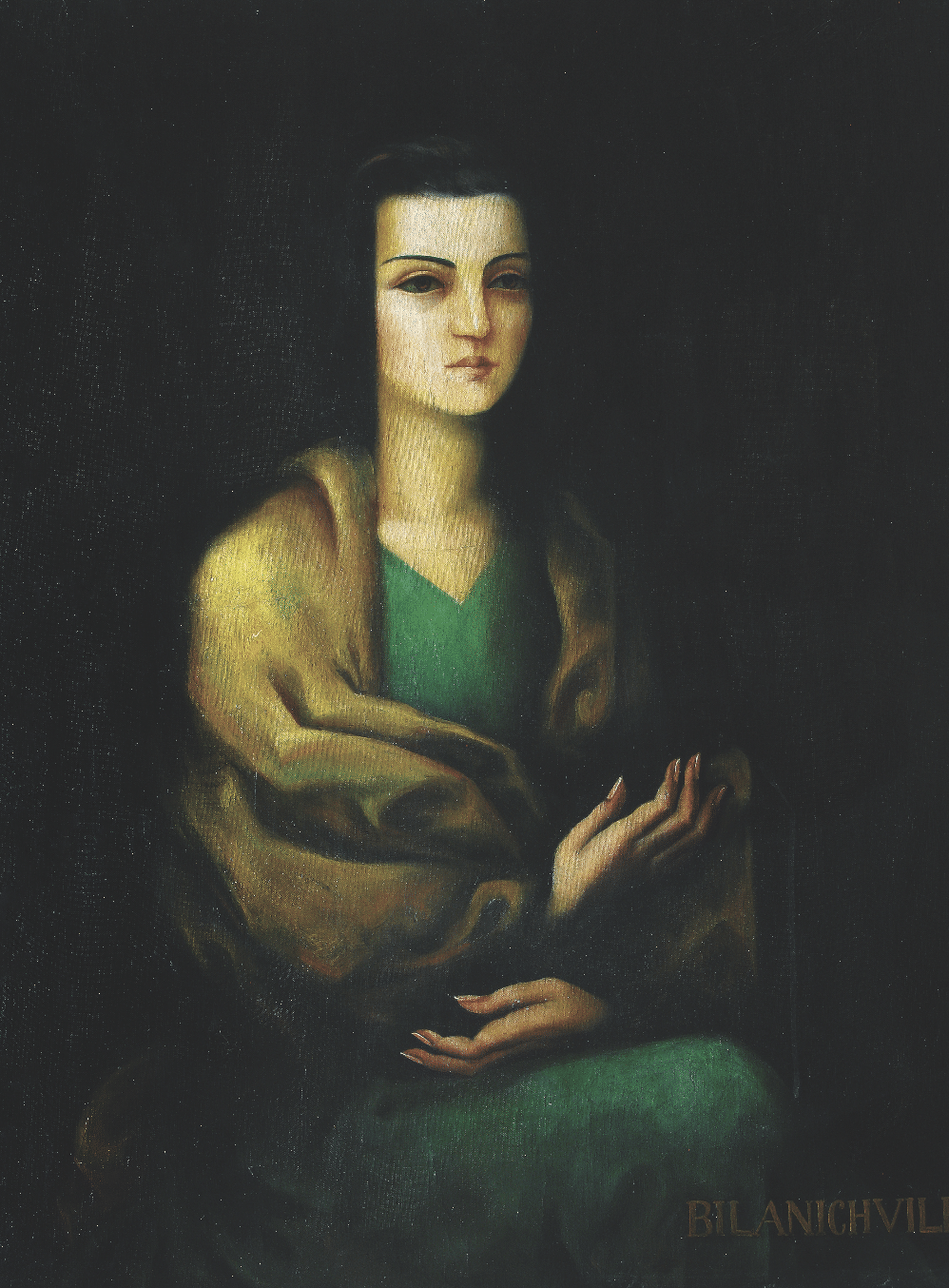
Portrait of a Georgian Woman. Oil on canvas. Art Museum of Georgia. 96x75 cm. 1929
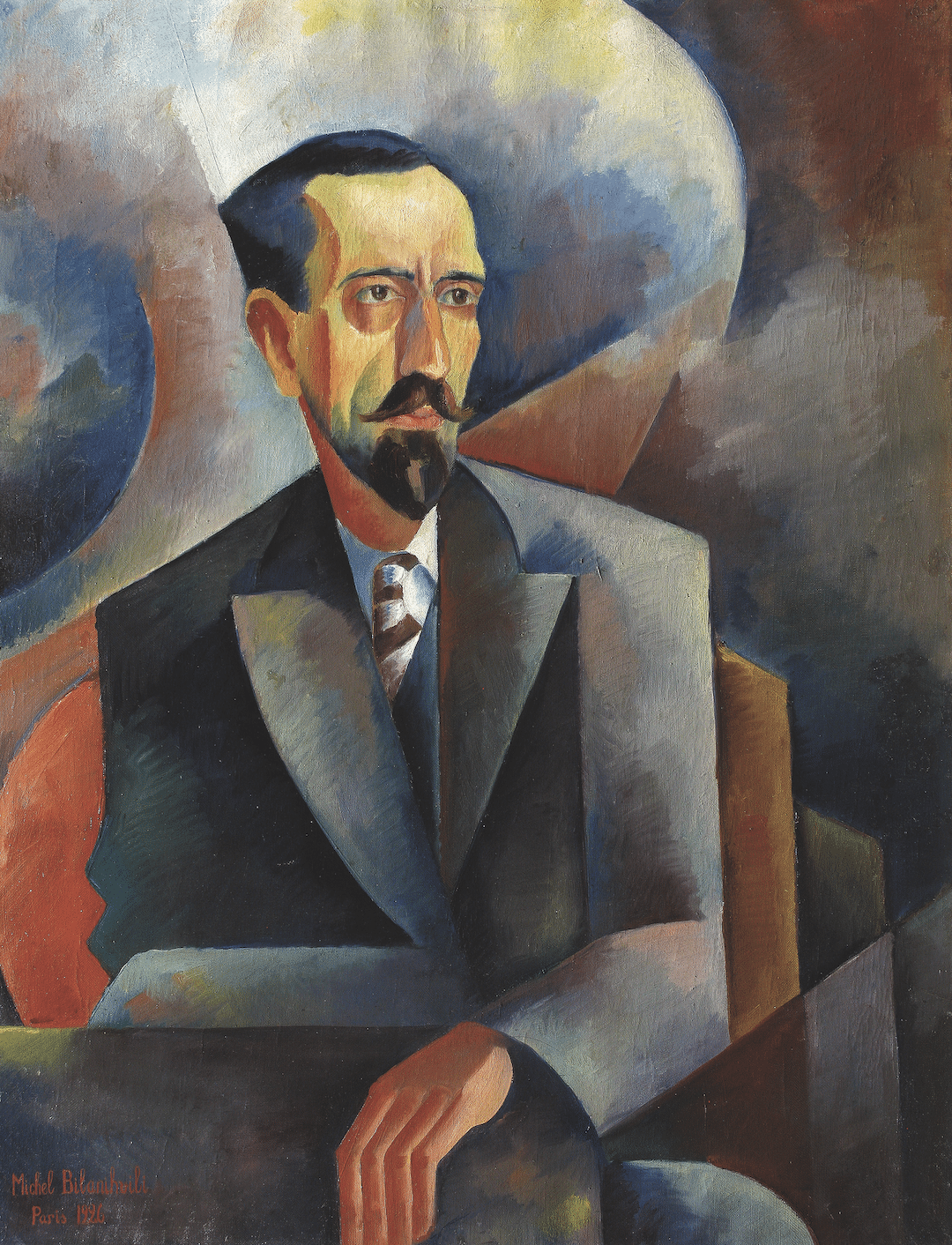
Gambarashvili’s Portrait. Oil on canvas. Art Museum of Georgia. 91x72 cm. 1926
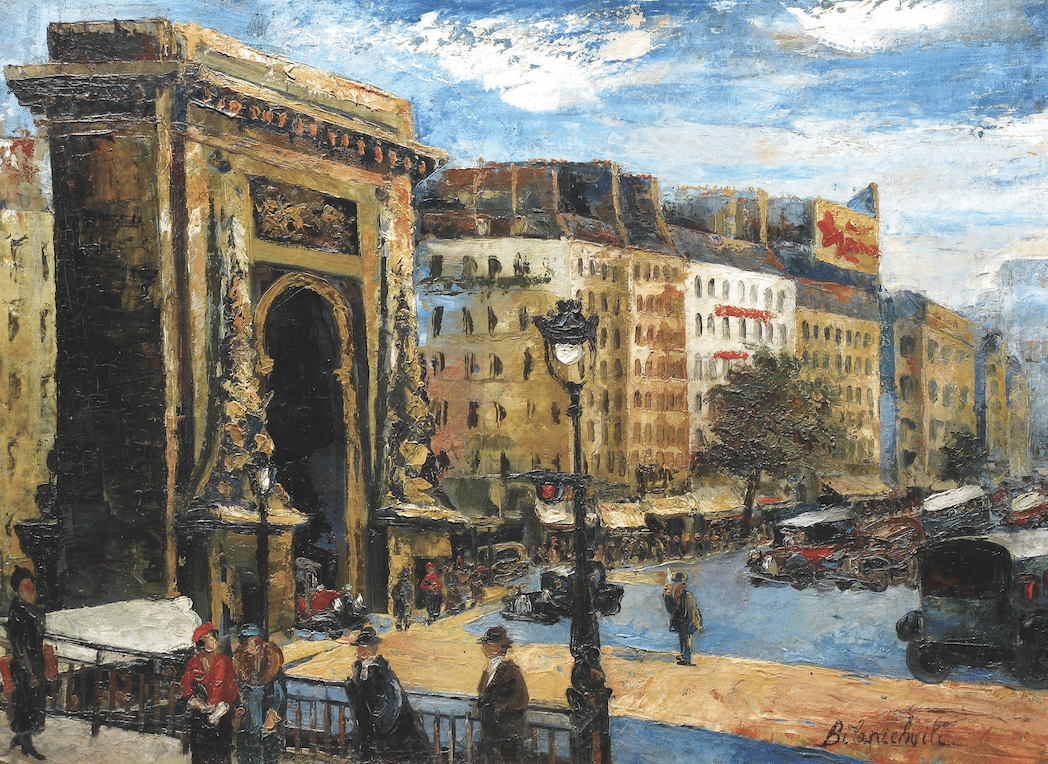
The Arc de Triomphe in Paris. Oil on canvas. Art Museum of Georgia. 61x77 cm. 1926
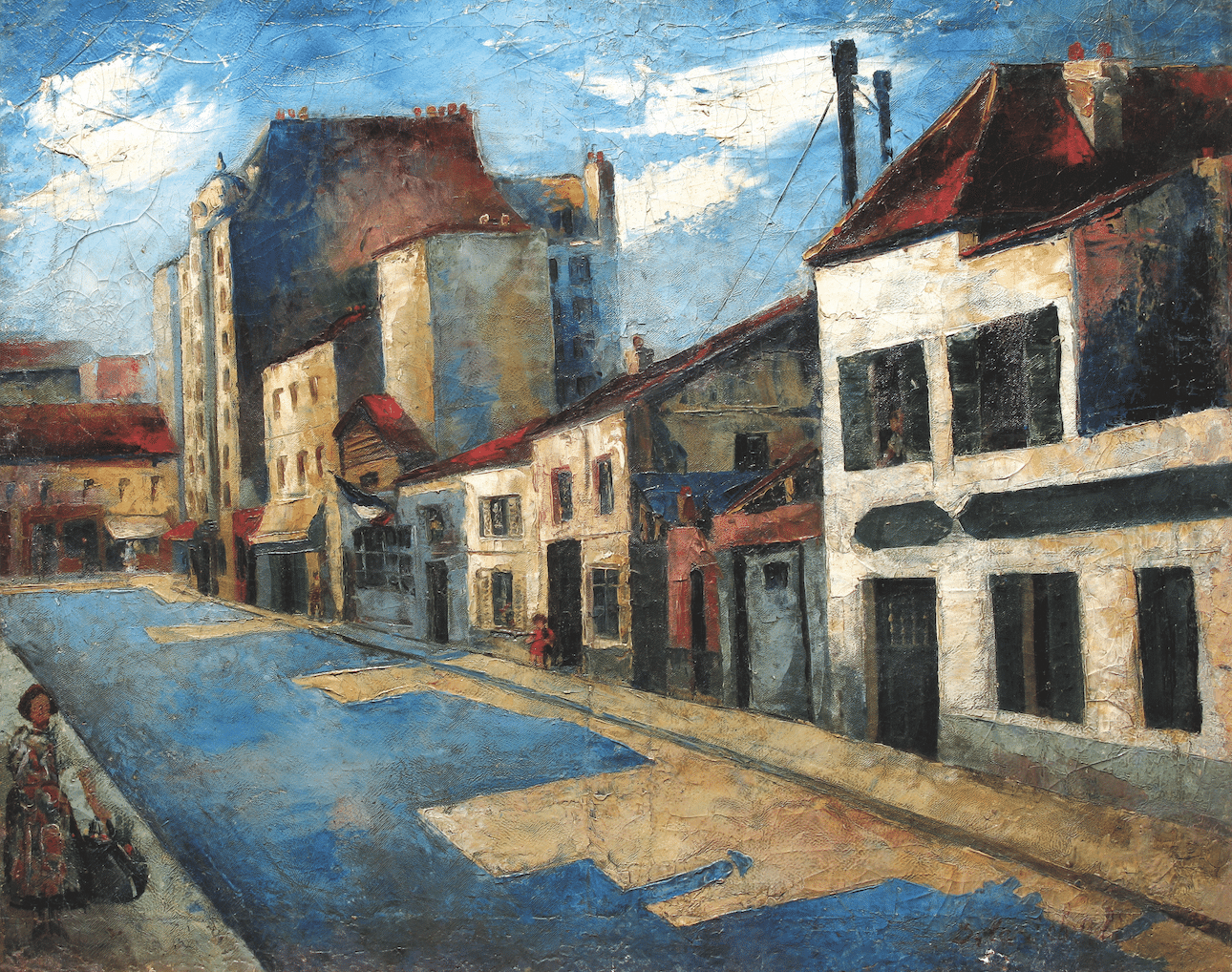
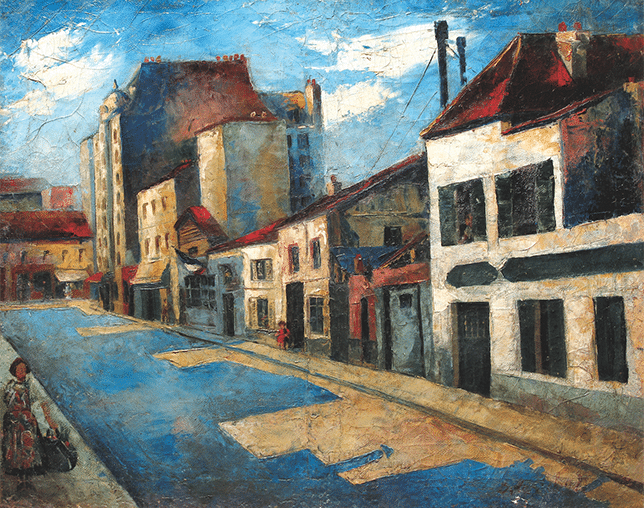
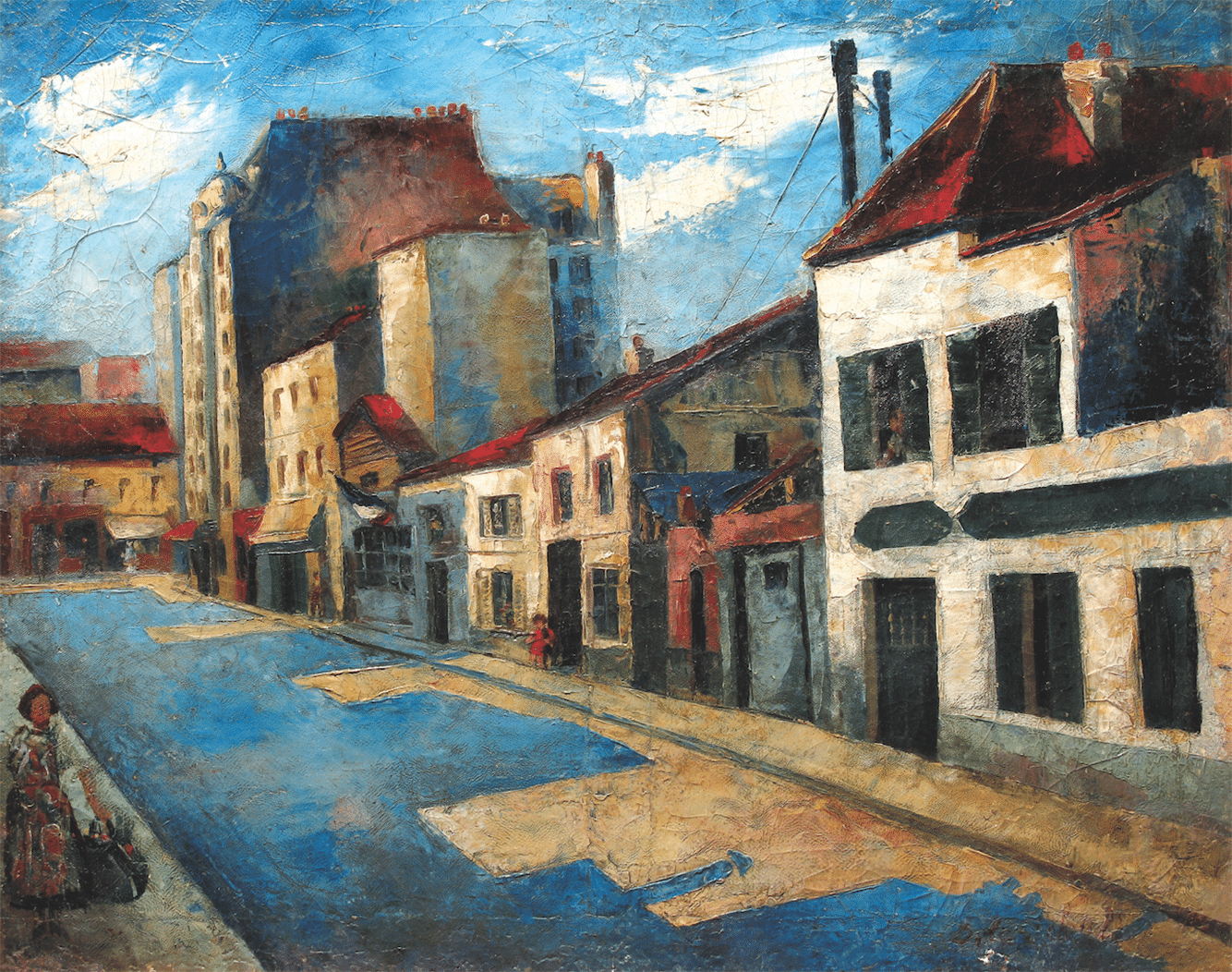
Paris Street. Oil on canvas. Art Museum of Georgia. 60x74 cm. 1925
In this article, we will discuss the newly discovered artifact—a still life by Bilanishvili—that functions as a direct reinterpretation of Niko Pirosmanashvili’s work, particularly his still life paintings
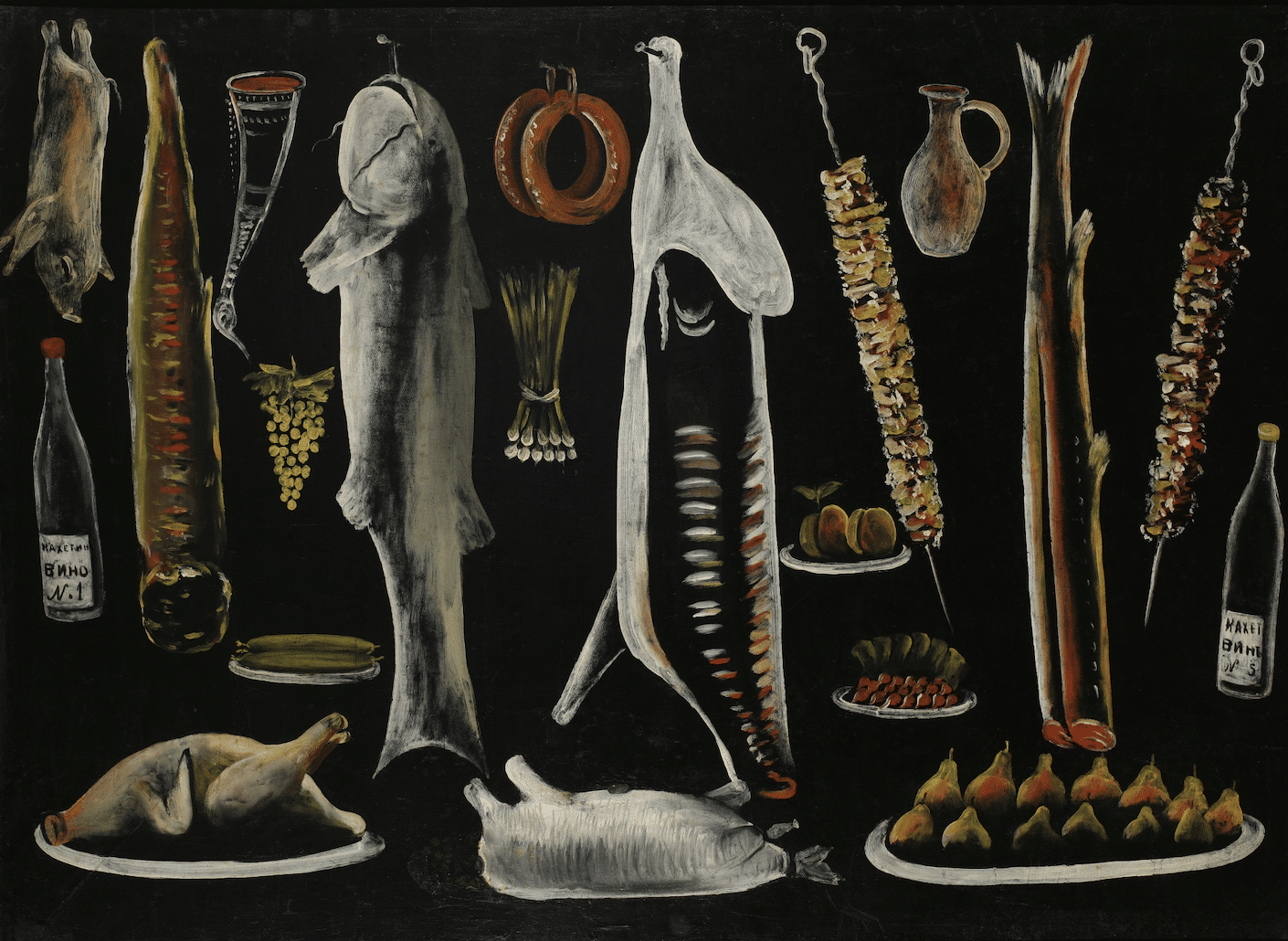
Niko Pirosmanashvili. Still Life. Oil on oilcloth. 102x135 cm.
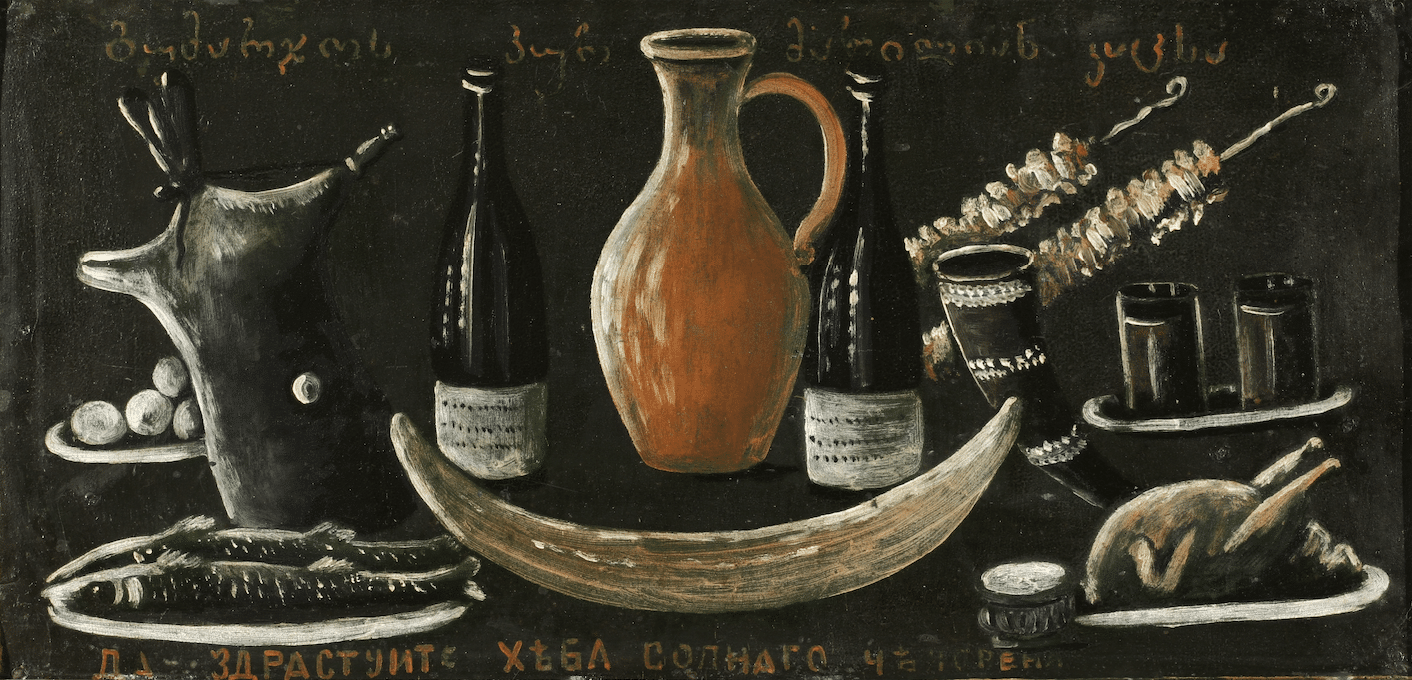
Niko Pirosmanashvili. Still Life. Oil on oilcloth. 36x73 cm
Niko Pirosmanashvili (Pirosmani), the first Georgian modernist artist and a brilliant and self-educated painter, passed away in 1918. Today, he is internationally renowned, and has become a symbol of Georgian cultural identity. However, during his lifetime, he remained largely unnoticed. Georgian artists discovered his work only shortly before his death, and even in the 1920s, evaluations of Niko Pirosmani’s art varied widely.
Mikheil Bilanishvili, who left Georgia at the age of 23, was an ardent admirer of Pirosmani’s talent. In 1929, he published an article in a Georgian magazine issued in Paris titled “The Principles of Art and Niko Pirosmanashvili.” The author’s main argument is that the principles of high art are eternal across all times and regions, and Niko Pirosmanashvili’s art is a prime example of this. “…Niko created his compositions thanks to his and Georgian people’s genius. So where from and how did these highest principles appear in our people and in their representative — Niko Pirosmanashvili?” Bilanishvili wrote (Kavkasioni, 1929, Paris).
Two years before the article was published, Mikheil Bilanishvili created the aforementioned still life in Paris. The work reveals a profound understanding of Niko Pirosmani’s artistic world. It is not a mere imitation, but stands as an excellent example of a creative dialogue between the two artists.
When viewing Mikheil Bilanishvili’s still life, the first impression is the clear parallel with Pirosmani’s laconic style—an immediate association with his distinctive artistic handwriting. Several expressive techniques closely align with Pirosmani’s approach: the black pictorial plane; the conditional arrangement of objects that ignores the table or any horizontal surface; the clearly defined and balanced composition with a central focus (the clay jug); the symmetrically arranged elements (white dishes with food); and the distinctive way of depicting the dishes (oval shapes marked on the front with a horizontal stripe).
The manner of depicting objects differs, however—in Bilanishvili’s work showing greater accuracy in form and a higher sense of volumetric sculpting. Mikheil Bilanishvili’s distinctive style is particularly evident in the color palette, characterized by rich, contrasting, and intense hues.
As a result, both Niko Pirosmani’s artistic language and the individuality of Bilanishvili’s still life are clearly visible. The artist’s undeniable talent is demonstrated by his ability to create a new, artistically valuable interpretation using similar expressive techniques. The still life, dated 1927, significantly enhances our understanding of the artist.
Mikheil Bilanishvili was one of those who achieved creative independence despite the difficulties encountered during emigration. His fate was particularly tragic: after spending 10 years in emigration, the artist died at the age of 33. To this day, the most comprehensive source of information about his life remains the work of the renowned philologist and researcher Guram Sharadze ("Under a Foreign Sky" -1993, Tbilisi, Merani Publishing House), according to whom Bilanishvili had to work in a chemical factory in Paris, where his health deteriorated and he contracted tuberculosis. During this time, he was supported by his friend, the Tbilisi-born artist Luka Khitarishvili, who had also moved to Paris, and who returned to Georgia in 1935. It is said that Khitarishvili was bringing Bilanishvili’s artworks back to their homeland, but lost the luggage on the way. Sharadze also mentioned another sad fact: Bilanishvili sent photographs of his works to his family, which were then buried with his mother. In this way, much information about the artist’s legacy was lost.
Before emigrating, Mikheil Bilanishvili spent two years studying at the Tbilisi Academy of Arts, where he was taught by notable artists such as Gigo Gabashvili, Iakob Nikoladze, and Eugene Lansere. In 1924, as a distinguished student, he earned a scholarship to continue his studies in Paris. It seems that Bilanishvili began exhibiting his works in 1927, when he participated in the Salon des Indépendants in Paris, which showcased two of his works.

Exhibition catalogue, cover. 1927

Mikheil Bilanishvili on the list of exhibition participants
A notable publication about this exhibition appeared in the French press. The March 10, 1927 issue of the magazine Revue du Vrai et du Beau was almost entirely dedicated to a review of the exhibition, and featured a detailed analysis and evaluations of the participating artists. On the very first page, there is an article about Mikheil Bilanishvili, and, importantly, it includes a photograph of one of his works, Portrait of a Young Woman.
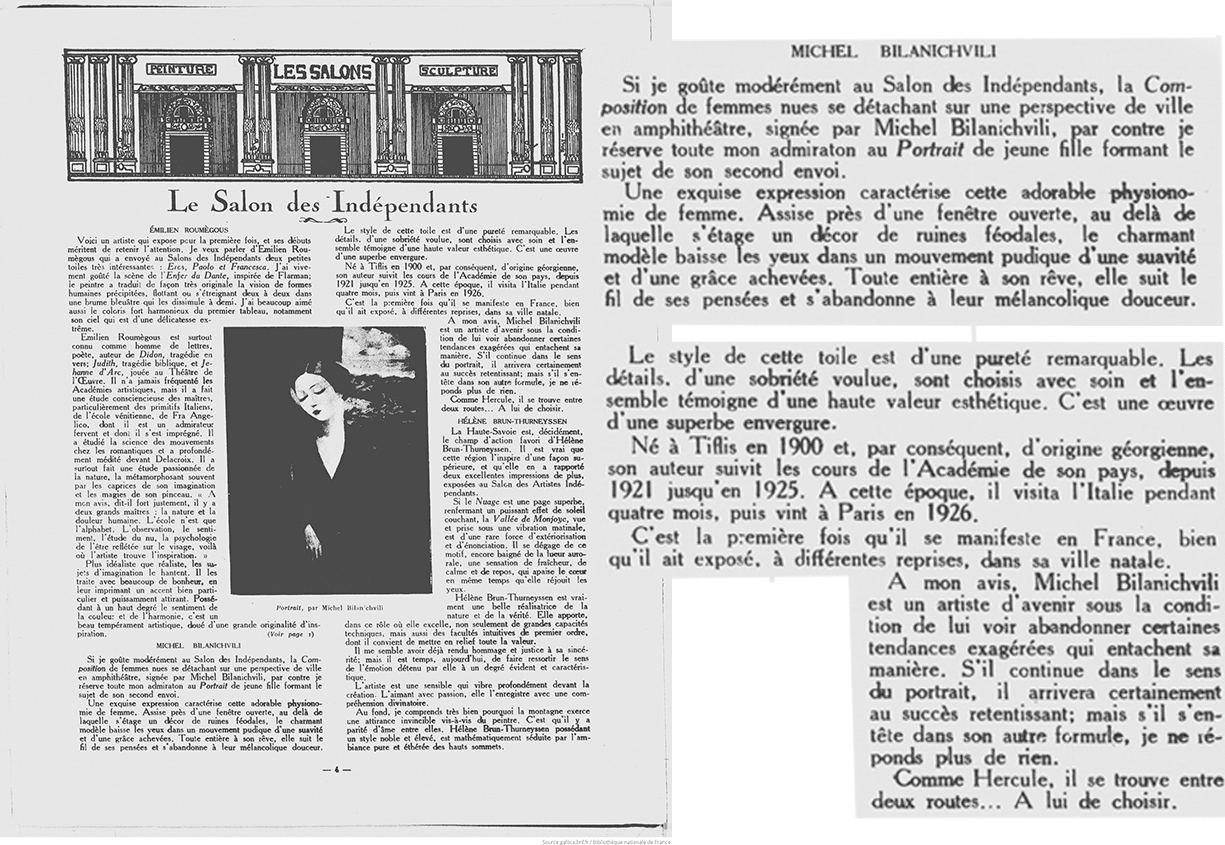
An article in magazine Revue du Vrai et du Beau, excerpt dedicated to Mikheil Bilanishvili and his work
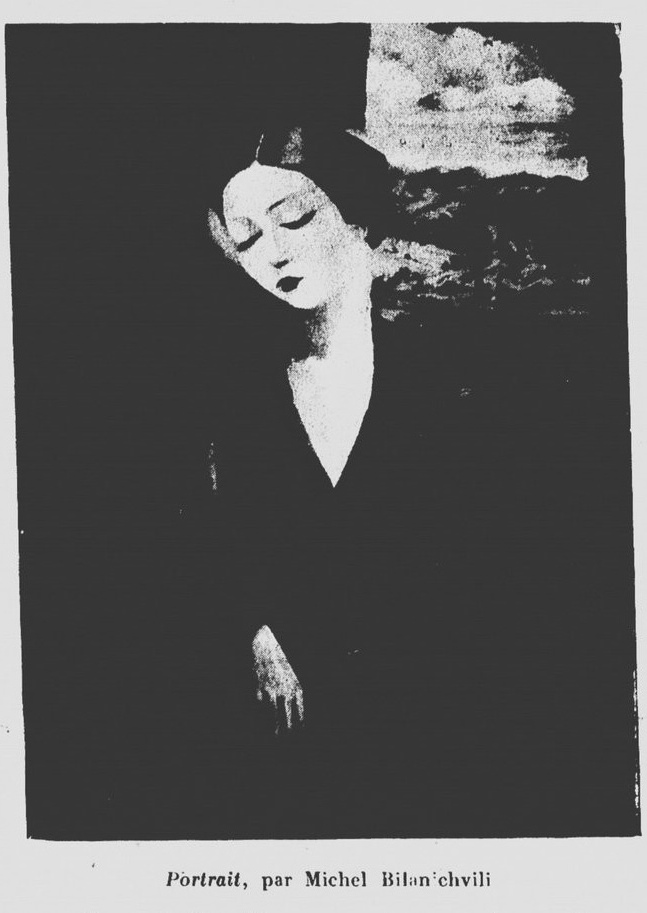
Mikheil Bilanishvili. Portrait of a Young Woman. Photograph from the magazine
This fact is particularly significant, as it reveals another previously unknown canvas. The foreign author enthusiastically praises the portrait, and highlights the great potential of the young Georgian artist. According to the author, the second work—a composition featuring female figures (les femmes nues)—evoked “moderate sympathy” in him, and he encouraged the artist to continue working in the portrait genre. He also predicted a very successful future for Bilanishvili in this field.
It is also worth noting that the artist’s name appears again in the exhibition catalogs of the Salon des Indépendants in both 1929 and 1931.
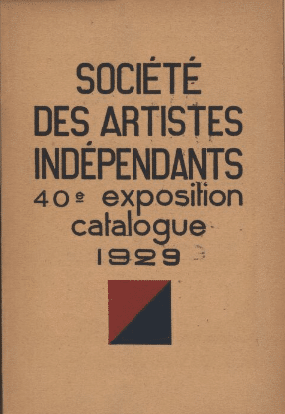
Exhibition catalogue, cover. 1929

Page from the catalogue
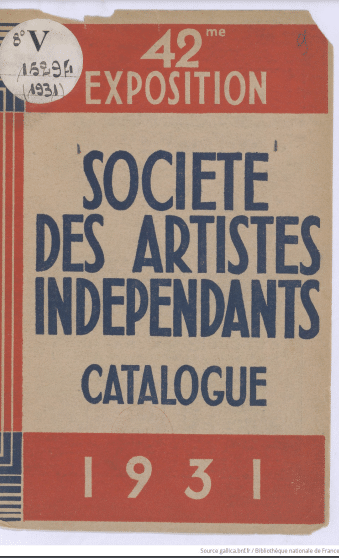
Exhibition catalogue, cover. 1931

Page from the catalogue
Further information about the artist, who remained in illegal emigration due to well-known circumstances, is limited. However, there is significant interest in his work, and we hope that this gap will be filled in the future.
Six of the eight paintings in Mikheil Bilanishvili’s legacy date from his time in Paris. All are high-quality works, which explain the interest the emerging Georgian artist received in the French press of the time. Bilanishvili created equally compelling pieces across the genres of landscape, portrait, and still life. For some of his compositions, no visual records are currently available. Among his existing paintings, we would highlight three that are not only valuable examples of modernist art, but which also distinctly bear Mikheil Bilanishvili’s unique artistic style, rooted in Georgian national culture. These are: 1) Portrait of a Georgian Woman; 2) Georgian Still Life; and 3) the portrait exhibited at the 1927 Salon des Indépendants in Paris, of which only a newspaper photograph remains.