




 Share this article
Tusheti is located in the far northeastern corner of Georgia. Its high-mountainous communities, which have sprung up on either side of the Caucasus Range, are renowned for their distinctive architecture, traditional crafts, folklore, and traditions, as well as their unique terrain. Tusheti is a border region, sharing boundaries with the Kakheti Plain to the south, Chechnya-Ingushetia to the north, Pshav-Khevsureti to the west, and Dagestan to the east.
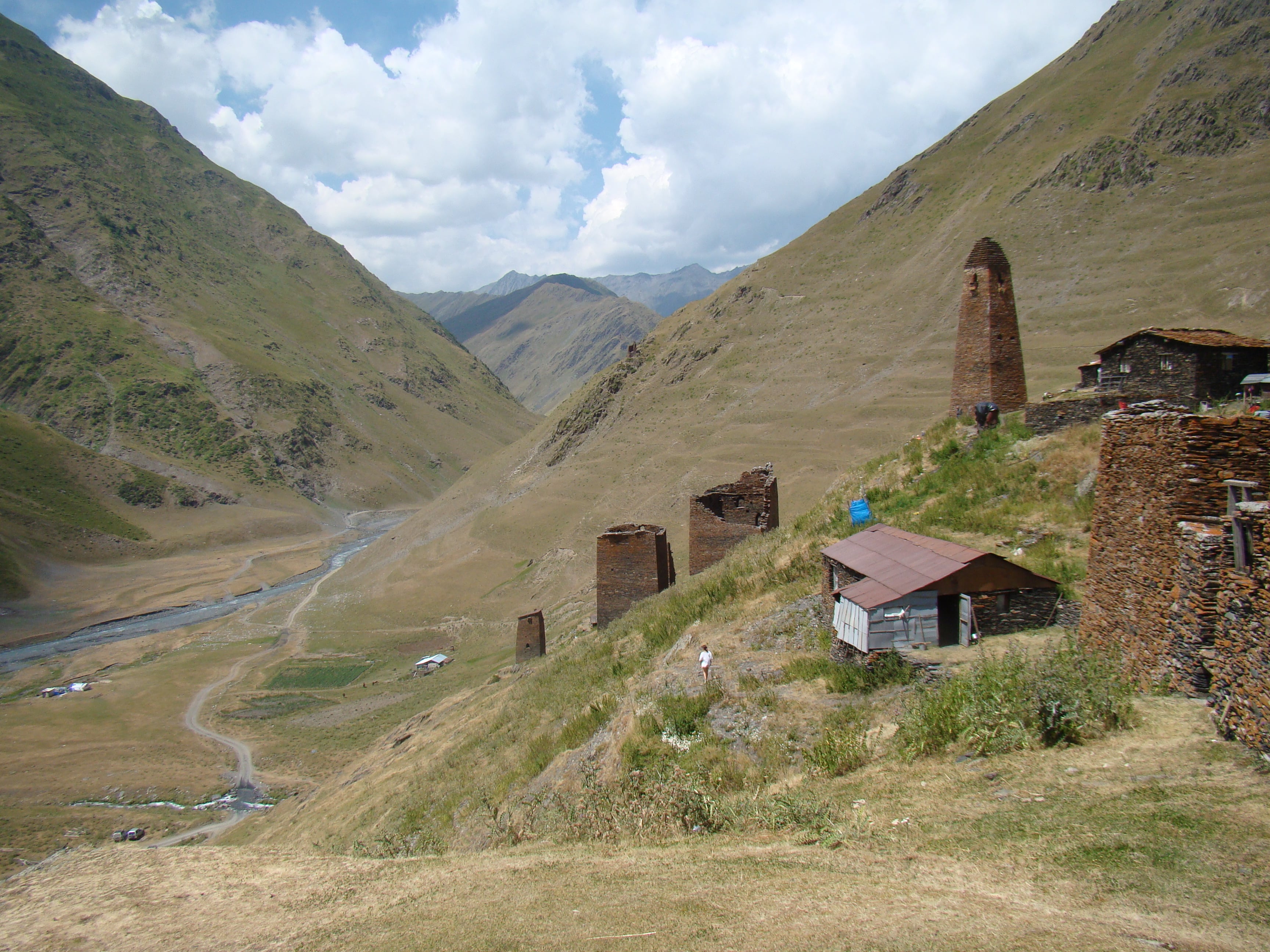
View of Parsma Village
Parsma, one of the largest communities in northern Tusheti (Pirikita) is positioned near the Chechen border. Due to its strategic location, Parsma was often the first point of contact, both in times of conflict and in times of peace. Historically, Chechens would raid Parsma during hostilities, but in peaceful times, they used the same route to trade goods. This pathway remains a vital link even today.
Parsma is perched on the northern side of the Alazani River, built atop a rocky slop above the highway. Archival data from the 17th century places the village of Parsma at the center of northern (Pirikita) Tusheti.The special importance of Parsma is also highlighted by the historian Vakhushti of Kartli, who referred to Northern Tusheti as “Parsma’s Tusheti,” and the Tushetians as “good warriors, courageous, strong, and successful horsemen.”
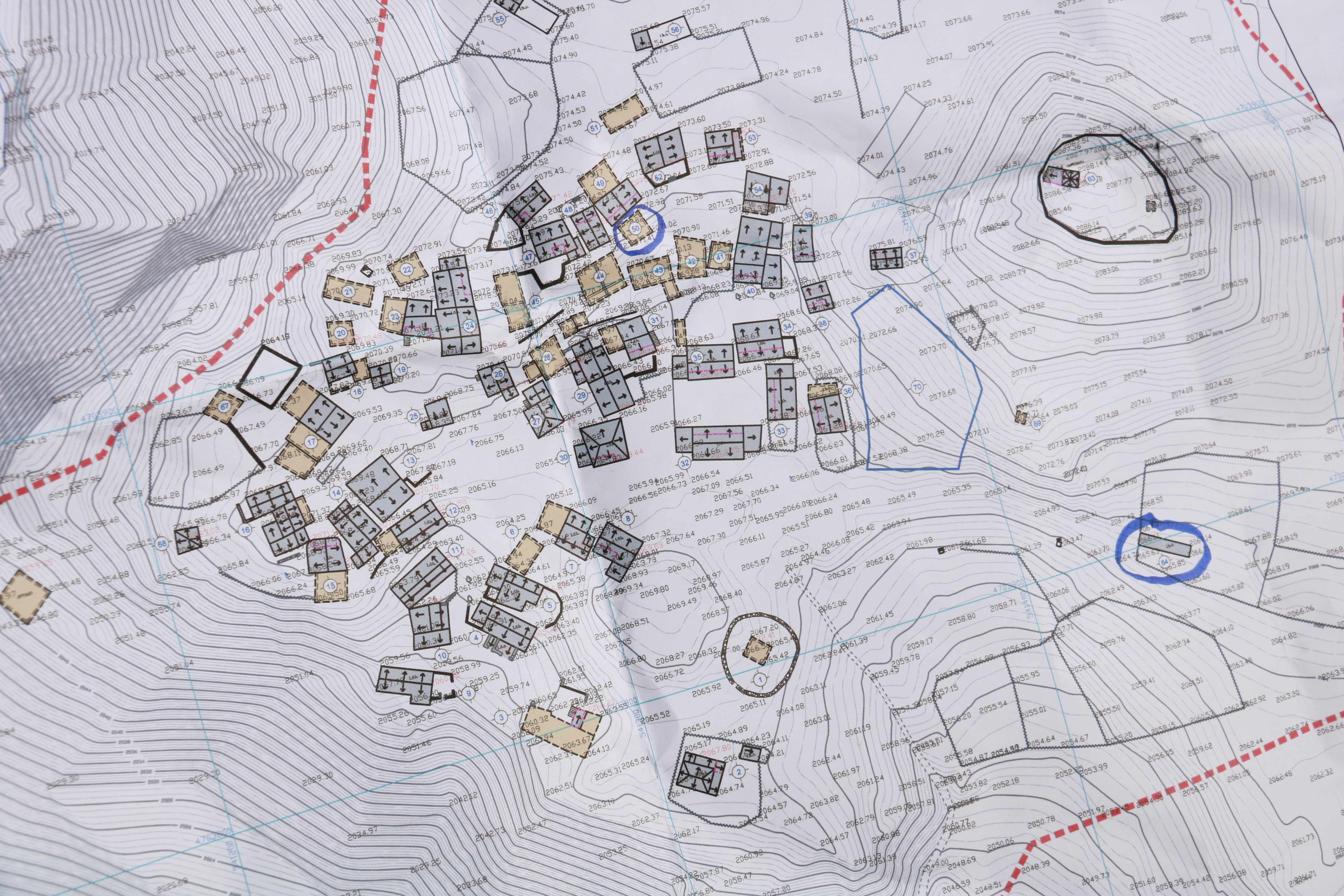
Parsma Village - General Plan
The settlement
of Parsma is not visible from the road. However, a complex of defensive buildings,
clustered tightly along the upper slope, signals its presence. These towers are
built at varying elevations depending on the terrain and, from a distance, resemble
a large, unified fortress. At the eastern peak of the rocky ridge stands a
combat tower, distinct with its elegant stonework and pyramidal roof. According
to folklore, the Parsma Tower was erected by a Chechen (Kist) from Bauli, and
his son. The remainder of the buildings in Parsma were built by the Tushetians.
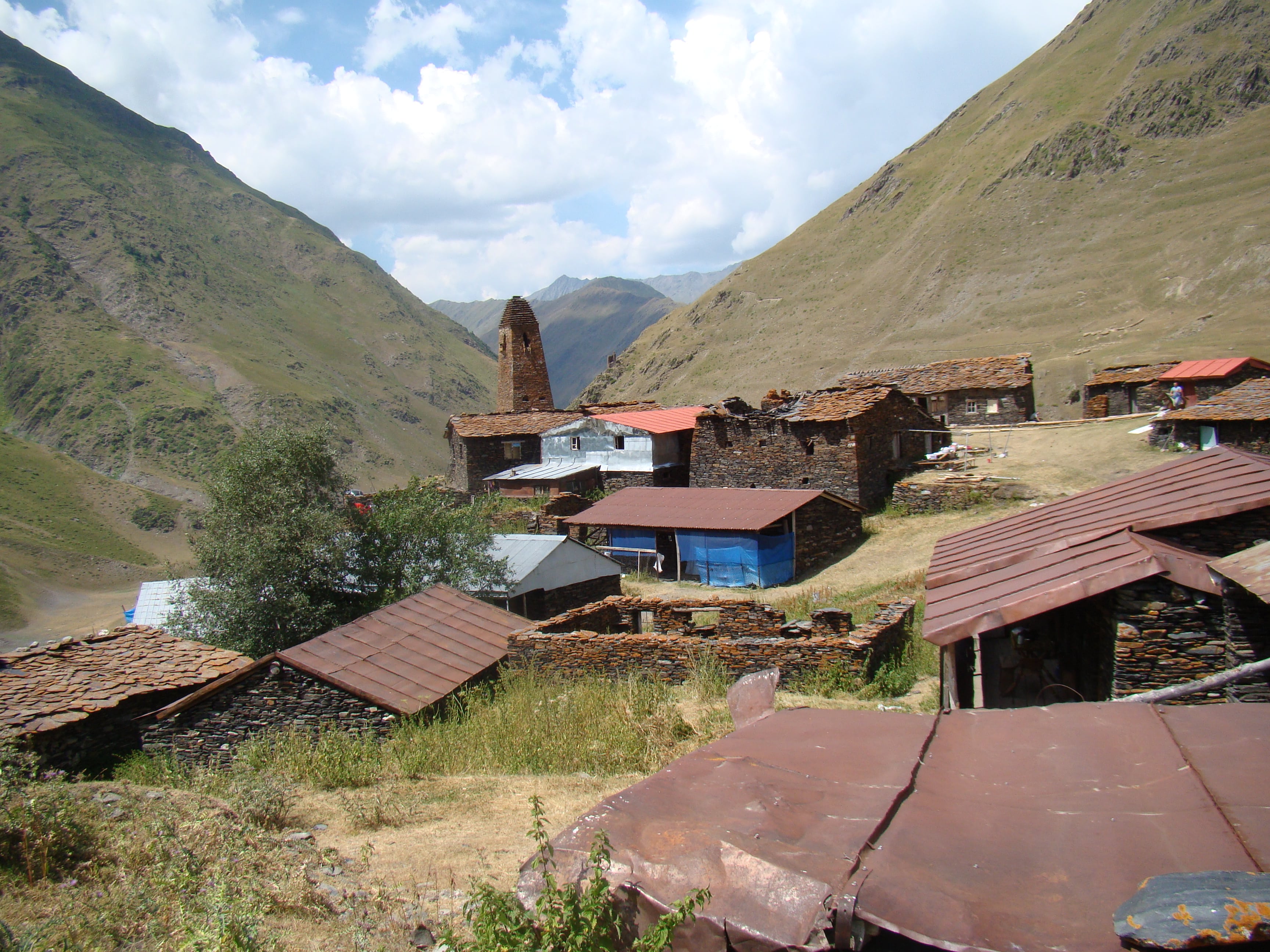
The village of Parsma today.
The settlement of Parsma is built on a vast, mountain-top plateau. Many of its defensive strongholds and towers today lay in ruins. During the late 19th century, balconies were added to the lower levels of existing towers, and the village underwent a significant transformation. Today, it is largely composed of simple one- and two-story houses with wooden balconies: a form that has remained consistent since that period. This is how Parsma appeared towards the end of the nineteenth century, as seen in an etching made by German traveler and alpinist, explorer-geographer Gottfried Merzbacher, which shows a part of the village center. At the time, Parsma was more densely populated and developed than it is today; yet back then, too, the battle tower was its sole vertical structure.
What truly sets Parsma apart from other Tushetian
communities is the extraordinary number of shrines. No other Tusheti community is
home to such a concentration of holy places. These shrines, positioned like a
protective fence, encircle the village from the northeast and east, forming a
sacred boundary.
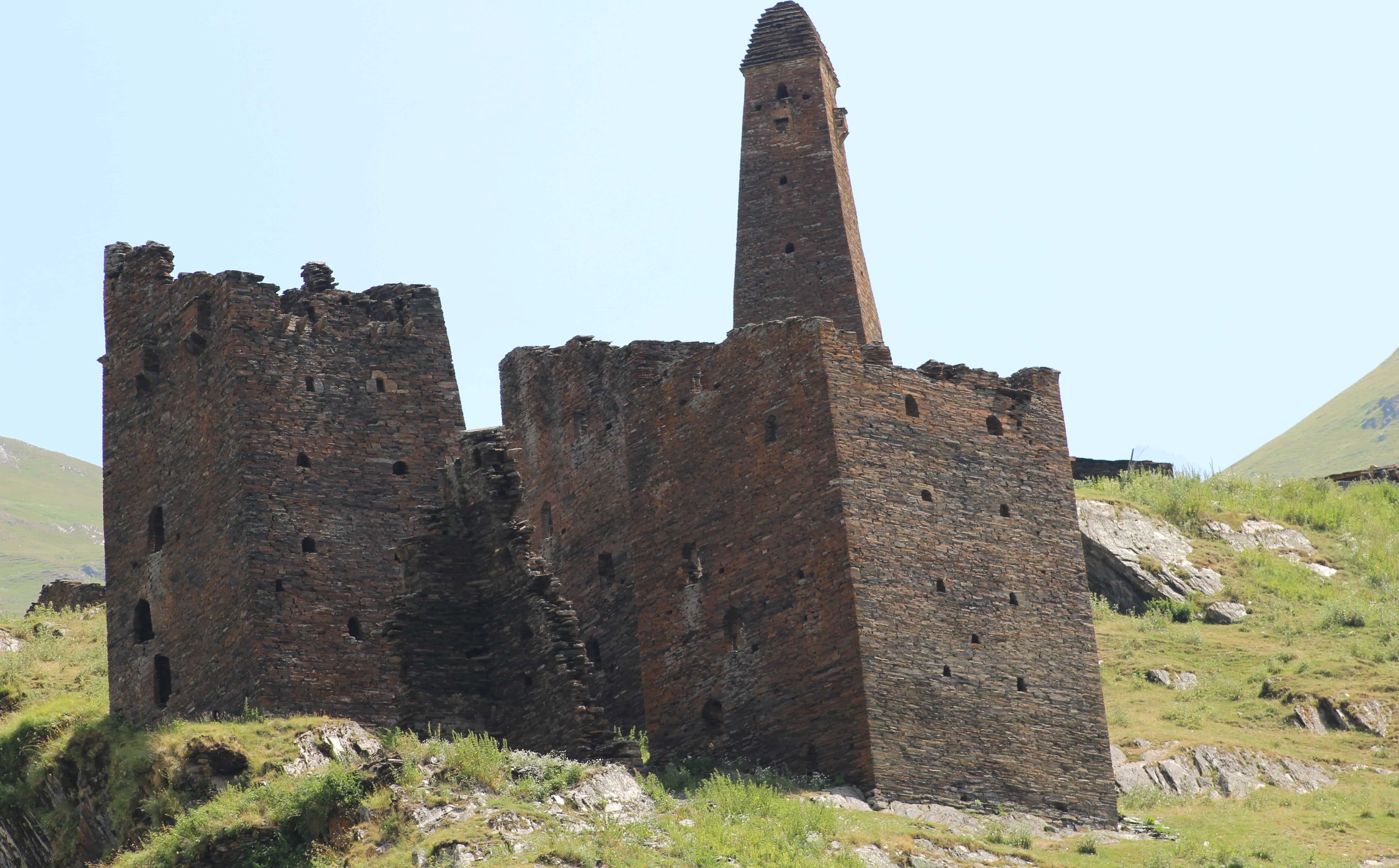
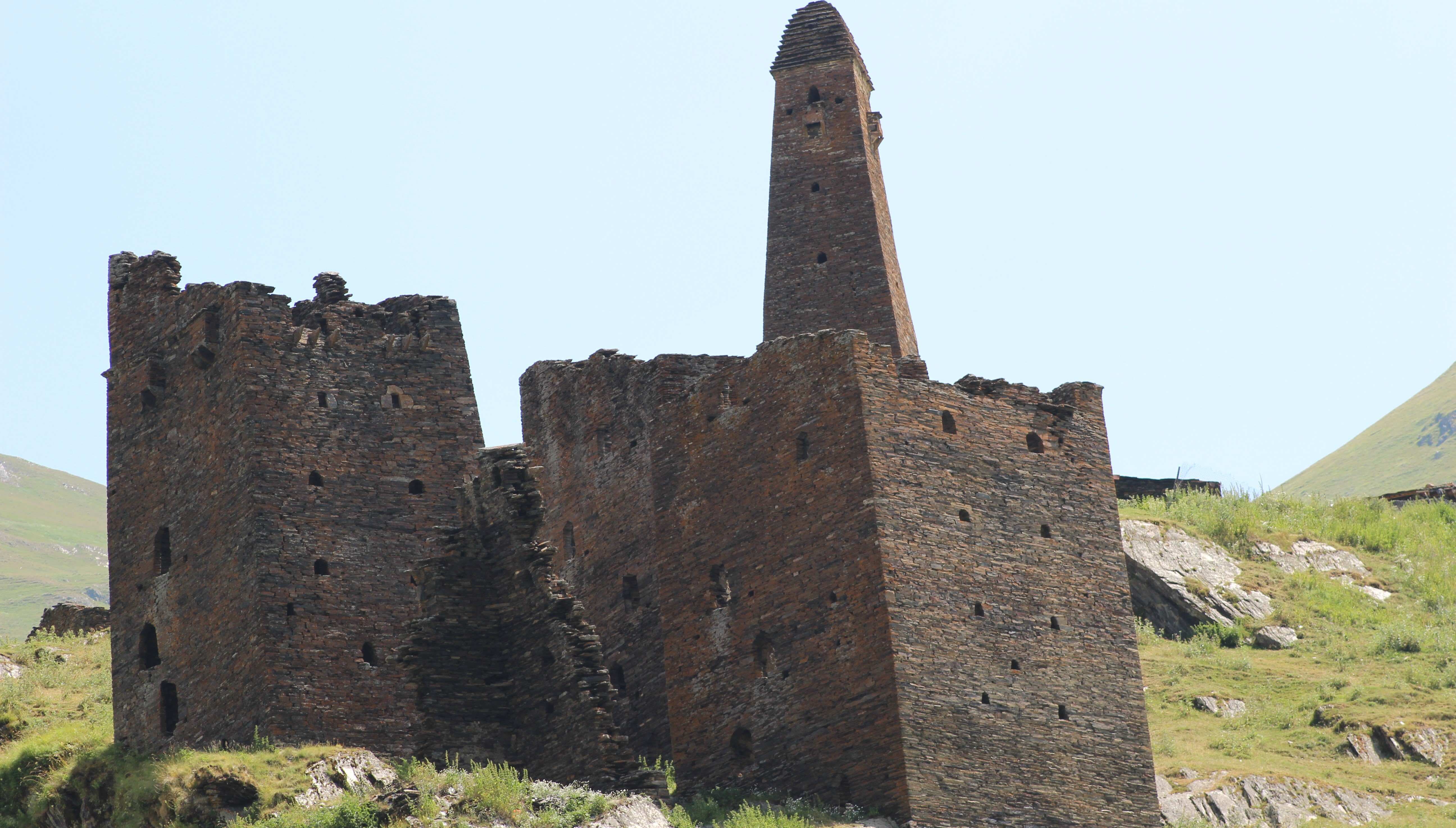
Parsma, a group of castles on a mountainside.
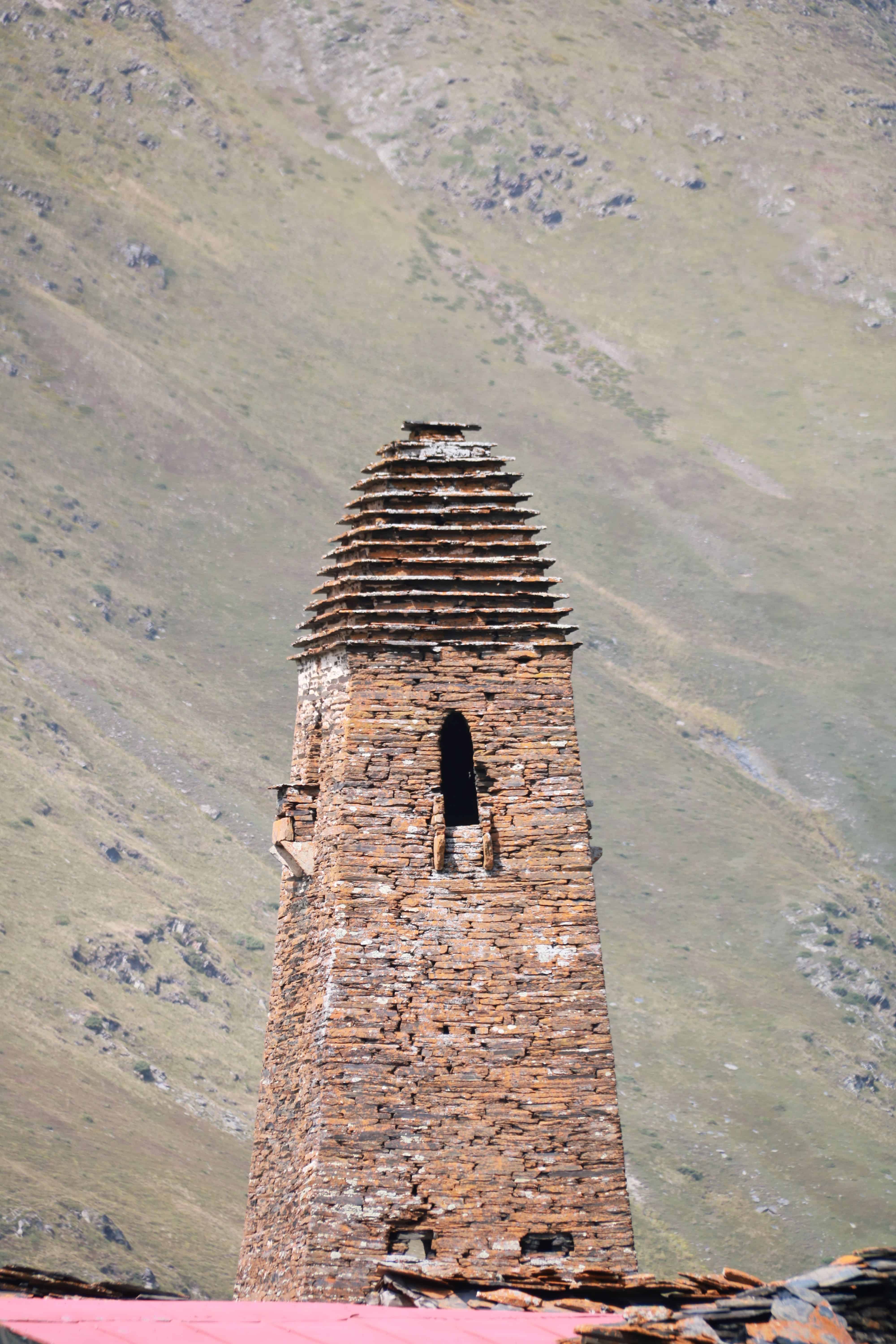
Parsma, pyramidal finish of a battle tower.
Three churches—St. George, St. Nino, and St. Theodore—make up the eastern boundary of the community. There are three shrines, and they are all somewhat modest in size. The most important of the existing shrines is the icon of St. George, placed on a small hill at the northeastern edge of the settlement. Between this shrine and the village lies the “Janago” cemetery, beside which stands a rectangular slate-built ecclesia. Behind it, on a nearby embankment, the main village church once stood. A square-shaped, slate symbol called "Sagintskaro" stands to the northeast of the settlement. The tower-shrine of St. Nino, its roof now collapsed, is situated on a high hill to the south of the St. George shrine. Towards the village's south-eastern boundary is the chapel of St. Theodore, also roofless. Notably, the chapel's wall features a fish-shaped stone.
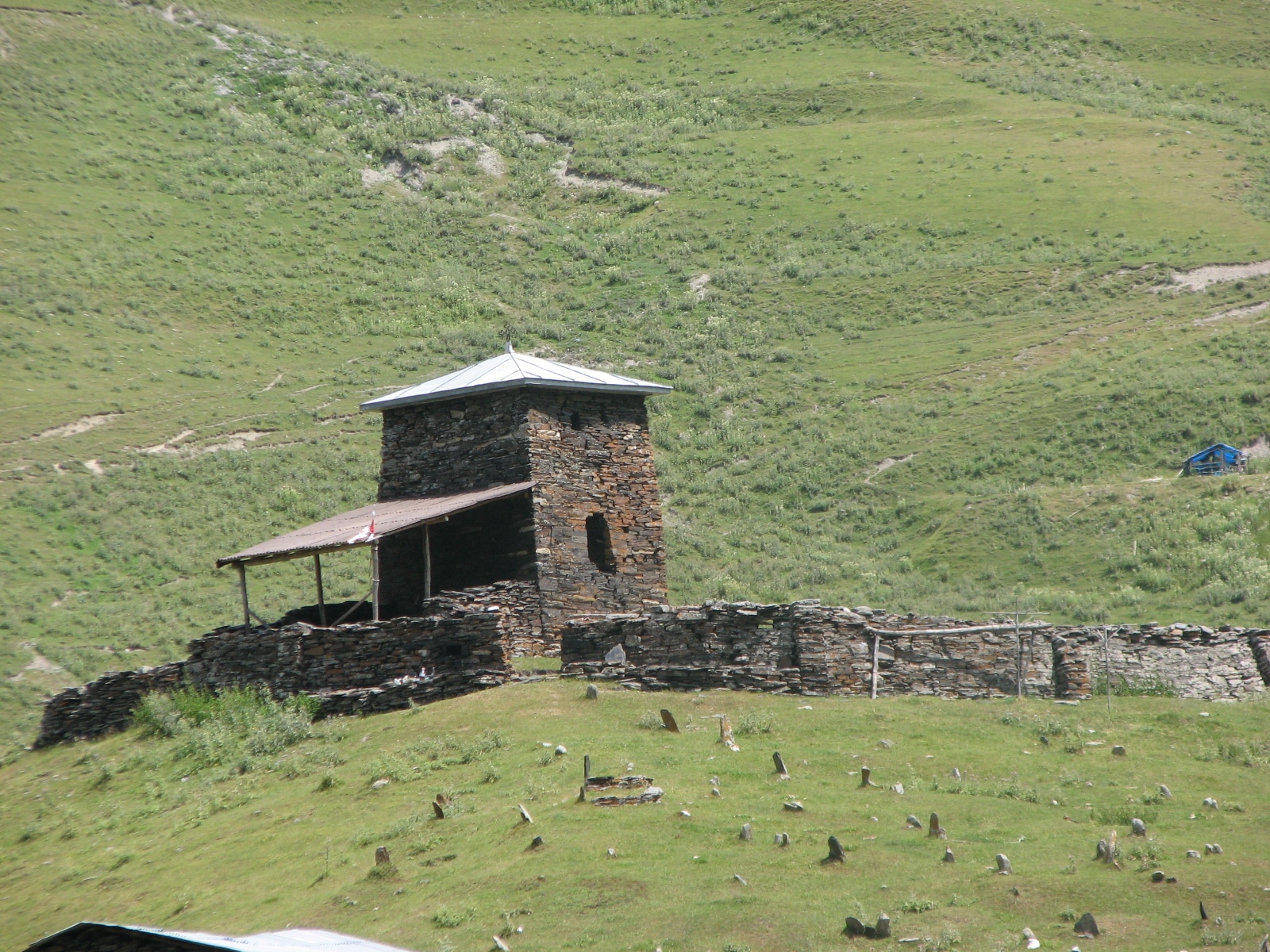
Parsma, St. George's Shrine and Cemetery.
Due to the severe mountain climate, only one person stays in Parsma year-round; the others come only during the summer. Parsma is a town of great historical and cultural significance due to its unique defensive system, specific strategic importance, unique layout, abundance of shrines, and compact growth.
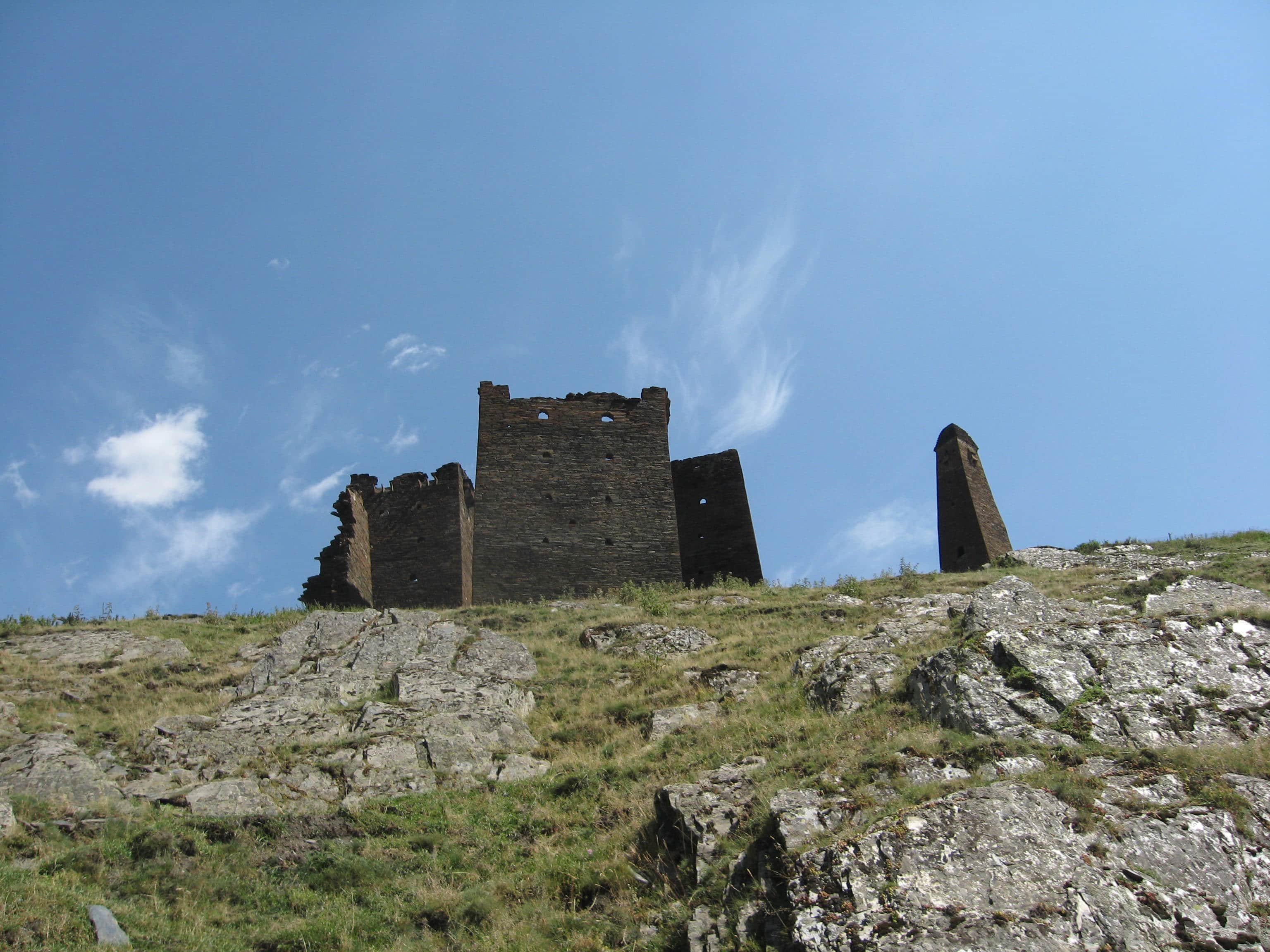
Parsma, a group of castles on a mountainside