When one thinks of Georgia, the associations may vary, yet certain shared impressions tend to emerge: the cradle of wine, a land of rich cultural heritage, a mountainous country with diverse natural landscapes, a country at the crossroads of Europe and Asia, an ancient Christian nation with its own unique script, friendly and hospitable people, delicious and vibrant cuisine, polyphonic folklore, and fiery dances. For some, however, the first association is Stalin.
For some reason, these familiar associations, and the broad characterization of Georgia as a land of ancient history, have come to overshadow one of the country’s most significant stories : by almost any historical criterion, Georgia ranks among the oldest of the approximately two hundred states existing in the world today. Its tradition of statehood is both ancient and rich. Yet, in enumerating the country’s defining features, we frequently overlook one of its most significant, and perhaps even the determining, factors underlying all its other virtues.
In everyday conversation, in public speeches, in celebratory toasts, and even in song lyrics, Georgians frequently emphasize that, as a nation and a state, Georgia boasts a “3000-year history.” If we set aside modern folklore and turn instead to the earliest written sources, we will find that Georgian statehood can indeed be traced back approximately three millennia.
Before we define its age, it is important to clarify the concept of “historical Georgia.” Any nation with a history spanning at least one to two centuries will have changed its borders. Consider how these dynamics would have changed over millennia. Over time, a perception closely tied to Georgian identity has emerged regarding which lost or acquired territories are considered Georgian and which are not. When defining the term “historical,” it is essential to note that it is not solely about the inclusion of territories within current political borders or the ethnic composition of specific provinces. “Historical Georgia” primarily refers to the regions and provinces that, from the viewpoint of Georgians, have formed and represented Georgian statehood and national culture. Throughout this article, when we mention Georgia, we often refer to “historical Georgia” as defined by this standpoint.
The country is historically divided into three main regions: East Georgia, West Georgia, and South Georgia (the latter is actually in the Southwest). Each of these regions has significant political implications beyond its geographical distinctions: they represent areas with traditions of having existed as independent Georgian states. The Likhi Range serves as the dividing line between the West and the East. This mountain range is a more significant boundary than it may initially appear, as it not only separates the two regions, but also delineates the basins of the Black and Caspian Seas. In a broader context, it acts as a boundary between Europe and Asia. Historical South Georgia comprises two sea basins—the Chorokhi and Kura (Mtkvari) valleys—separated by the Arsiani Range. Most of this region is now part of Turkey, while only a small portion remains within Georgia.
the Bronze Age, likely indicating the presence of early state formations in the region. However, we lack comprehensive written records about all these entities. Epigraphic texts from the turn of the 2nd to the 1st millennium BC primarily reference the alliances in southern Georgia. During this period, the powerful states of Assyria and Urartu extended their reach, engaging in conflicts with these unions in attempts to dominate them, with varying degrees of success. This historical context provides us with information about the earliest Georgian formations. Consequently, we begin to trace the origins of Georgian statehood back to Diauehi (Daiaeni) and Colchis, as noted in cuneiform inscriptions from the late 2nd millennium BC.
* * *
When discussing the state as a key determinant of Georgian identity, we must highlight another equally important characteristic—continuity—alongside antiquity. History reveals many early states that were once powerful, yet their existence, including their dominant people and languages, was ultimately terminated or interrupted for an extended period. Many Georgians take pride in their nearly uninterrupted history of statehood. Throughout the ages, whenever one political entity fell to a larger power, at least one of the others managed to carry on. This continuity was facilitated by the region's geographical diversity and the Caucasus's role as a traditional meeting point for empires. Georgian political entities frequently overcame the obstacles posed by competing powers in order to ensure their survival.
The combination of these factors resulted in a paradox: despite its small size, Georgia, within its historical borders, was never entirely conquered by any major power. A separate Georgian kingdom or principality always managed to exist in some part of the region. Even when the independence of these political entities was constrained, a form of autonomous government and state institutions persisted, ready to reclaim sovereignty at the first opportunity.
We used the term “almost” in relation to continuous statehood, and it is important to highlight the exceptions that disrupted this continuity. The only state that completely eradicated all signs of Georgian statehood was Russia.
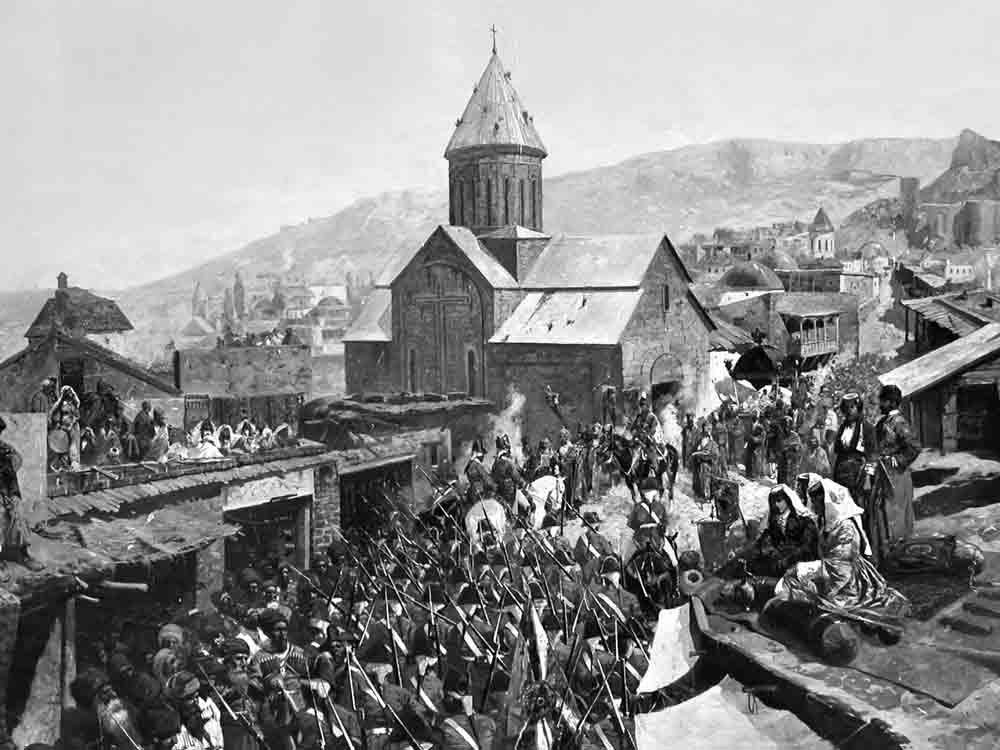
Entry of the Russian Army into Tiflis, 1799. Engraving.
Beginning in 1801, Tsarism gradually conquered Georgian political entities and soon controlled most of the territory. Although several principalities were under a protectorate, they still formally maintained independent status. The final abolition of the Principality of Samegrelo (Odishi), in 1867, marked Russia's completion of the process of extinguishing statehood in Georgia. However, it was never able to fully annex all “Georgian lands,” as certain parts of the southern territory remained under the Ottoman Empire.
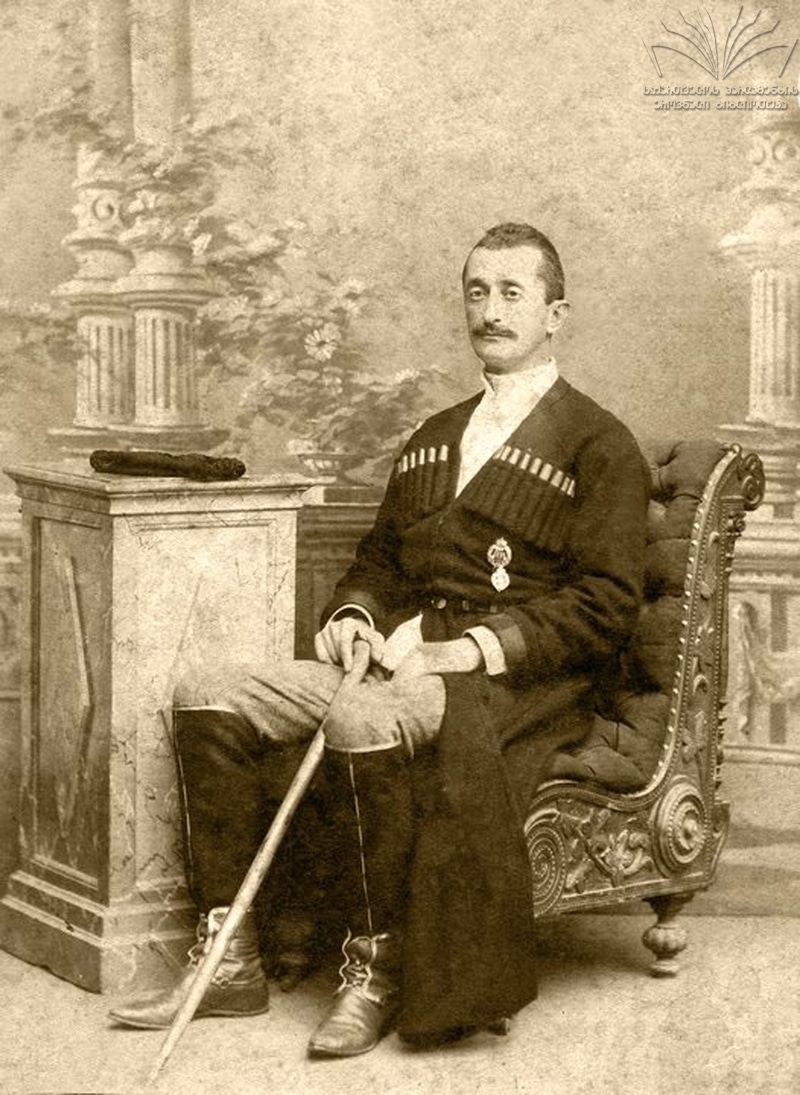
Niko Dadiani: The Last Prince of Samegrelo (1853–1867). With the abolition of the Principality of Samegrelo,
the Russian Empire completed its conquest of the Georgian kingdoms and principalities.
The second break spans the period from the Soviet occupation of the Democratic Republic of Georgia (1918-1921) to the collapse of the Soviet Union in 1991. The conquered nation, weakened by emigration and repression, appeared to exhibit the characteristics of a small state within the “great Soviet family” (Georgia was referred to as a “Soviet Socialist Republic”). However, in reality, this notion was merely a facade.
* * *
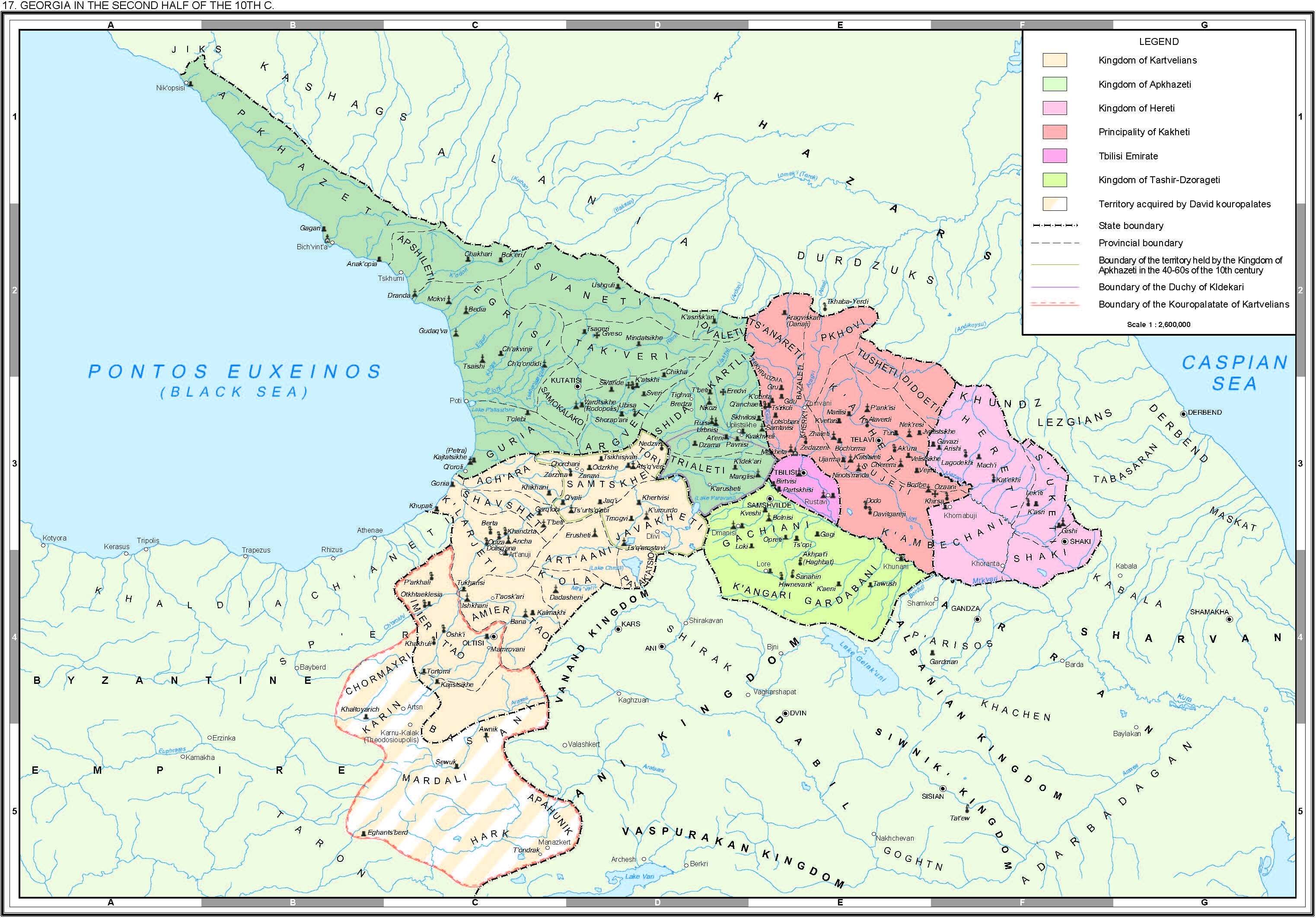
After the fall of the earliest known state formations—Diauehi and Colchis—two independent political entities emerged in the territory of Georgia, one in the West and the other in the East. According to Georgian tradition, these kingdoms are referred to as Egrisi and Kartli, while in Greco-Latin (and thus European) tradition, they are known as Colchis and Iberia. The southern region became part of Eastern Georgia, specifically the political entity of Kartli, and remained so for an extended period.
Another aspect of Georgian statehood is that Georgia was politically united for only incomplete five centuries, specifically from the XI to the XV centuries. Additionally, if we consider that this unified state at times excluded other Georgian political entities or separate territories, the actual period of unity becomes even shorter. The unified state was reestablished twice in the 20th century, in 1918 and 1991, though not encompassing all the “historical” territories.
Georgia Prior to Unification
(Second Half of the 10th Century)
The history of Georgian statehood has been both lengthy and arduous, marked by battles, disintegrations, restorations, and unifications. Yet, how many local states have existed on the territory of Georgia throughout this extensive period? The complexities of history, particularly the political landscape, often make it challenging to provide a definitive answer. However, we can estimate that the total number of local states ranged from 30 to 35.
Following the era of the unified kingdom, Georgia entered a period of fragmentation that peaked at the turn of the 17th to 18th centuries, when approximately ten political formations coexisted within its territory. This included three kingdoms: Kartli, Kakheti, and Imereti. A Georgian historian aptly referred to these entities as “Georgias.” On one hand, the vast majority of them were undeniably Georgian—reflected in the political, cultural, linguistic, and religious affiliations of the ruling elite, as well as in the ethnic makeup of the main population. On the other hand, and perhaps most importantly, many of them, especially after the collapse of the unified kingdom, viewed themselves as part of a cohesive whole, irrespective of their political influence or aspirations.
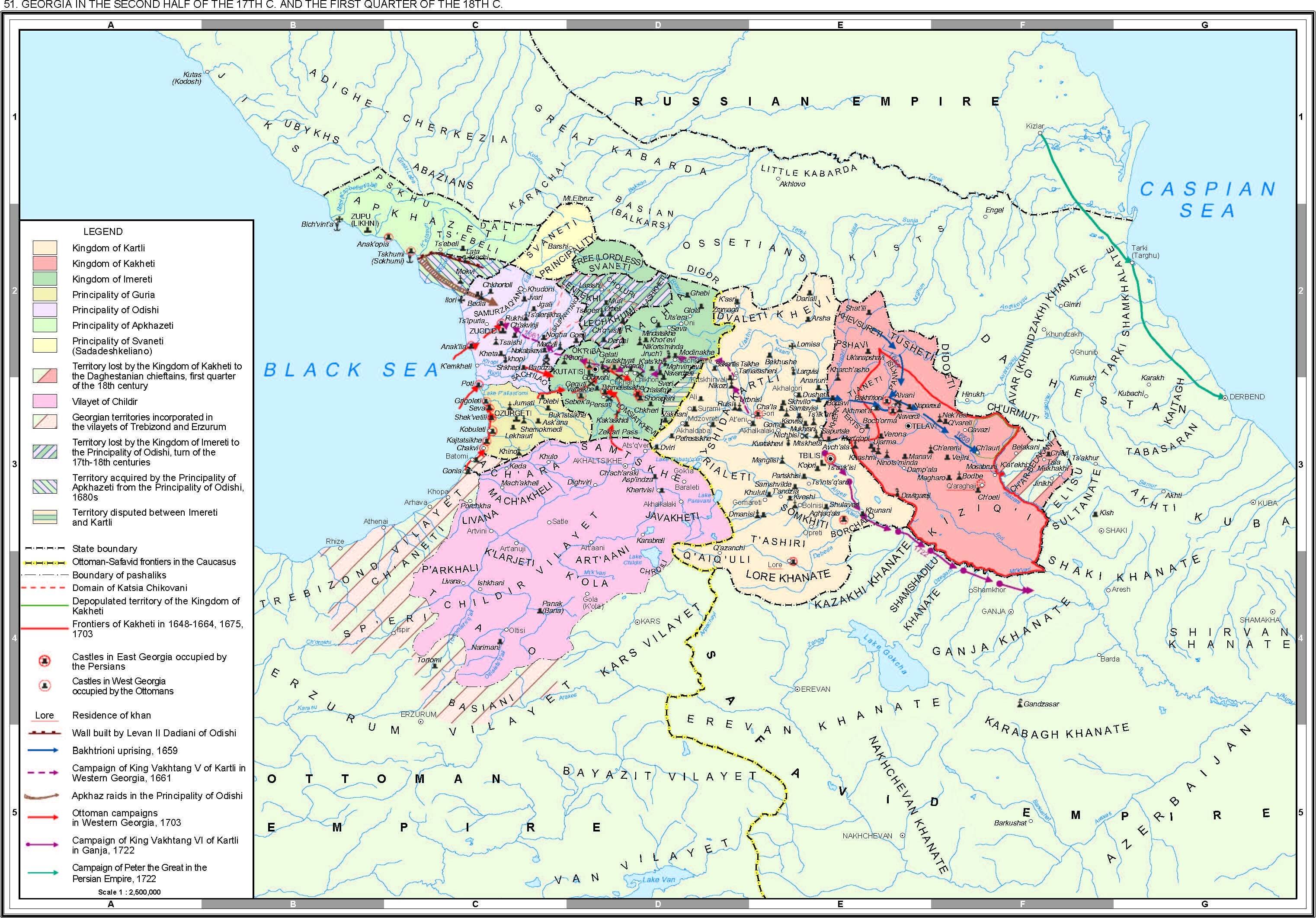 Georgia during the Period of Peak Political Fragmentation
(17th–18th Centuries)
The longest unification in Georgia dates back to the turn of the 10th and 11th centuries. It took more than a century for King David the Builder (r. 1089-1125) to complete this process. He is recognized as the first ruler in history to unite all the Georgian territories into a single kingdom. During the reign of his great-granddaughter, Tamar (r. 1178/84-1213), who is celebrated as the most popular female monarch in Georgia, the borders of Georgia reached their greatest extent—approximately 2.5 times larger than modern Georgia.
Bagrat III (978–1014): The First King of Unified Georgia.
Mural from Bedia Cathedral.
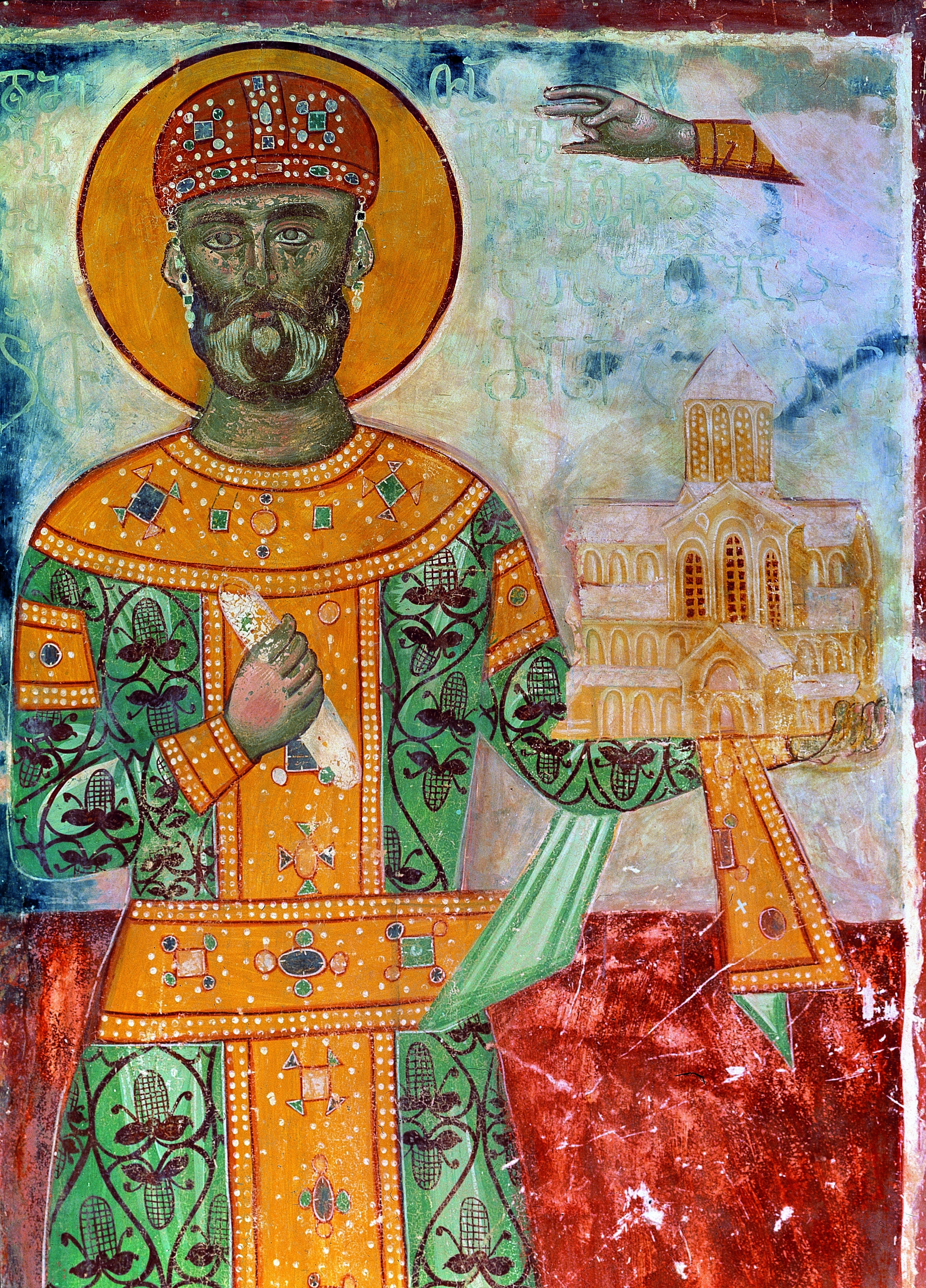
David IV the Builder (1089–1125) – The King who Solidified a United Georgia.
Mural from Gelati Monastery.
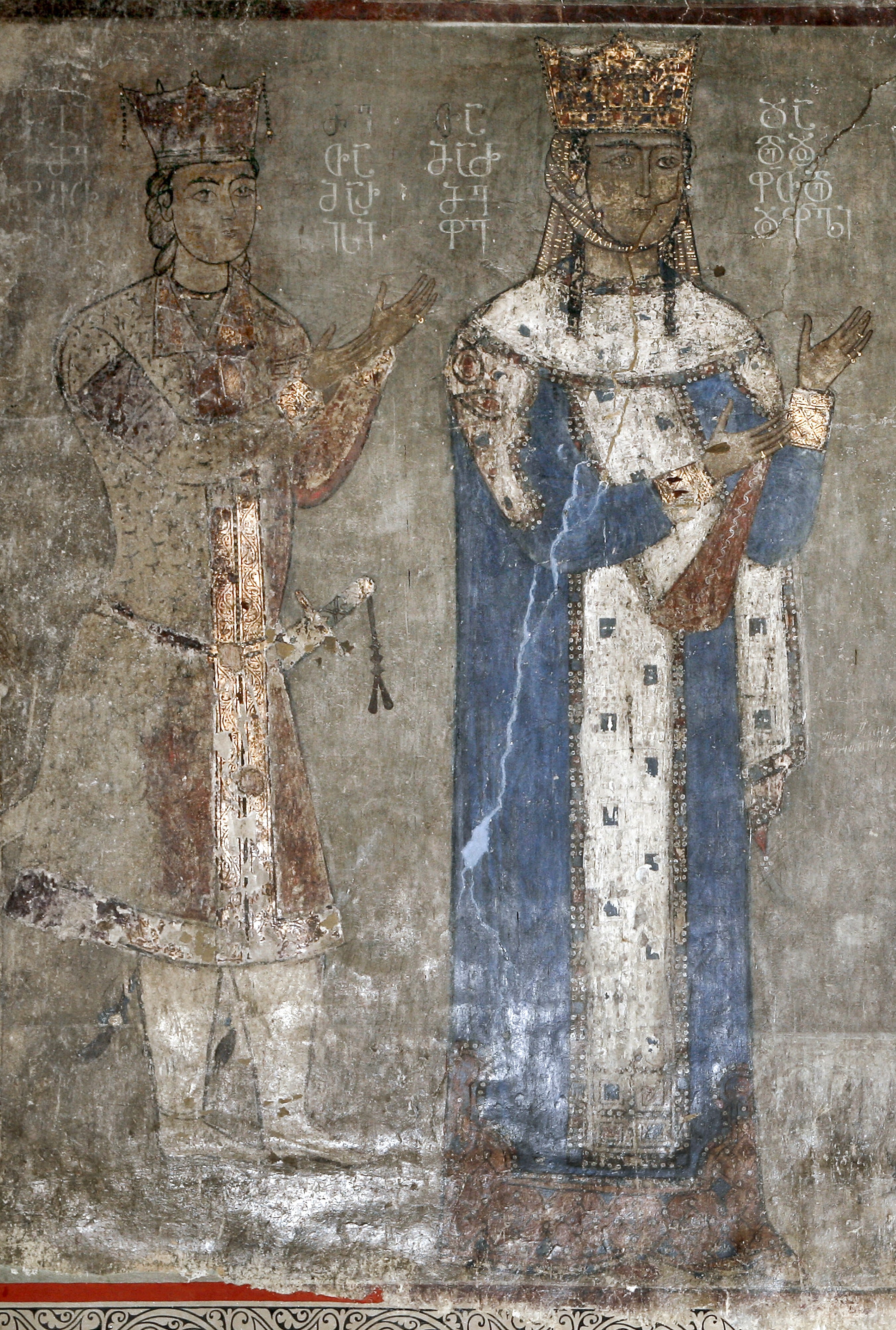
King Tamar (1178/1184–1213) and her son, Giorgi IV Lasha (1213–1223)
The Georgian Monarchs under whom the Kingdom reached its greatest territorial extent.
Additionally, several neighboring political entities acknowledged Georgia’s supremacy during this time. This long-standing period of political, military, economic, and cultural flourishing, known as the Golden Age of Georgia (1120s–1220s), is characterized by the chronicler's assertion that Georgia stretched “between two seas”—“from Nikopsia to Darubandi.” This phrase is still proudly recited by Georgians who appreciate their history (Nikopsia was a fortress city on the Black Sea coast, northwest of present-day Tuapse; Derbent is a historic city on the Caspian Sea coast). The Mongol invasions ultimately ended the dominance of this, one of the most significant states, in the Near East. Following this, the unity was fractured for a period of 70 years. Although there were attempts to reunite the Georgian lands into a single state in subsequent eras, these initiatives did not achieve lasting success or stability.
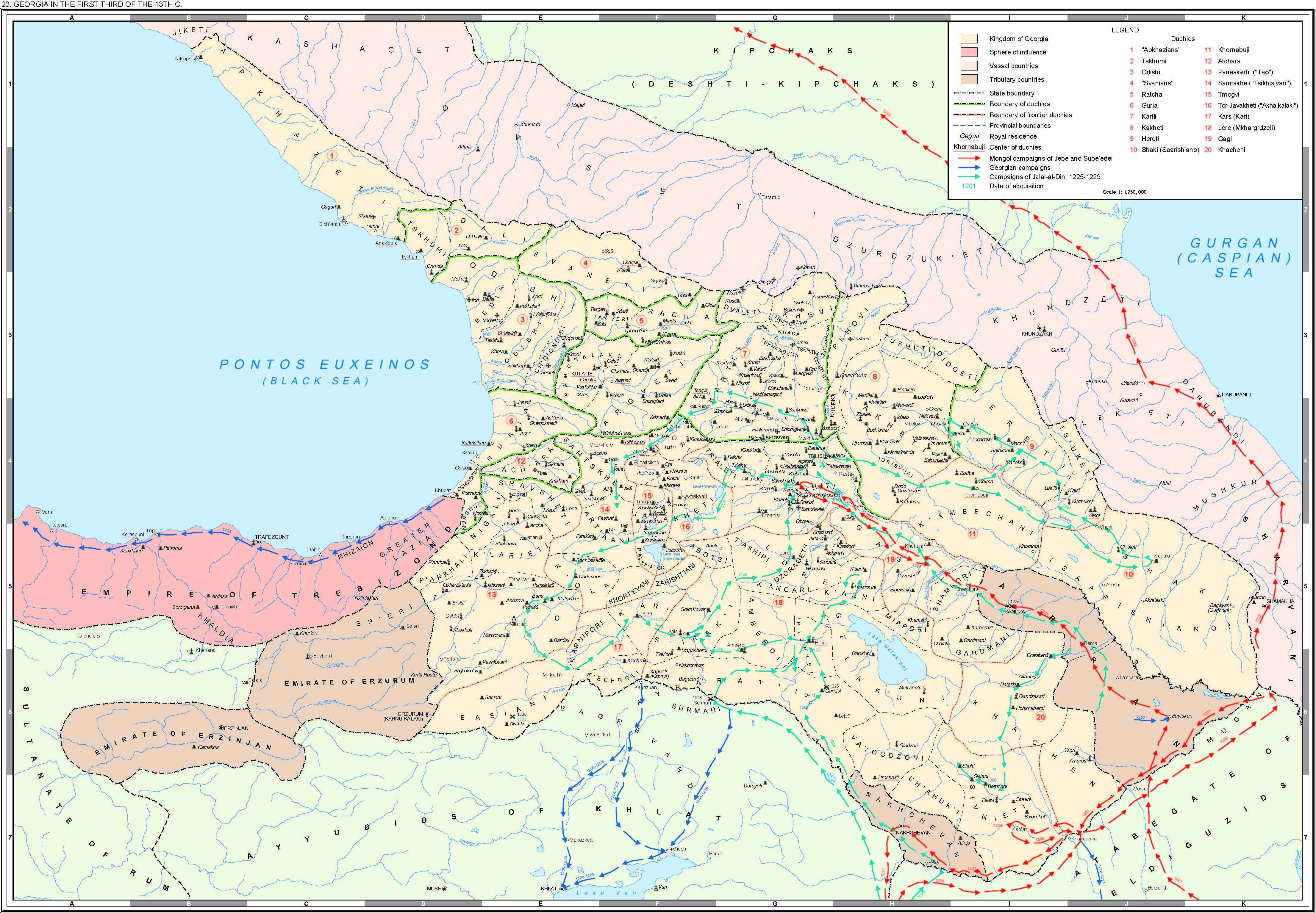 The Kingdom of Georgia at the Zenith of its Power
 (First Third of the 13th Century)
The great cataclysms of the 20th century, combined with a strong national aspiration for self-determination, twice created the conditions for the restoration of Georgian independence. In the aftermath of the First World War and the collapse of the Russian Empire, the Democratic Republic of Georgia was established (1918–1921).
Session of the Constituent Assembly of the Democratic Republic of Georgia. 1919.
Then, following the dissolution of the Soviet Union, the modern Georgian state was founded. Yet, Georgia was not restored within its full “historical borders.” Territorial losses incurred during the Soviet period were compounded in the 1990s by the de facto separation of two regions by Russians. Yet, viewed in a broader historical perspective, these episodes may still be regarded as moments of restored statehood and renewed political “unification”.
Proclamation of the Restoration ofIndependence at the Session of the Supreme Council, April 9, 1991.
Independence at the Session of the Supreme Council, April 9, 1991.
The sum of the periods of unity appears somewhat modest when compared to the extensive history of statehood, which spans 3000 years. Nevertheless, the collective consciousness of Georgians still views this entire rich history as a “unified” identity and “unification.” This perception is most likely explained by the common ethnic origins, a single literary language and writing system, the affinity of the Kartvelian languages, and a consolidated identity during the period of the common ecclesiastical structure and the unified kingdom.
* * *
For various reasons, the name of one historical province—Kartli—was first applied to the eastern political entity known as the Kingdom of Kartli. Over time, its meaning expanded and became the basis for the name of the unified country and its people: Kartveli (Originally = Kartleli: Kartlian, a person from Kartli) and Sakartvelo (= the country / land of the Kartvelis). The country’s capital is likewise situated within historical Kartli. The Georgian writing system was created in the Kingdom of Kartli, and the eastern Georgian variety developed into the literary standard now known as the Georgian language. In western Georgia, however, there exist three more Kartvelian languages—Megrelian and Laz (sometimes treated together as Megrelian-Laz, or Colchian) and Svan. These factors contributed to the formation of a certain “Kartli-centrism” within Georgia, whereby the country’s history has often been interpreted from an eastern Georgian perspective.
The terms we employ today to describe ancient kingdoms and territories — “Georgian” and “Georgia”—are certainly conditional, as such concepts carried different meanings in their historical contexts. In the modern sense, most of the political entities of that period may be regarded as Georgian. However, there were notable exceptions. One such case was the Emirate of Tbilisi, an Islamic political entity that functioned as a vassal of the Arab Caliphate from the eighth to the eleventh (or early twelfth) century.
Another important aspect should be considered. Situated at the crossroads of continents and empires, in the Caucasus—a region marked by rugged terrain and remarkable ethnic, linguistic, and religious diversity—the Georgian state, whether unified or divided into separate political entities, continually had to struggle for survival, freedom, and for the restoration of statehood. Accordingly, a kind of “defensive psychology” developed, along with the perception that Georgians were perpetually engaged in defending themselves against great powers or struggling to restore their independence, rather than initiating aggression against others. Although this was largely the case, such generalizations must be treated with caution. At the height of its power, the Kingdom of Georgia pursued an active aggressive policy (and, episodically, so did other political entities) whenever circumstances permitted and strategic considerations required it.
Among the modern states of the world, Georgia possesses one of the oldest traditions of statehood, and its nearly continuous historical development has become an integral component of contemporary Georgian identity.
* * *
Wine, mountains, ancient churches, polyphony, hospitality — behind these alluring and often romantic associations lies one of the oldest state traditions in the world.
For Georgians, this long and complex past forms an integral part of everyday identity. Even during extended periods of political fragmentation, the sense of belonging to a single historical whole never disappeared. For this reason, Georgia’s 3000-year history is typically understood not as a mechanical sum of separate states, but as a continuous historical experience — a sustained tradition of statehood that has shaped the country’s culture, its enduring self-awareness, and its place in the world.





 Share this article


.JPG)