The cult of the Cross of Golgotha, the instrument of Christ’s Passion, dates back to the time of Constantine the Great (272–337), leading to the creation of various practices, including the veneration of fragments of the Golgotha Cross and the production of their reliquaries. Ecclesiastical tradition attributes the discovery of the True Cross, lost after the Crucifixion, to the emperor’s mother, Saint Helena. According to historical accounts, Helena sent a portion of the Cross from Jerusalem to her son. From this time onward, the veneration of relics of the Cross became a widely established practice. Georgian chronicles record that in the fourth century (326), during the Christianization of the Kingdom of Kartli, King Mirian III received fragments of the True Cross and other relics of the Passion from Constantinople.
The extant Georgian reliquaries vary in their forms, materials, and structure. The True Cross reliquaries were mainly owned by members of the ruling elite and aristocracy. Along with the religious function, reliquaries of the True Cross served as significant markers of power and social status. Medieval Georgian cross reliquaries were produced in different periods and display various conceptual, artistic, and compositional features. The dedicatory inscriptions of their commissioners underscore the functional, theological, and ideological significance of the relics. To the particles of the Cross have been ascribed potent protective power. Moreover, the possession of the relics of the Cross implied a spiritual connection with the Holy Land and participation in the sanctity of the sacred city.
The earliest surviving Georgian cross reliquary is a pectoral cross from the Martvili Monastery, dated back to the 9th–10th centuries. This massive pectoral cross is a unique example of medieval metalwork. The Crucifixion, depicted on a black enamel background, with the dominant figure of Christ, strikes the viewers with its expressiveness and dramatic decorative effect. The inscription on the reverse indicates that its patron/owner was Queen Khosrovanush. Her supplication addressed Saint John the Baptist, suggesting that the cross also contained relics of this saint.
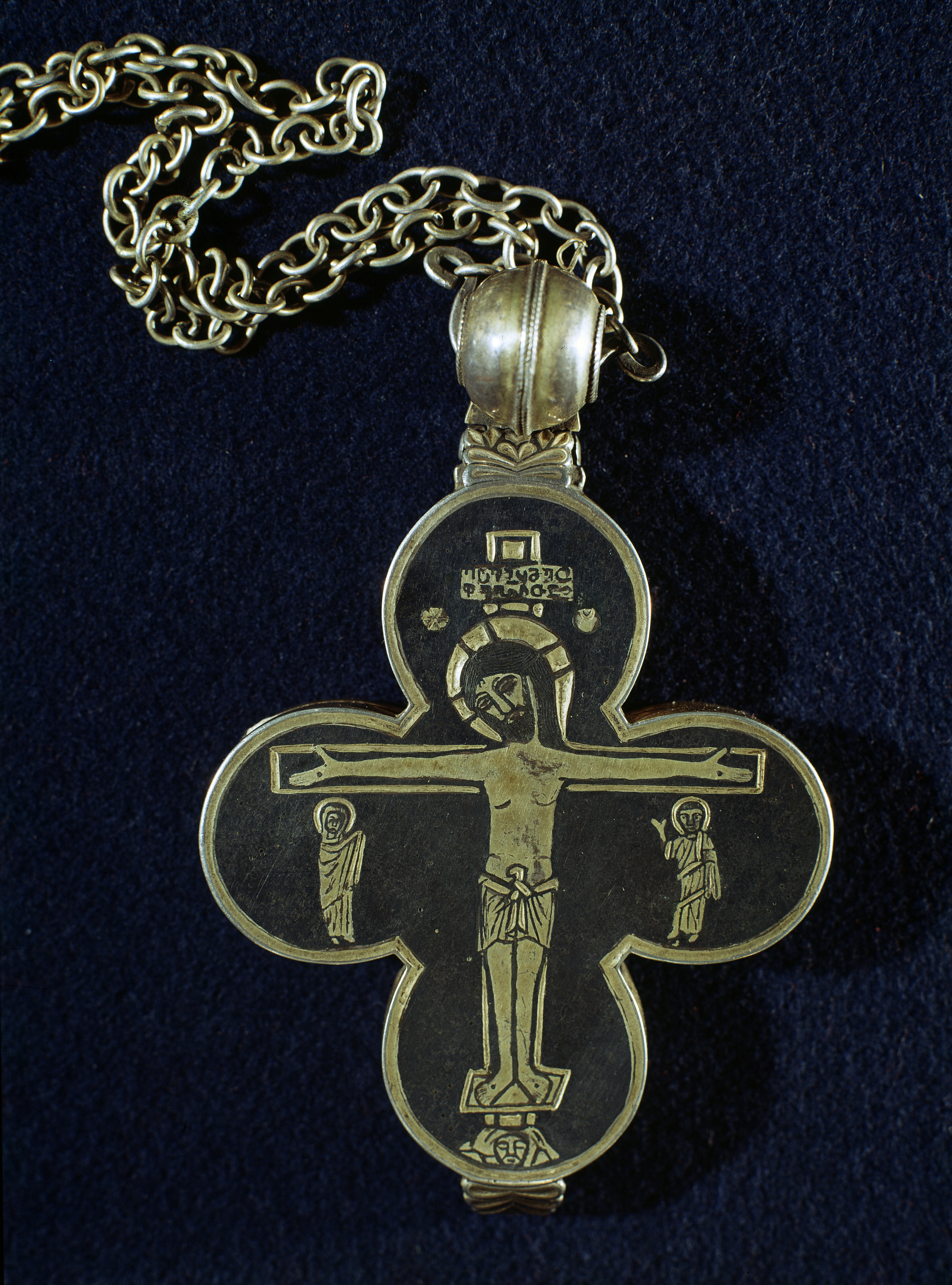
Martvili Cross, 9 th –10 th cc.
The so-called reliquary of “Znakhva Jvarisa” (named after two toponyms of Racha), now preserved in the Niko Berdzenishvili State Historical Museum in Kutaisi, was produced in the same period. The reliquary contains a silver-gilt cross with a handle, and beneath the crystal at the intersection of the cross’s arms is a small fragment of the Golgotha Cross. The entire reliquary is covered with repousse silver plate. The „lid“ of the reliquary features a relief figure of the 3rd-century saint Gregory of Neocaesarea, the Wonderworker. The dedicatory inscription reveals the owner’s name Sahakdukht, otherwise unknown from other sources.
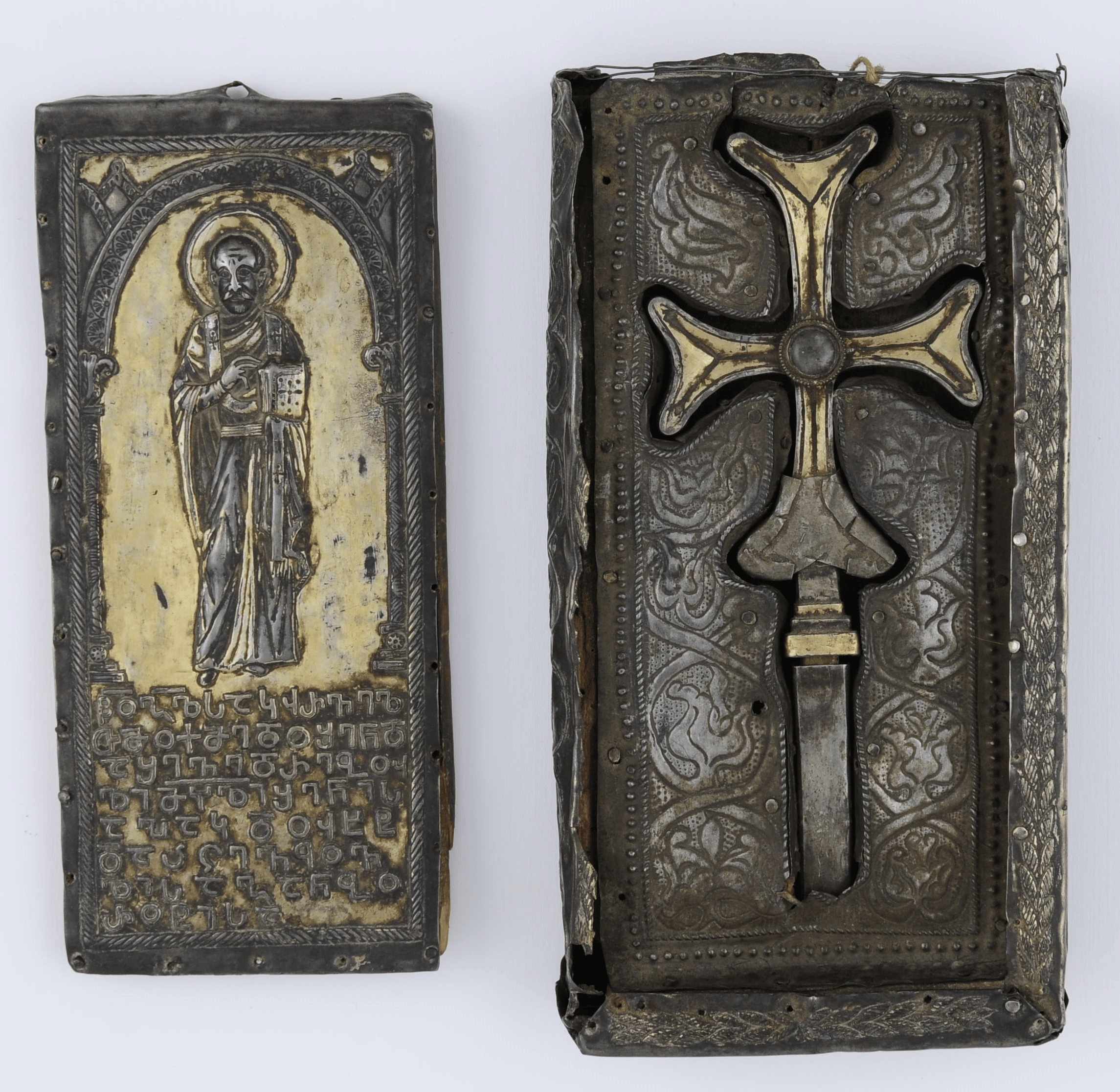
Znakva-Jvarisa Cross Reliquary, 9 th –10 th cc.
A precious pectoral cross belonging to the celebrated female monarch, King Tamar (1160–1213), captures attention with its colorful brilliance. The carefully balanced combination of precious stones and pearls of varying sizes emphasizes the triumphal meaning of the Cross. The precious stones have both aesthetic and symbolic significance, referring to the triumph of the Cross. Such a cross could be perceived as a metaphor of the Second Coming and salvation.
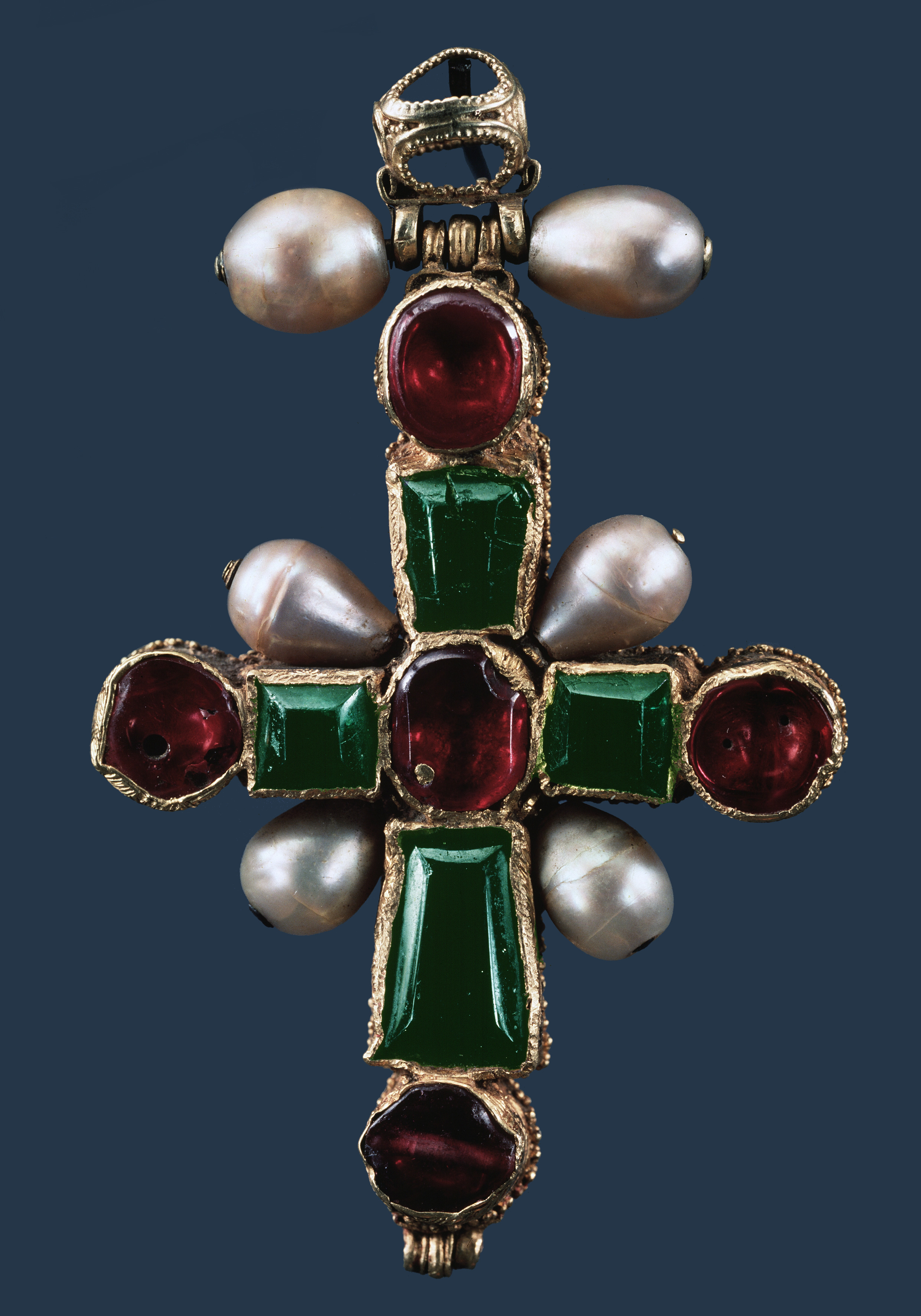
Cross of King Tamar, late 12 th -early 13 th cc (Front)
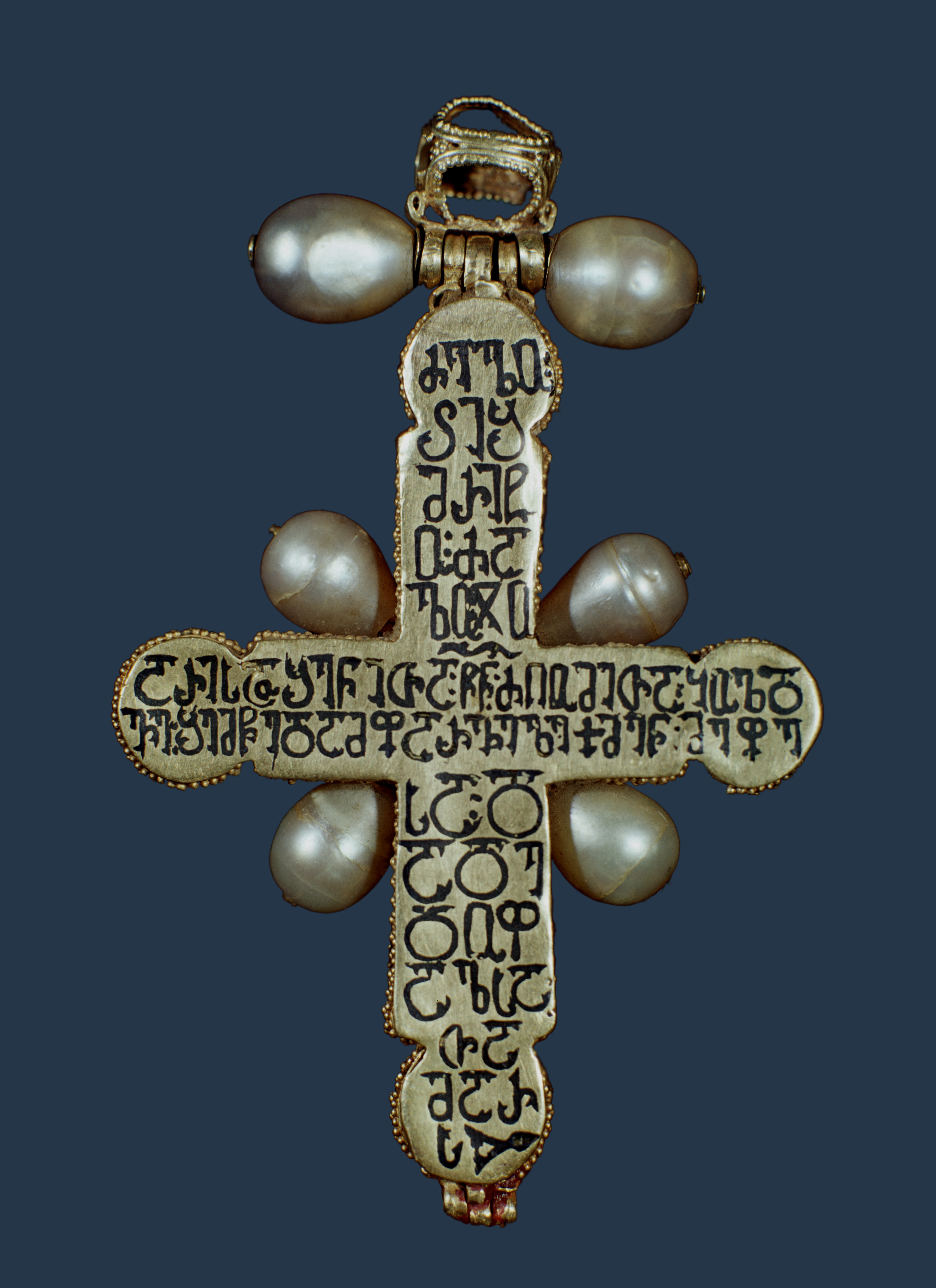
Cross of King Tamar, late 12 th -early 13 th cc (Back)
Queen Bordukhan, mentioned in the inscription on the reliquary, now housed in the Dadiani Palace Museum in Zugdidi, is identified as the mother of King Tamar. In the 15th century, the reverse of the reliquary was reveted with silver repousse sheathing. The inscription indicates that later, in 1640, Levan Dadiani, son of Manuchar, restored the damaged receptacle of the particles of the True Cross.
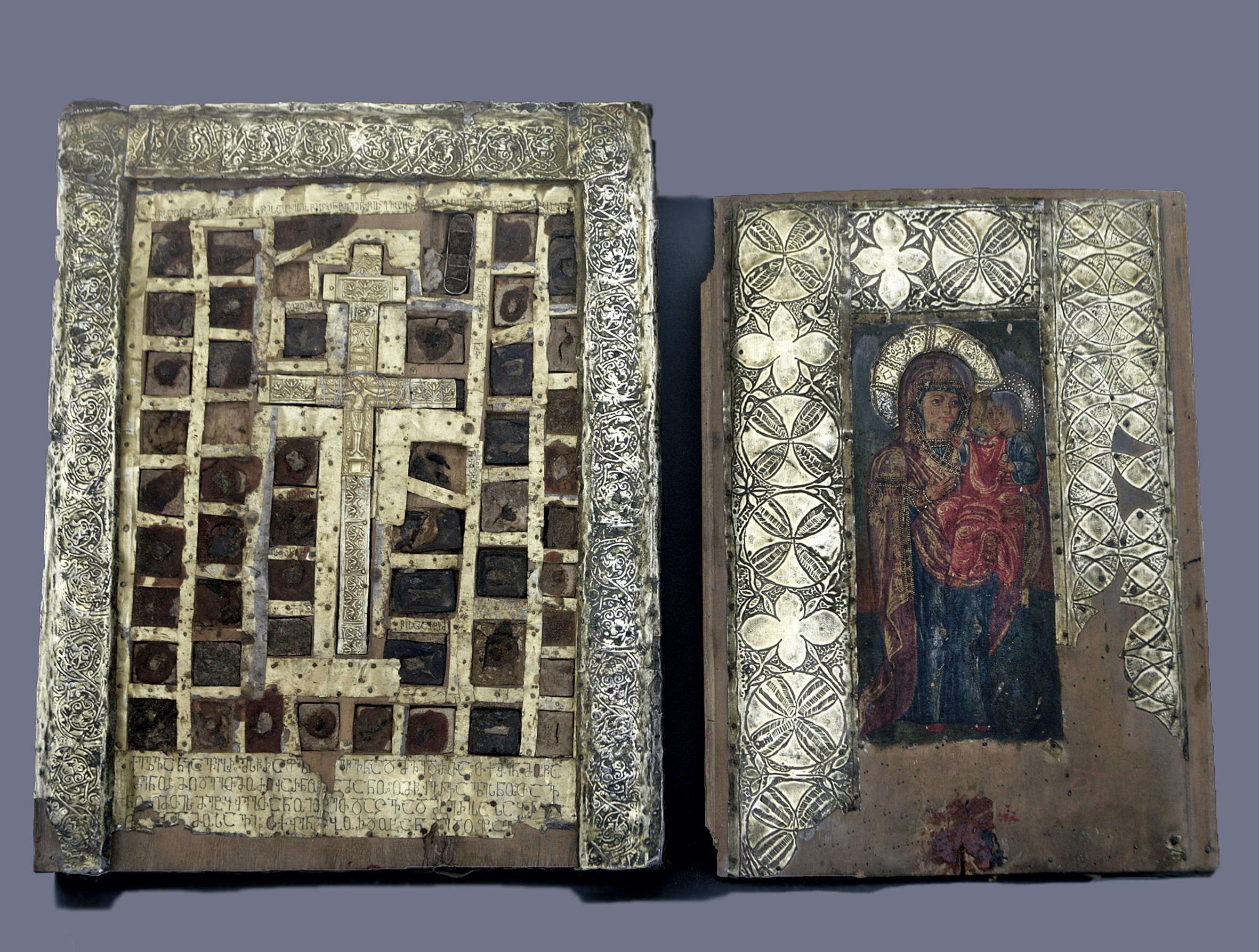
Reliquary of Bordukhan, 12 th c.
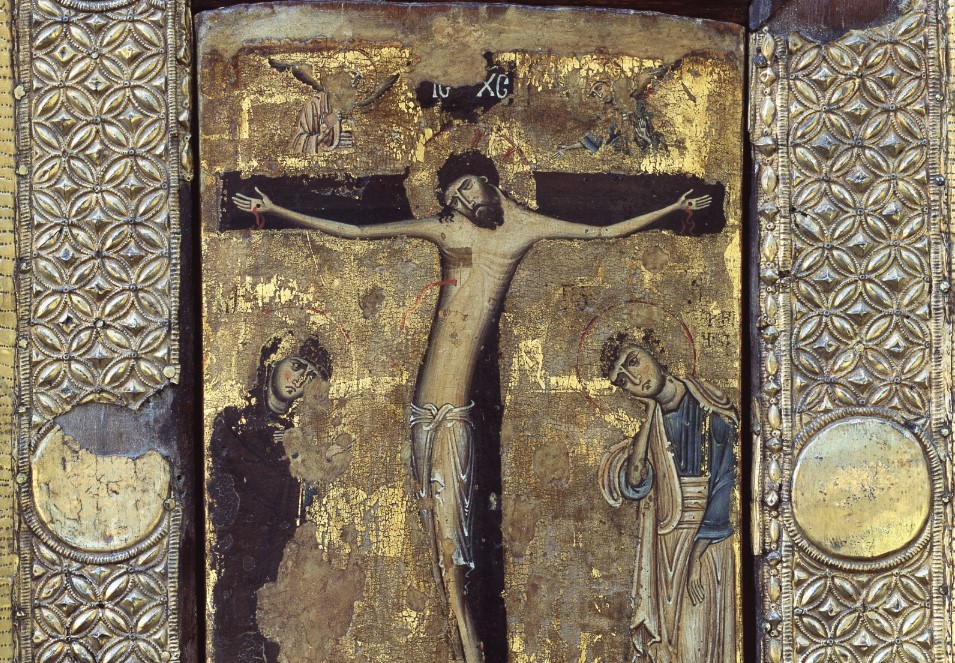
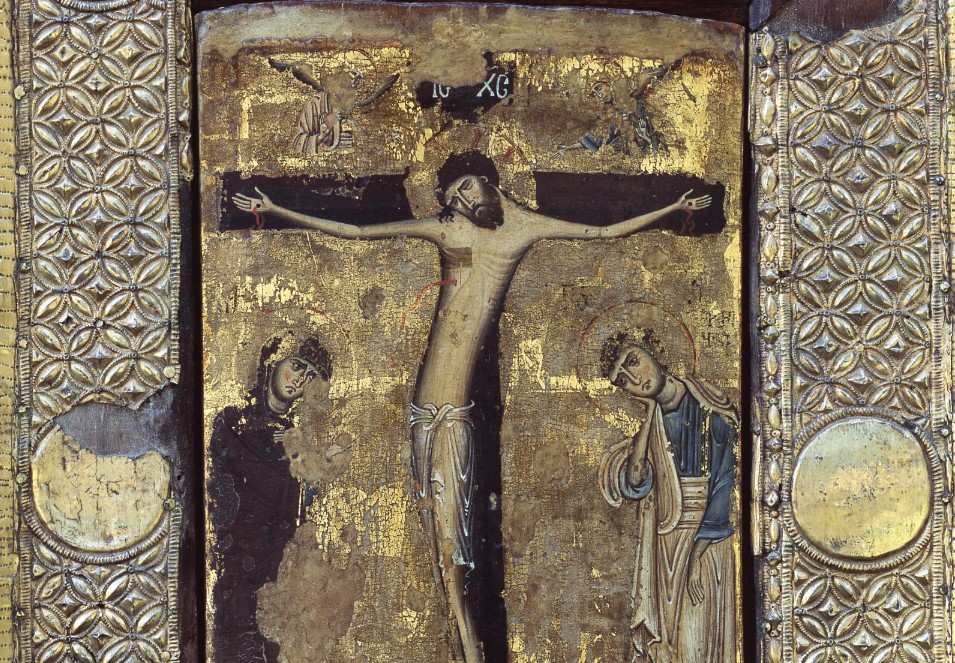
The 11th–12th-century Crucifixion icon from Mestia Museum (Upper Svaneti) is a rare example of painted cross reliquaries. The receptacle for housing the pieces of the Cross and other Christian relics is decorated with the three-figured Crucifixion against a gold background. The culminating episode of the Christian story is depicted with delicacy. The brilliant colors, resembling enamels, and gilt silver repousse frame with geometric pattern add the transcendental overtones to the composition.
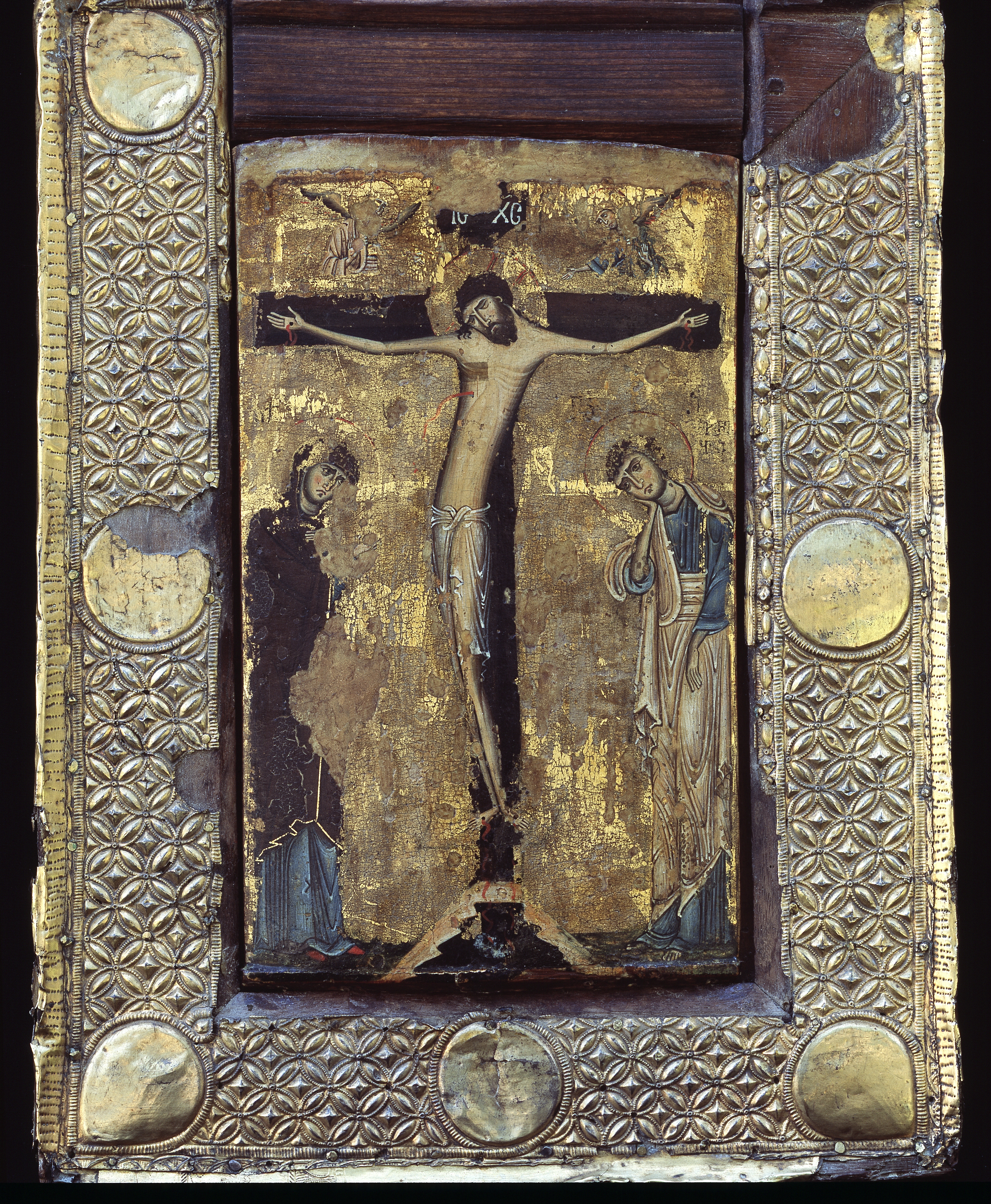
Icon-reliquary, 11 th -12 th cc. (Front)
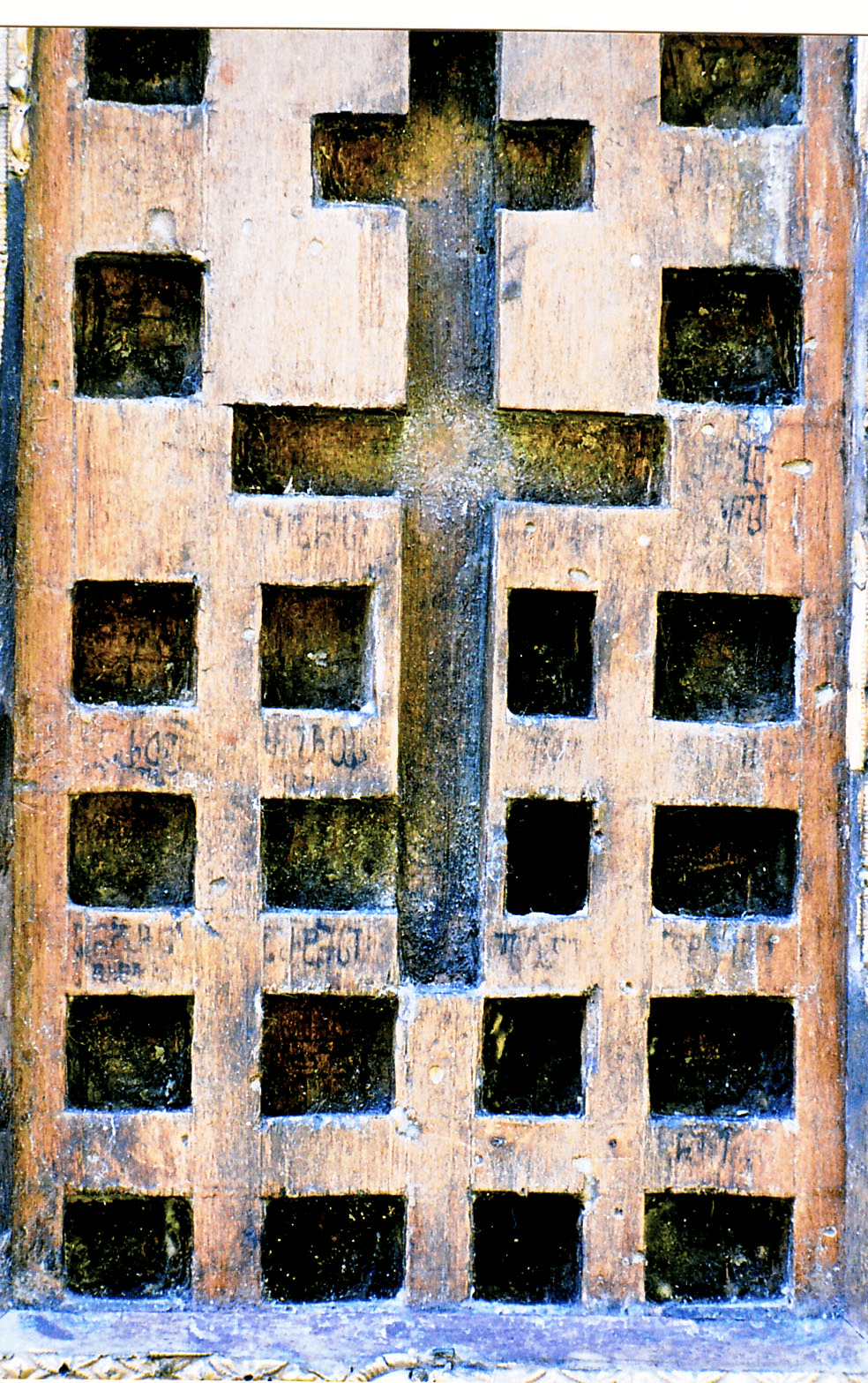
Icon-reliquary, 11 th -12 th cc. (Back)
An intricated, complex icon-reliquary from the early 13th century is housed in the same museum. The icon features four Christological compositions, framed by representations of the angels and saints. The inscriptions preserve the commissioner’s name - Silikhan, raised by “Queen of queens Rusudan”. According to both her title and stylistic features of the icon, Rusudan could be identified as the daughter of King Tamar. The fragments of the Cross were placed in the center of the upper section, accompanied by an image of Christ known as “The man of Sorrow”.
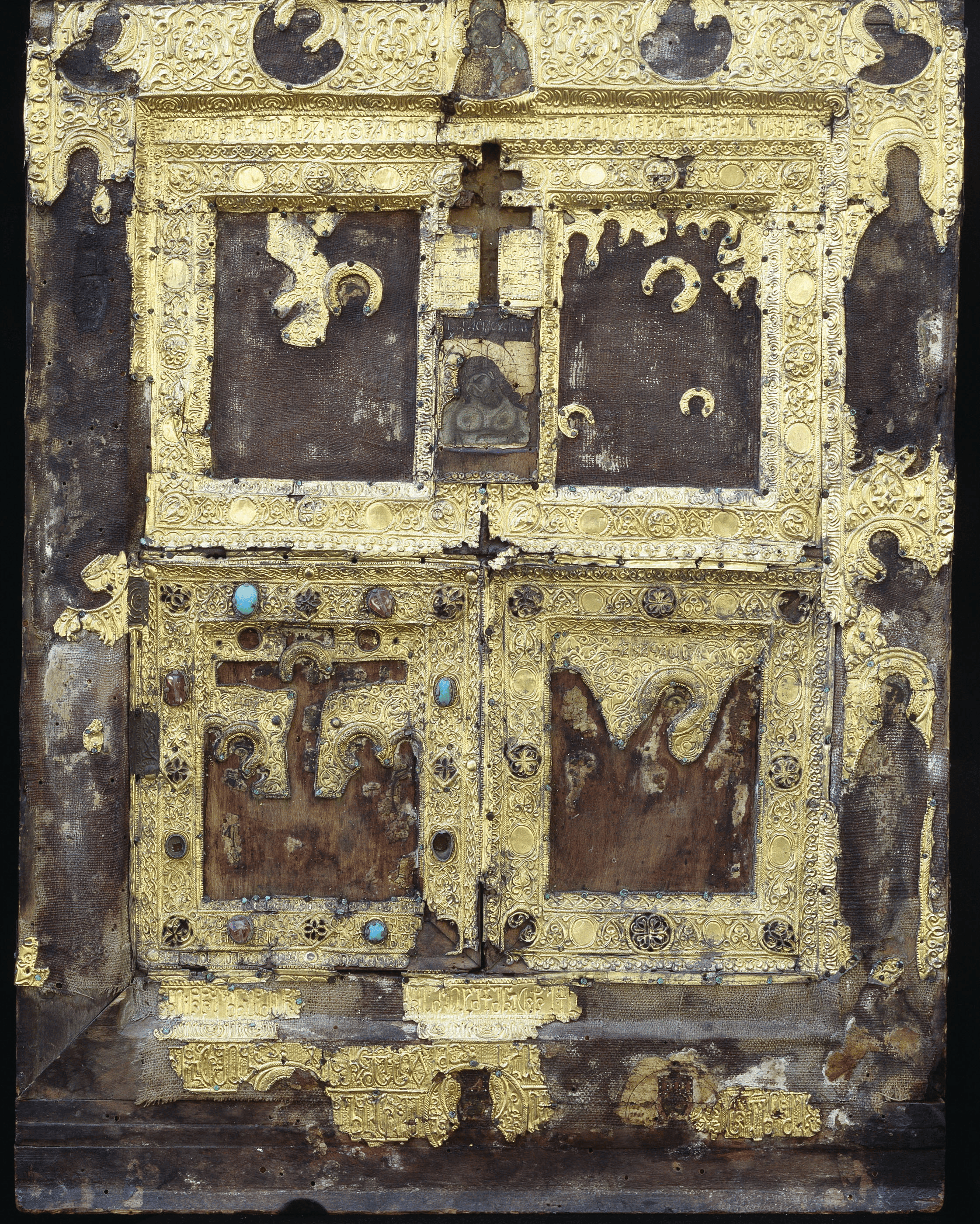
Icon-Reliquary of Silikhan, early 13 th c.
The veneration of the True Cross relics, along with other relics associated with the earthly life of Christ, demonstrates the significance of the Holy Land within cultural tradition. The Cross, as a symbol of the Passion and Salvation, embodies multiple dogmatic and semantic dimensions of Christian teaching. The possession and veneration of True Cross relics were regarded as equivalent to the veneration of Christ Himself and considered as a means of mystical communion and spiritual proximity to the divine.