




 Share this article
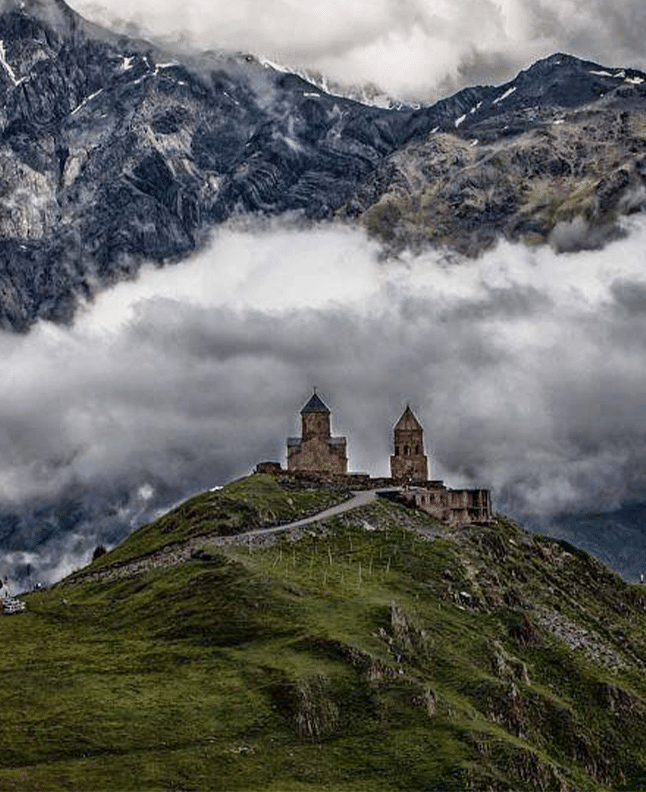
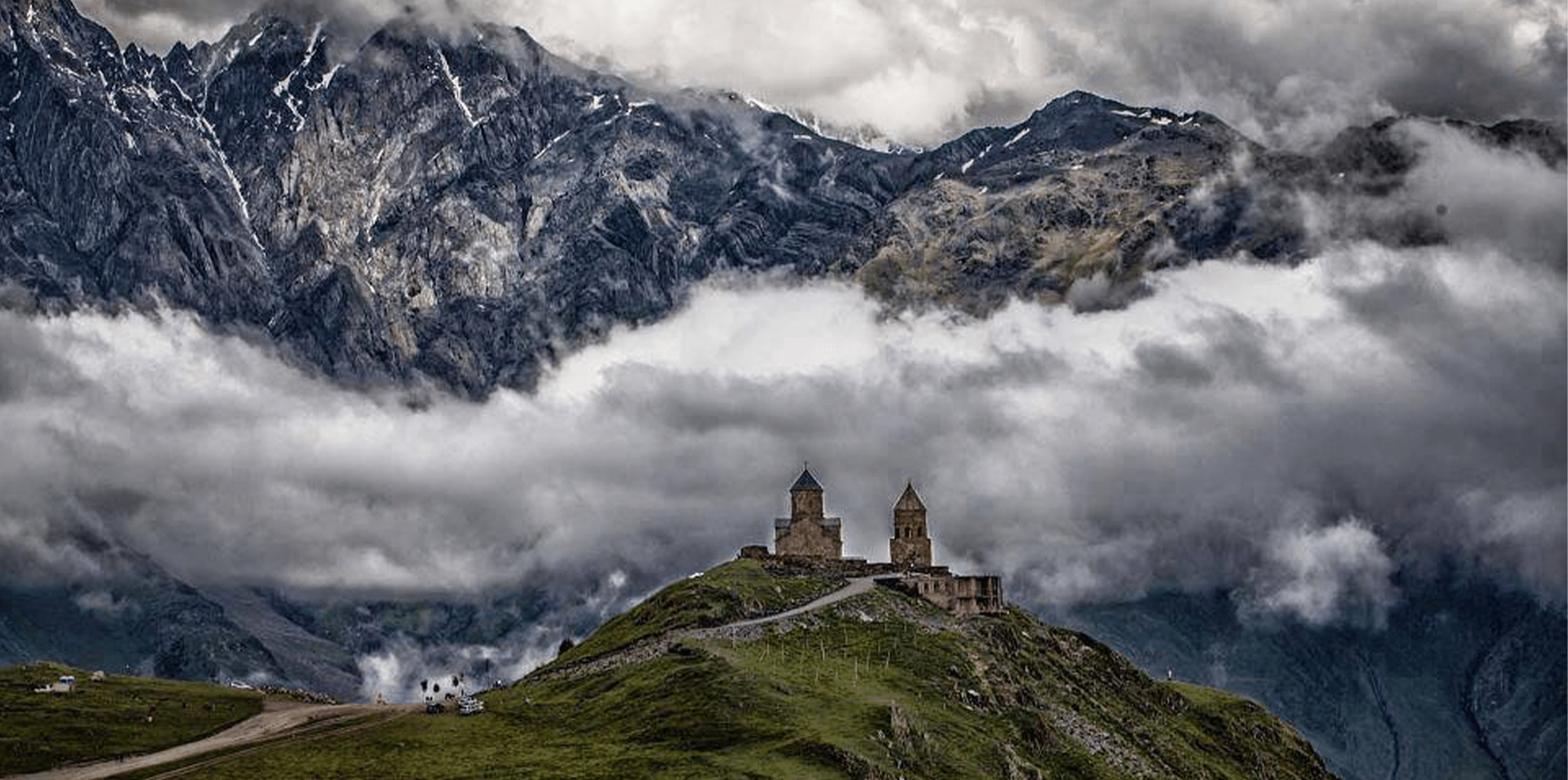
Khevi is a historic mountainous region in northern Georgia, long recognized for its cultural and geographical significance. Since ancient times, it has served as an important frontier area. Its most famous landmark is Gergeti Trinity Church — the main shrine of Khevi, and one of the most remarkable domed churches in Georgia’s highlands. The complex stands on a mountain peak 2,200 meters above sea level, about four kilometers from the town of Stepantsminda (Kazbegi).
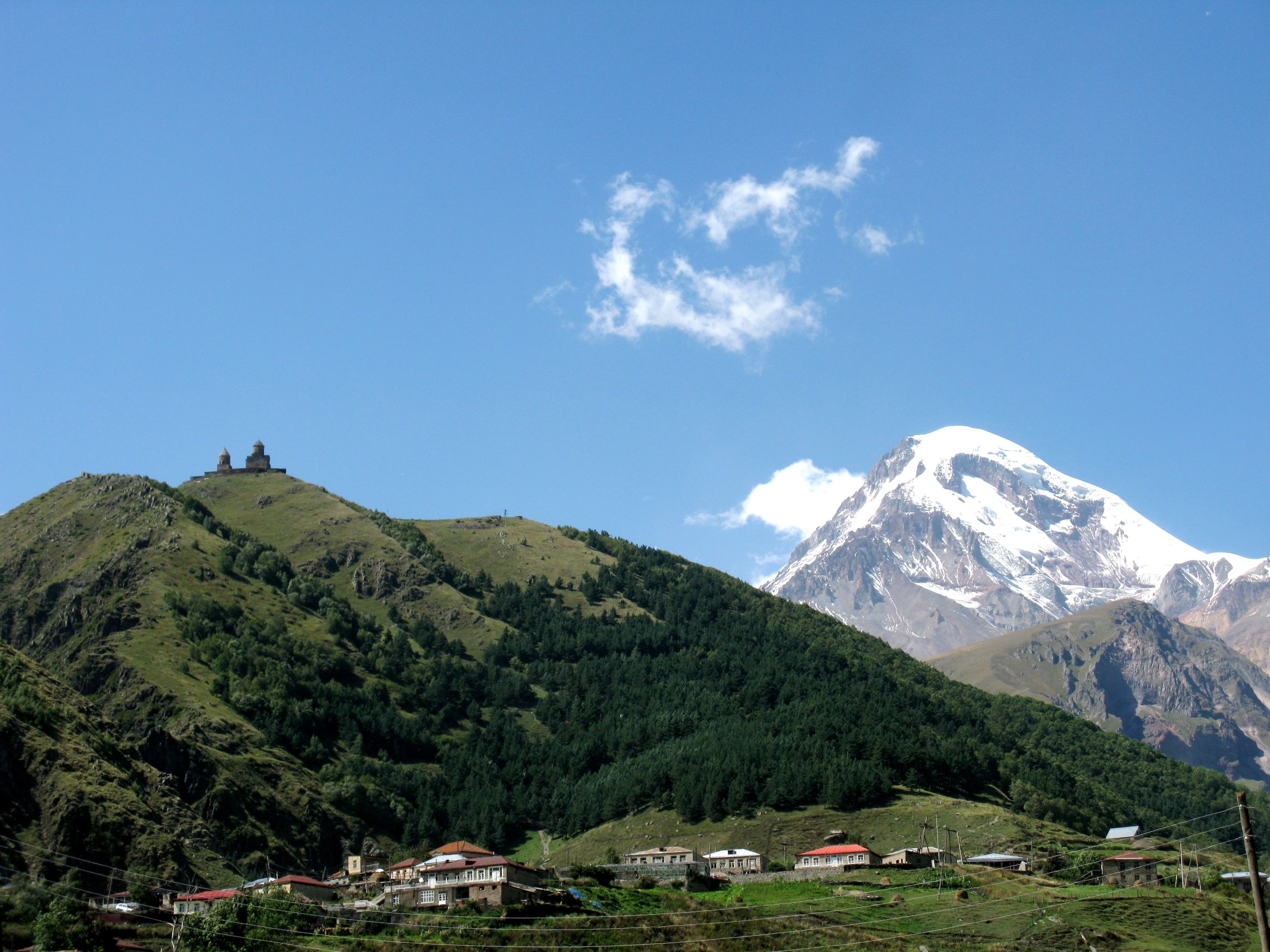
Gergeti Trinity Architectural Complex, view from Stephantsminda
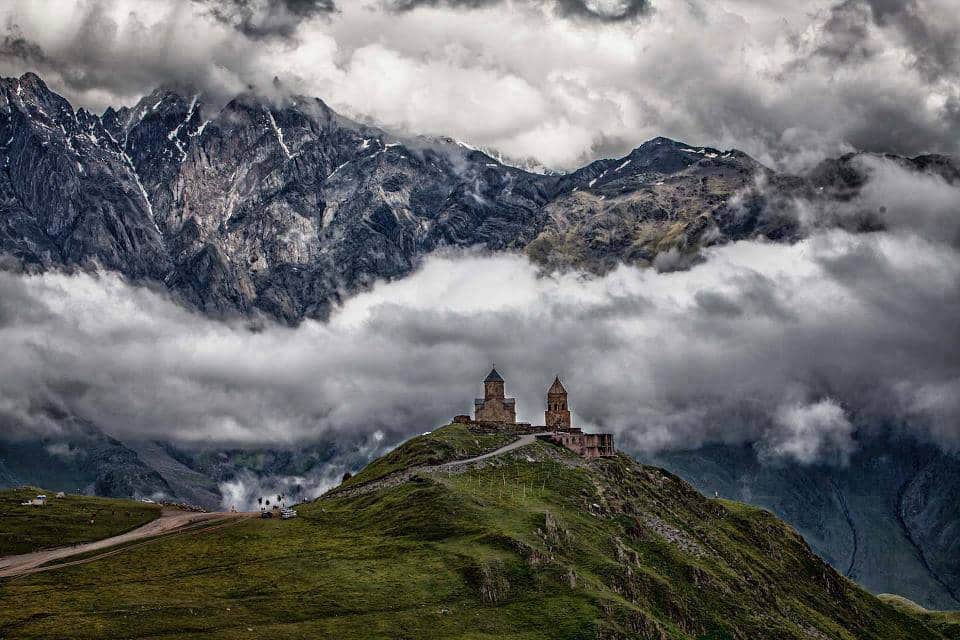
Gergeti Trinity Architectural Complex. Photo by Sh. Lezhava
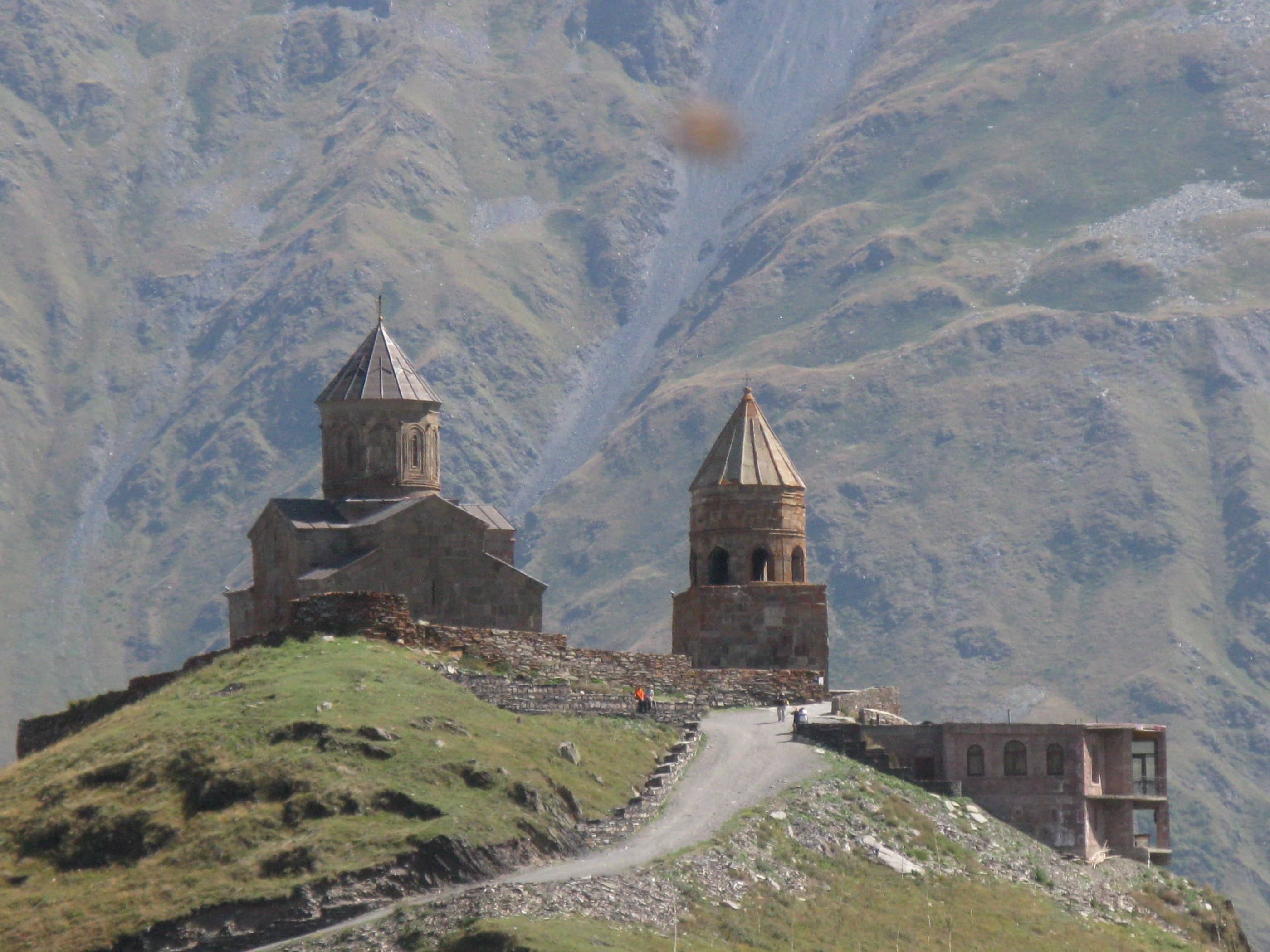
Gergeti Trinity Architectural Complex, view from the East
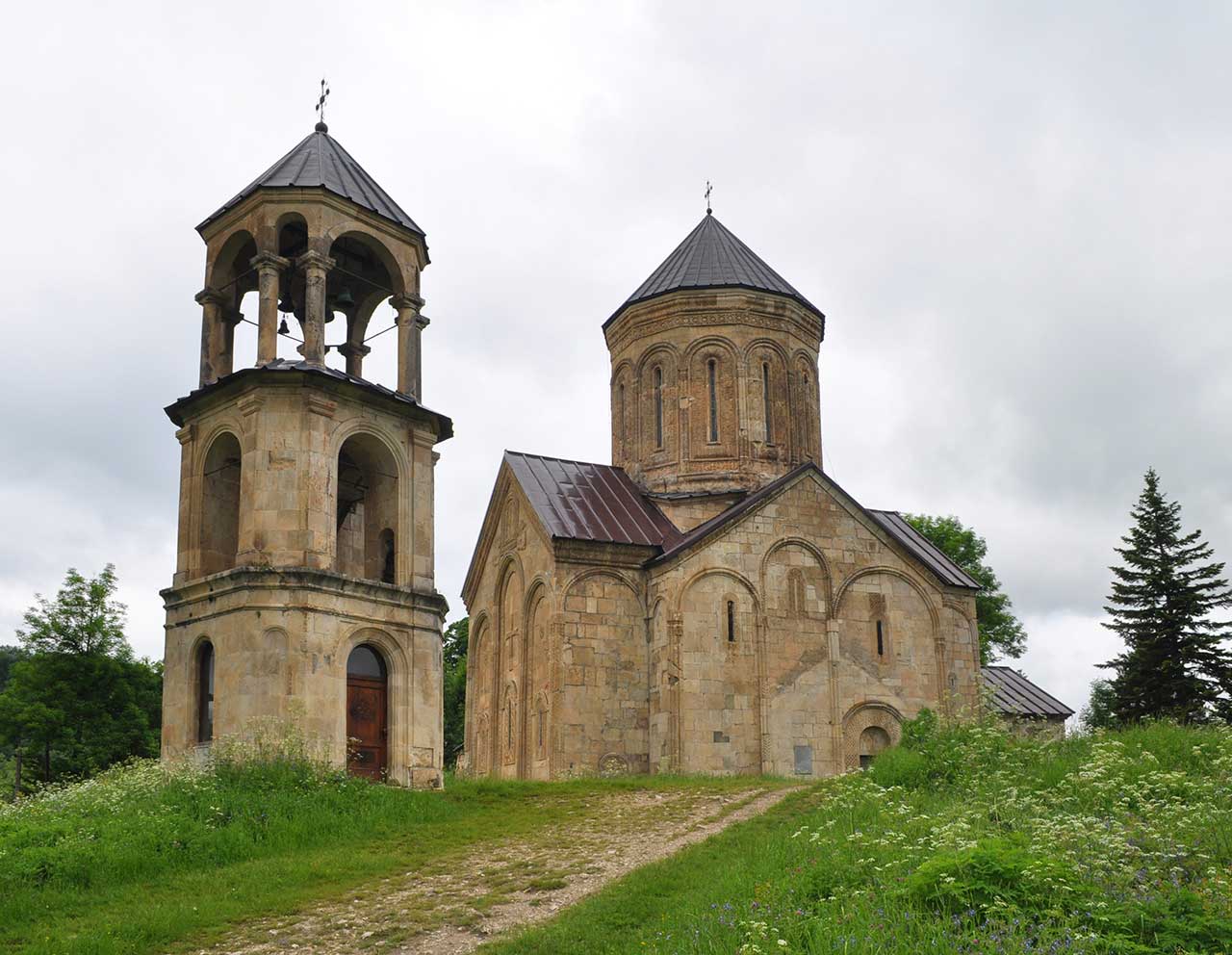
The walled Gergeti complex consists of several historic structures: the domed Trinity Church, built in the 1330s, a bell tower from the early 14th century, and the “Council Hall” building, dating from the late 15th to early 16th centuries.
Throughout history, Gergeti Trinity Church has played a vital role in Georgia’s religious life, over the centuries functioning both as the treasury of Mtskheta and as a place of refuge. At one time, the Cross of Saint Nino was kept there—a privilege it shared with the Svetitskhoveli Cathedral and Tbilisi’s Sioni Cathedral.
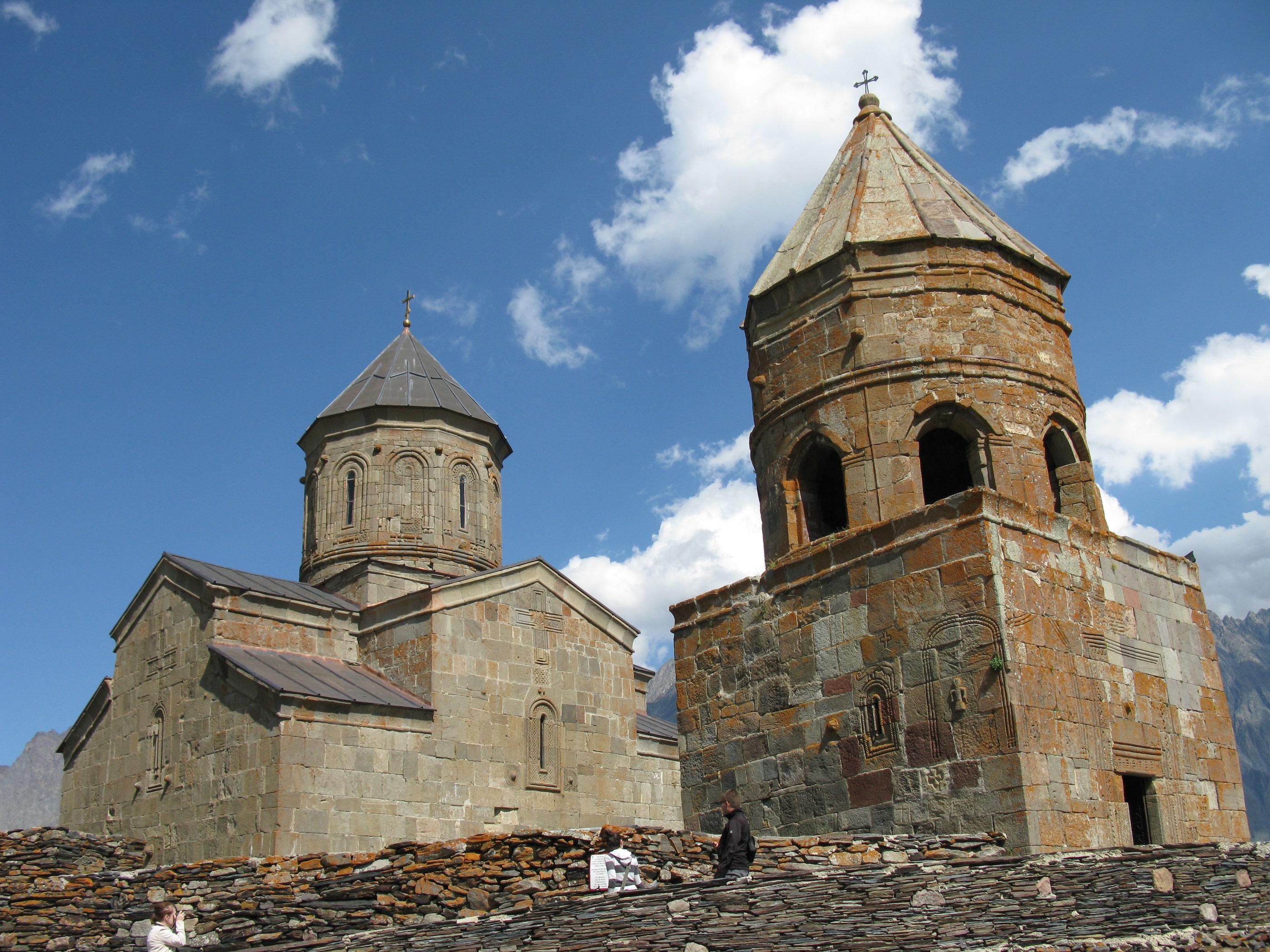
View from the North-East
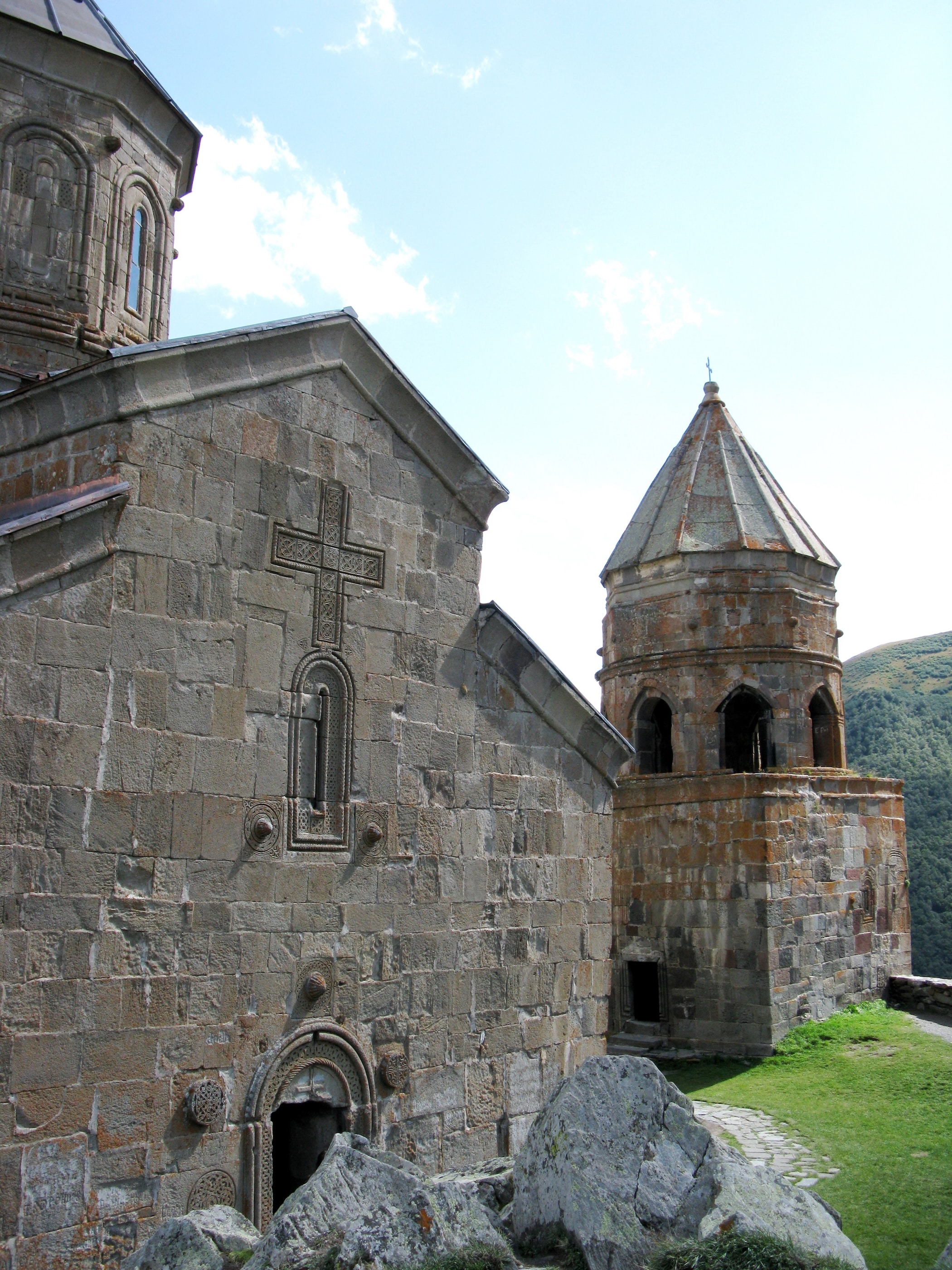
View from the West
The massive, heavy proportions of the Gergeti Trinity Church create a cubic base, crowned by a broad, well-balanced dome. The walls are faced with carefully cut andesite blocks on both sides. Despite its modest size, the plain, almost rigid cubic form of Gergeti Trinity Church expresses the harsh and unyielding spirit of Khevi. Standing at the highest point of the mountain, against the backdrop of the eternally snow-capped Mount Kazbek, this is the only domed church in the region, and it overlooks the entire valley.
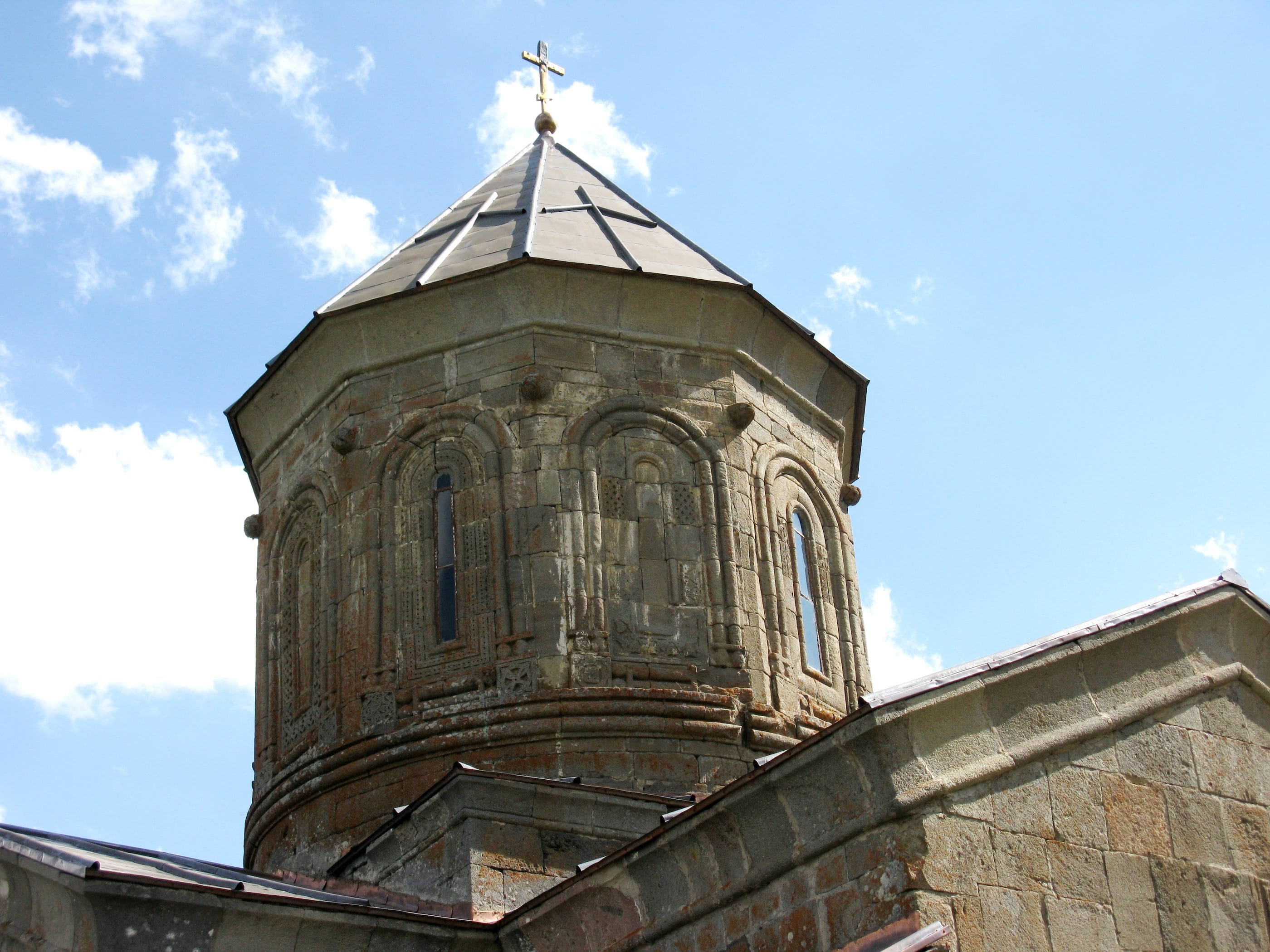
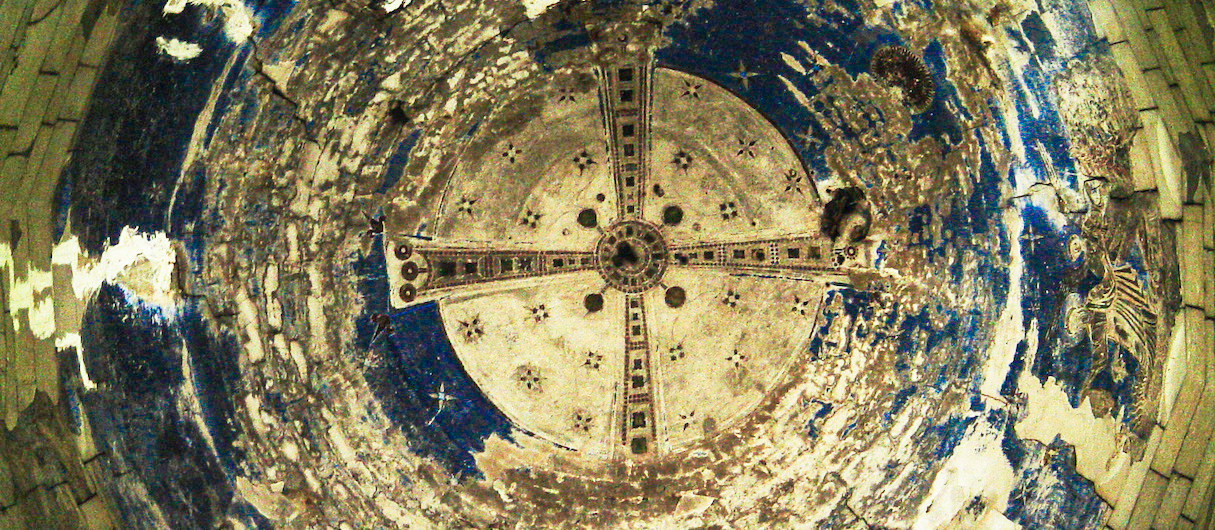
The dome
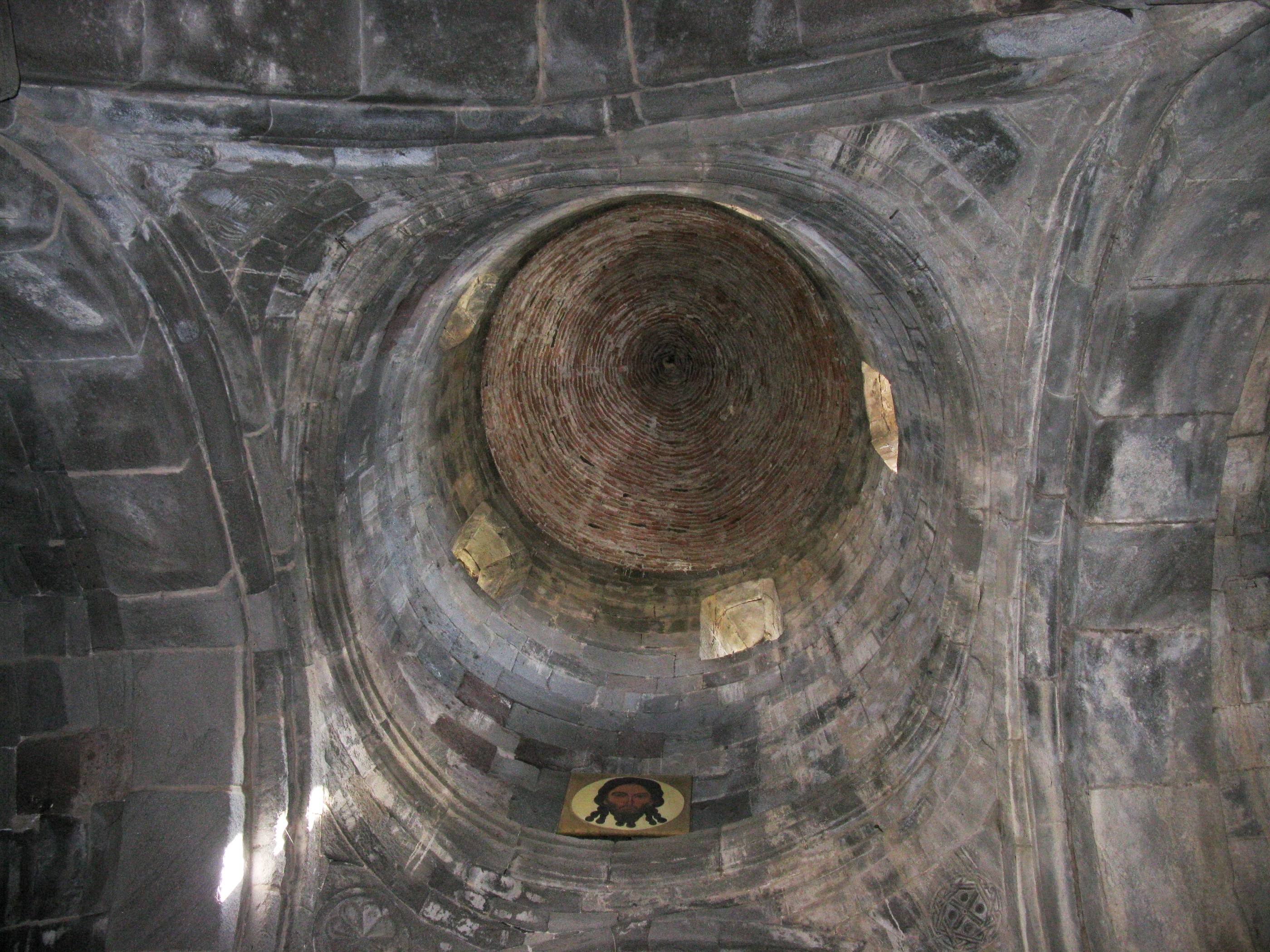
Interior, the dome
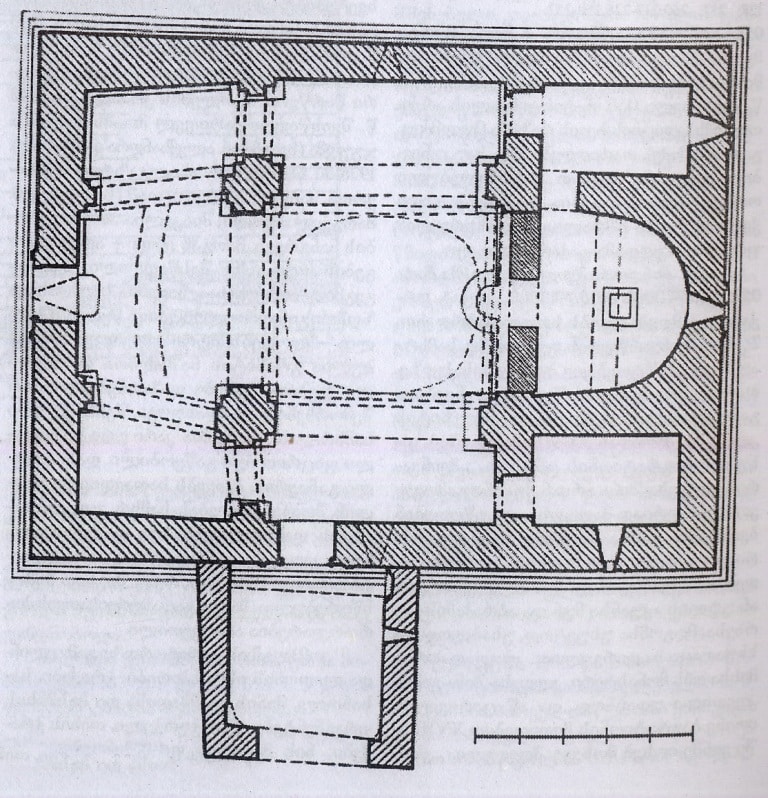
Gergeti Trinity Church, floor plan
The church’s monumentality is highlighted by its restrained decoration, visible only when one comes close to the building. Ornaments frame the openings and accentuate the large crosses etched above them. The façade decoration is carved into the surface of the wall, with only the dome’s window frames projecting outward in slight relief. The masonry of the façade and dome is enriched with carved pinecones and rosettes of various shapes. The masterfully made decor is marked by the restrained simplicity typical of its time.
On its southern side, the church has a unique annex, built in the 15-16th centuries, known as the “Council Hall”—a meeting place for the elders of the Khevi community. The building is square in form, covered with a double-pitched roof, and opens to the south through an arched doorway.
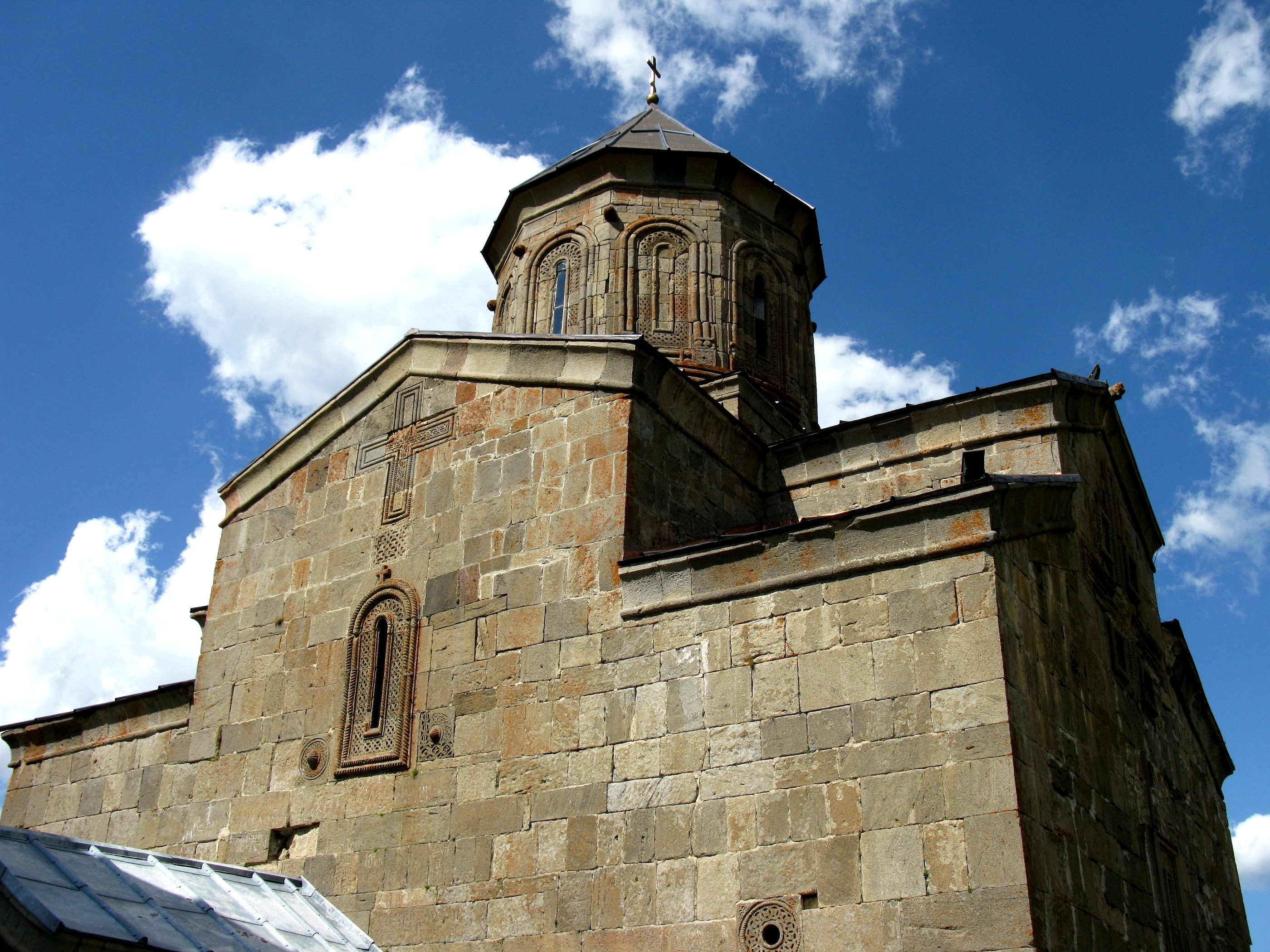
Southern facade
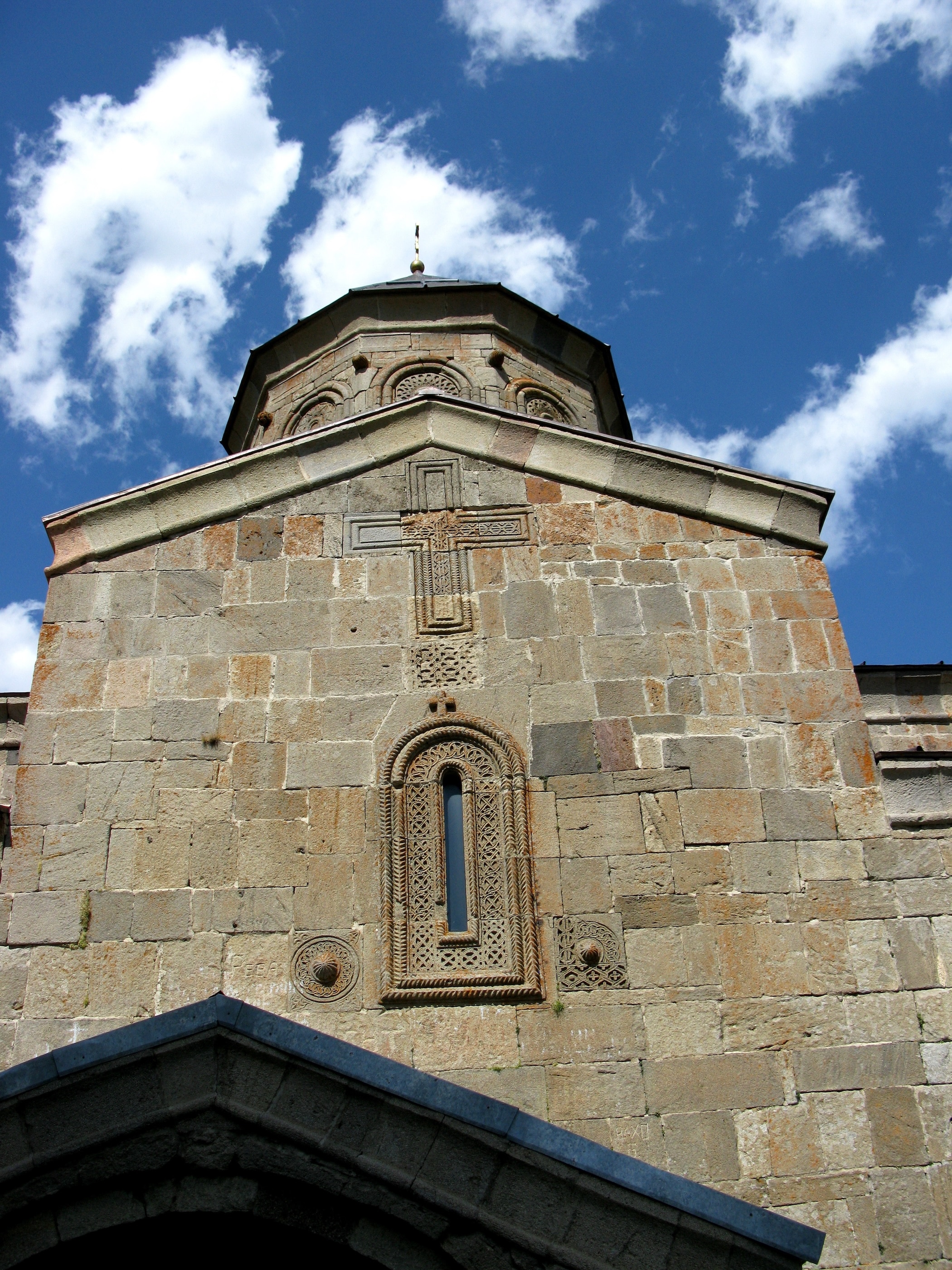
Southern facade, "Council Hall'
The church and bell tower are built from similar materials, and
share similar proportions. The bell tower’s façade, however, features
distinct decoration, including clusters of grapes and carved figures of
fantastic animals and humans, while the portal of the bell tower is adorned with geometric patterns.
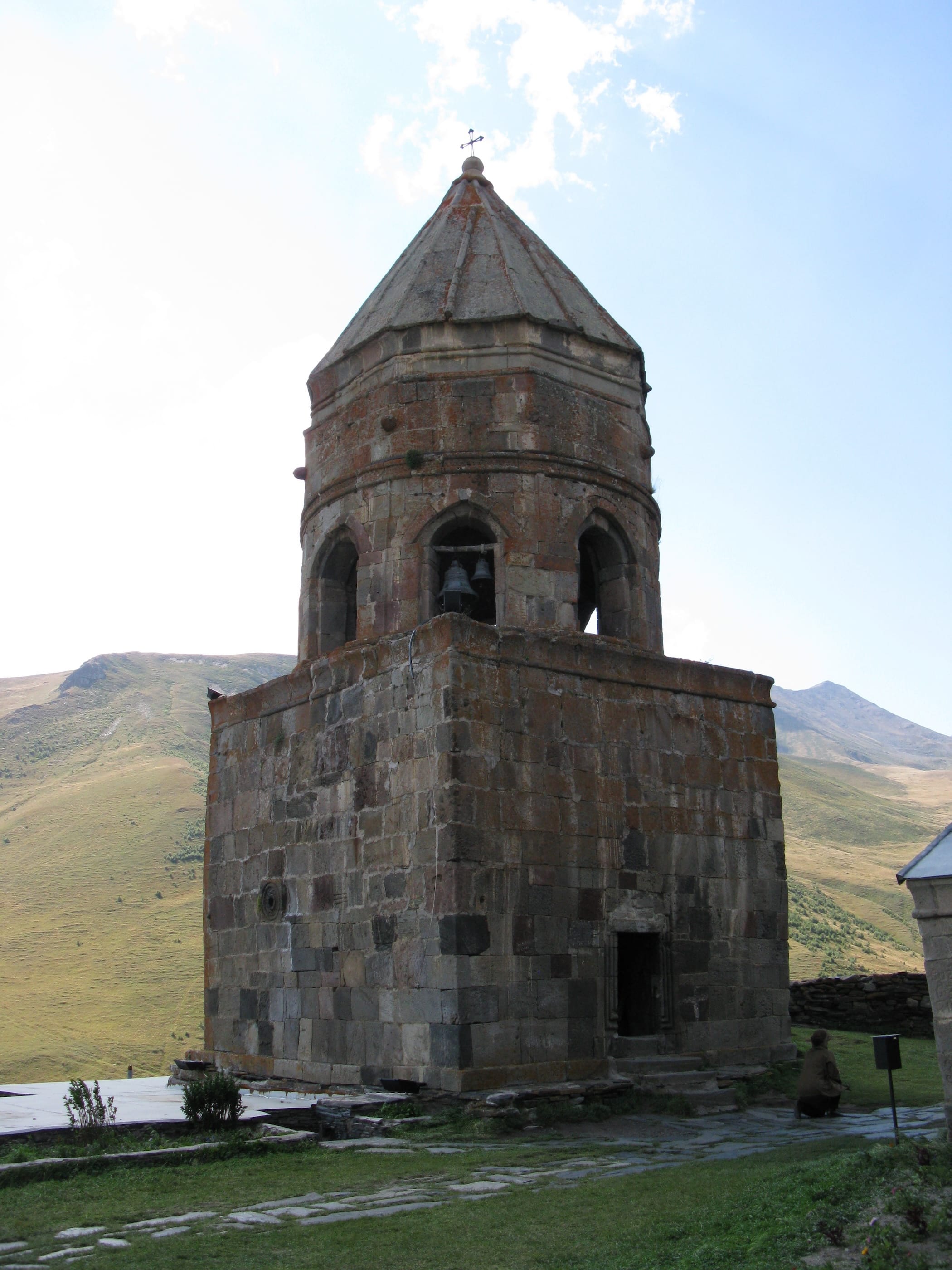
Bell tower, view from the South-west
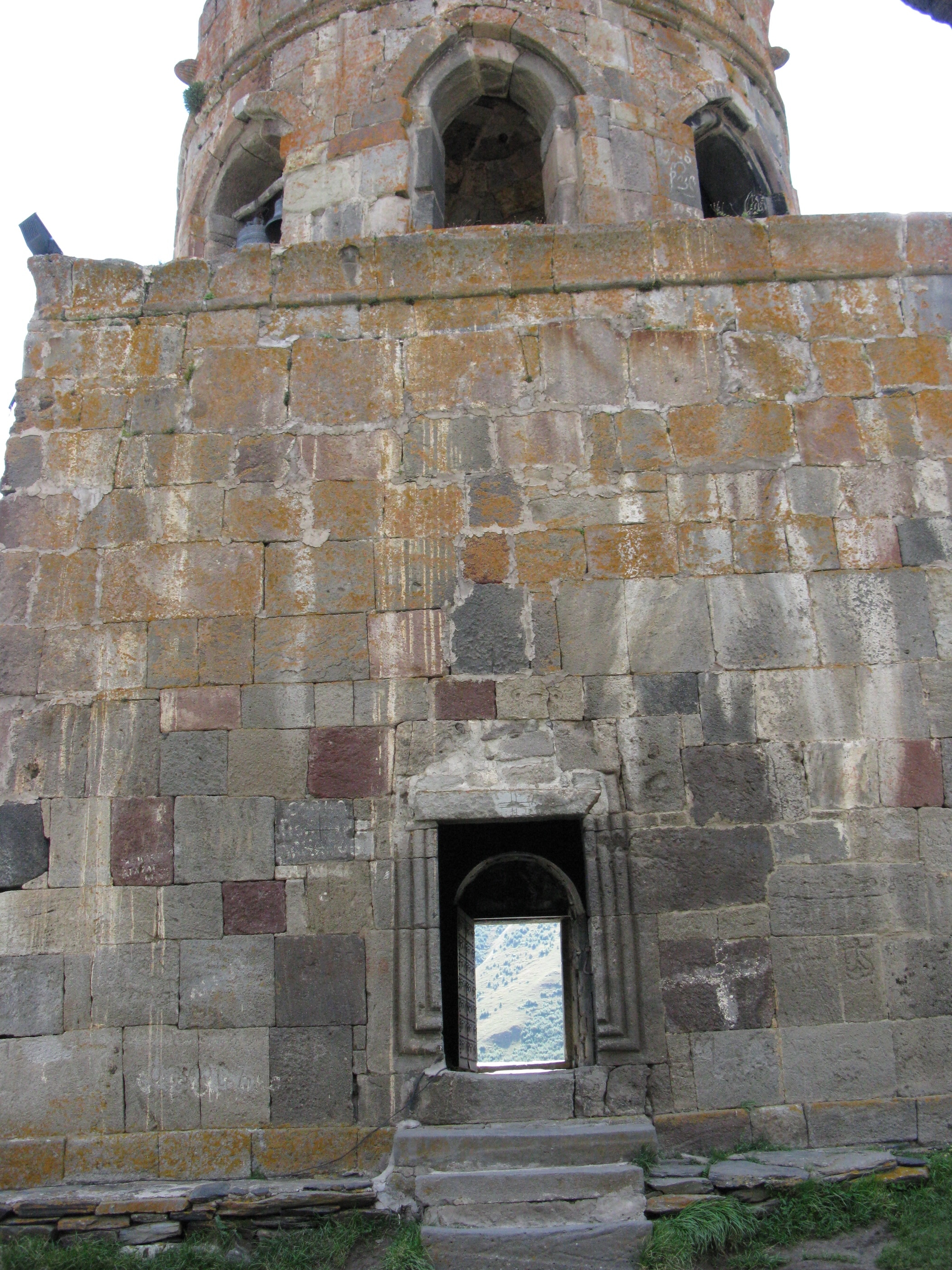
Bell tower, Southern facade
The color and texture of the stone lend the complex a powerful, austere character—one that harmonizes perfectly with both the rugged landscape and the resilient spirit of the local mountain dwellers. Positioned prominently on the mountainside, it is visible from many different vantage points, serving as a striking visual centerpiece in the vast natural panorama. The location was chosen not only for artistic or aesthetic reasons; its deep religious significance was just as vital.
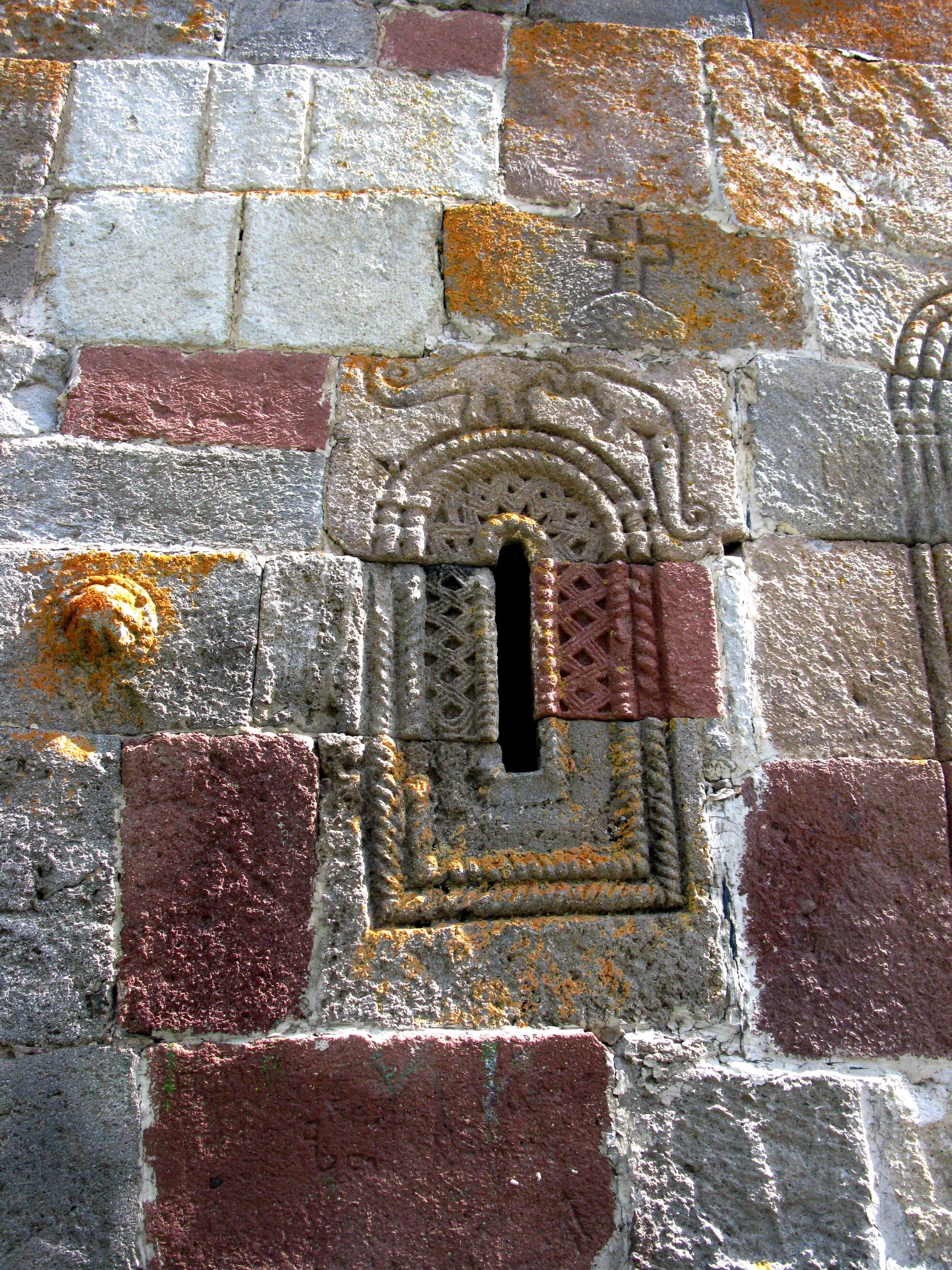
Bell tower, facade decoration
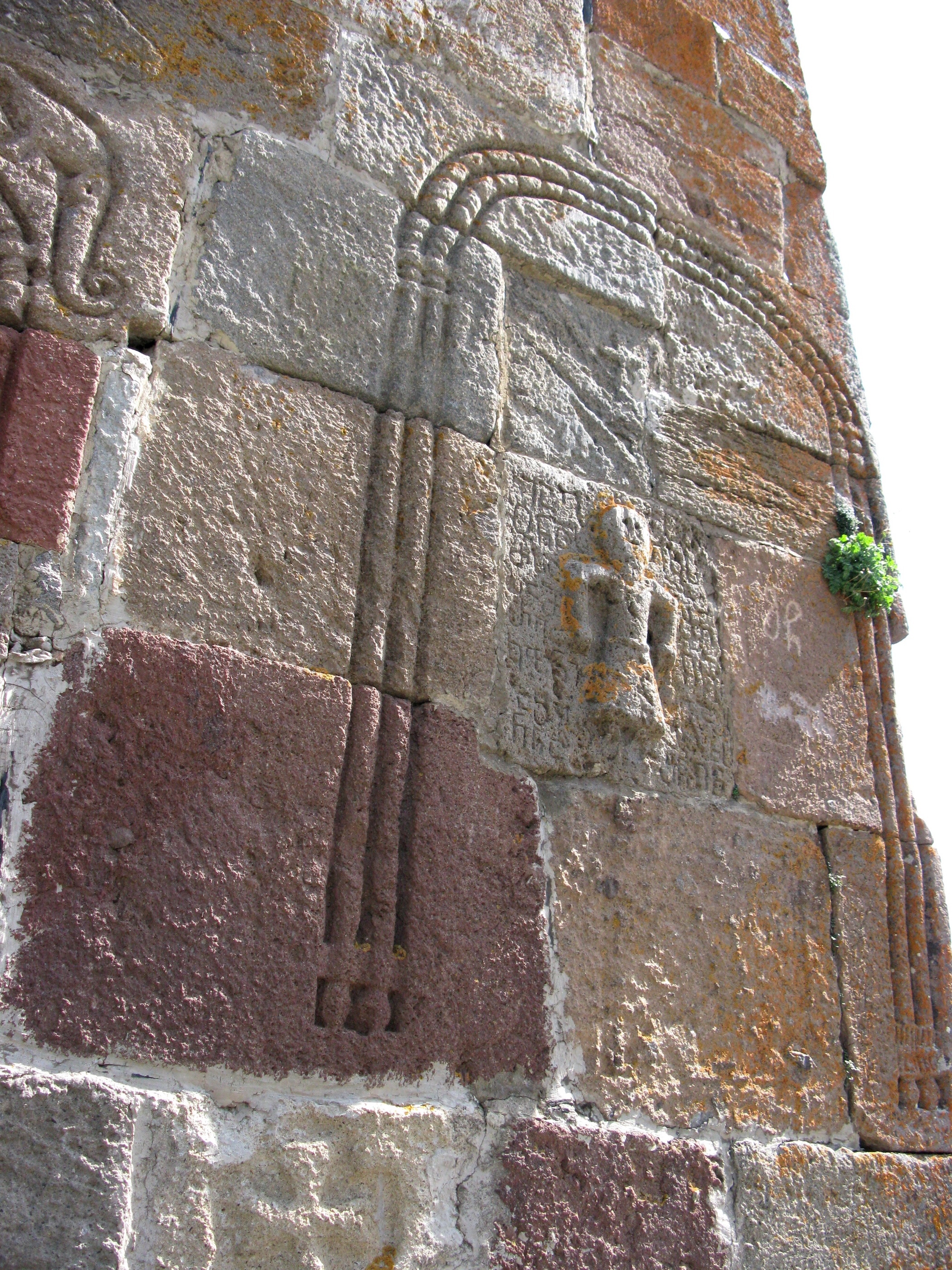
Bell tower, facade decoration
In the late 20th century, a monastery was founded near Gergeti Trinity Church. New buildings were added to the original ensemble, subtly softening the church’s once-solitary and ascetic character, along with the stark mood characteristic of its natural surroundings. Despite these additions, the silhouette of the Gergeti Trinity complex still crowns the mountain; standing out clearly against the backdrop of Mount Kazbek’s glacier, and offering that unforgettable image born of the union between nature and architecture.