




 Share this article
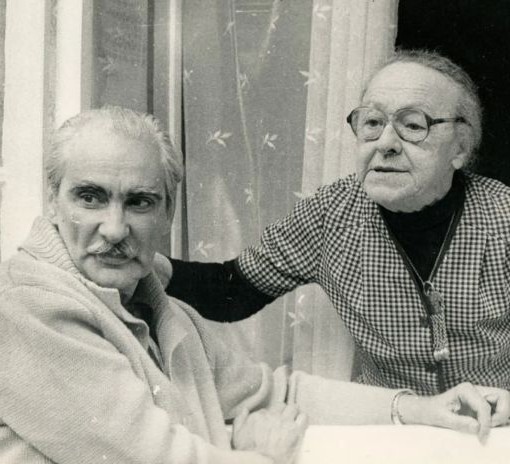
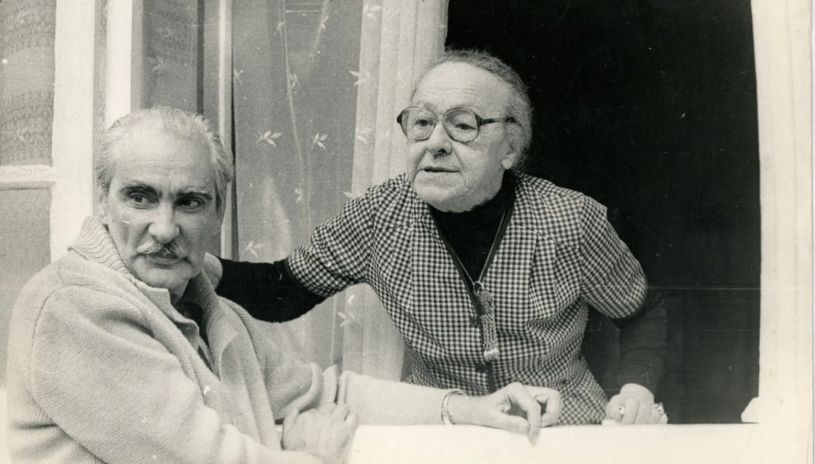
If he was cautious, how could he also be courageous? one might ask. Indeed, the life and work of the remarkable Georgian theater director, teacher, and theorist Mikheil Tumanishvili reflect a striking blend of contrasts and contradictions.
Formed within the cultural framework of the Soviet era, Tumanishvili ultimately distanced himself from its ideological constraints. He expressed his resistance to totalitarianism through his artistic endeavors, both in the thematic content he chose and in the expressive forms he developed. At times, he exposed the nature of tyranny through profound tragedy; at others, he did so with subtle humor and refined irony.
Despite living and working behind the “Iron Curtain,” which limited access to information, Mikheil Tumanishvili continually sought forms that would set him apart from mainstream Soviet theatrical styles and bring his work closer to contemporary European theater. Guided by the creative intuition of a true artist and thinker, he pioneered avant-garde theater during the Soviet era – developing productions that, in concept, perspective, and form, resisted the rigid doctrines of socialist realism, its imposed pathos, and monumental style. He favored intimate, chamber-like spaces, dissolved the invisible barrier between stage and audience, cultivated a close and immersive environment, and rejected theatrical affectation, artificiality, and declamatory performance.
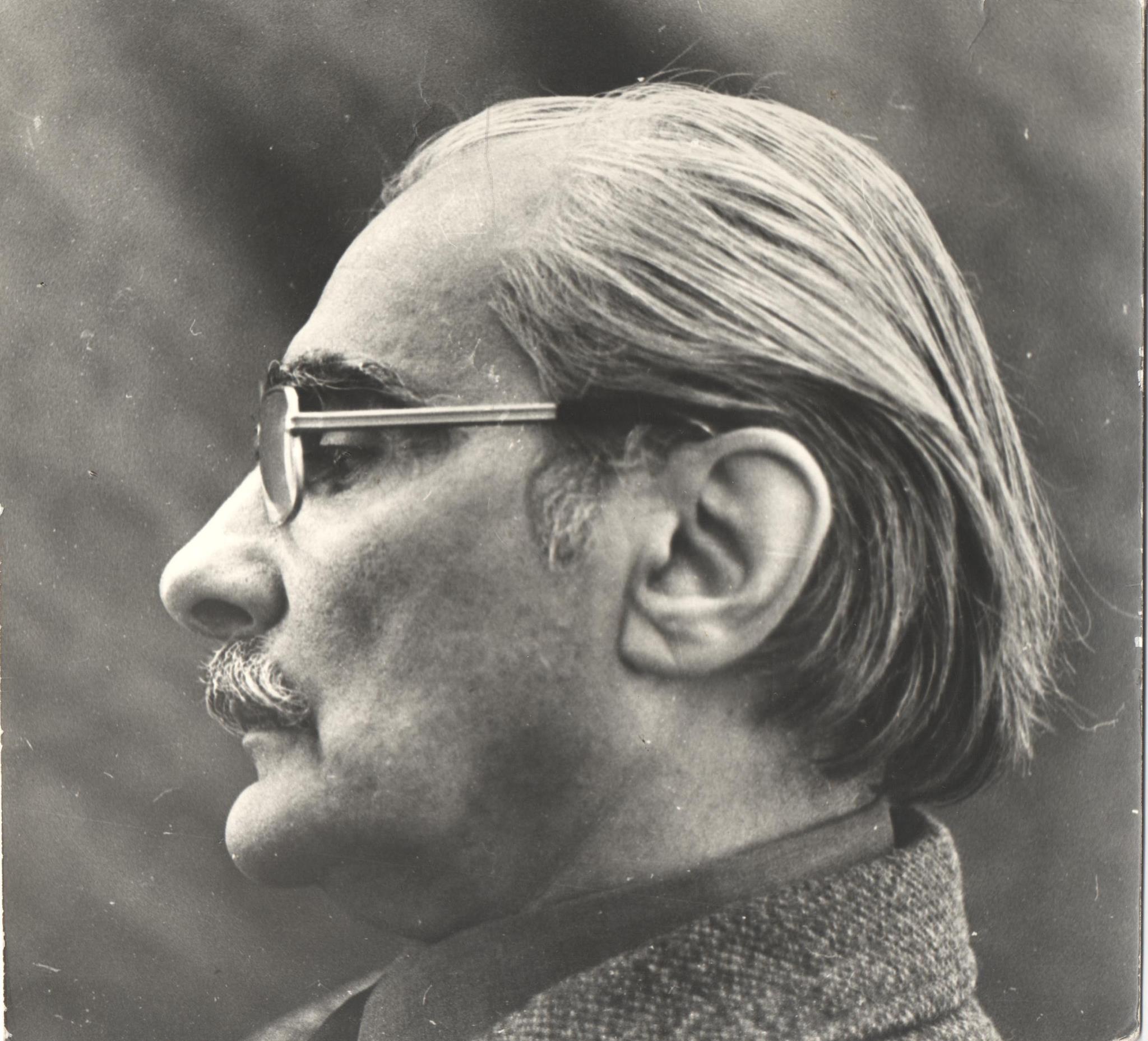
Mikheil Tumanishvili.
Mikheil Tumanishvili is a singular figure in contemporary Soviet theater, distinguished by his achievements as a director, teacher, and theorist. His theoretical writings and books on theatrical art have become essential textbooks for actors, directors, set designers, critics, and scholars. For over half a century, his students have enriched and diversified the stages of Georgian theater, producing many of the country’s most significant artistic figures. Among the internationally recognized directors he trained are Robert Sturua, Temur Chkheidze, and Davit Doiashvili. Tumanishvili's own performances had a profound impact on Georgian theater, its language, and even the viewpoint of Soviet audiences.
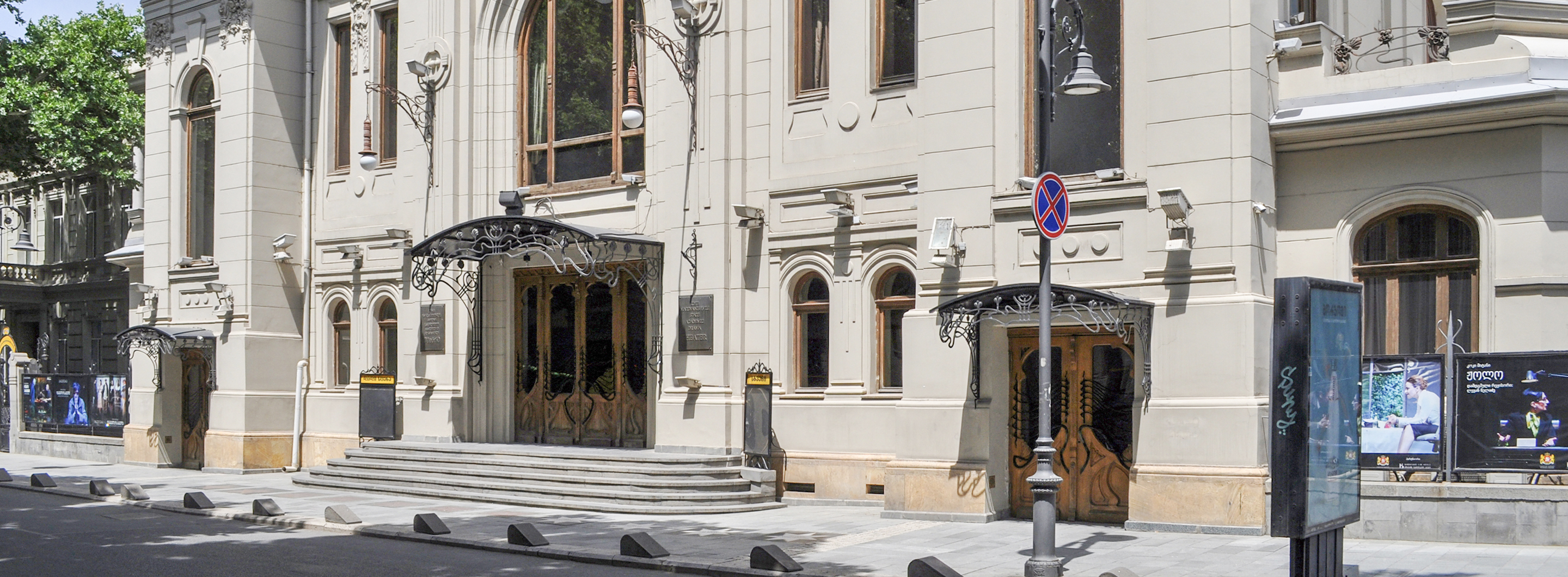
Mikheil Tumanishvili was born on February 6, 1921, in Vera, one of Tbilisi's oldest and most culturally rich neighborhoods. He was drawn to art and theater from a young age. At 13, he saw Sandro Akhmeteli's production of Anzori by Sandro Shanshiashvili at the Rustaveli Theater, and it left a lasting impression on him. Although he initially chose architecture as a future profession, the theater soon became his true calling, and he became a frequent visitor of the Rustaveli Theater.
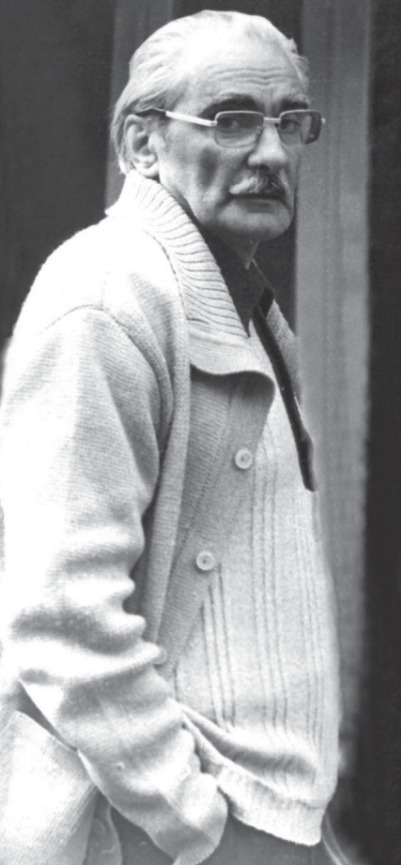
Mikheil Tumanishvili.
Tumanishvili’s early life was marked by hardship. After failing entrance exams, he was promptly drafted into military service. By 1941, he was on the front lines of WWII, where he was wounded multiple times, imprisoned, and ultimately escaped from captivity. In 1944, complications from a major wound led to his release, and he returned to Tbilisi. These wartime injuries had a profound impact on both his life and his art.
Back in Tbilisi, Tumanishvili enrolled at the Tbilisi Shota Rustaveli Theater Institute to study drama directing under the guidance of Giorgi Tovstonogov, the same Tovstonogov who would later lead the St. Petersburg Bolshoi Drama Theater and shape Russian Soviet theater for decades. Tumanishvili graduated in 1949. His first student performances were unremarkable, and many teachers and members of the theater community did not foresee a promising future for him. However, the rector of the Theater Institute and the director of the Rustaveli Theater, along with the renowned actor Akaki Khorava, recognized his potential. With Khorava's support, Tumanishvili began his journey at the Rustaveli Theater, initially working as a firefighter due to a lack of director positions, but these challenges did not deter the young artist, who was brimming with ideas.
Mikheil Tumanishvili's early performances were not marked by a new form or theatrical language. He became an innovator only via experience and in-depth reflection on the difficulties of his time. His first breakthrough came with Julius Fuchik's play - People, Be Vigilant!, which he performed at the Rustaveli Theater. Here, the director's unique vision, flair and intuition were revealed.
Mikheil Tumanishvili was the first to refuse to use the traditional theater curtain, breaking down the barrier between the vast stage of the Rustaveli Theater and the audience, and bringing spectators closer to the actors. He also employed indirect interaction, which was unusual at that time; for example, in Pavel Kohout's play When Such Love Is, Sergo Zakariadze’s entrance from the stalls created a surprising and memorable effect on audiences accustomed to conventional theatrical forms. Tumanishvili moved away from grandiose décor, instead creating visually minimal spaces that came alive through the actors and their characters. By replacing the pseudo-romantic Georgian Soviet theater with psychological realism, he encouraged actors to portray modern, believable people. This method fundamentally transformed the performance style and approach of the artists.
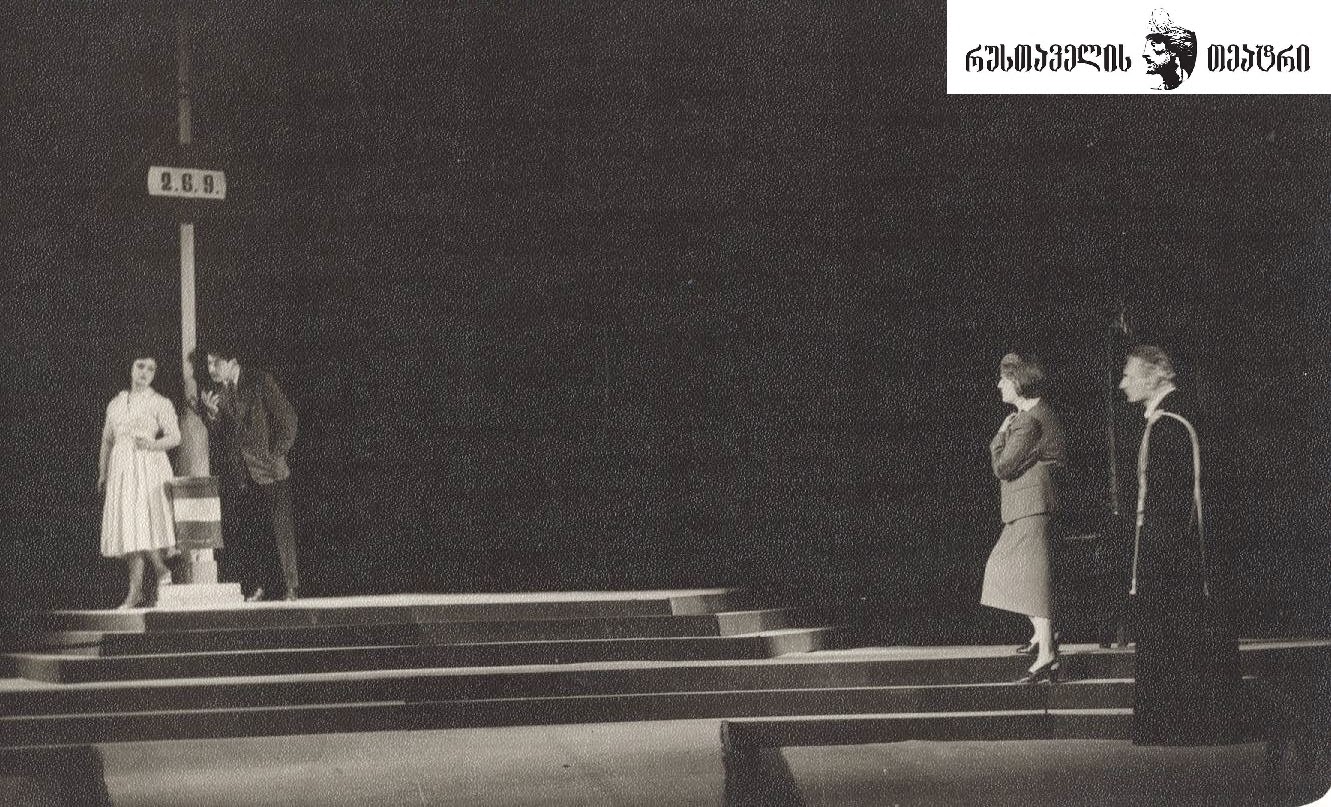
When Such a Love Is.
Among the performances staged at the Rustaveli Theater, several stood out: Julius Fuchik's People, Be Vigilant! (1951), John Fletcher's The Spanish Priest (1954), Kita Buachidze's Love Story (1958), Guga Nakhutsrishvili's Chinchraka (1963), William Shakespeare's A Midsummer Night's Dream (1964), Jean Anouilh's Antigone (1968), Otia Ioseliani's Before the Cart Turns Over (1969), and Aleksandre Chkhaidze's The Bridge (1970), among others.
Mikheil Tumanishvili's Chinchraka was particularly noteworthy, as it marked the opening of the Rustaveli Theater's small stage. Every aspect of the performance, from the script to the actors, was unconventional. At that time, the Rustaveli Theater did not stage fairy tales or children's plays, so the announcement of this production sparked mixed reactions from among the public. Actors such as Sergo Zakariadze, Ramaz Chkhikvadze, Medea Chakhava, Giorgi Gegechkori, Erosi Manjgaladze, Zinaida Kverenchkhiladze, Bela Mirianashvili, Karlo Sakandelidze, and Nana Pachuashvili, who were assigned to portray animals and fairy-tale characters, were themselves taken by surprise. The actors trusted Mikheil Tumanishvili so deeply that they fully embraced his vision, resulting in a performance that became a sensation, drawing audiences repeatedly. His production laid the foundation for a new style and direction in Georgian theater, which later influenced Robert Sturua's work and developed into a distinctive aesthetic known as conventionally grotesque theater.
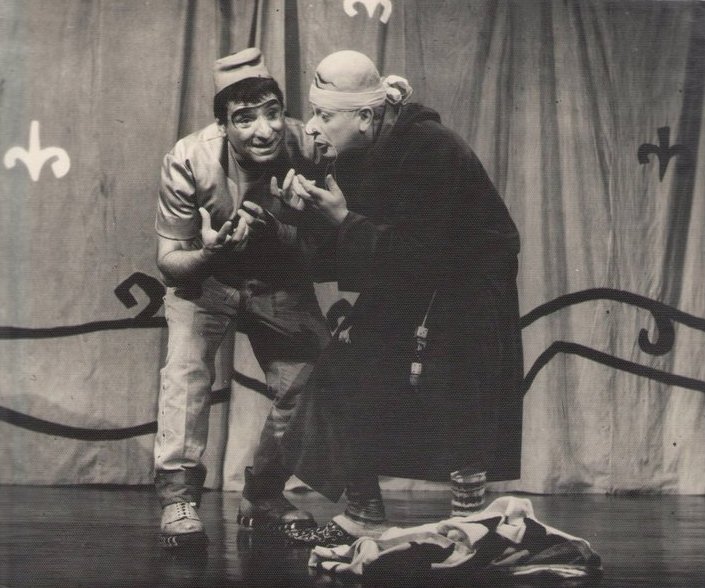
Chinchraka. Sergo Zakariadze and Ramaz Chkhikvadze.
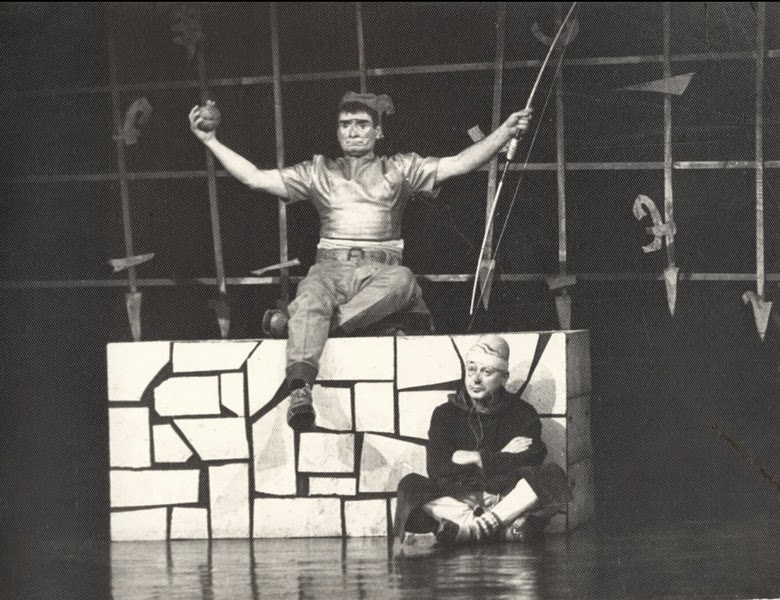
Chinchraka. Sergo Zakariadze and Ramaz Chkhikvadze.
Mikheil Tumanishvili's Antigone, based on Jean Anouilh's play, was equally scandalous. The director adapted the ancient mythological plot to address the contemporary issues of the modern Soviet world, revealing a system that showed no mercy and lacked genuine human values. The performances of Sergo Zakariadze (as Creon) and Zinaida Kverenchkhiladze (as Antigone) became exemplary models for the Georgian acting school.
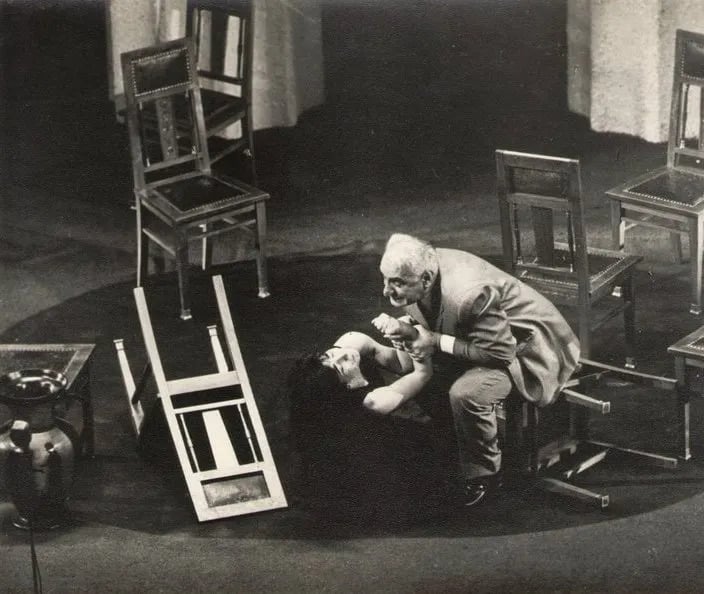
Antigone. Sergo Zakariadze (as Creon) and Zinaida Kverenchkhiladze (as Antigone)
Mikheil Tumanishvili, together with a group of young collaborators, founded the creative collective known as the “Seven People” at the Rustaveli Theater. Their productions were highly significant for their time, but internal conflicts eventually forced Tumanishvili to leave the theater. Without a venue of his own, he returned to his roots at the theater institute, where he mentored several generations of actors and directors, laying the groundwork for a new theatrical center. This effort led to the creation of the Film Actors Studio, which was officially recognized as a theater workshop—the Film Actors Theater—in 1978. Today, this prominent center of modern Georgian theater continues to celebrate Mikheil Tumanishvili's vision. In its early years, the theater functioned as an experimental workshop, offering a censorship-free environment where young artists and their mentors could develop performances rooted in creative exploration.
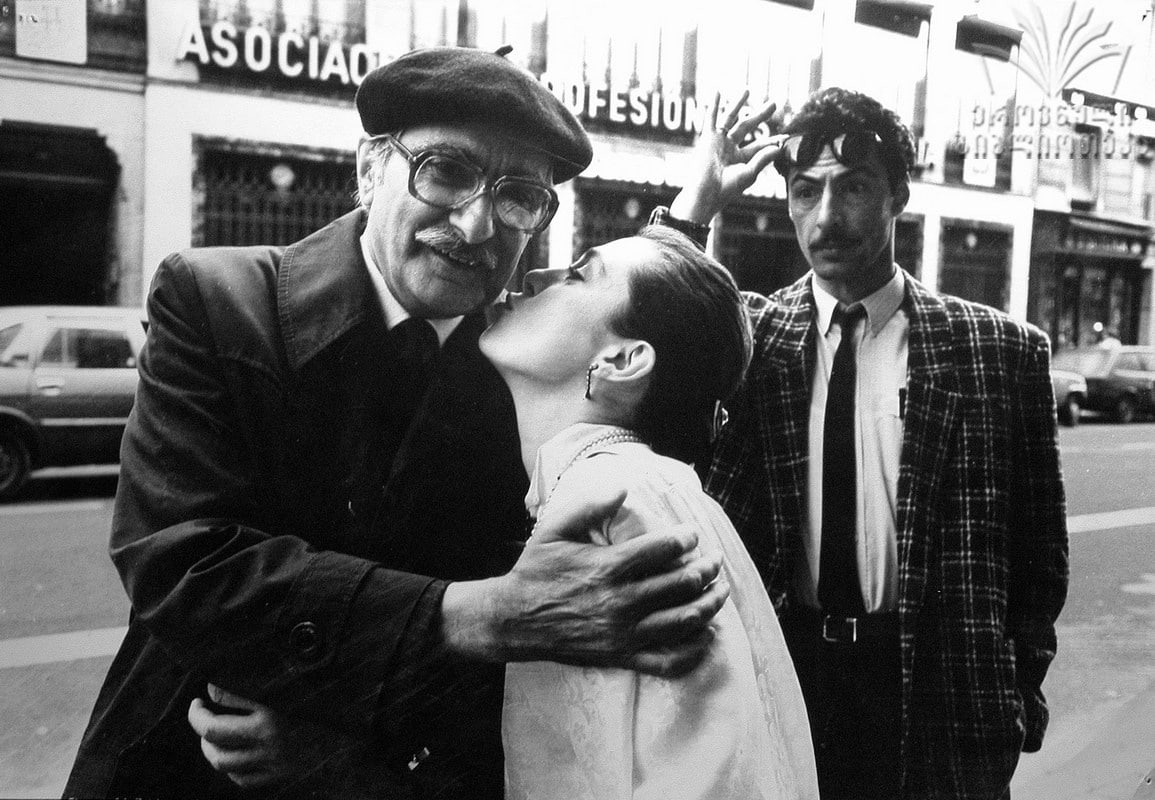
Mikheil Tumanishvili, Nineli Chankvetadze and Zurab Kipshidze.
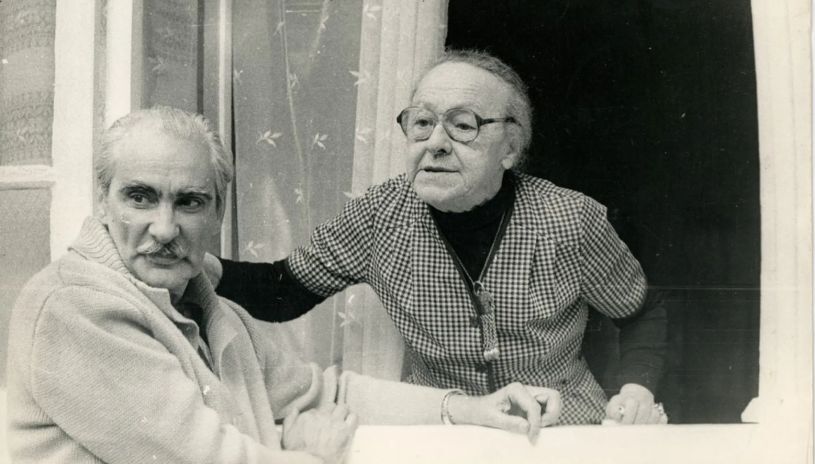
Mikheil Tumanishvili and Sesilia Takaishvili.
Among the performances staged at the Film Actors Theater, several stand out: Davit Kldiashvili's Bakula's Pigs remains in the theater's repertoire today, continuing to captivate audiences, while Rezo Gabriadze's Our Little Town, has been part of the active repertoire of the theater for over three decades. Molière's Don Juan and Shakespeare's A Midsummer Night's Dream were particularly popular, and even toured international festivals following the recommendation of the renowned 20th-century director Peter Brook, who greatly admired Mikheil Tumanishvili's innovative staging.
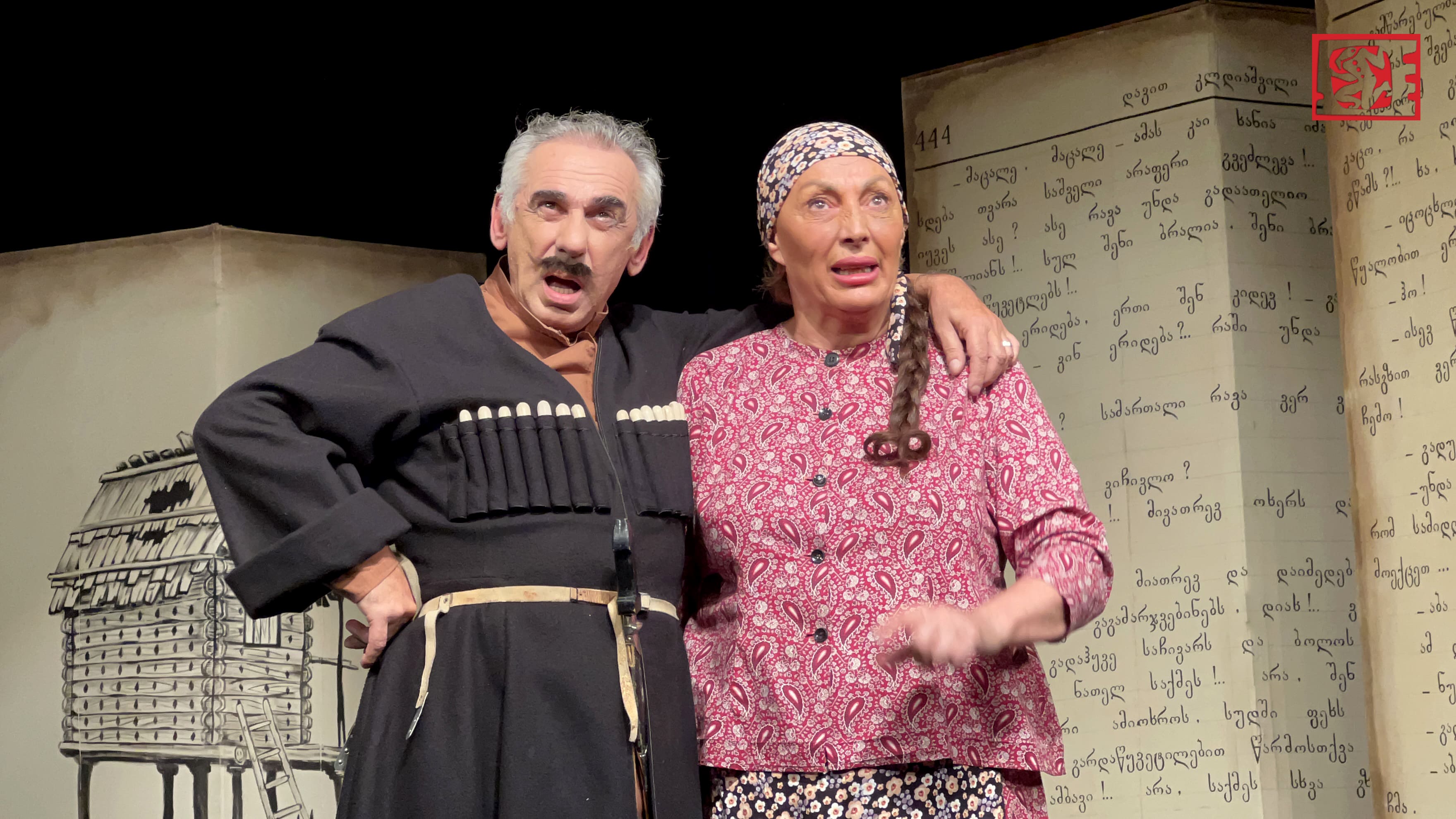
Bakula's Pigs. Ramaz Ioseliani and Laura Rekhviashvili.
Mikheil Tumanishvili passed away in 1996, and is buried in the Didube Pantheon of Public Figures. He received numerous awards throughout his career. Following his death, the Film Actors Theater was named in his honor, and an award and prize were established to celebrate his achievements. Additionally, an international art festival and an art development fund are named after him, and a street in Tbilisi is also bears his name.