Giorgi (Gigo) Gabashvili (1862-1936) was one of the
founders of the Georgian academic school and easel painting. Deeply influenced
by the traditions of Russian Realism, his artistic vision closely aligned with
the ideals of the Peredvizhniki (the Wanderers), a connection clearly
reflected in his realistic works. Gabashvili was also the first artist in the
history of Georgian art to create symbolist compositions.
Gigo Gabashvili was born in Tbilisi
in 1862. His father died when he was five. His mother, Tamar Nareklidze,
enrolled him in a
Real School.
When he was ten, she entrusted him to a family of Germans living in Tbilisi,
the von de Neniers, where he learned German and French. After his mother married
a military colonel, Gigo returned home. His stepfather treated him with great
affection, and brought him up as his own son.
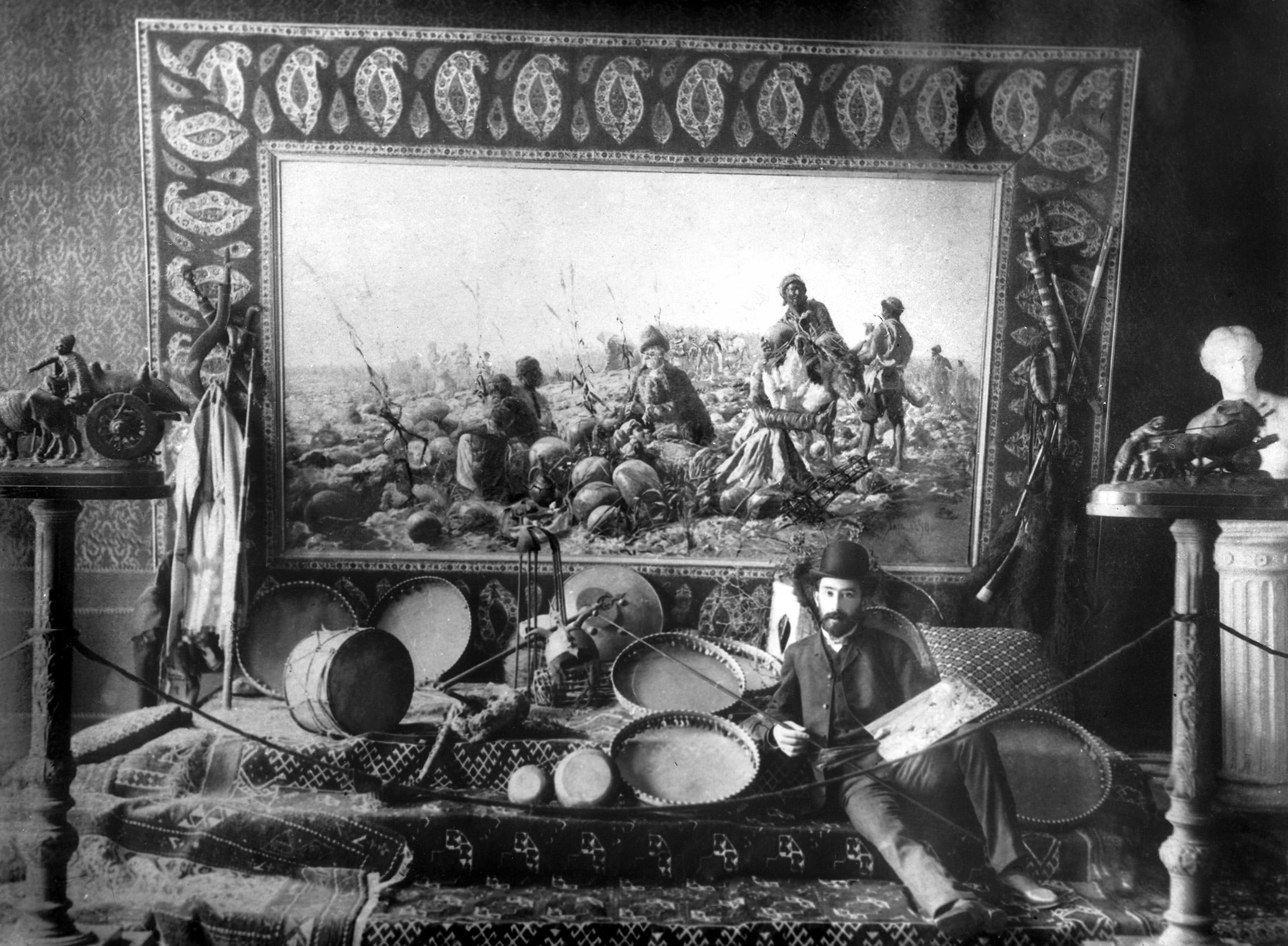
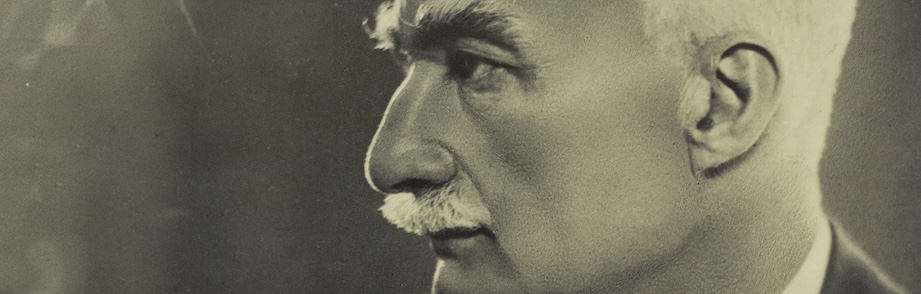
Gigo Gabashvili
After
graduating from the Real
School, Gabashvili was admitted to Keppene’s private art school. In
1883, he enrolled as a non-degree (free) student at the Imperial Academy of
Arts in St. Petersburg, studying in the battle painting class of Bogdan
Willewalde.
In St. Petersburg, Gabashvili befriended
Oscar Schmerling, Romanoz Gvelesiani, and Shio Beridze. He also met and became
close with Ilia Chavchavadze, who was deeply impressed by the young artist’s
talent. Upon finding out about Gabashvili’s interest in photography,
Chavchavadze helped him purchase his first camera. It was then, in the late
1880s, that Gabashvili’s photographic practice began.
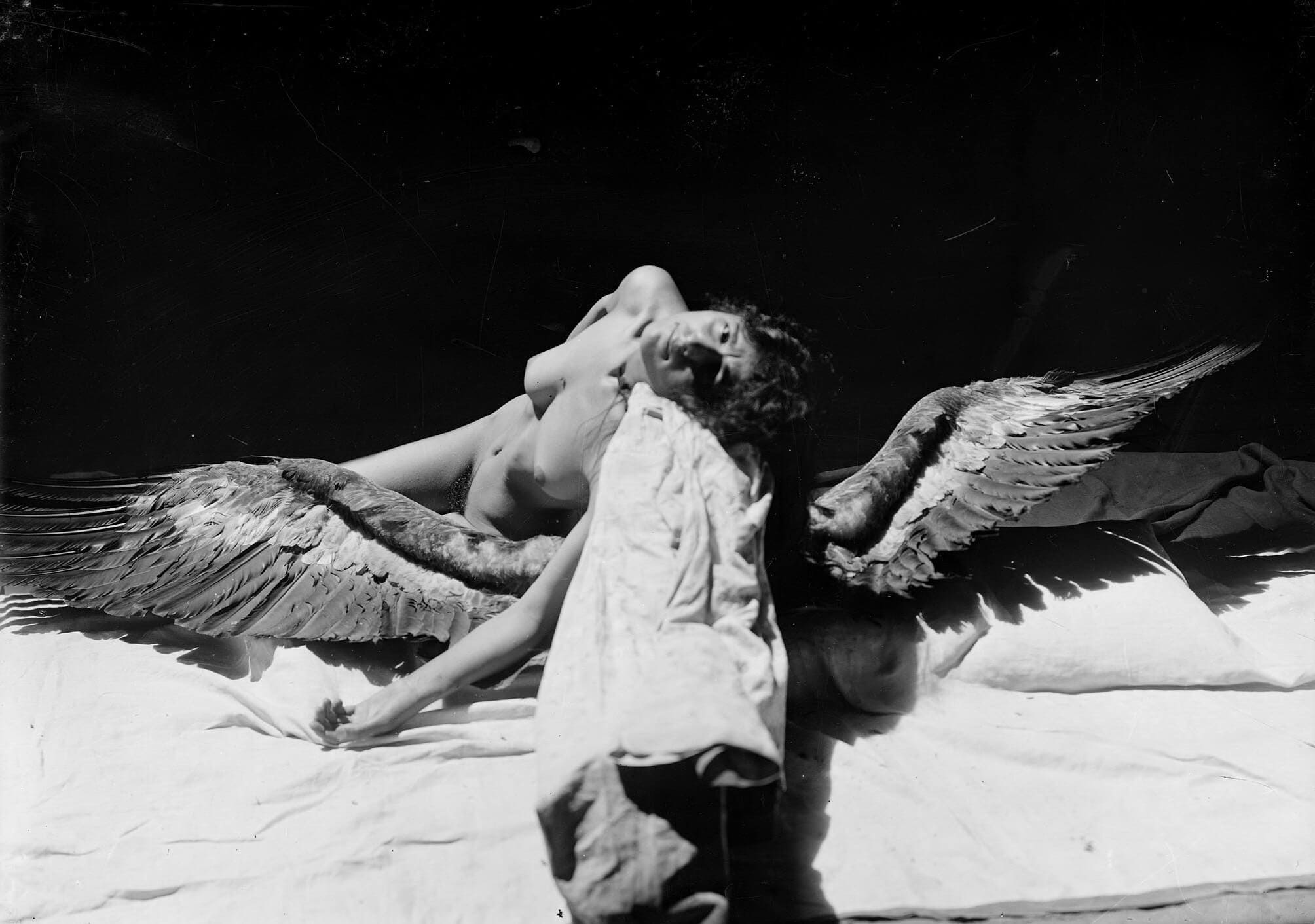
Gigo Gabahsvili, A Woman with Wings, Photography, 1910, GNM - Museum of Fine Arts
In 1888,
Gabashvili graduated from the Academy, returned to Georgia, and went on to travel
throughout the Caucasus. During his travels, he took photographs, made sketches
and pictures, and began collecting ethnographic artifacts.
In 1891, an exhibition was
held in Tbilisi featuring
70 of Gabashvili’s
paintings of various genres.
This was the first show of Georgian fine art ever organized in Georgia, and also the first
solo exhibition by an individual Georgian artist. It was at this exhibition
that the Chicago-based millionaire collector Charles Cranny first saw
Gabashvili’s works. He
commissioned him to paint 28 scenes
of Central Asian life. Gabashvili traveled to Bukhara, where he worked on the paintings
for three years. With the proceeds from those 28
paintings, and with additional financial support from his close friend, the
entrepreneur and philanthropist David Sarajishvili, Gabashvili next went to
Munich to continue his studies.
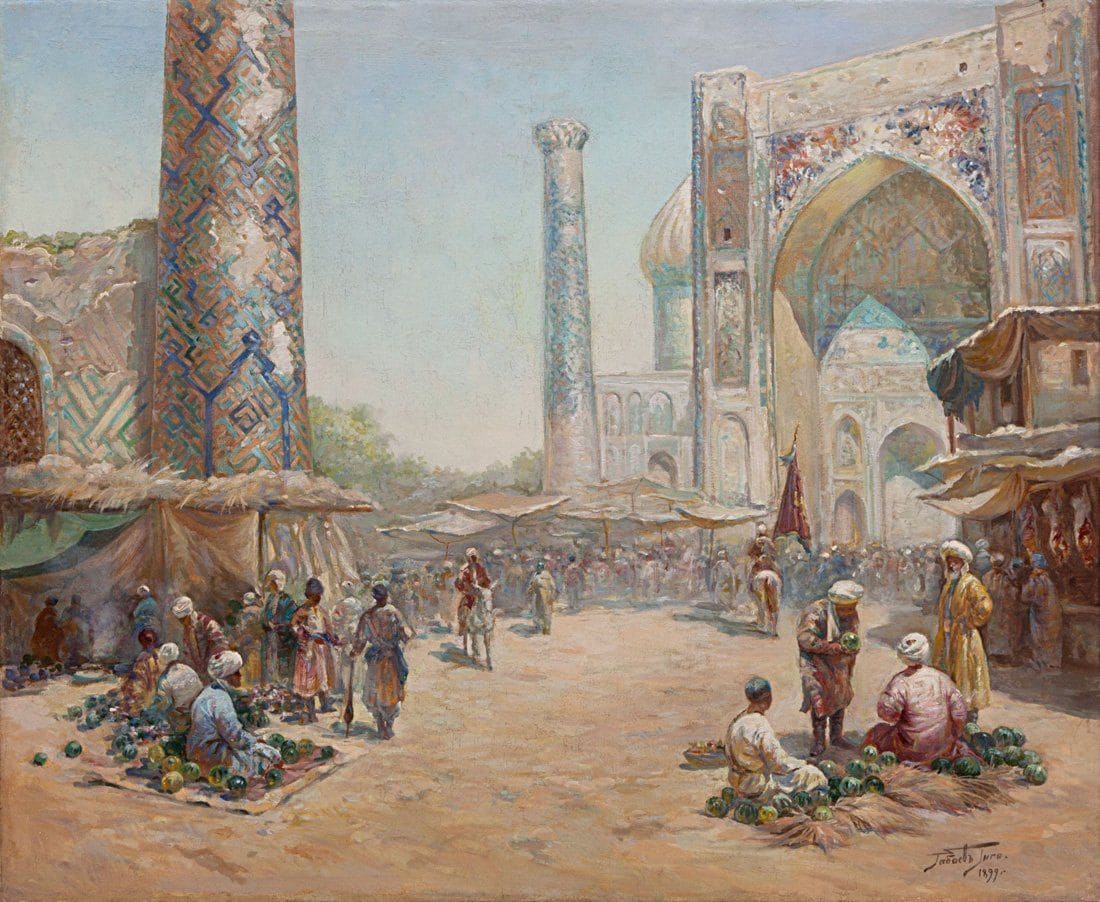
Gigo Gabashvili, The Bazaar in Samarkand, Oil on canvas, 1899
In
1894, Gabashvili was enrolled
in the composition class of Professor Alexander
(Shandor) von Wagner at the Munich Academy. During his time there, he
befriended several professors, including Roubaud, Eisenhut, and Uhle.
Roubaud, impressed by Gabashvili’s talent, invited him to assist him in
creating a large painting depicting the Russo-Turkish War. They painted it together, in Kars.
In 1897, Gabashvili graduated
from the Munich Academy with a silver medal. The
same year, he traveled to Khevsureti, where he produced numerous sketches and
paintings, took photographs, and collected examples of local weaponry and
everyday objects. In 1910–1911, together with Ekvtime Takaishvili and David
Sarajishvili, he founded an ethnographic museum, which came to house his own
extensive collection of ethnographic artifacts.
In
1897, Gabashvili established a private art studio in Tbilisi.
From
1900, he taught at the Drawing School of the Caucasian Society for the
Promotion of Fine Arts, and from 1901, he served as the school’s director.
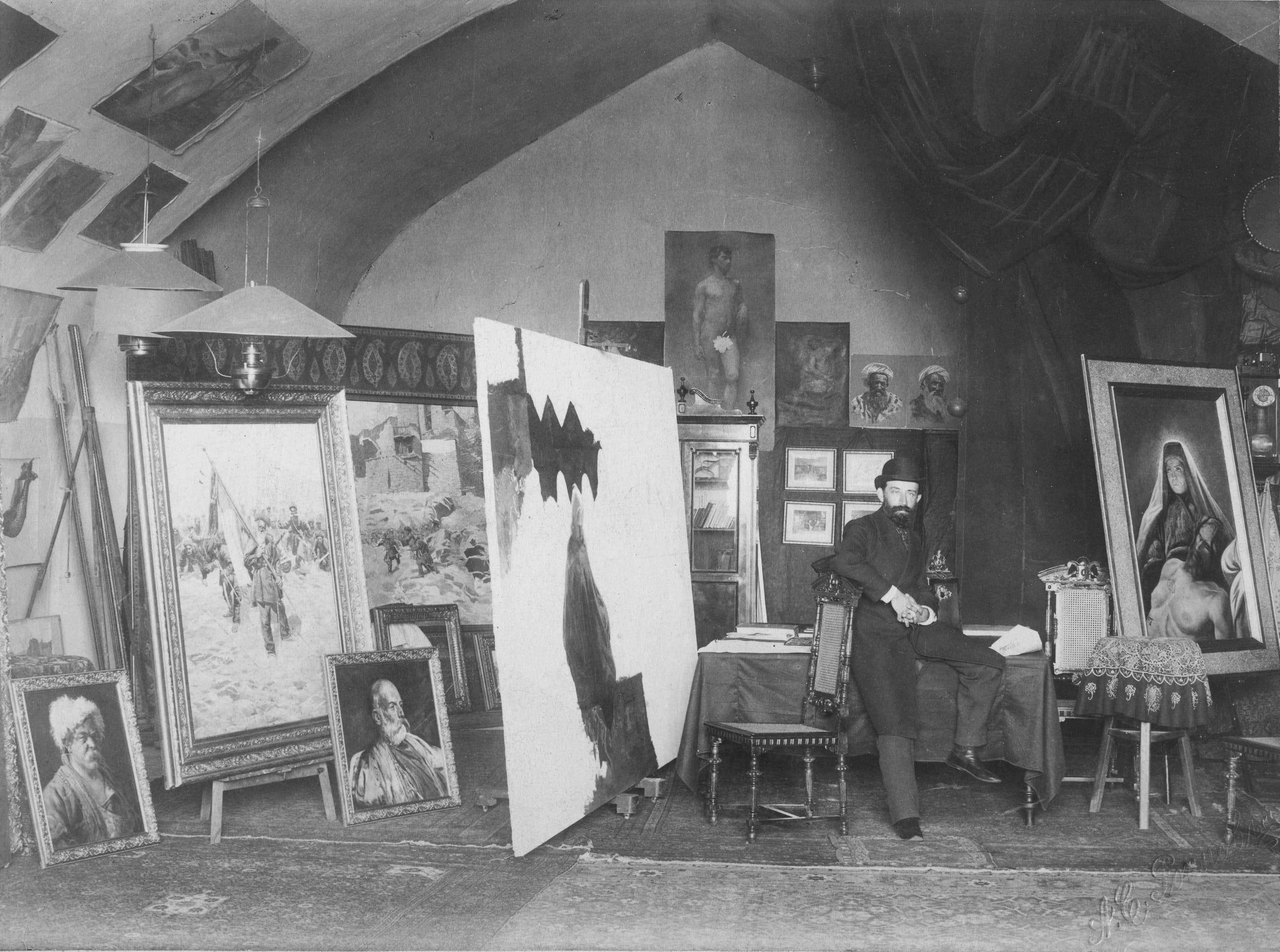
Gigo Gabashvili in his Studio
In 1901, Gabashvili held a solo exhibition
at the Tbilisi Museum of Military History, which received wide acclaim and was
heralded as a great success. The following year, he traveled through Turkey,
Greece, Italy, Spain, France, Switzerland, Austria, Germany, the Netherlands,
and England. On this journey, at an exhibition in Vienna, he met his future
wife, Olympia (Olga) Mühlbaum. In 1904, Olga came to Tbilisi to join him,
marking the beginning of their life together.
Earlier, while studying in Munich,
Gabashvili had been romantically involved with a German woman, Mathilde Franz.
The two met again during his European travels in 1902, and in 1903 their
daughter, Georgina Paulina, was born. In 1906, Mathilde and her daughter came
to Georgia, where she
lived as Gabashvili’s wife until 1921.
After the Sovietization of Georgia, she faced persecution as a German national,
and returned to Germany with her daughter. From this relationship, Gabashvili
has a great-granddaughter, Mikaela (Miki) Appel, who resides in Munich.
In 1902, at the request and with the
generosity of Nina Kobulashvili, Gabashvili lived in the left wing of her
house, which today serves as the building of the Tbilisi State Academy of Arts.
His studio was also located there.
In 1922, Gabashvili was appointed Professor
of Color Painting at the Academy of Arts, and in 1929, he was awarded the title
of People’s Artist.
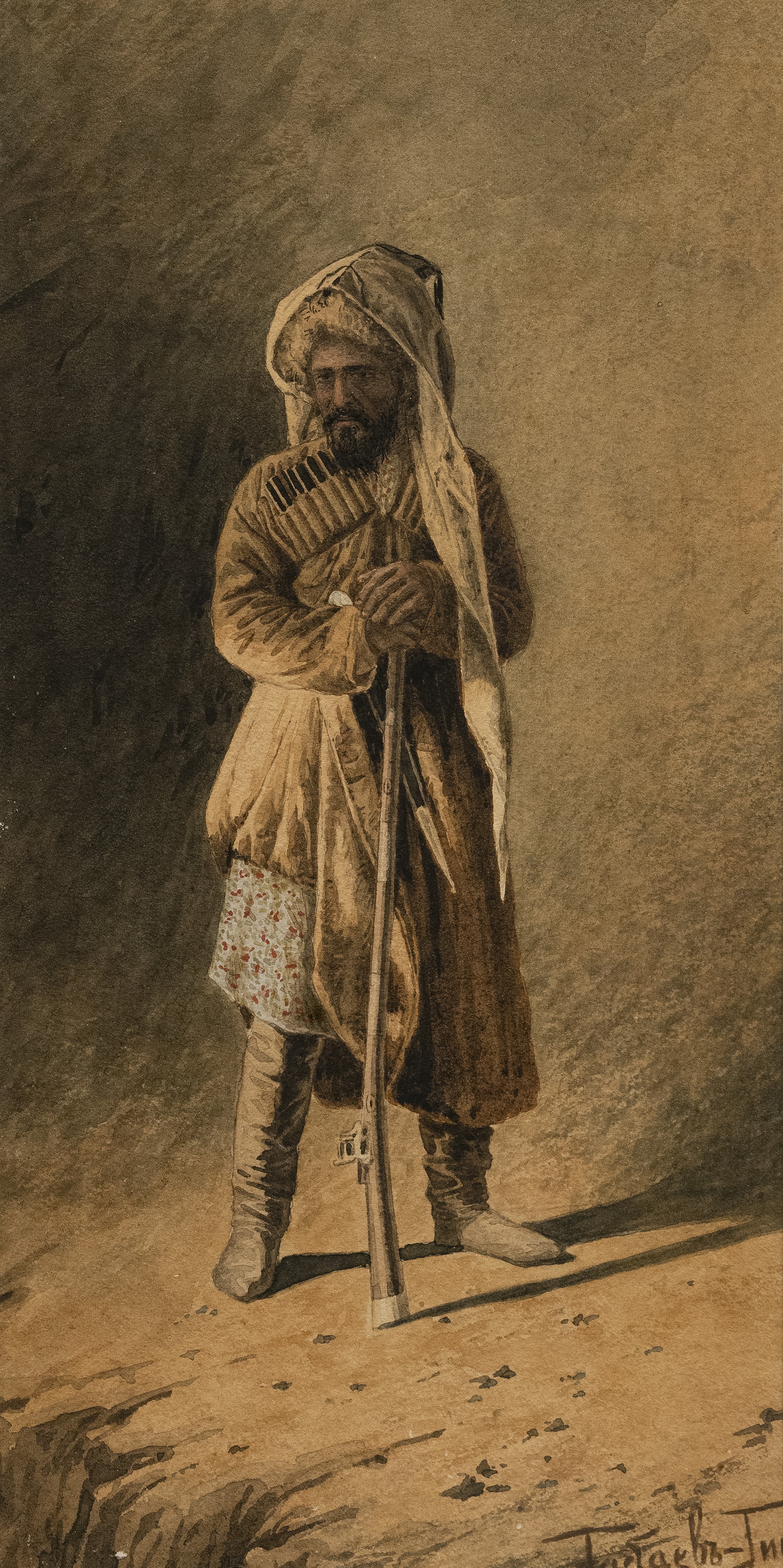
Gigo Gabashvili, Mountaineer, Watercolor on cardboard, 29x13,7cm, 1889, ATINATI Private Collection
Gigo Gabashvili made an immense
contribution to nurturing generations of artists who later contributed to the
history of Georgian art. He had a close friendship with many of his students, among
them Mikheil Bilanishvili and sculptor Nikoloz Kandelaki. The artist
corresponded regularly with his former students, who became dispersed across
various countries. One of them, Apollon Kutateladze, often wrote to him from
Russia: “…The sleeping Georgian or Khevsurian, lying or standing in the corner
of your studio, would set a record among the portraits of Russian and foreign
artists in the Alexandrov Museum. ... I am proud that we have a man whose works
will, more than once, surpass those of many titans of foreign and Russian art —
save perhaps one or two exceptions” (Leningrad, October 16, 1928).
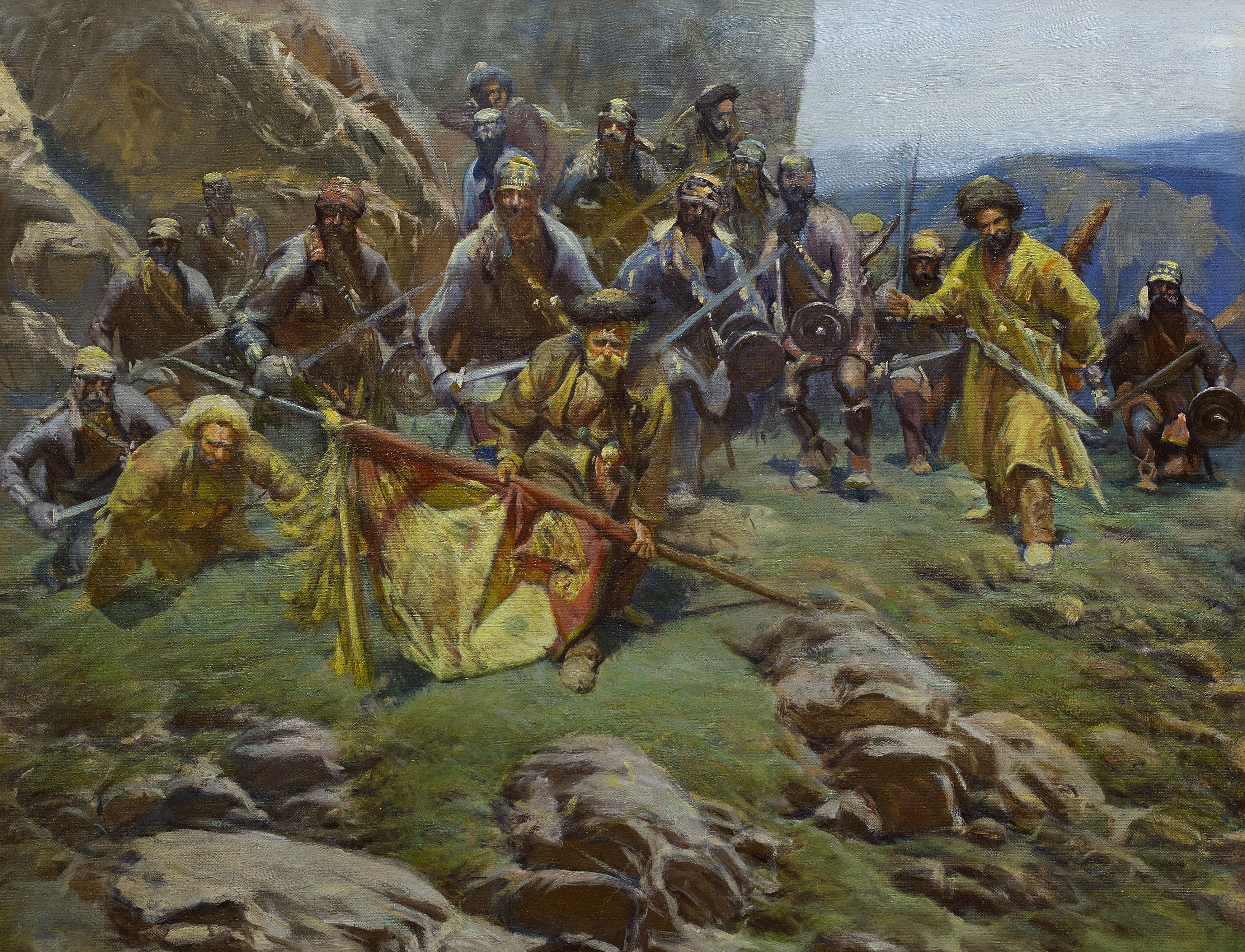
Gigo Gabashvili, Khevsurians, Oil on canvas, 58x71,5cm, 1920, Private Collection
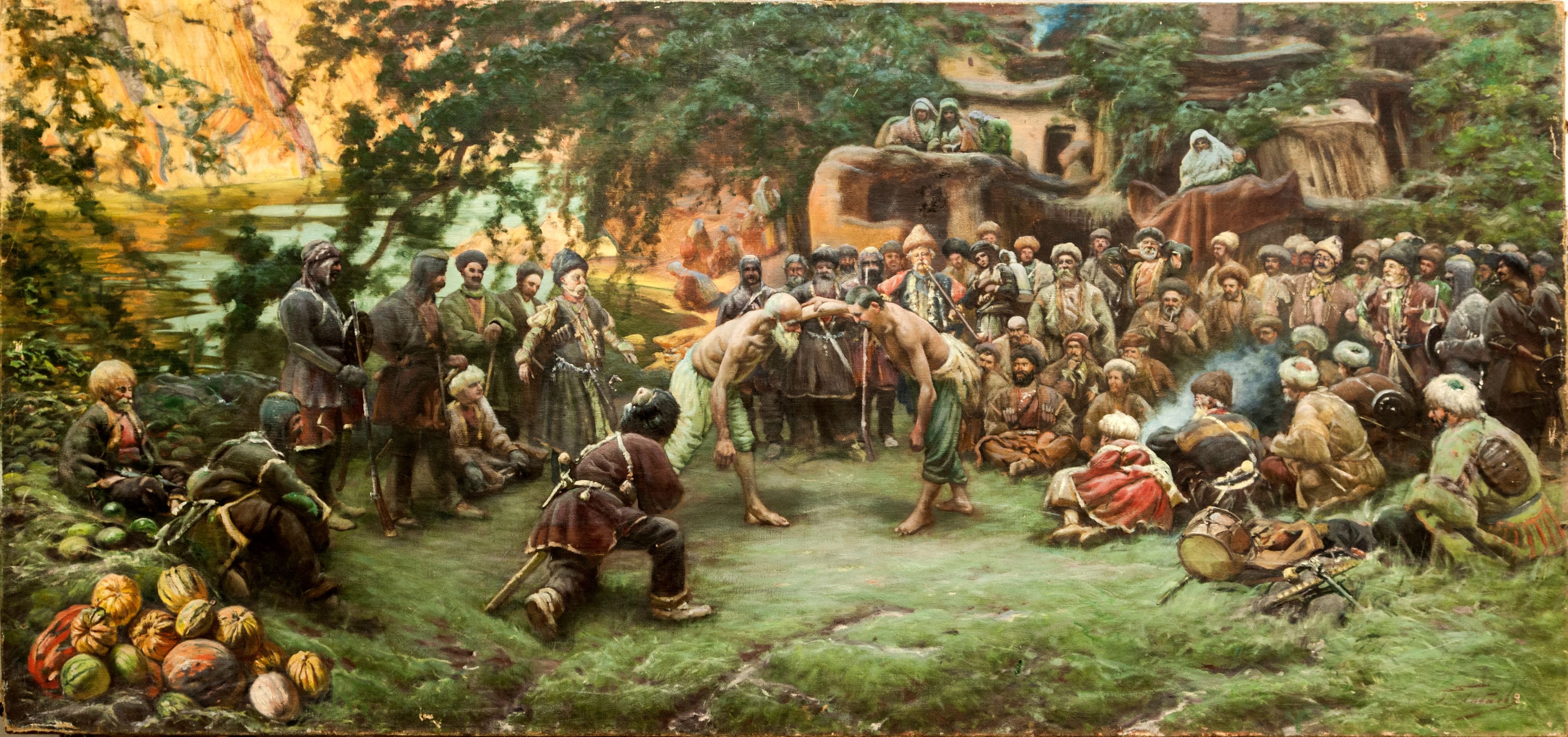
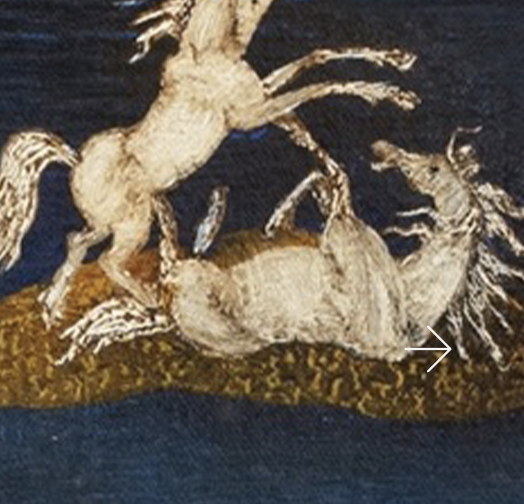
Gigo Gabashvili, Wrestling, Oil on canvas, 1900s
Gabashvili’s students often posed for him
as models — among them Mukhraneli, Japaridze, Makashvili, and Bezhanishvili. On
one occasion, Gabashvili noticed a poster by a young artist, Ivane
Vepkhvadze, displayed on a Tbilisi street. He was so impressed by the
poster that he sought out the young artist who had created it, found that he had
no formal art education, and helped him gain admission to the Academy. Later,
he often took pride in Vepkhvadze’s artistic achievements.
In
1936, the government commissioned Gabashvili to paint a large panel depicting
the citrus plantations of Adjara. To prepare for the task, the artist traveled
to Tsikhisdziri, accompanied by his student Meri Mikeladze. One morning, when
she came to call on her teacher so they could begin working on their sketches,
she found him lying on the bed — wearing only one slipper, his hand slipped
into a single sleeve of his robe. Gabashvili had passed away quite suddenly. It
was October 28, 1936.
As per Gigo Gabashvili’s will, his widow donated
the artist’s works to the Georgian Museum of Art. The will stated: “With endless
affection and devotion, I dedicate my multi-year work as a gift to my people.
Tbilisi, September 1, 1936.”
Gabashvili’s art is distinguished by its
high level of professionalism and remarkable diversity of genres. He created
portraits, landscapes, and historical-ethnographic scenes, rendering nature and
architectural forms with such precision that every detail and characteristic scene
seems to come alive on the canvas. His portraits reveal his subjects’ character
and inner world in depth, conveying both their spiritual essence and social position.
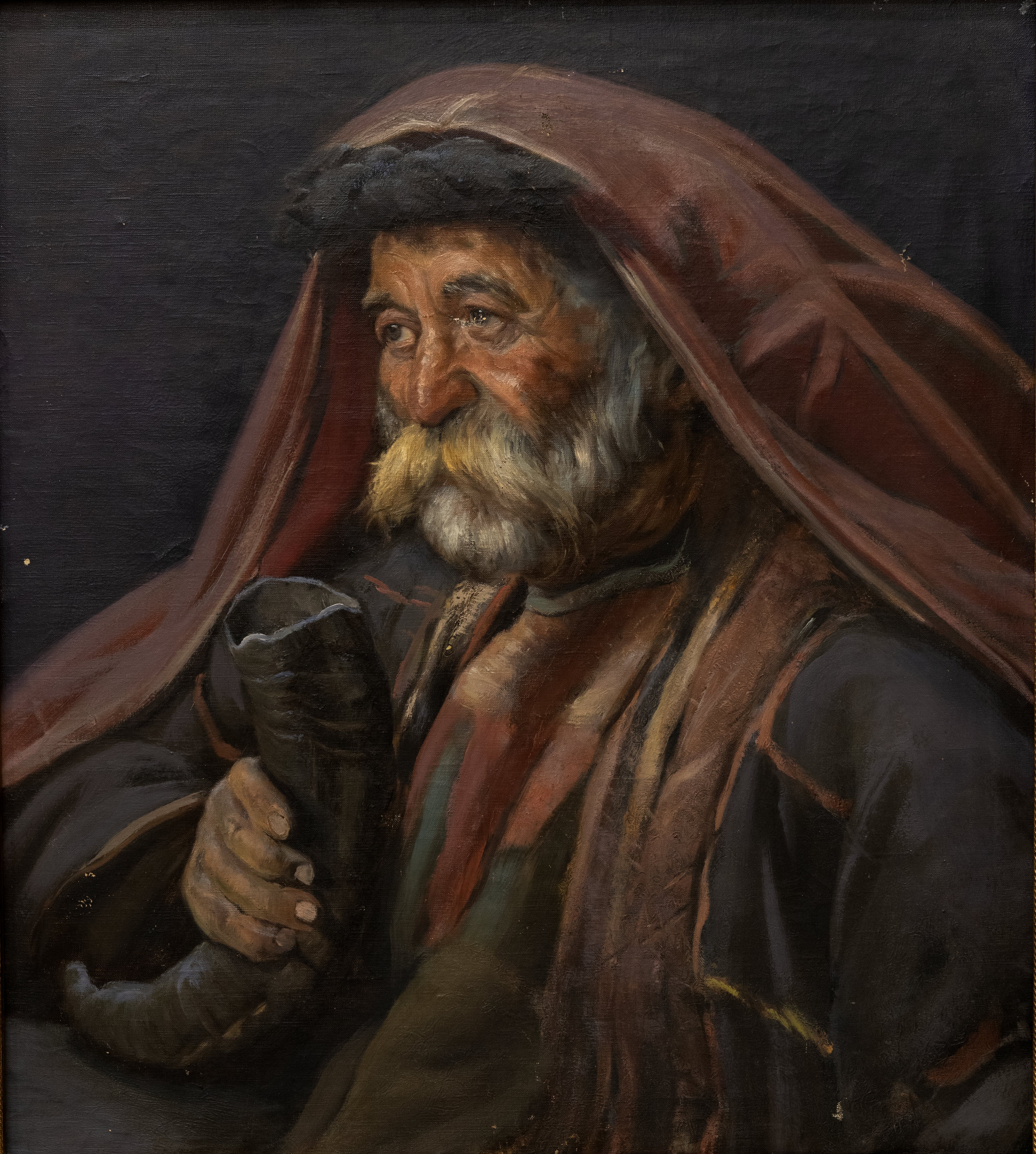
Gigo Gabashvili, Portrait of an Old Man, Oil on canvas, 80x70cm, ATINATI Private Collection
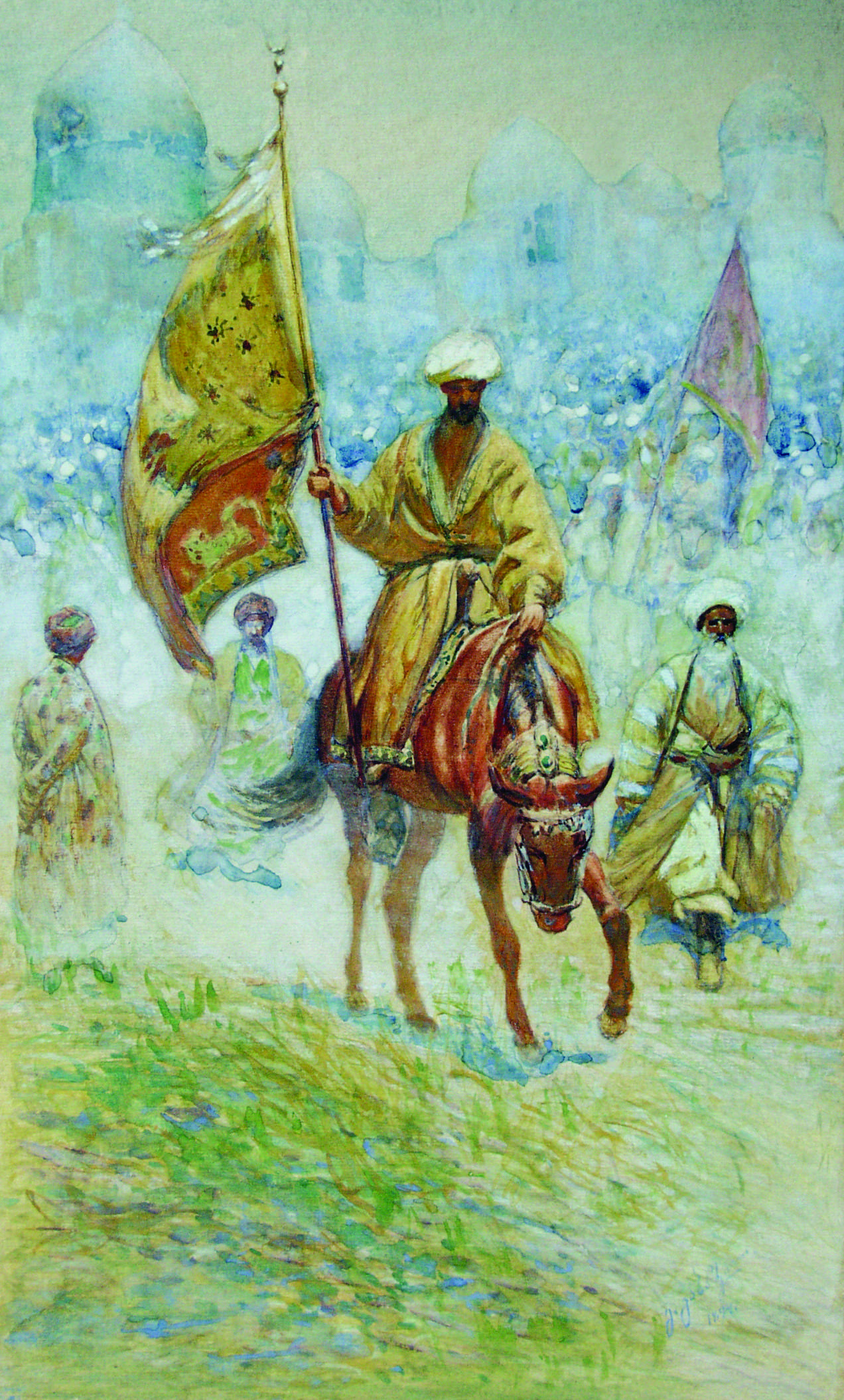
Gigo Gabashvili, Rider, Watercolor on paper, 32x19cm, 1896,Private Collection
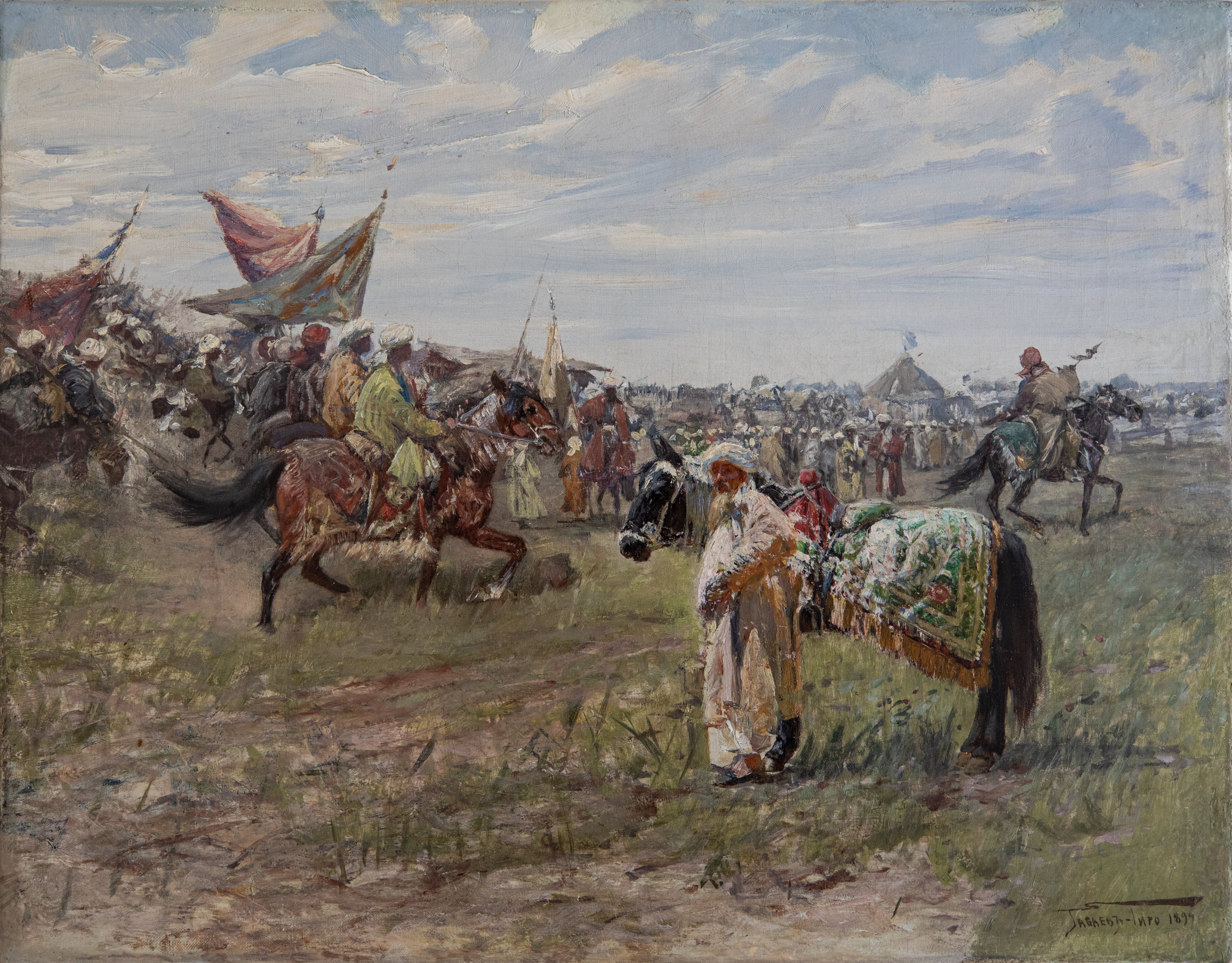
Gigo Gabashvili, Warriors on a Battelfield, Oil on canvas, 29x37cm, Baia Gallery
His landscapes are notable for their rich painterly quality, harmonious color
combinations, tonal balance, and the subtle treatment of natural light. In his
ethnographic compositions, Gabashvili realistically portrayed scenes of daily
life—work, markets, traditions, and festivities—creating pieces that possess
not only aesthetic beauty, but also significant cultural and ethnographic value.
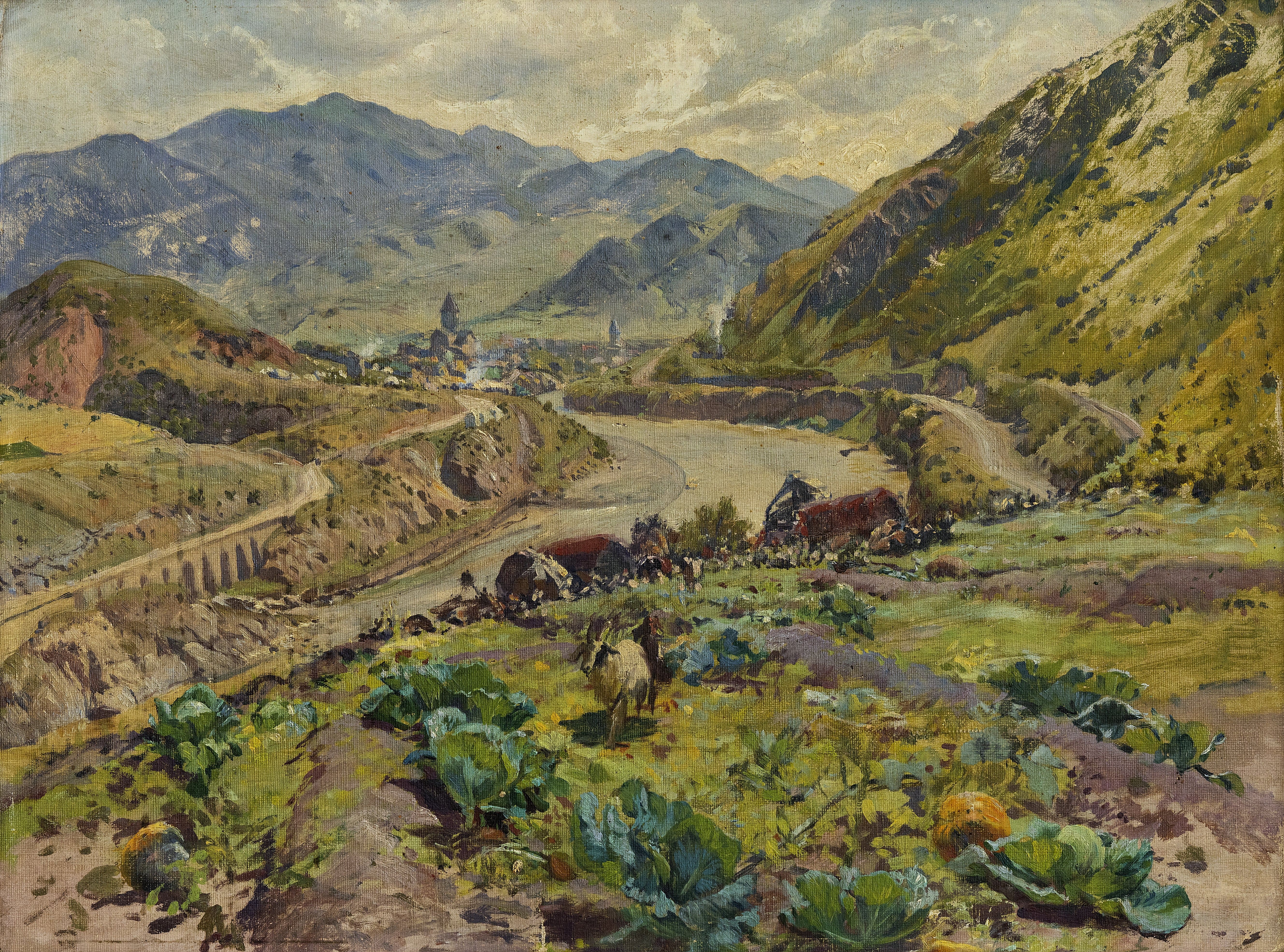
Gigo Gabashvili, Landscape of Mtskheta, Oil on canvas, mounted on cardboard, 40x53,5cm, ATINATI Private Collection
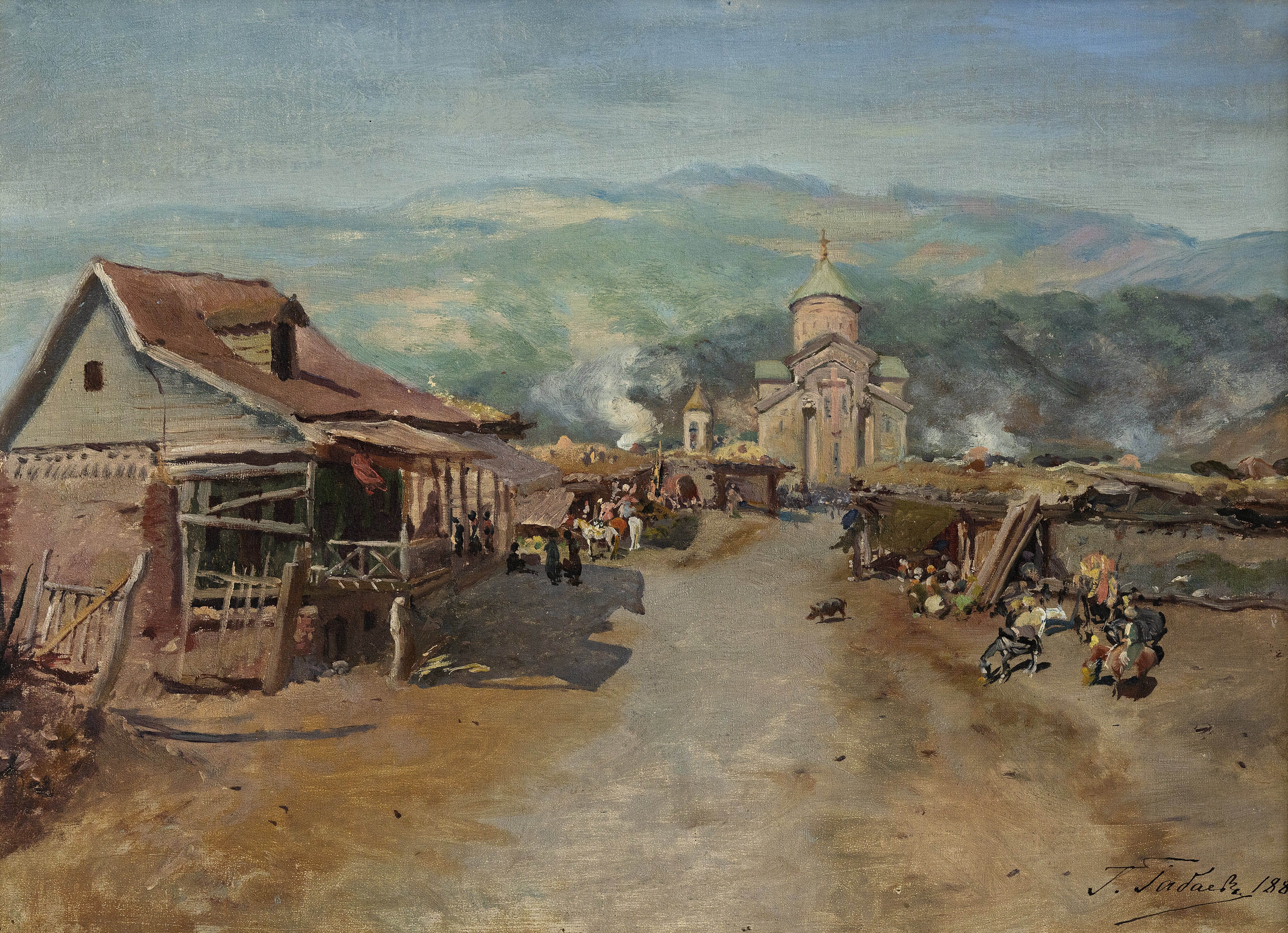
Gigo Gabashvili, Alaverdi, Oil on canvas, mounted on cardboard, 33x44cm, 1883, ATINATI Private Collection
In the newspaper Golos Kavkaza, we read: “The artistic path
on which G. Gabaev stands is not influenced by the fashionable and meaningless
trends of contemporary
art. He is not poisoned by the corrupting breath of ‘decadence,’ and does not
pursue obscure conventionalities. With inimitable realism, he depicts divine
nature, discovering within it meaning, truth, and beauty...” (Exhibition of Paintings by the Artist Gabaev,
May 11, 1910).
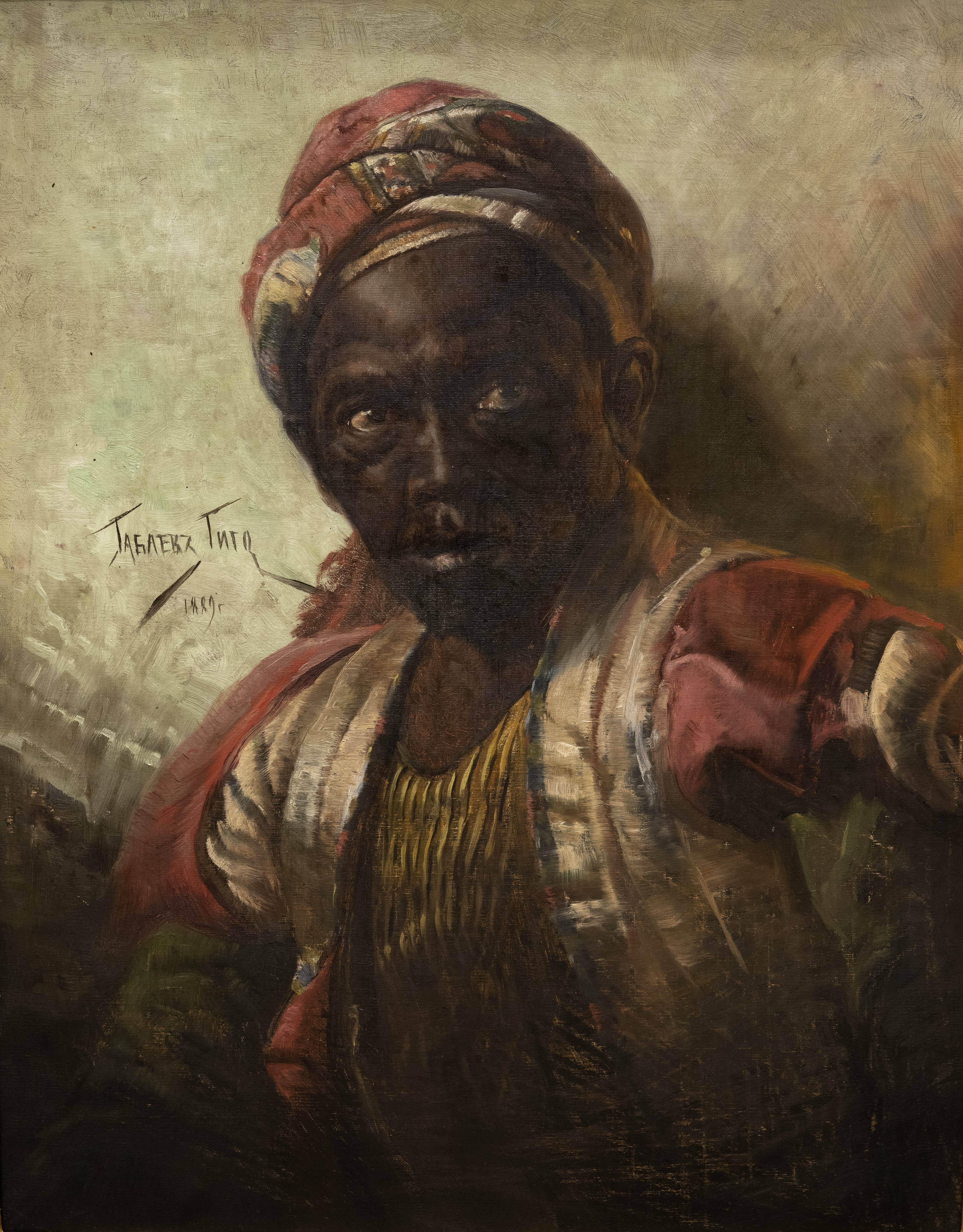
Gigo Gabashvili, Portrait of a Black Man, Oil on canvas, 65x60cm, 1889, ATINATI Private Collection
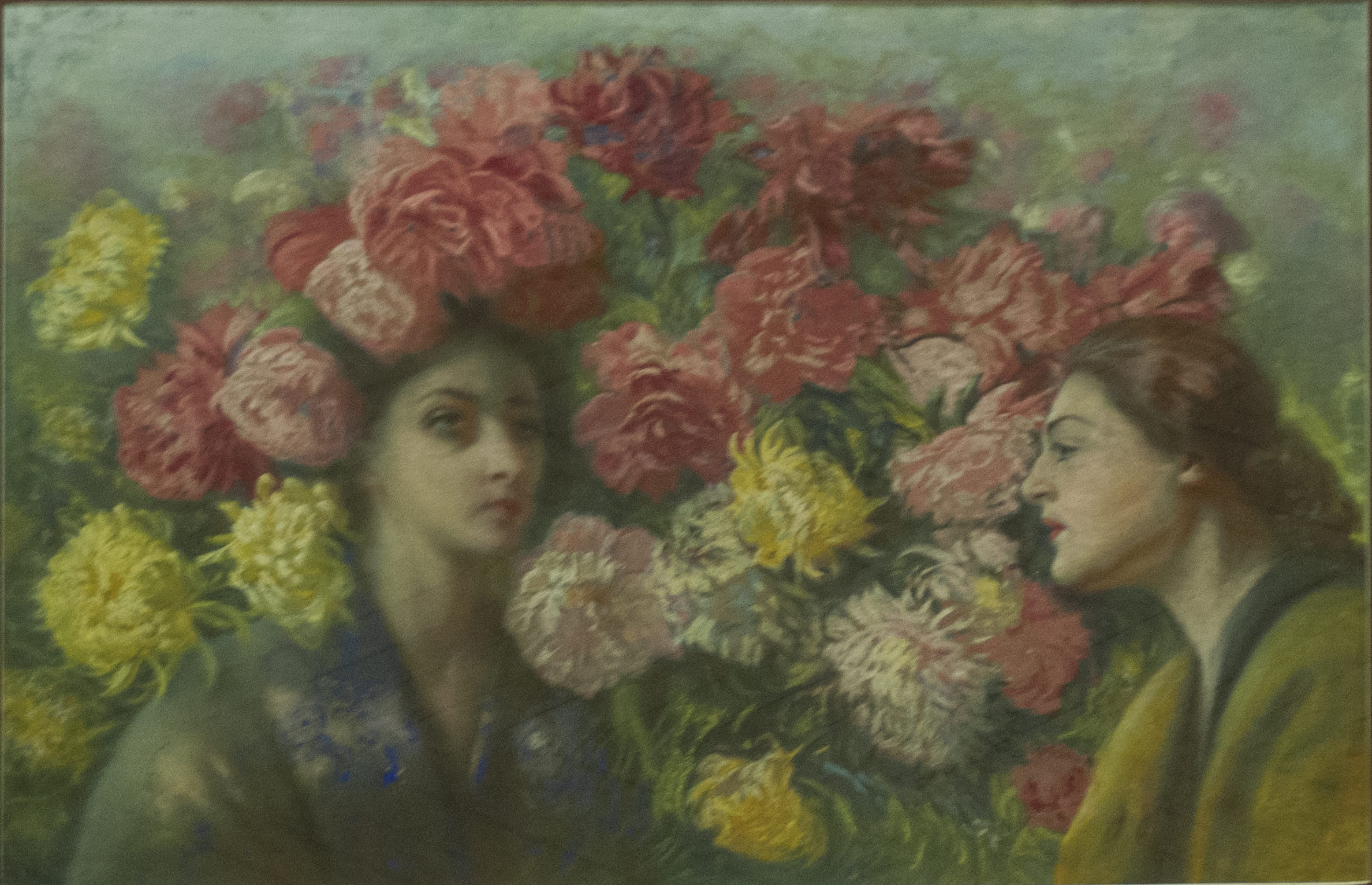
Gigo Gabshvili, Women with Chrysanthemums, Pastel on cardboard, 65,5x96cm, GNM - Museum of Fine Arts
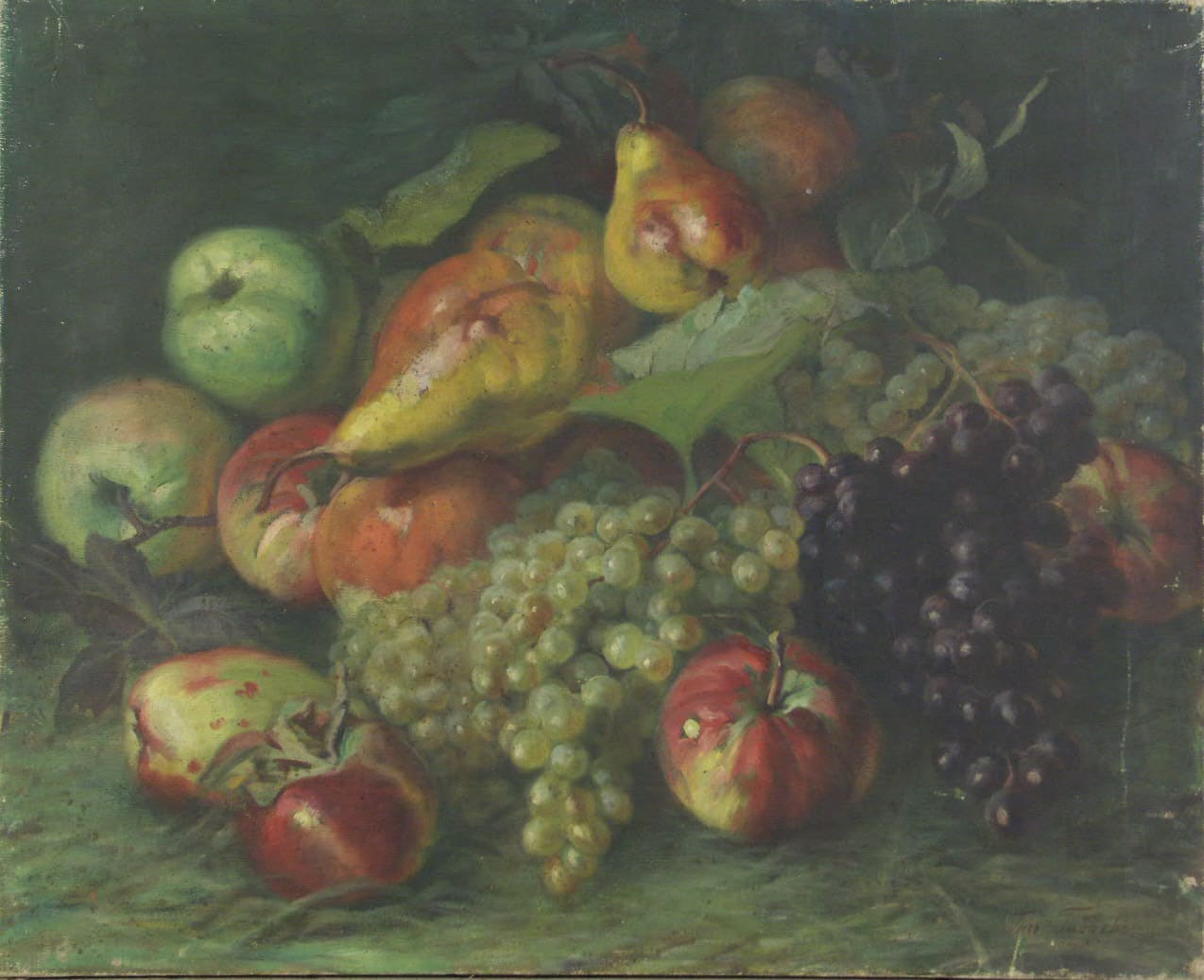
Gigo Gabashvili, Still Life, Oil on canvas, 51x71cm, 1876, GNM - Museum of Fine Arts
The artist Mamia Duduchava wrote that Gigo
Gabashvili, in a letter addressed to David Guramishvili dated July 14, 1895,
“gave a negative assessment of the entire German art of his time. ‘The
Germans,’ he writes, ‘are in such a state of stagnation in art, that I could
hardly have imagined it.’” In another letter, the artist attacks the “dull
modernism” prevailing in Germany (M. Duduchava, Gigo Gabashvili,
Tbilisi, 1953).
The Soviet regime sought to promote
Gabashvili as a realist painter, since this image aligned well with the
artistic and ideological framework of Socialist Realism. However, only recently
has the true diversity of his art been revealed—not only in terms of genre, but
also in his artistic language. The unveiling of previously unknown works and
archival materials preserved in the collections of the Georgian Museum of Art have
succeeded in highlighting the stylistic variety of Gabashvili’s paintings: in
numerous works, the artist employs the visual language of Symbolism; in others,
one can discern elements of Fauvism and Expressionism—demonstrating his great
interest in the modern artistic movements of his time.
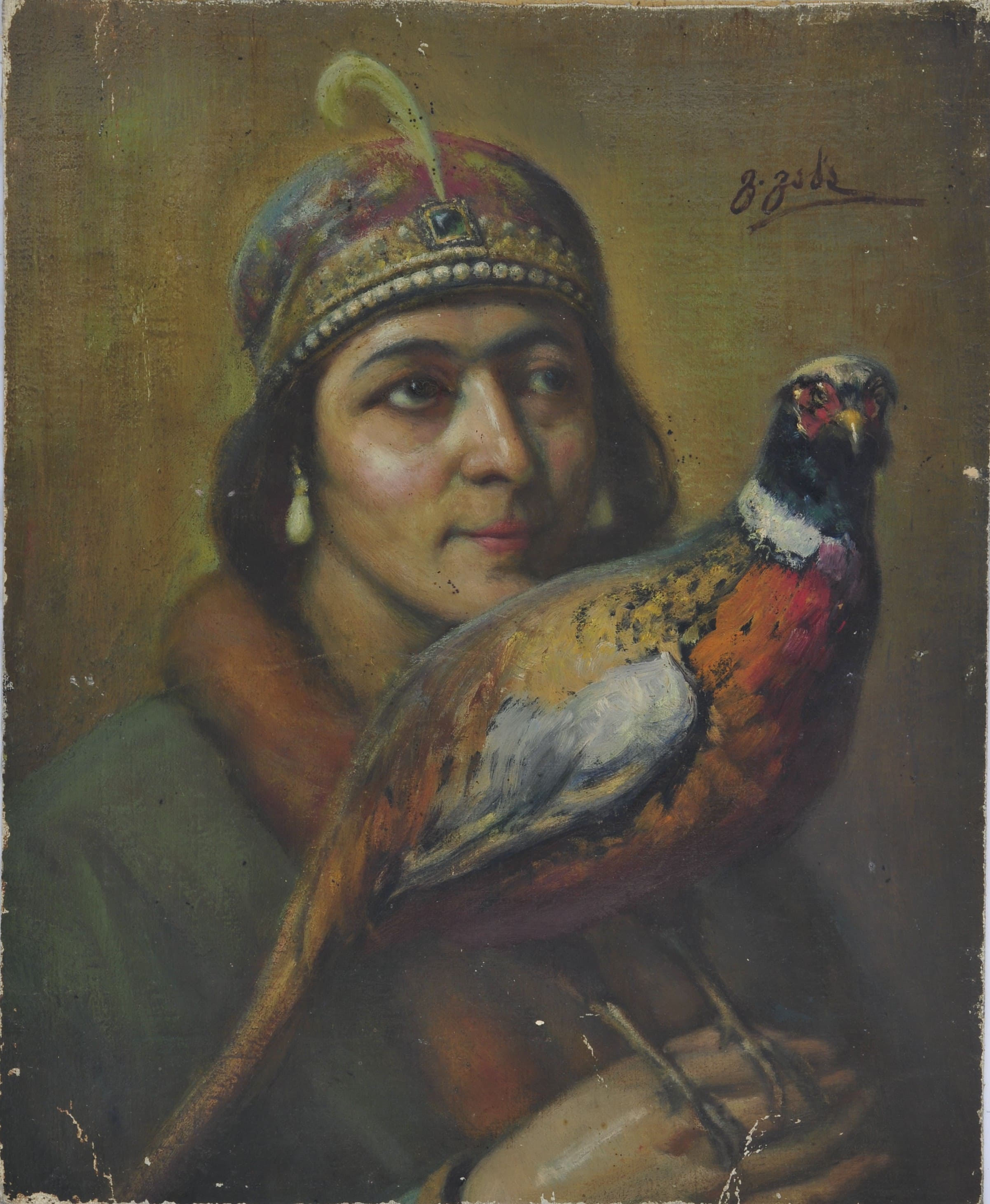
Gigo Gabashvili, Woman With a Pheasant, Oil on canvas, 47x32cm, GNM - Museum of Fine Arts
In 2012, Gogi
Sarajishvili, the grandson of Gigo Gabashvili’s close friend Aleksandre
Sarajishvili, who learned about the artist’s photographic work from his
grandfather, discovered 684 glass negatives of Gabashvili’s photographs in the
store rooms of the Georgian Museum of Art. Shortly afterwards, he held an
exhibition showcasing part of this collection, which also included Gabashvili’s
symbolist works. Through this event, a wider audience was able to discover an unfamiliar aspect of the
artist’s creative activity. Soon after,
the museum’s curators also brought to light Gabashvili’s symbolist paintings
and graphic works.
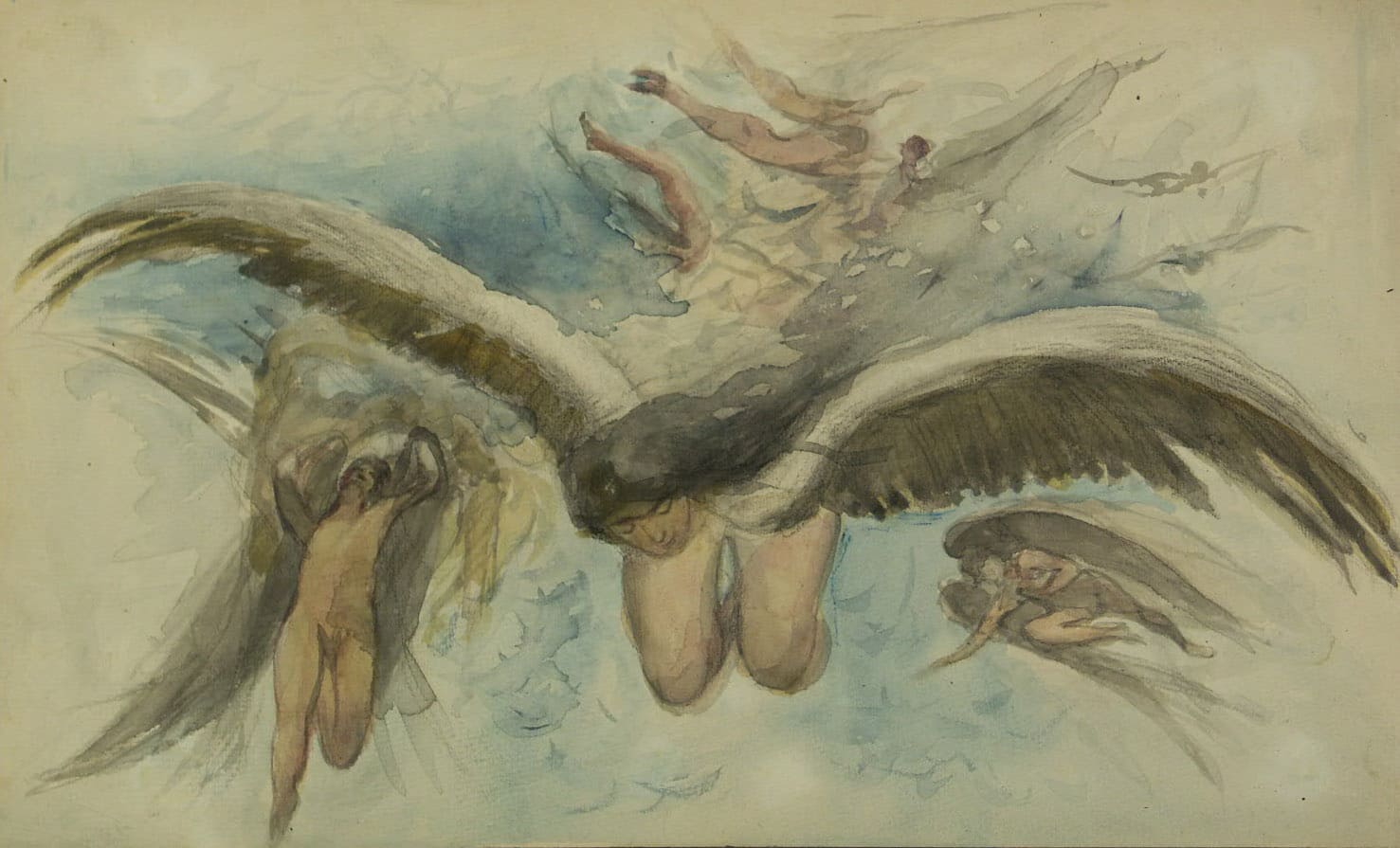
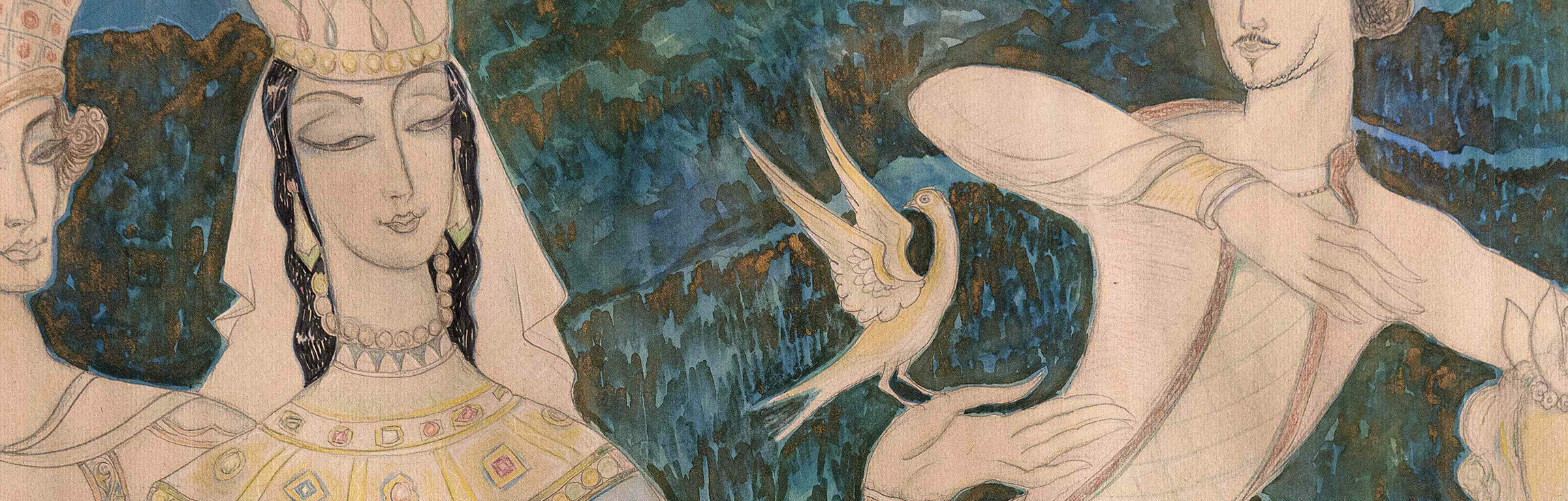
Gigo Gabashvili, Demons, Crayon on paper, 22x33cm, GNM - Museum of Fine Arts
It appears that
while studying in Munich, Gabashvili became well acquainted
with the artistic tendencies of his time, and even
experimented in these directions himself. His symbolist
works reveal a strong affinity with the art of Arnold Böcklin, Franz von Stuck,
Mihály Zichy, and other European painters. These works effectively dispel the
long-standing opinion that Gabashvili was solely a realist artist.
It is also worth noting that this aspect of his works
seems to have enjoyed little popularity in early twentieth-century Georgia.
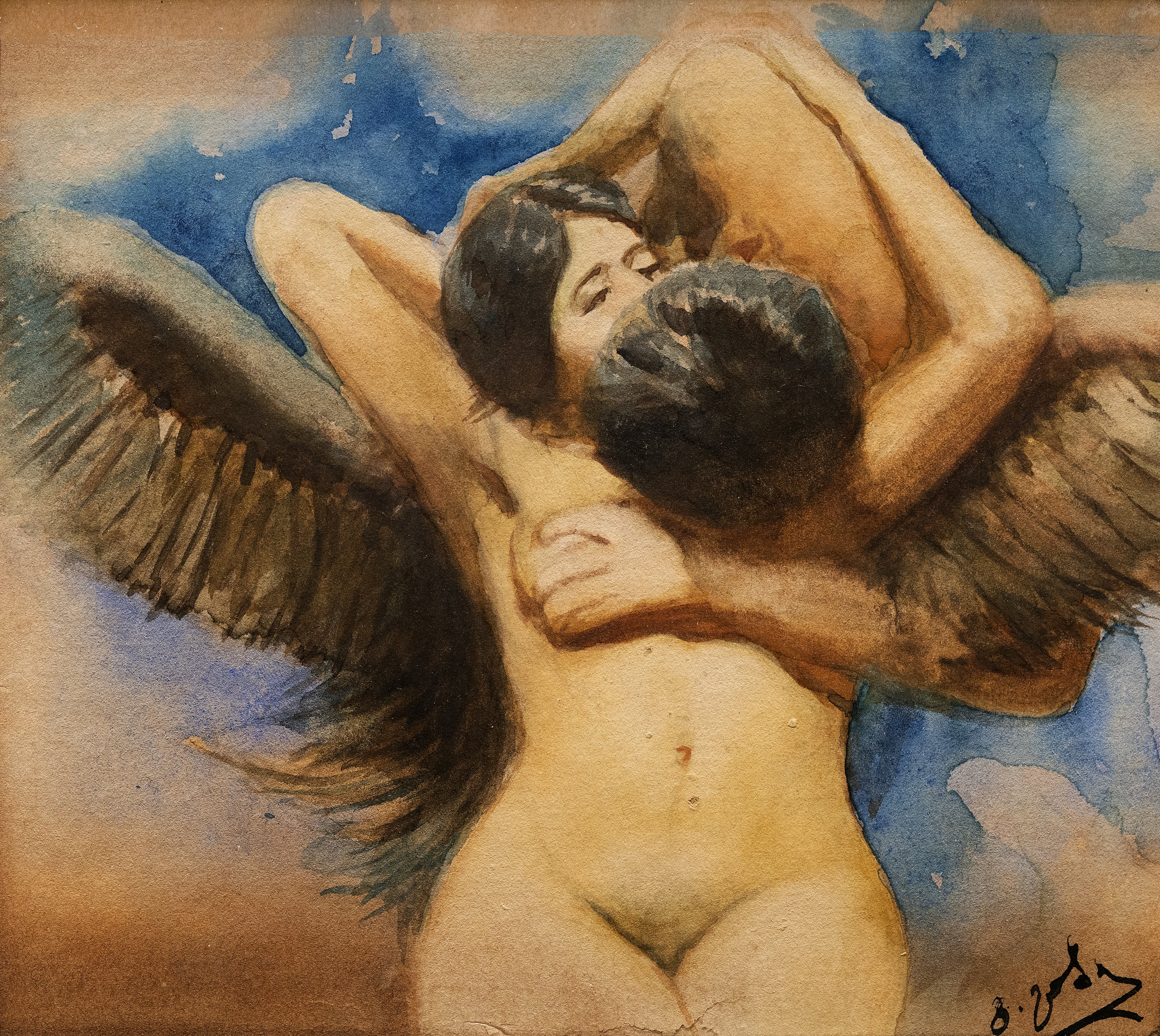
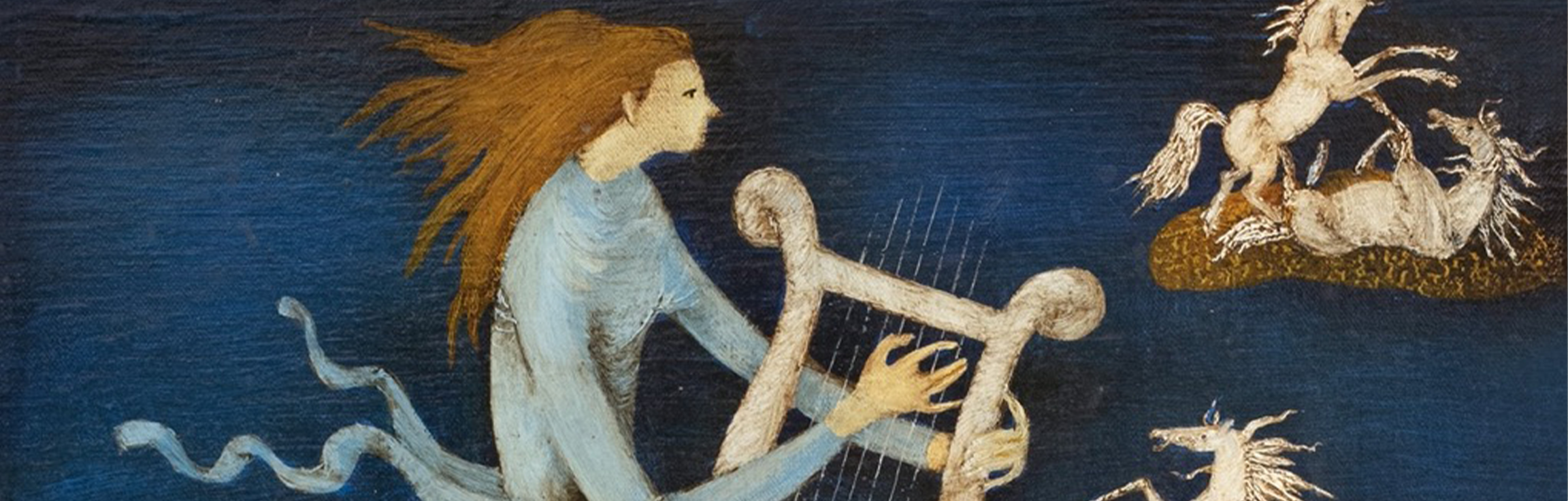
Gigo Gabashvili, Mythological scene, Mixed media on paper,15,5x17cm, 1900s, ATINATI Private Collection
It is remarkable that Gigo Gabashvili, the founder of the Georgian
Realist School, was so deeply captivated by Symbolism. Symbolist painting emerged as a reaction against Realism and Naturalism in art, and is regarded as a forerunner of Modernism, as it
sought to use new forms to convey psychological truth and ideas that existed
beyond the physical world, within a
spiritual reality (https://www.theartstory.org).
In his symbolist works, Gabashvili does not attempt to imitate
reality; rather, through free interpretation, he expresses his inner spiritual
state. He employs emotionally charged symbols that serve to reveal the essence
of individual reality. This imaginative world is the product of Gabashvili’s
vision and imagination, where knowledge, faith, and myth coexist. His
compositions are at times esoteric or exotic; mysterious, dreamlike, and fantastic. While
drawing on real objects and environments, the artist transforms their meanings
and, through the power of imagination, creates a new, visionary world where
reality and fantasy intertwine.
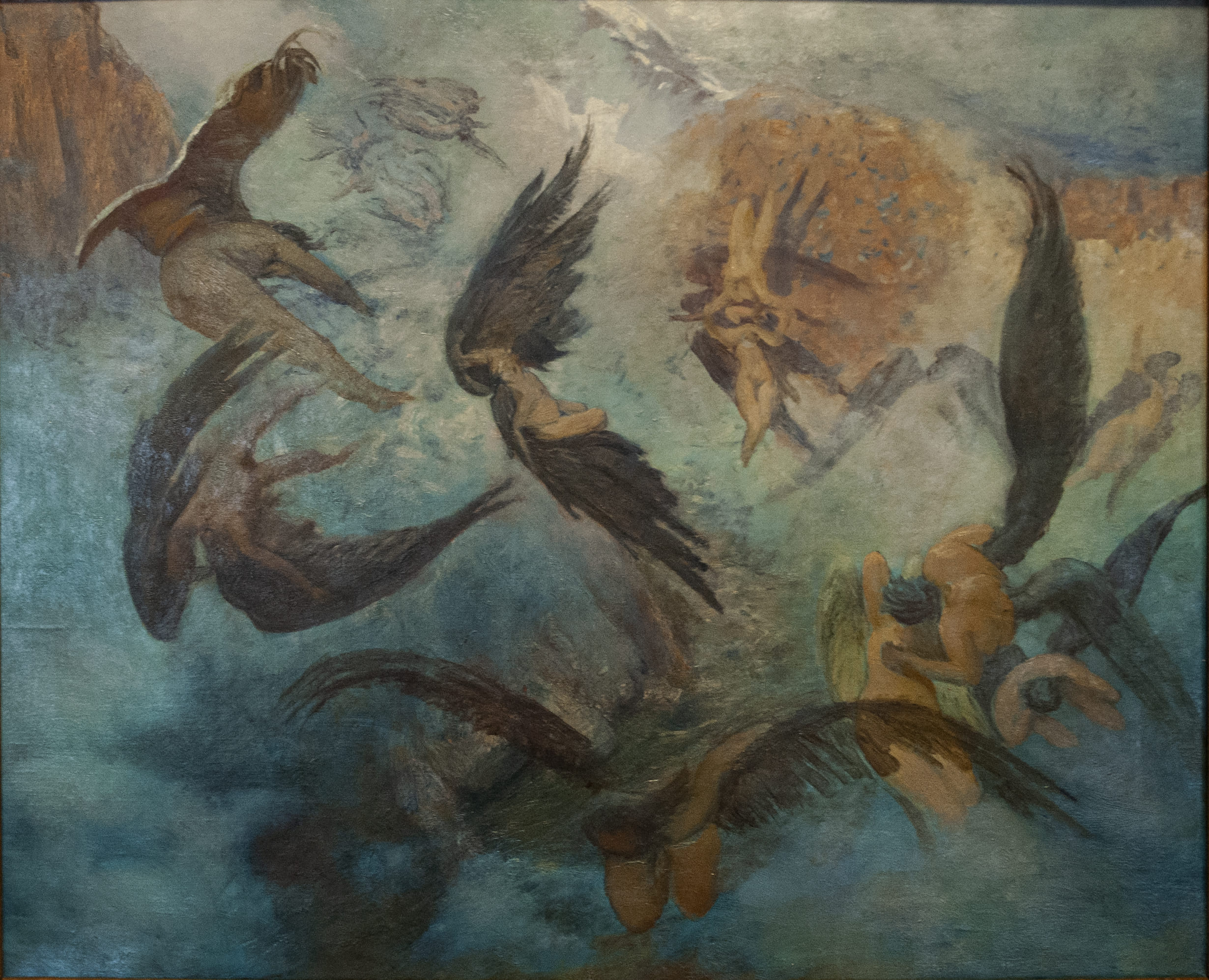
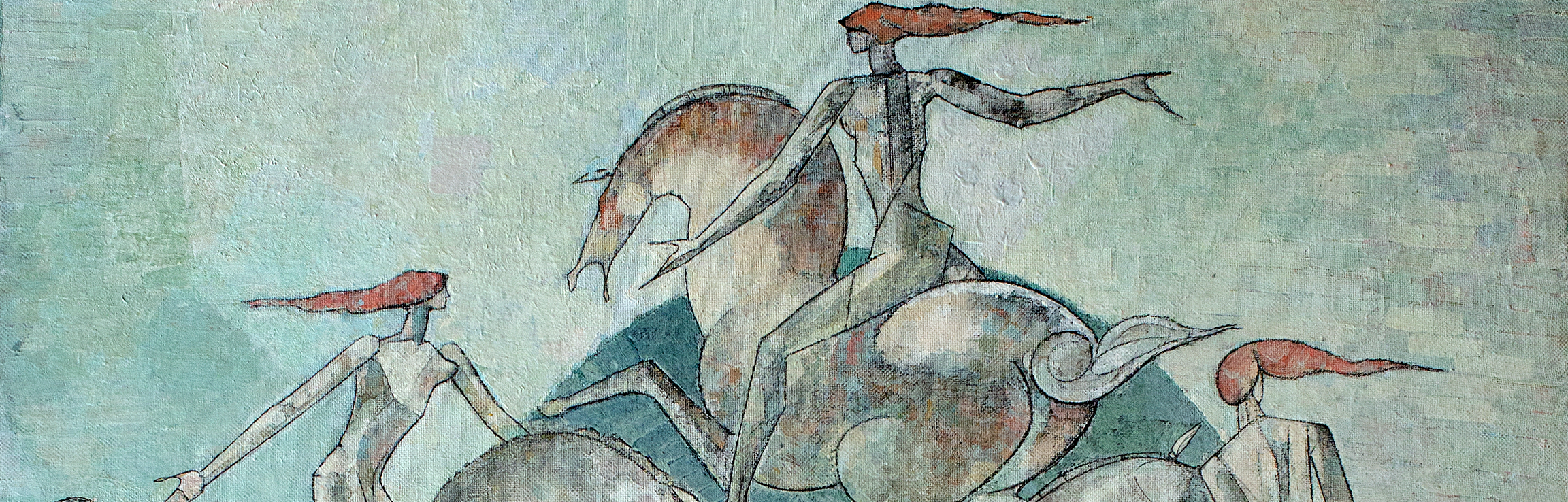
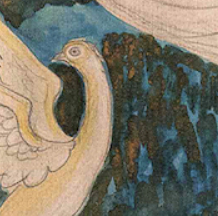
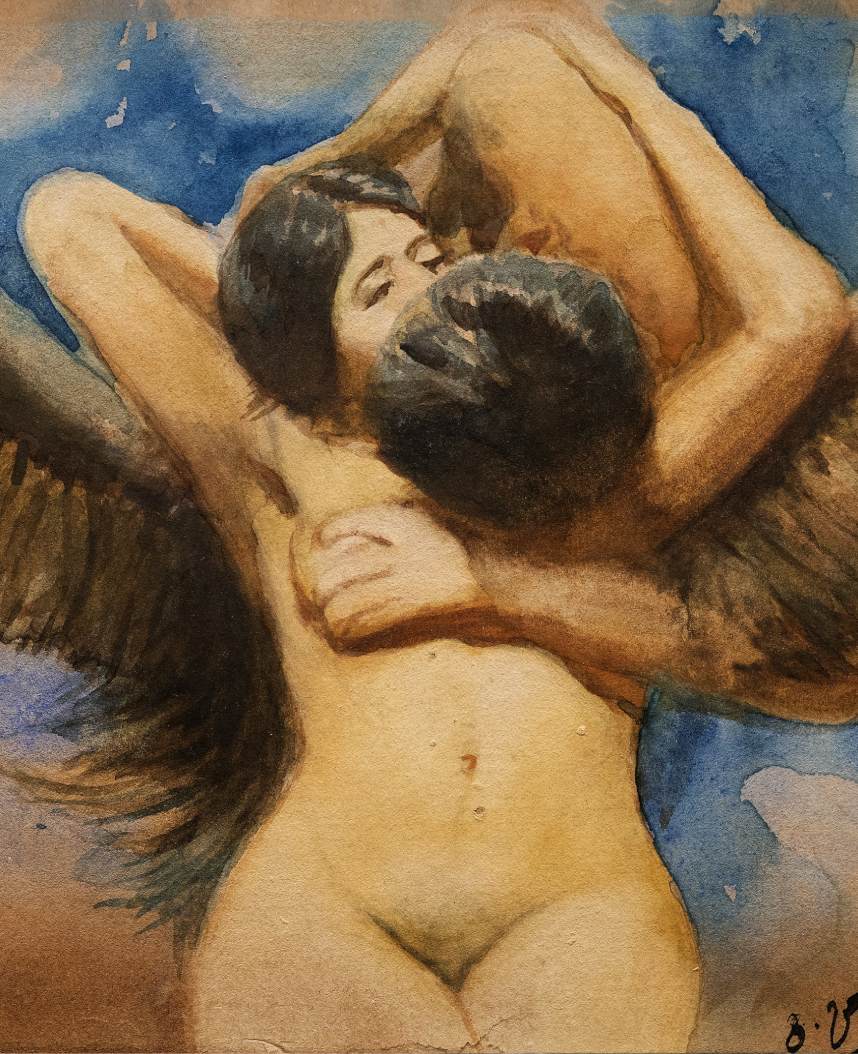
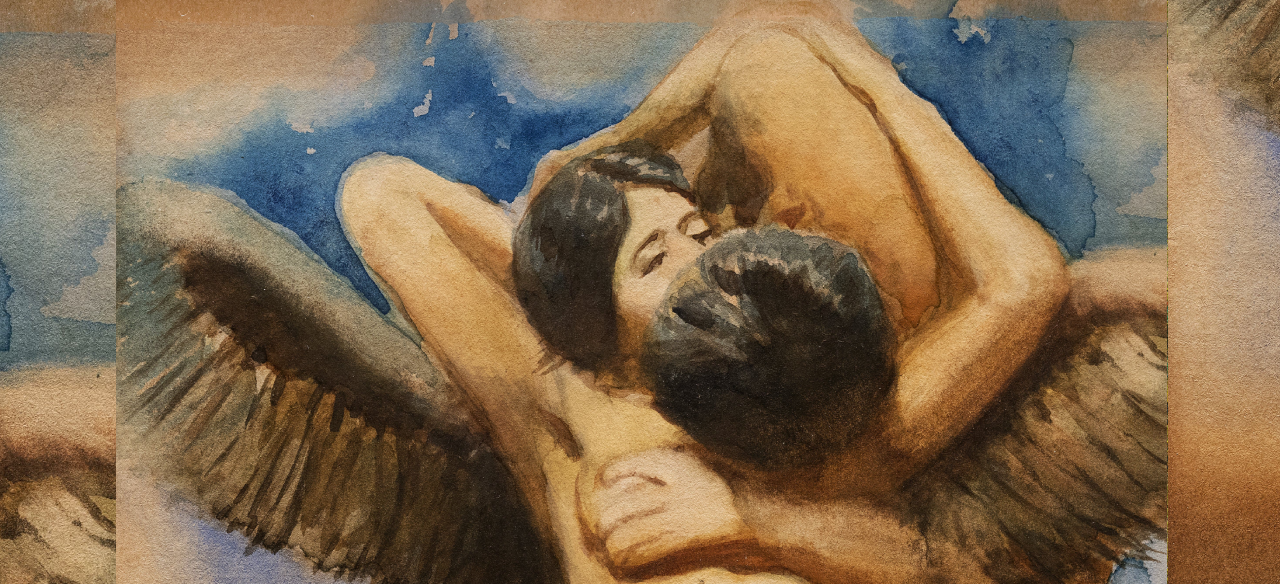
Gigo Gabashvili, Feathery Creatures, Oil on canvas, 71x58cm, GNM - Museum of Fine Arts
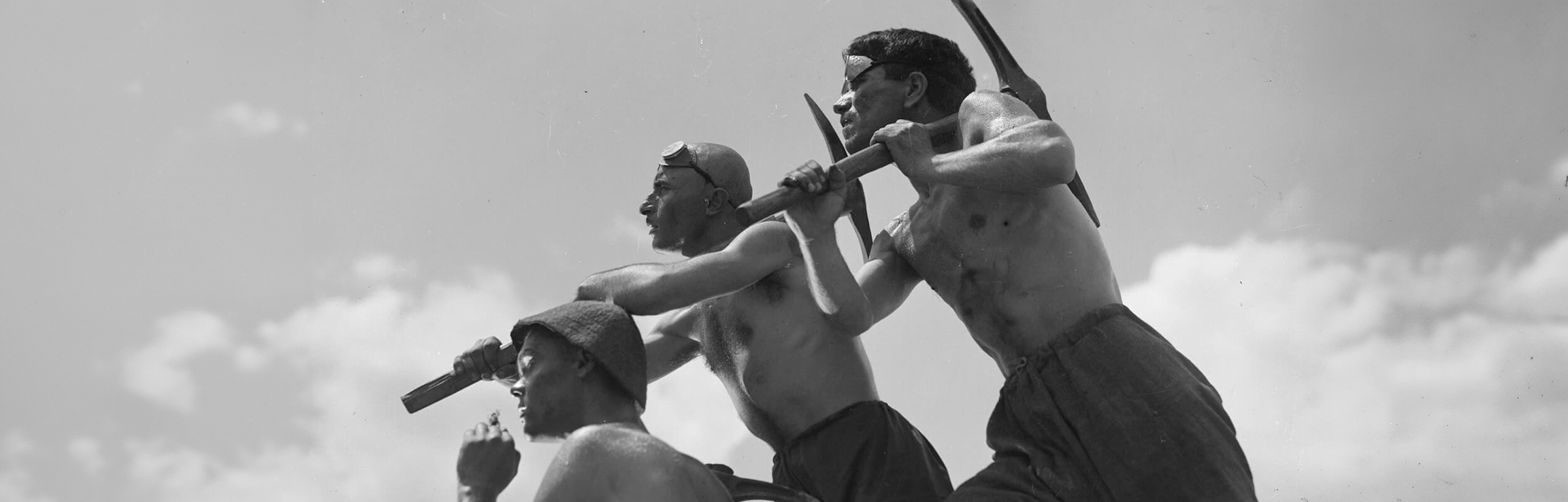
As already
noted, photography occupied an important
place in Gabashvili’s art. Some of his
photographs served as preparatory compositions for his paintings and graphic
works, while others stand as independent creations. Their compositional
structure, distinctive lighting, and expressive power are truly astonishing. In
them, the artist revealed himself as a creatively free and daring experimenter.
He employed staged scenes, using light and shadow as his principal means of
expression; specific lighting effects, darkened backgrounds, and cast shadows
become tools for modeling character. Artistically conceived and precisely
constructed compositions—sometimes featuring superimposed images—were used to
evoke mood, mystery, or even an erotic atmosphere.
Gigo Gabashvili is a world-renowned artist. his paintings are kept in museums and private collections across Georgia, Russia, Europe, and the United States. Among Georgian artists, his works rank among the most valuable on the iinternational art market. In 2006, his Bazaar in Samarkand was sold at Christie's $1,136,000, and The Divan-Begi Pool in Bukhara for $508,000. in 2008, at Sotheby's Gabashvili's Still Life with Fruit fetched $97,000 and Bazaar was sold for $67,000.
Gigo Gabashvili was not only one
of the founders of Georgian Realism, but his symbolist works can also be seen
as precursors to Modernism. Consequently, the origins of modern
Georgian art may be moved back by at least a decade—if not by up to fifteen
years—to the early twentieth century.
References
Maia
Tsitsishvili. Symbolism in Gigo
Gabashvili’s Creative Work, Tbilisi, 2017.
Maia Tsitsishvili. Gigo Gabashvili’s Unknown Paintings, Ars
Georgica,
https://www.georgianart.ge/index.php/ka/2010-12-03-16-25-41/97-2011-12-13-15-26-28.html
Eka Makharashvili. Gigo Gabashvili, Newspaper ‘24 Hours,’ January 16, 2010.
Nino
Khundadze. Gigo Gabashvili - ‘Professor of Color Painting,’ https://gfsis.org.ge/files/my-world/29/Gigo_Gabashvili.pdf
Irine
Shavladze. Gigo Gabashvili’s Unknown Photographic
Art, Hammock
Magazine, 2020, https://hammockmagazine.ge/articles/925/n-a.