Lev Bayakhchev was an artist of the 1960s, a generation of artists that eagerly embraced the air of freedom leaking through the cracks of the "Iron Curtain" that had descended between the Soviet Union and the rest of the world in the aftermath of the post-Stalin liberalization of the 1950s. In doing so, this generation successfully assimilated many global cultural trends.
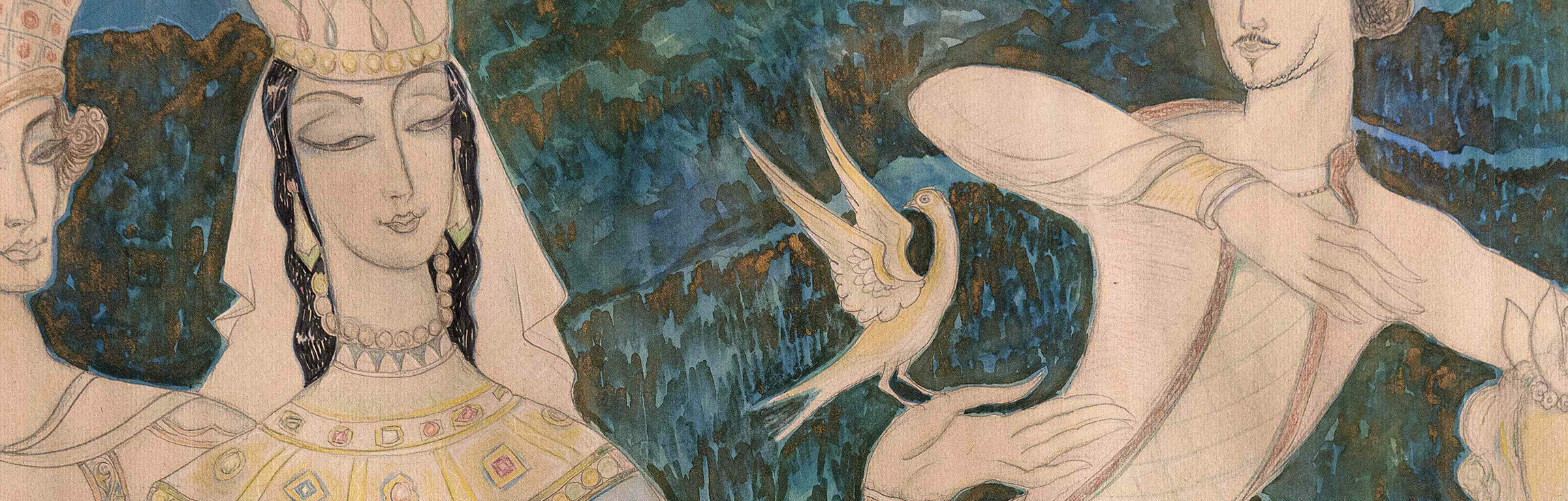
Lev Bayakhchev, in his aesthetic taste and views, shared many commonalities with the renowned Georgian artist Avto Varazi. Perhaps, at the initial stage, this similarity was encouraged by their mutual teacher, Alexander Bazhbeuk-Melikov. Lev Bayakhchev kept friendly relations with the Tbilisian artist Albert Dilbarian. Critics called the art of Tbilisian Armenian artists (especially of the 1970s) the "Tbilisi School." The basis for this remark was that Armenian artists who adapted to Tbilisi at different times managed to imbue the genetic Armenian creative code with local Tbilisian painting traditions. It can be said that the Georgian aura of Lev Bayakhchev's landscapes and portraits was complemented by the intense dramatism characteristic of the Armenian traditional artistic form.

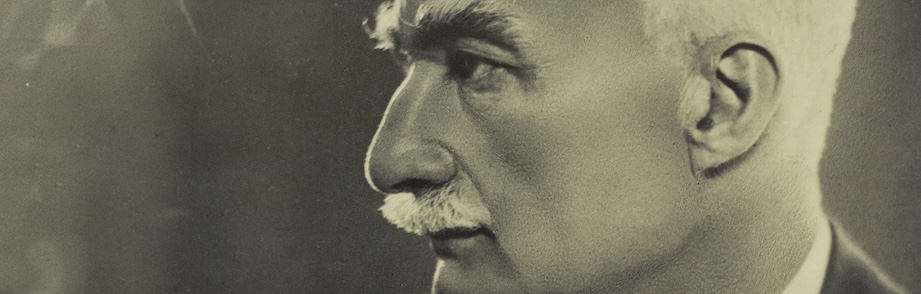
Lev Bayakhchev
Lev Bayakhchev was born in 1930, in Tbilisi. Artist Alexander Bazhbeuk-Melikov was his first art teacher. Bayakhchev was passionate about painting. He eventually decided to attend a technical school in Moscow, but his love for painting and his hometown proved to be so strong that he instead completed his education at the Tbilisi Academy of Arts. His teachers, Vasily Shukhaev, Apollon Kutateladze, and Sergo Kobuladze, were all well-known painters.
When he graduated from the Academy of Arts in 1959, Bayakhchev delved into the capital city’s creative life, taking an active part in both group and individual exhibitions. Numerous leading Georgian state museums and private collections, including the Zimmerli Non-Conformist Collection in the United States, Germany, France, Russia, Armenia, and Azerbaijan, today house his works.
Many viewers find themselves captivated by the artist's landscapes due to their remarkable authenticity and unique aesthetics. The comfort and distinct scent of Old Tbilisi are beautifully captured in Bayakhchev’s urban scenes, presented from multiple angles. His works from the 1960s radiate a strong sense of inner excitement, marking the years when he began his journey of self-expression. In these pieces, it seems as though Bayakhchev, while depicting the old neighborhoods of his native city, strived to create a portrait of Tbilisi which, while wandering its streets, appeared to him in various ways. Through this approach, he crafted a collection of landscapes that evoke a range of emotions, somehow resembling a musical suite. With red or blue tiled roofs, wine cellars adorned with awnings, or with stone-paved alleys with one or two passers-by, his paintings lead the viewer into the depths of the composition, where towering domed churches rise into the sky. Bayakhchev highlights the two- and three-story houses with their faded balconies, characteristic of the old districts of the Georgian capital, using oil paints on canvas, and gouache or watercolor on cardboard.

Lev Bayakhchev. Autumn in the Mountains. Gouache on paper. 34x48cm. 1992. ATINATI Private Collection

Lev Bayakhchev. Landscape. Gouache on paper. 50x36cm. 60x46 cm. 1985. ATINATI Private Collection
Lev Bayakhchev’s landscapes, portraits, and still lifes of the 1970s reflect a greater creative freedom and his clear willingness to experiment with alternative methods of depiction. The landscapes of this period convey a multitude of tones, sometimes dramatic, sometimes poetic, which the artist achieves with lighting. By employing a linear-rhythmic alternation of shapes and antagonism of pictorial spots, Bayakhchev was able to present a tension of compositional structure on the image plane.

Lev Bayakhchev. Old Tbilisi. Gouache on paper. 36x25cm. 1992. ATINATI Private Collection
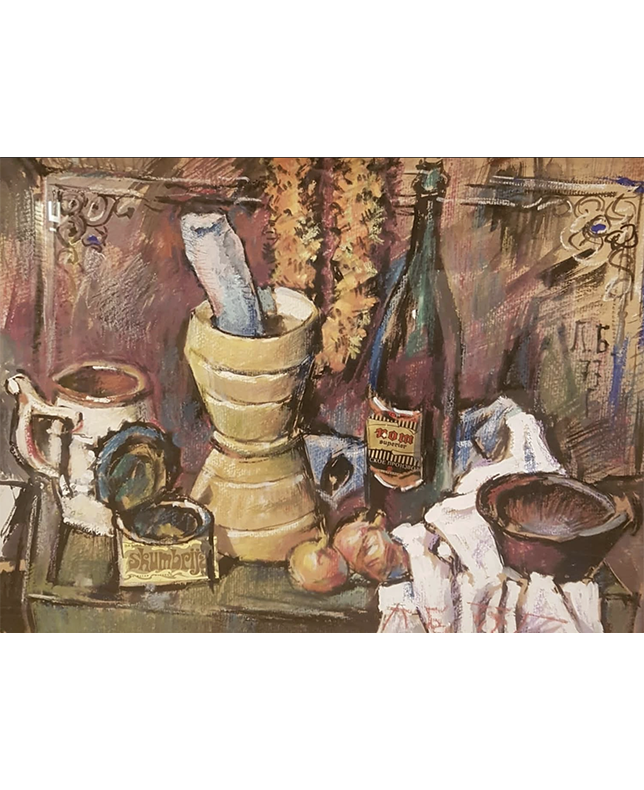
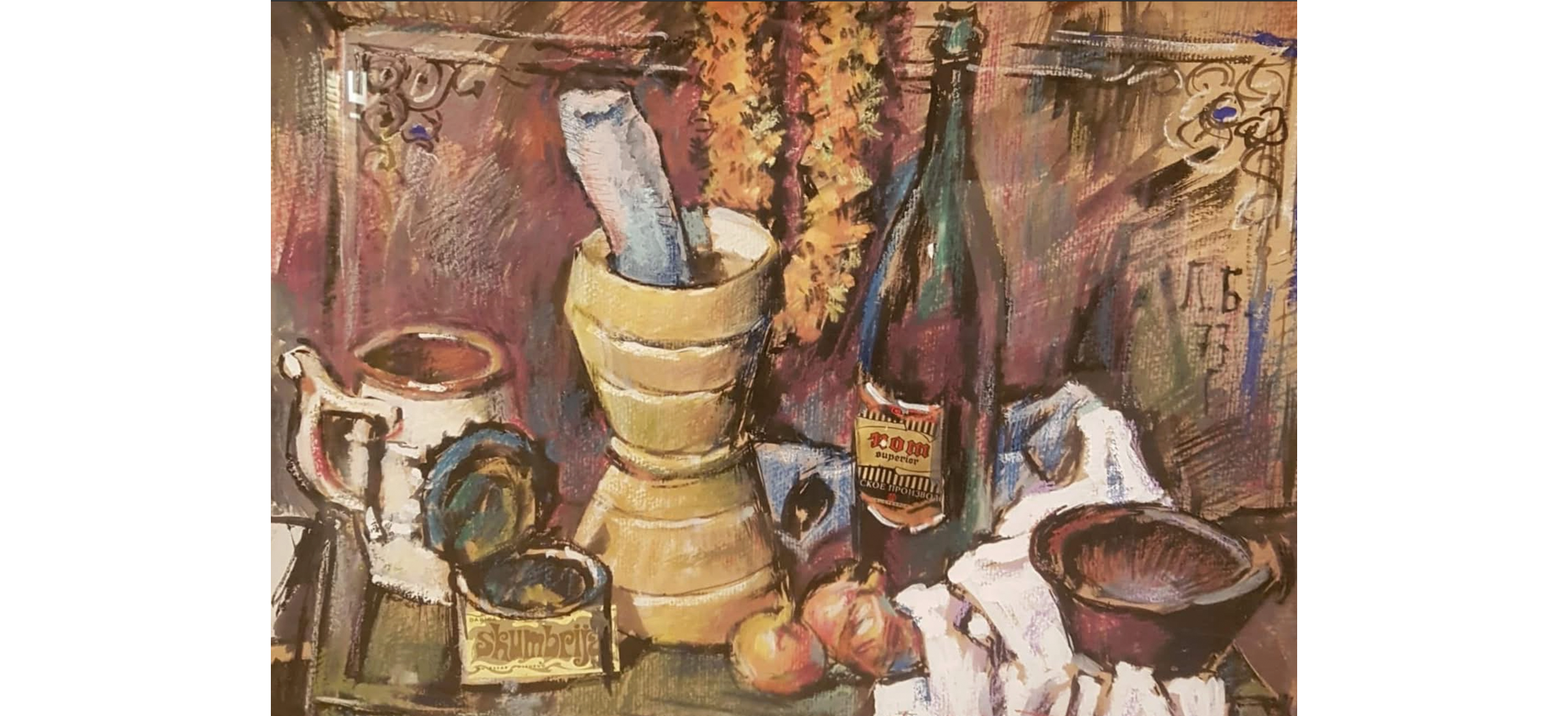
In the still life genre, where there are many themes, Lev Bayakhchev develops an astonishing decorative pattern by simplifying and generalizing shapes, and by interweaving contour lines that define the outlines of objects so as to complete the compositions. The interconnectedness of these compositional elements reflects Bayakhchev’s desire to harmonize contrasts within his works, an approach that suggests he found bare realism and the passive depiction of a motif to be inadequate. Consequently, his still lifes feature a form of object distortion, with uneven, occasionally "crushed" or slightly broken contour lines enclosing the subject world.
It is important to note that Bayakhchev never compromised on the realism of the textural depiction of objects. In every instance, he was able to portray the material's texture in a manner that was remarkably similar to their natural appearance. This is especially evident in his portrayal of various textures - glass, ceramics, metal, wood, or other materials – in his still lifes. The subtleties of light and color is what allowed the artist to attain such accuracy. Bayakhchev used different brushstroke intensities to model the form of each object, sculpting shapes with color and light across a variable pictorial plane. By manipulating light to create the surface of objects and patches of shade, he was able to present a dramatic intonation that became the defining feature of all his paintings.

Lev Bayakhchev. Still Life. Mixed media, cardboard. 62x79cm. 1977. ATINATI Private Collection

Lev Bayakhchev. Still-Life. Oil, canvas. 48,5x45,8 cm. 1978. ATINATI Private Collection
One of the defining features of Lev Bayakhchev's work, in addition to the generalization of motifs, is the expression of melancholic emotions, which is evident in every figure in his portrait gallery. At the same time, his portraits capture the subtleties of the human spirit - pride, fear, tension, and self-doubt. In these works, the subjects’ eyes are often directed at the viewer. There is a deep sense of introspection in their gaze, one that penetrates into the subject's soul. Notably the artist's portraits from the 1960s and 1970s were stylized and somewhat exaggerated. However, in the 1980s, Bayakhchev abandoned his stylization of earlier years and, with moderation, shifted to a more in-depth psychological depiction of the people he portrayed.

Lev Bayakhchev. Portrait of a Woman. Oil, canvas. 70x50cm. 1969

Lev Bayakhchev. Portrait of Liana. Oil, canvas. 106x52cm. 1974
The internal tension is particularly evident in his portraits of photographer Alexander Saakov. It seems that where initially the photographer seemed uncomfortable when posing, in a later portrait of the same model, the representation feels more natural.

Lev Bayakhchev. Portrait of A. Sahakov. Oil, canvas. 108x58cm. 1973-1974
Lev Bayakhchev frequently returned to certain models, yet each time employed a different touch. For example, whereas the first painting of the young woman Manana Ninidze was dramatic and unnecessarily rigid, the second portrait shows her as more joyful, open, and slightly romanticized. It is clear that Lev Bayakhchev's exaggeration technique, which he frequently used in portraiture, contributed to spotlighting the inner dramatism of his models' personalities.

Lev Bayakhchev. Nude. Oil, canvas. 96x80cm. 1992. ATINATI Private Collection
Almost all of Lev Bayakhchev's works, to varying degrees, reflect his sense of loneliness and melancholy. Yet it can be confidently said that his art is far from monotonous, as he skillfully avoided dullness by incorporating the collage technique, doing so in particular with his still lifes. When using the collage technique in this genre, Bayakhchev's primary goal was to capture the essence of each object he portrayed, rather than focusing solely on the model's physical form through external effects like rhythm, decoration, or color. To achieve this, he would introduce external, symbolic elements - a specific semantic marker from the outside, such as a piece of a photograph, a crumpled cigarette pack, a scrap of a newspaper, and even ash. These additions seem to represent the artist’s attempt to reveal the invisible, allowing the true essence of the portrayed subject or object to emerge. In his collages, Bayakhchev skillfully manipulated tonal paint, blending translucent and dark colors, and played with light and shadow, all while precisely integrating ornamental elements into the image plane.

Lev Bayakhchev. Harlequin. Cardboard, gouache. 70x50cm. 1981

Lev Bayakhchev. Old Tbilisi. Oil., cardboard. 76x54cm. 1975
The artist’s deep desire to explore the essence of his subjects, be they physical or material, is evident in all his works- still lifes, landscapes, portraits, and thematic paintings. This reflects his constant effort to enable the viewer share the emotions that he himself experienced. In this regard, two very important pieces created by Lev Bayakhchev in the late 1980s stand out. These paintings show two terrible events that happened in Bayakhchev's home country of Armenia: the devastating Spitak earthquake in 1988; and, a year later, in Georgia, the artist's second home country, the Soviet Russian government's brutal crackdown on peaceful, freedom-loving protesters on April 9, 1989, which resulted in many deaths. Through their intense color palette, jumbled line work, and the stark contrast of light and dark, both works convey the profound sorrow that lived in the artist's sensitive heart.

Lev Bayakhchev. Armenian Tragedy, Spitak. 1988
Lev Bayakhchev died in 1992. His creative legacy, an inseparable part of Georgian painting, will forever serve as a reminder of this truly unique and distinctive artist.