.jpg)






 Share this article
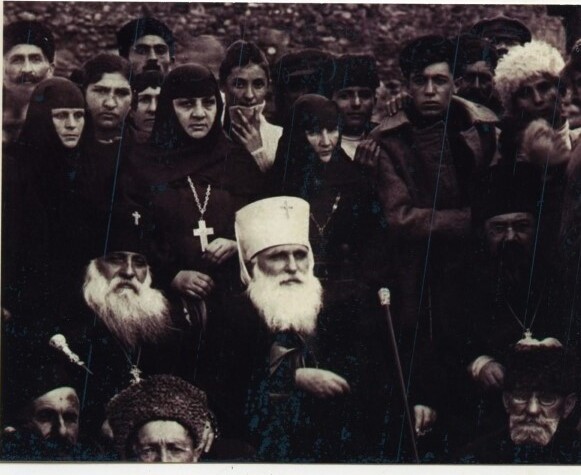
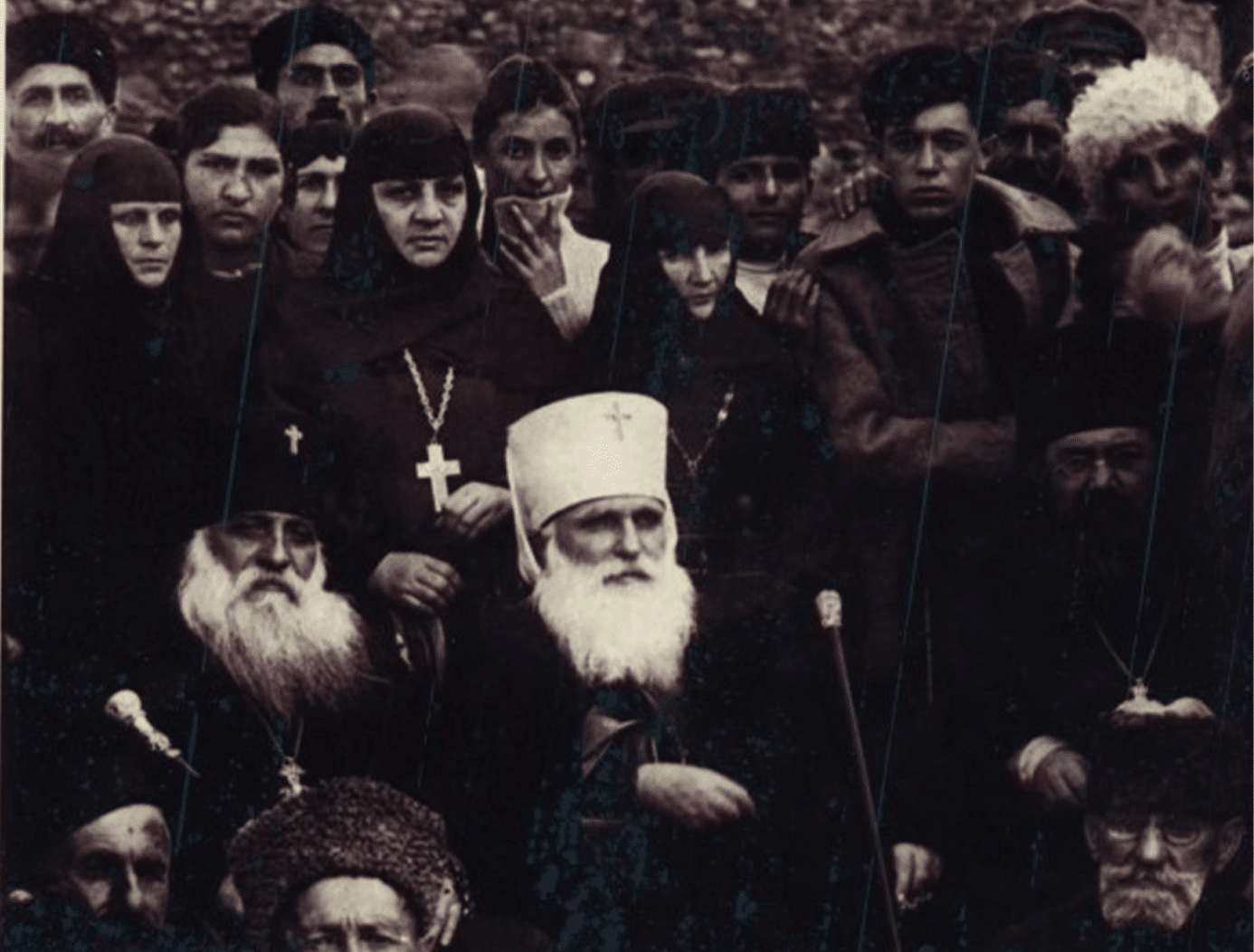
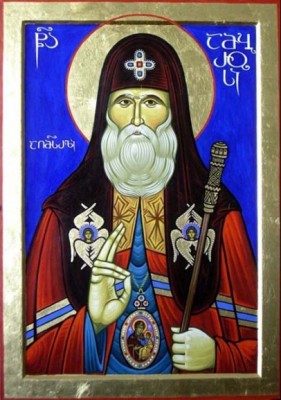
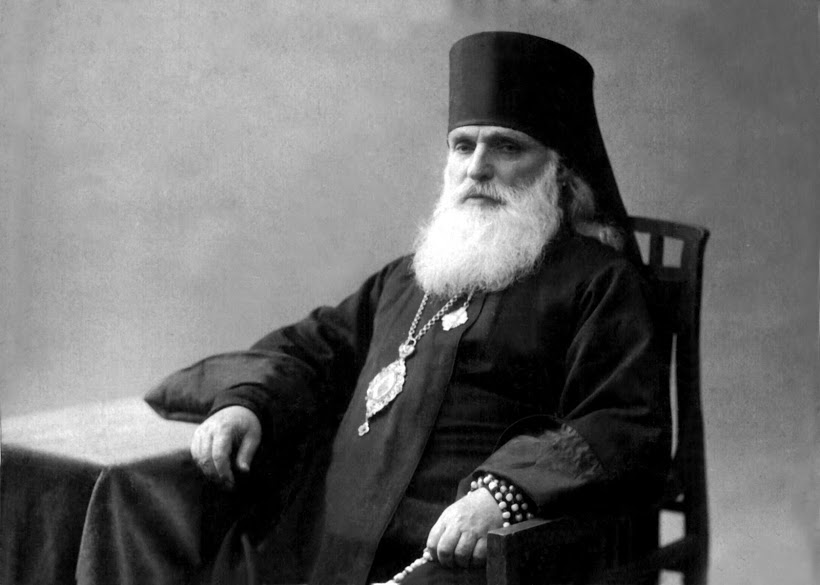
Ambrosius (secular name: Besarion) Khelaia came from a family of priests and missionaries. His father, Zosime Khelaia, and his grandfather, David Khelaia, were active missionaries in Abkhazia. Ambrosius’ father served at one of the most revered shrines of western Georgia, the Church of St. George in Ilori. In the Georgian imagination, Ilori has been shrouded in a mystical veil since ancient times. Numerous legends circulated among the population, which, according to popular belief, testified to the extraordinary spiritual power of the shrine. It is evident that the place of his father’s service and the religious way of life of his ancestors profoundly influenced Besarion, leading him to follow in the footsteps of his father and grandfather.
_Catholicos-Patriarc_Ambrosius_(Khelaia).jpg)
Besarion was born into the family of priest Zosime Khelaia on October 7 (19), 1861. As was appropriate for the children of clerics at that time, little Besarion was sent to primary school in Ochamchire, which he completed in 1871, after which he continued his studies at the Martvili school. The memoirs of Besarion Khelaia’s contemporary, the renowned Georgian ethnographer Tedo Sakhokia, offer a vivid picture of life in Samegrelo and Abkhazia during this period. Besarion grew up in much the same environment as Sakhokia, whose father also belonged to the clergy.
The Georgian peasantry of that time, living in the dense forests of Samegrelo and the marshy plains of Colchis, still followed ancient customs and half-pagan, half-Christian beliefs. The peasants of that time lived in large yards, in wooden huts built far apart from each other, in numerous patriarchal families. The priestly figure was a clear authority for them. Children in clerical families were raised under strict discipline, and this rigor was even more pronounced—often harsh—in theological schools, where the impersonal and rigid ideology of the tsarist educational system prevailed.
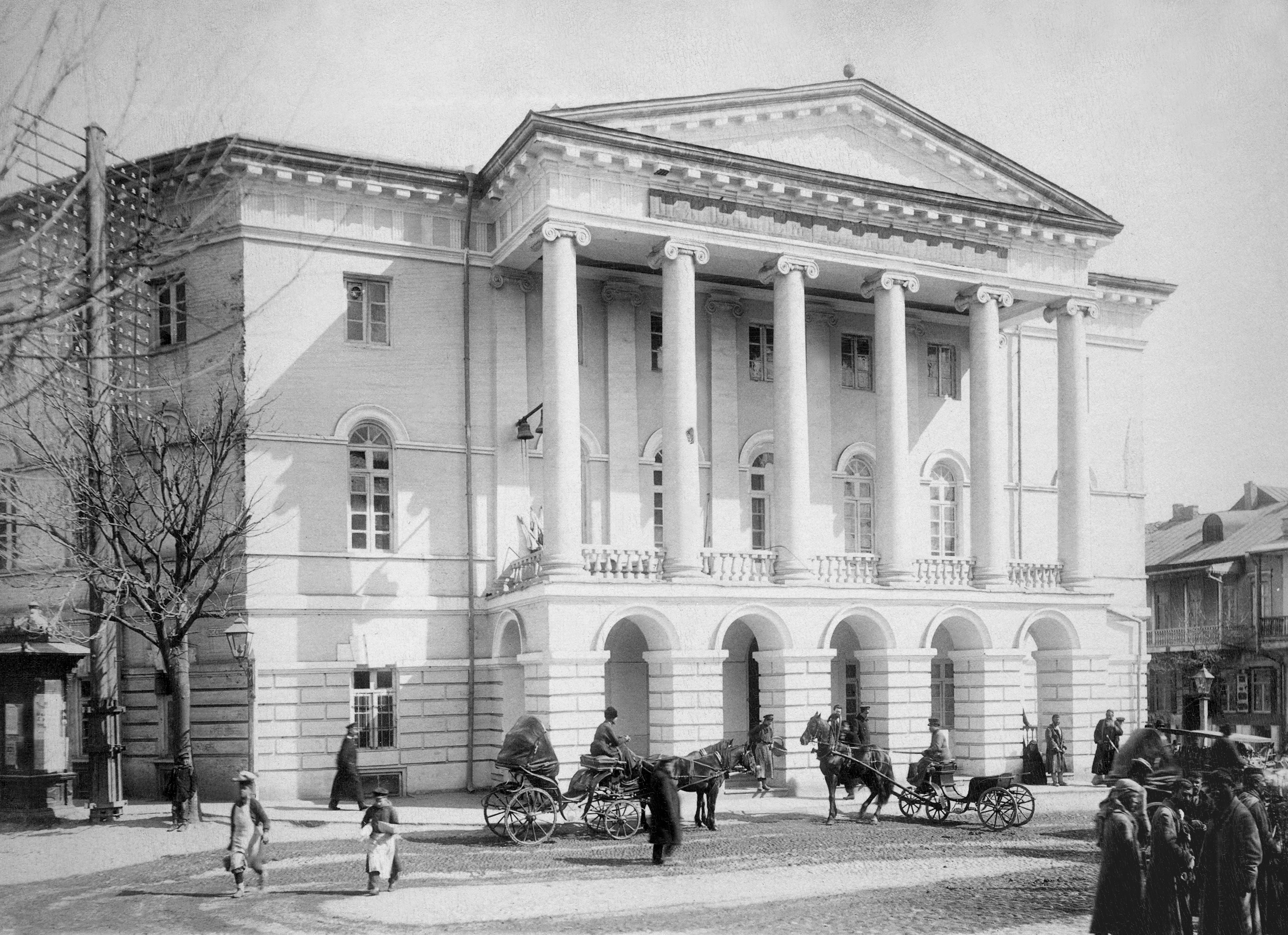
A whole new world awaited the young men who had grown up in the forests of Samegrelo when they came to Tbilisi to continue their studies. Besarion and his younger brother Giorgi were among them. They began their studies at the Tbilisi Theological Seminary (now the building of the Art Museum on Pushkin Street, near Freedom Square) in 1879. Two years later, tragedy struck the Khelaia family when Besarion’s brother, Giorgi, died in 1881. Despite this loss, Besarion continued his studies and graduated from the Tbilisi Theological Seminary in 1885.
After completing the seminary, he considered leaving Georgia to pursue a university education, but this aspiration was never fulfilled. Marriage and the beginning of his priestly ministry prevented him from realizing his goal. In 1887, he married his fellow villager, Elizaveta Merchule, and in the same year was ordained—first as a deacon and then as a priest. The young Father Besarion began his pastoral service in Sochi.
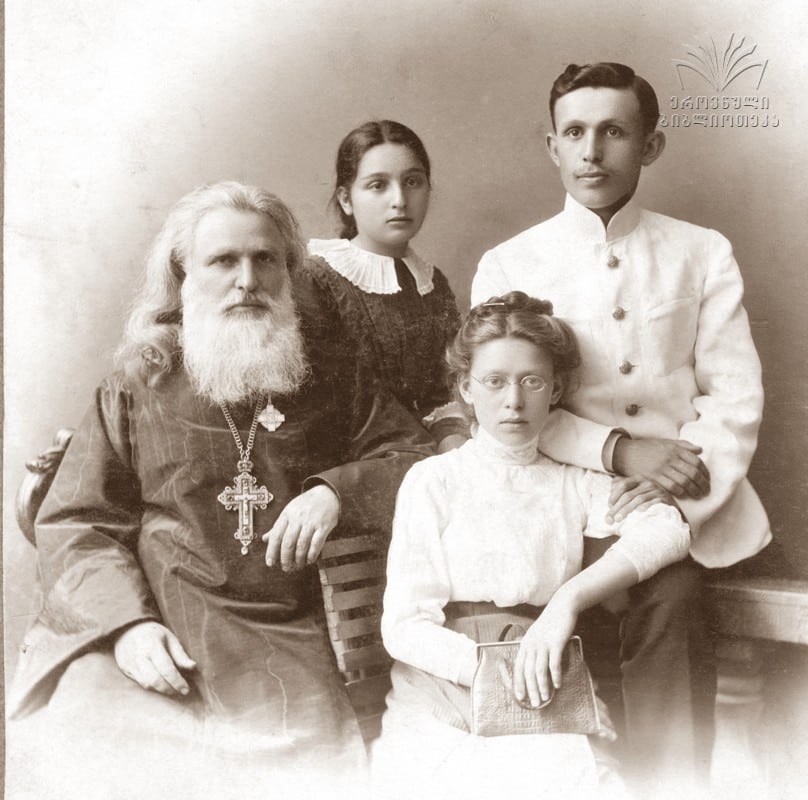
The path of the young priest began with yet another great tragedy. His eldest son, Andria, died in early childhood. Besarion and his wife had two more children, Nina and Alexander. Sorrow and loss would become constant companions in the life of the future head of the Georgian Church.
From the very outset of his priestly ministry, Besarion Khelaia’s missionary work was closely linked to Abkhazia. Between 1892 and 1896, he served there, and fought vigorously against Russian ecclesiastical policy. The Russian Empire, inseparably allied with the Church, imagined itself the ‘enlightener’ of the peoples of the Caucasus, and often looked with contempt at local languages and traditions, restlessly pursuing a policy of Russification. Russian clergymen such as John Vostorgov (a close friend of John of Kronstadt, canonized by the Russian Orthodox Church) were particularly hostile toward Georgians. They mocked and insulted the ancient Georgian Church and the Georgian language. Vostorgov was by no means alone in this; many Russian priests like John Vostorgov, shaped by imperial chauvinism, derided Georgian liturgical practices and local ecclesiastical traditions, doing everything possible to advance Russification in the Caucasus.
An example of this is an incident that occurred with the Russian bishop of Sukhumi, Arsen Izotov, in 1895, when he forbade Besarion Khelaia to read the Bible in Georgian in the Sukhumi Cathedral. “This is not Georgia,” declared Bishop Arsen. Besarion Khelaia replied: “This is Georgia, not Russia, and the liturgy here should be in Georgian.”
In 1896, Besarion’s young wife died, and he went to study at the Kazan Theological Academy. In 1900, Besarion was tonsured a monk and was given the name Ambrosius.
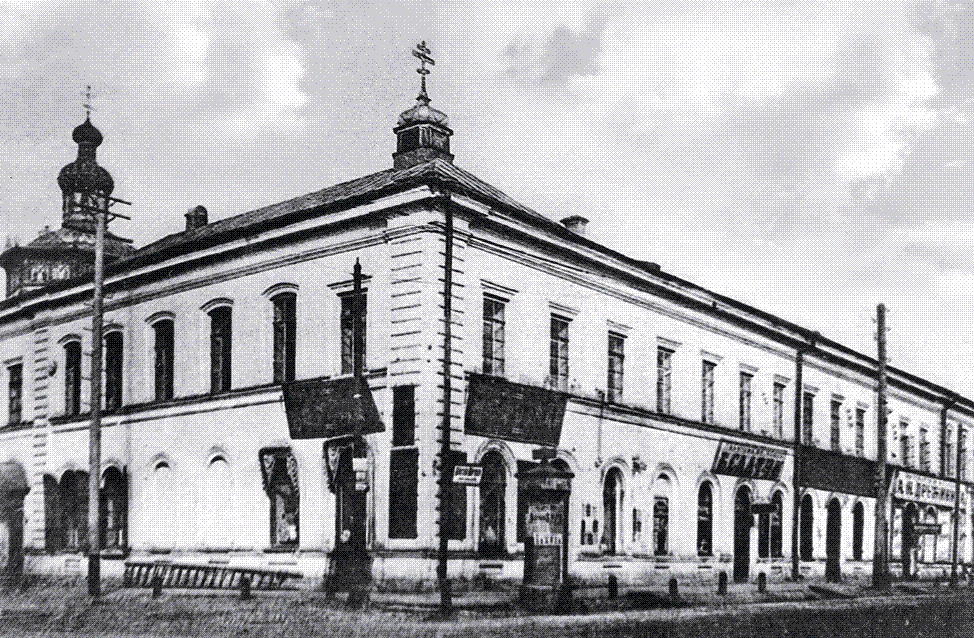
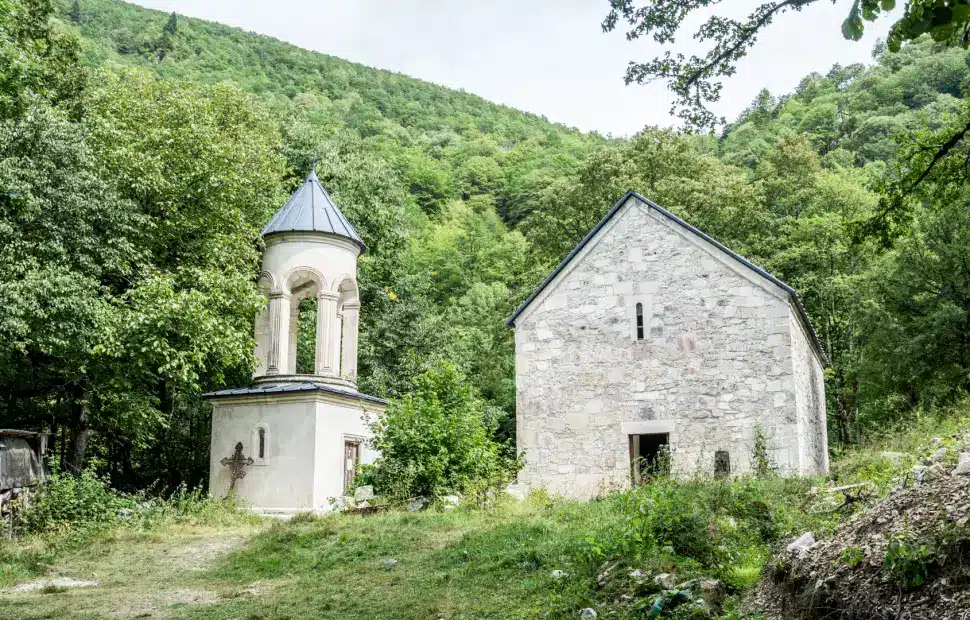
Returning from the Kazan Academy, Ambrosius Khelaia was appointed to the Transfiguration Cathedral in Tbilisi, and in January 1902, he was appointed abbot of the Chelishi Monastery in Racha. The Chelishi Monastery was one of the most important monastic centers in western Georgia. It was here that Ambrosius Khelaia discovered a new (dating from the fourteenth century) edition of the Conversion of Georgia. The Conversion of Georgia is one of the most significant sources of Georgian history, and the discovery of this edition became an event of particular importance for Georgian historiography and for Georgian culture as a whole. The archimandrite would later describe in detail the period of his activity in Racha-Lechkhumi, as well as his impressions, but first his path was to lead to the cold north.
The Russian government did not treat the archimandrite, a defender of Georgian culture, well. In the 1900s-1910s, Archimandrite Ambrosius Khelaia actively campaigned against the policy of Russification, especially in Abkhazia. As we have already mentioned, the followers of Russian imperial ideology did not consider Abkhazia to be part of Georgia at all, and actively sought to promote an interpretation of Abkhazian history that did not recognize Abkhazia as part of Georgia.
Because of his active resistance to these policies, Ambrosius was exiled to the Don diocese in 1903. However, in the revolution of 1905, liberal reforms were introduced to the Russian Empire, and Ambrosius was allowed to return to Georgia and resume his work in Tbilisi.
Following the murder of another anti-Georgian Russian exarch, Nikon—an event the Russian authorities linked to a Georgian patriotic group—Ambrosius was once again exiled. Though his time in the arid north was long, he was not idle, and served in the Transfiguration Cathedral of Novgorod, often publishing academic articles and essays.
The First World War and the revolutionary movement in Russia, which was stirred up by the incompetence and brutality of the tsarist government, brought about many changes. In February 1917, Russia’s last emperor, Nicholas II, abdicated, and for the first time a democratic government (the so-called Provisional Government) took power in Russia. Shortly after the February Revolution, Archimandrite Ambrosius returned to his homeland.
At that time, the struggle for the restoration of autocephaly, or ecclesiastical independence of the Georgian Church, illegally suspended by the Russian authorities, had already been underway for decades. This autocephaly had not been legitimately abolished, since the Georgian Church had been independent long before the Christianization of Russia. Georgian clergy and scholars had been actively researching and discussing the history and nature of Georgian autocephaly since the end of the nineteenth century. The February Revolution gave the Georgian Church the opportunity to regain its independence, and thus, on March 25, 1917, the Georgian Church formally restored its autocephaly.
.jpg)
The Georgian Church was entering a new chapter in its history, and in this new reality, Ambrosius was again destined to play a prominent role. In September 1917, Archimandrite Ambrosius Khelaia was appointed as the Metropolitan of Chkondidi, and from 1919, he served as the Metropolitan of Tskhum-Abkhazia. Both in Chkondidi, and later in Abkhazia, Ambrosius Khelaia continued his active missionary and scholarly activities.
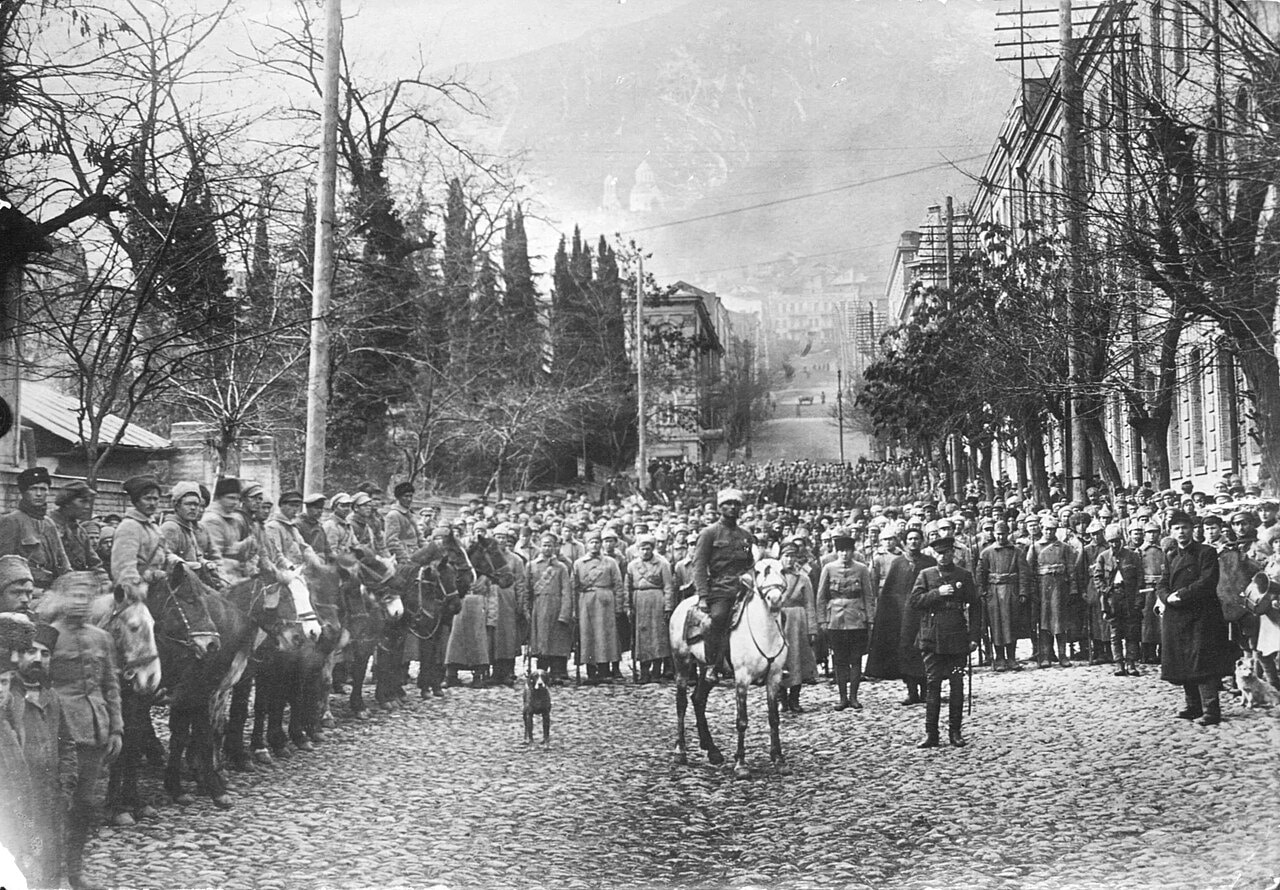
Metropolitan Ambrosius’ tenure coincided with one of the most tragic periods in Georgia’s history. In February 1921, the Bolsheviks invaded Georgia. The Georgian Social Democratic government, which had succeeded in preserving the independence of the young Georgian republic for three years under the most difficult geopolitical situation, was unable to resist the vast Bolshevik military machine. Lacking both sufficient weaponry and a comparable army, the government was overwhelmed. Georgia was fully occupied and incorporated into a new empire—one even more ruthless and repressive than tsarist Russia.
On July 11, 1921, the Catholicos-Patriarch of Georgia Leonid died. In September of the same year, at a council held in the Gelati Monastery, Ambrosius Khelaia was elected as the new head of the Georgian Church.
__________________._________________________..jpg)
In February 1922, Catholicos-Patriarch Ambrosius addressed the Genoa Economic and Financial Conference, attended by representatives of thirty-four European countries. In his appeal, he openly spoke of the Bolshevik occupation of Georgia and the persecution faced by the nation and its Church.
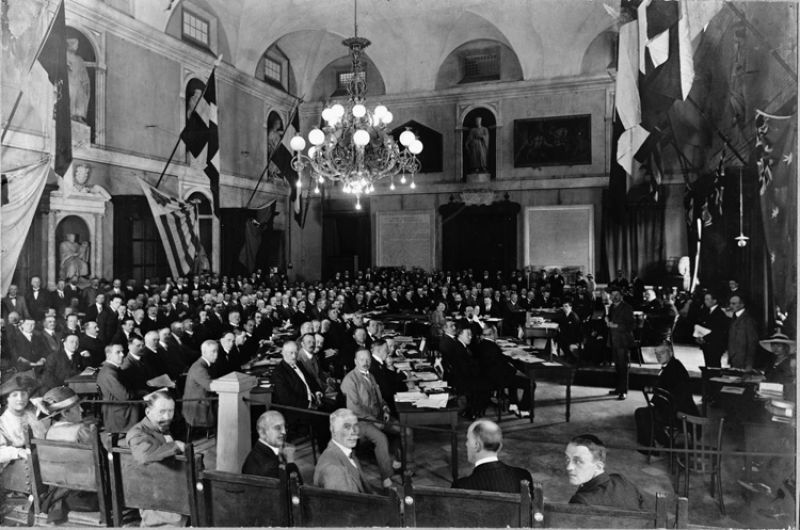
As a result, the Bolshevik authorities arrested and tried Ambrosius, imprisoning him until his release in 1925. After his imprisonment, a group of bishops within the Georgian Church who were loyal to the Soviet regime launched a hostile campaign against the Catholicos. Their objective was to remove Ambrosius Khelaia from the Catholicosate. However, the Catholicos, who had fought against the Tsarist and Soviet empires of Russia many times throughout his life, did not live long enough for them to achieve their goal. He died on March 19, 1927. His body was buried in the Sioni Cathedral, where it rests to this day.