




 Share this article
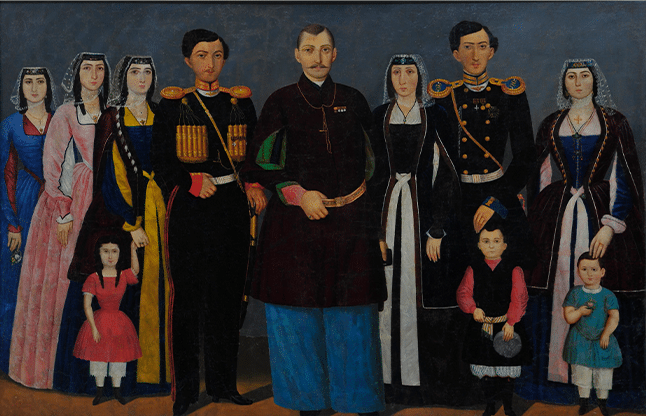
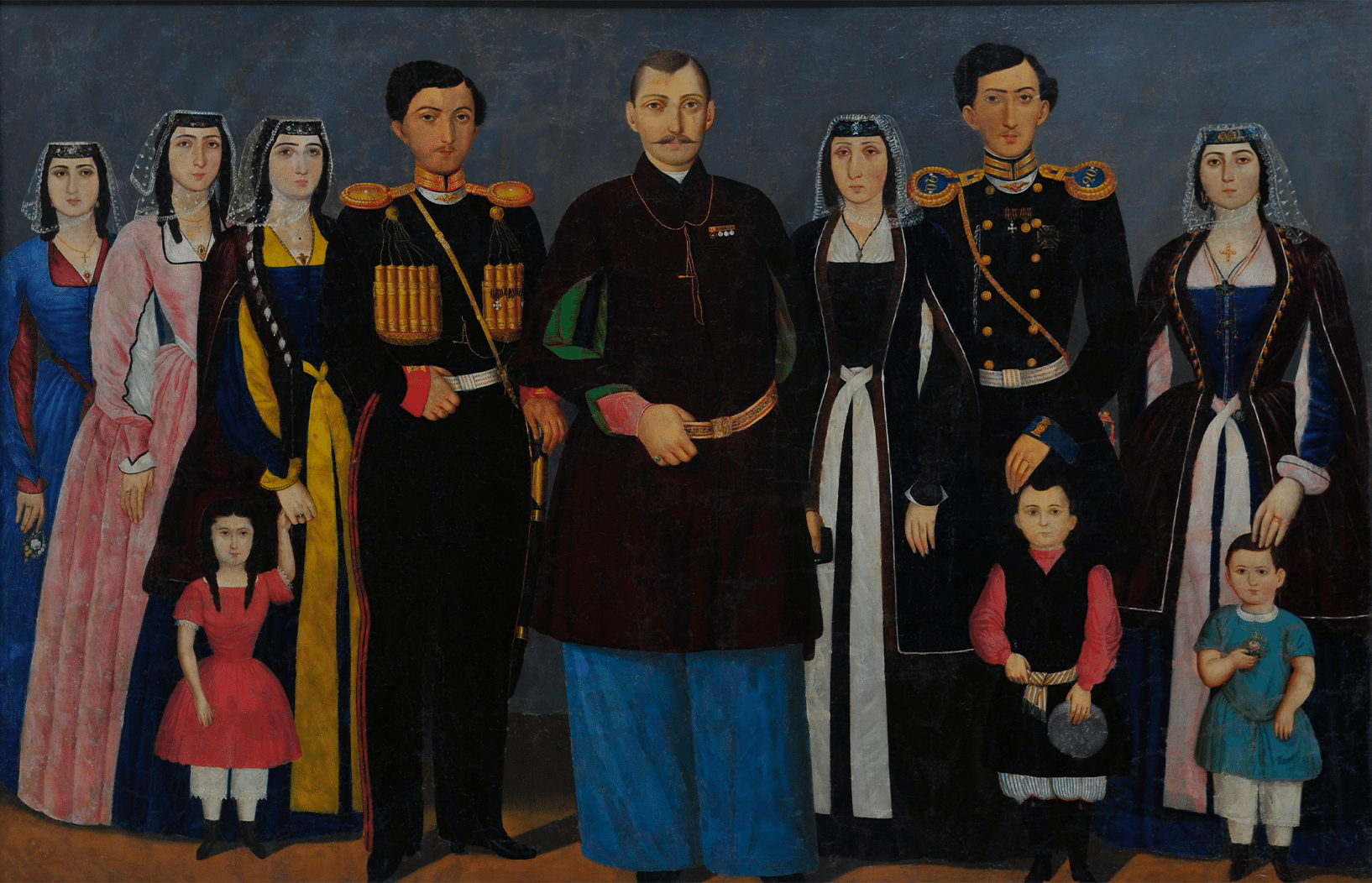
The portraiture of the Georgian nobility created in Tbilisi during the first half of the nineteenth century—known as the Tiflis Portraiture School—represents a landmark phenomenon in the history of Georgian art. The finest works produced within this creative circle stand out for their individuality and exceptional artistic quality, while also conveying a pronounced sense of national identity. It is noteworthy that the emergence of the Tiflis Portraiture School coincided with the broader development of modern Georgian art and the rise of easel painting in the country.
The development of a distinctly Georgian art, separate from Western European influences, was shaped by multiple factors: the turbulent political climate and ongoing warfare of the late Middle Ages, the persistence of the feudal system, and the vibrant tradition of Orthodox-Christian art. By the early nineteenth century, during the formation of the Tiflis Portraiture School, Georgia was experiencing an exceptionally difficult and transformative period. Following the annexation of Georgia, the Russian government not only abolished the monarchy and the autocephaly of the church, but also dismantled the entire social order and public structure of Georgian society.
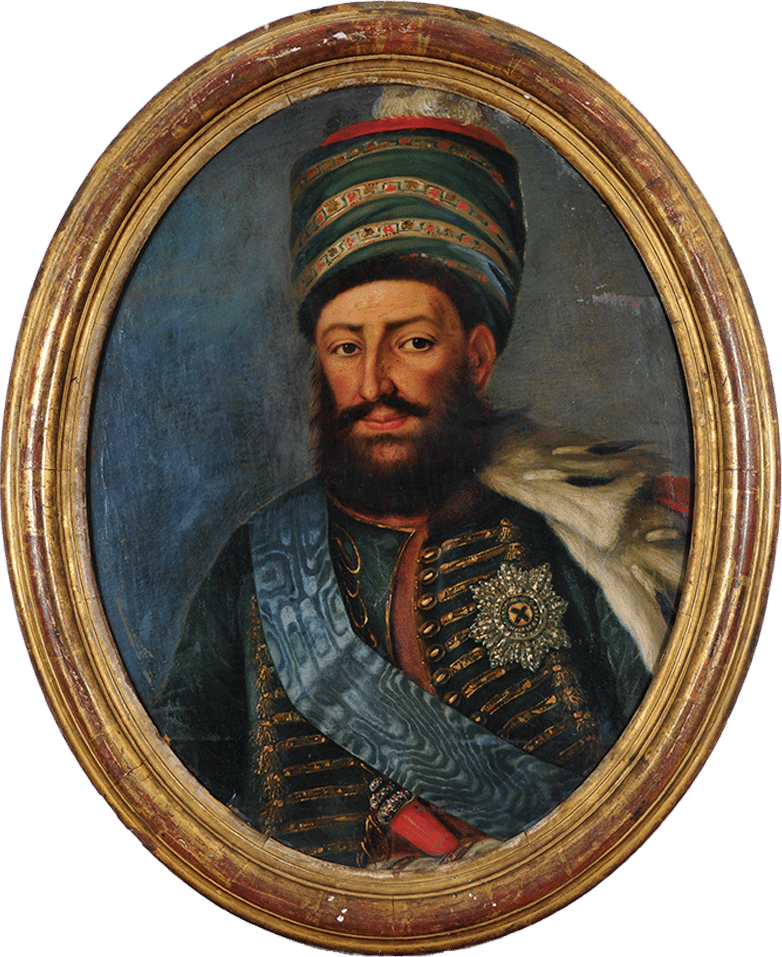
Unknown artist. Erekle II. Canvas, oil. 89X71. Second half of the 18th century. Art Museum of Georgia
.JPG)
Unknown artist. . Canvas, oil. 68X60. Second half of the 18th century. Art Museum of Georgia
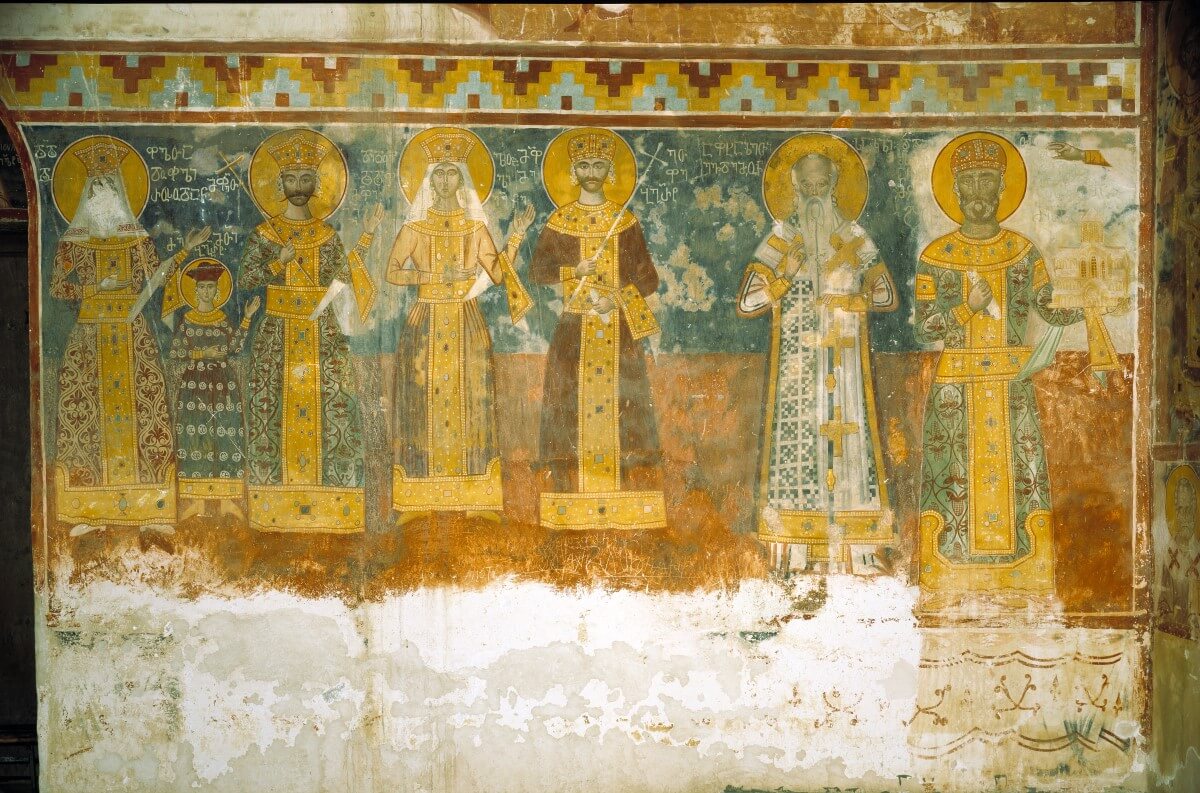
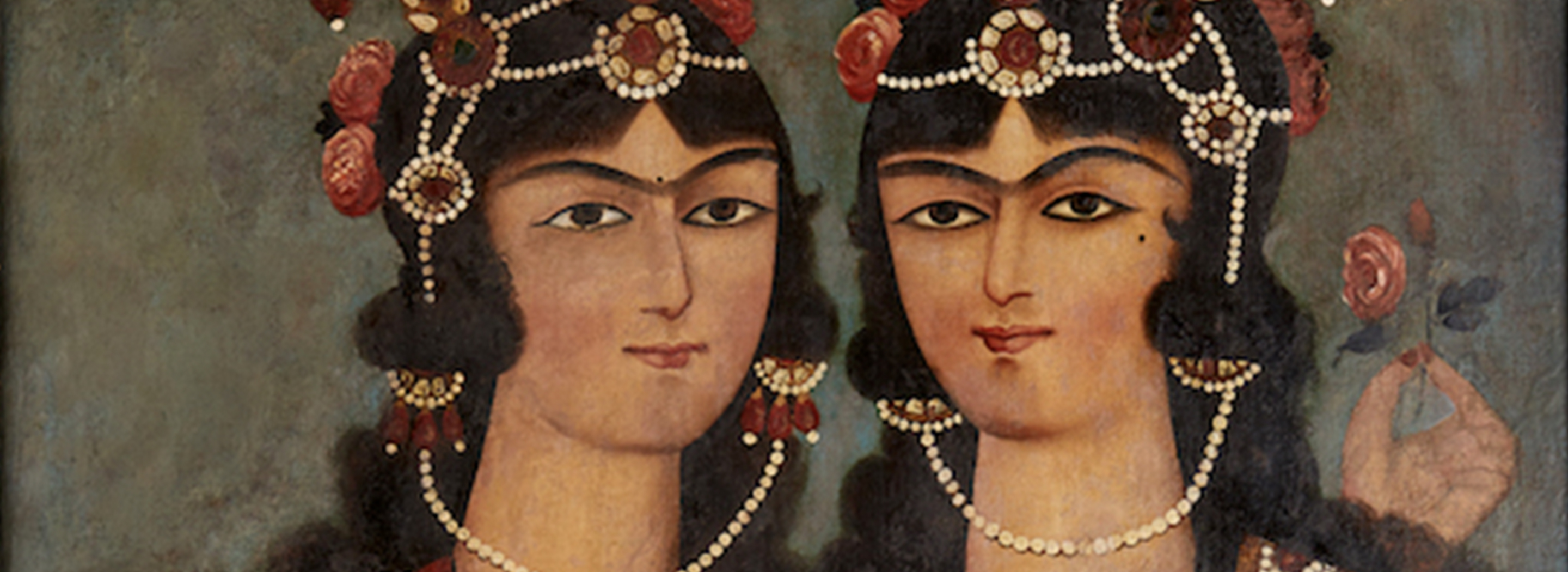
Naturally, the Tiflis Portraiture School did not emerge in isolation; it was preceded by important artistic traditions. Foremost among these was medieval Georgian mural painting, particularly the ktetor portrait, which played an essential role in the development of the school. Equally significant was the Iranian artistic tradition, well known in Georgia at that time, as well as the Georgian ceremonial portrait of the second half of the eighteenth century. The latter, created under the influence of European ceremonial portraiture, preceded the establishment of the Tiflis Portraiture School by several decades.
.JPG)
Unknown artist. Giorgi XII. Canvas, oil. 49X60. Second half of the 18th century. Art Museum of Georgia
The emergence of Georgian easel painting in the form of ceremonial portraiture in the second half of the eighteenth century was directly associated with the royal court. These portraits depict Georgian monarchs—Erekle II, Solomon I, and George XII—as well as their descendants. It is supposed that a substantial part of Georgian ceremonial portraits was created in Russia during the exile of the Georgian royal family and court. Though these works were executed considering the essential features of European ceremonial portrait painting, they were made by artists of different talent and education. The portraits were most likely painted by Georgian artists attached to the royal retinue, though, presumably, some of them were executed by Russian or European artists. Notably, none of the works bears a signature. This absence further supports the assumption that their authors were Georgian, as Russian and European painters of the late eighteenth century usually signed their works.
.png)
Unknown artist. Teimuraz II. Canvas, oil. 70X58. Second half of the 18th century. Art Museum of Georgia
Members of the royal dynasty are portrayed from the chest or waist up, against a neutral background, nearly filling the picture plane at almost life size. Their poses are both balanced and firm. Each portrait vividly reveals distinct facial features, character, and mood. The richness of the attire is emphasized, and the royal insignia and ornamental details are rendered with meticulous attention. Light accentuates the faces, royal regalia, and the symbols of rank. In contrast to contemporary Russian ceremonial portraiture, these portraits are relatively simple and less pompous. It is notable that Georgian ceremonial portraiture shows a significant affinity with Polish painting, particularly within the Sarmatian portrait tradition.
In the very first years of the nineteenth century, a certain group of portraits likely emerged that substantially differed from the ceremonial portraits of the late eighteenth century. In these works, the defining characteristics and aesthetic sensibilities of local artistic tradition became more pronounced, suggesting that their authors were probably Georgian. These paintings belong to a transitional period, when interest in European ceremonial portraiture was beginning to wane and efforts to forge a new, distinctive artistic language were taking shape. The influence of ancient and medieval Georgian art is clearly felt. Although the artists adhered to established compositional schemes and iconographic conventions, they did not entirely abandon artistic traditions, whether Western or Eastern European, or Iranian.
As none of the works associated with the Tiflis Portraiture School bears a signature, as is also the case with earlier portraits, determining the precise date of the school’s formation remains difficult. In the 1820s and 1830s, the Tiflis Portraiture School, having already claimed a distinctive and unique style, was fully established, and went on to maintain its particular significance for roughly half a century. Today, approximately 200 works attributed to the Tiflis Portraiture School have survived in Georgia. It is reasonable to assume that they represent only a small part of a great number of portraits executed during the first half of the nineteenth century.
Within the framework of the school, characterized by a consistent set of stylistic features, the presence of artists with varying style and temperament is evident. This diversity enables the categorization of portraits into distinct groups. The works of the Tiflis Portraiture School share little with those of the earlier Georgian Ceremonial School. However, compared to pieces from the so-called transitional period, they primarily became smaller in size; adopting a more intimate and chamber-like quality, and displaying limited compositional variation. The figure is typically positioned close to the geometric center of the canvas and occupies a substantial portion of the picture plane. Background elements are either reduced to a minimum or entirely omitted so as not to distract the viewer’s attention from the central focus: the face and upper body. In most cases, the backdrop is plain, uniform, and rendered in a single color. The figures, usually shown in three-quarter view, are depicted half-length or knee-length. Their poses are balanced and predominantly static. Multi-figure group compositions are rare; by contrast, paired portraits are relatively common, in which the depicted persons are turned three-quarters towards each other.
.JPG)
Unknown artist. King Solomon I of Imereti. Canvas, oil. 70X53. Second half of the 18th century. Art Museum of Georgia
Most portraits impress through the expressive silhouette of the figure. Although the contour line is rarely emphasized explicitly, the drawing is accurate, fluid, and flexible, and often gently distinguishes the figure from the background. Against bodies rendered in broad, localized areas of color, the plastically modeled faces and hands emerge with striking relief and sculptural clarity. Executed with an almost miniature-like technique, the works convey the material presence of fabric, the subtle relief of intricate embroidery, the warm sheen of pearls, and the refined aesthetics of the attire as a whole. In each portrait, the artist’s attention is focused primarily on the face. These faces are expressive and individual; often sharply characterized, and, in certain instances, particularly in male portraits, they verge on the grotesque. At the same time, many of the works are distinguished by a romantic sensibility characteristic of the era and of Georgian cultural life, while also exuding an aristocratic dignity and composure inherited from the older feudal tradition.
The majority of the figures depicted belong to the Georgian nobility. Their slightly melancholic, contemplative, and serene expressions are marked by pronounced ethnic features. A distinctive mode of presentation emerges: silent, almost “mute” figures rendered in restrained stillness; their poses somewhat frozen or suspended. In some cases, the emotional tone seems inwardly contained, even closed, and often tinged with melancholy. Above all, this quality unmistakably evokes the expressive language of local traditional iconography.
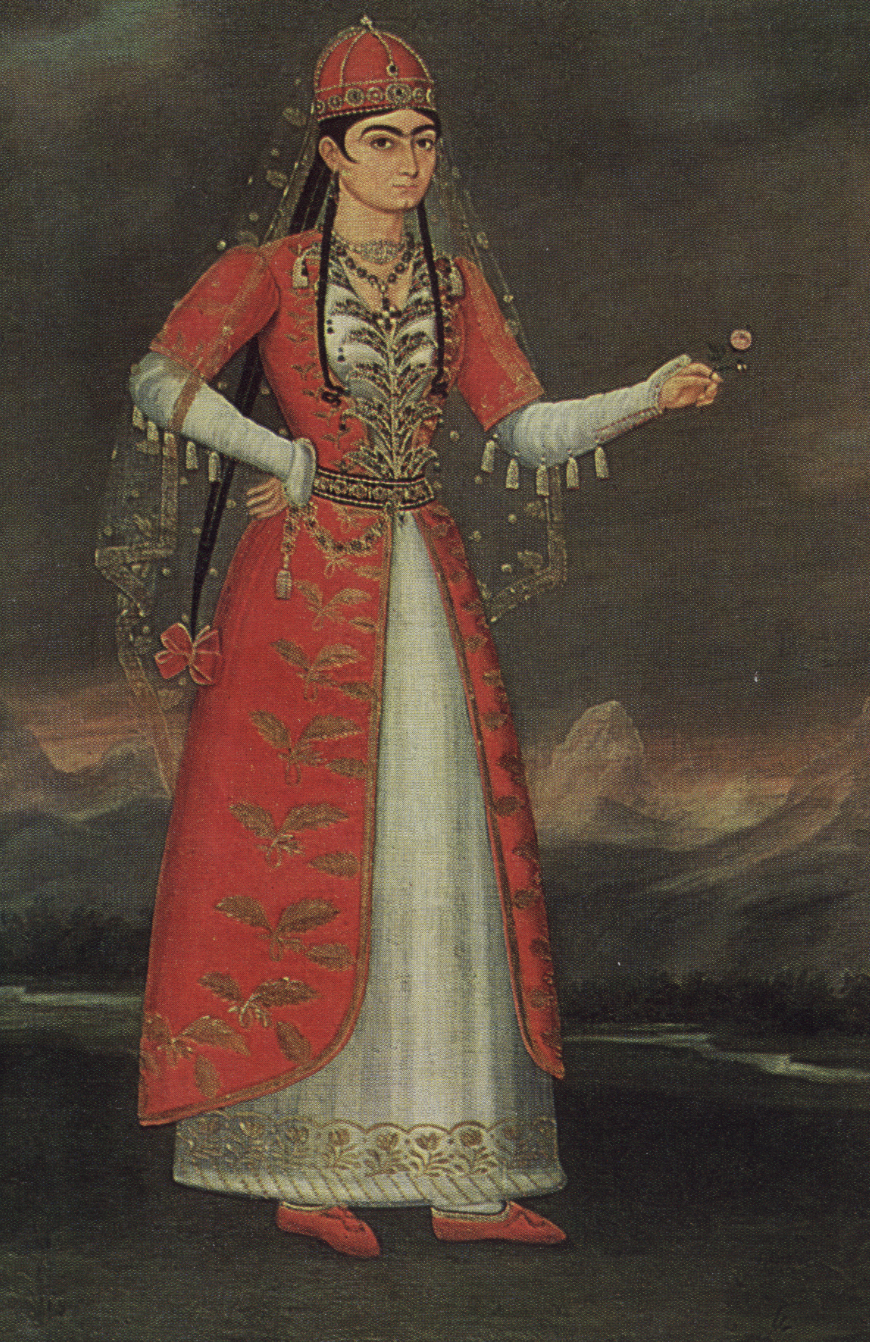
Unknown artist. Portrait of Nino Eristavi, Daughter of Tornike, the Eristavi of Ksani. Canvas, oil. 135X90. 1829. Art Museum of Georgia
The school encompasses works by artists of varying professional training, technical competence, and artistic talent. Yet, despite this diversity, a clear sense of unity remains evident. As noted, the portraits are largely unsigned, and their authors are unknown: a circumstance that likely reflects the continued vitality of a tradition inherited from medieval Georgian ecclesiastical art. Significantly, this tradition, characteristic of local artistic practice, was observed not only in works created by Georgian painters, but also by non-Georgian artists working within the Tiflis Portraiture School. Fortunately, thanks to archival documentation and contemporary press sources, the names of several artists active in Georgia during the first half of the nineteenth century are known, and may be associated with these portraits. Among them are Giorgi and David Bezhiashvili, Sulkhan Baratashvili (parental name Germanoz), Bastamov, Tsitsishvili, Hakob (Akof) Hovnatanyan, Andronikashvili, Mikirtum Nakashbashian, Mikhail Troshchinsky, Germane Reishi, Maghaladze, Ludwig Longo, Isaia Janjughashvili, Anton Kotsotsashvili, the Gegelidzes, and Grigol Maisuradze.
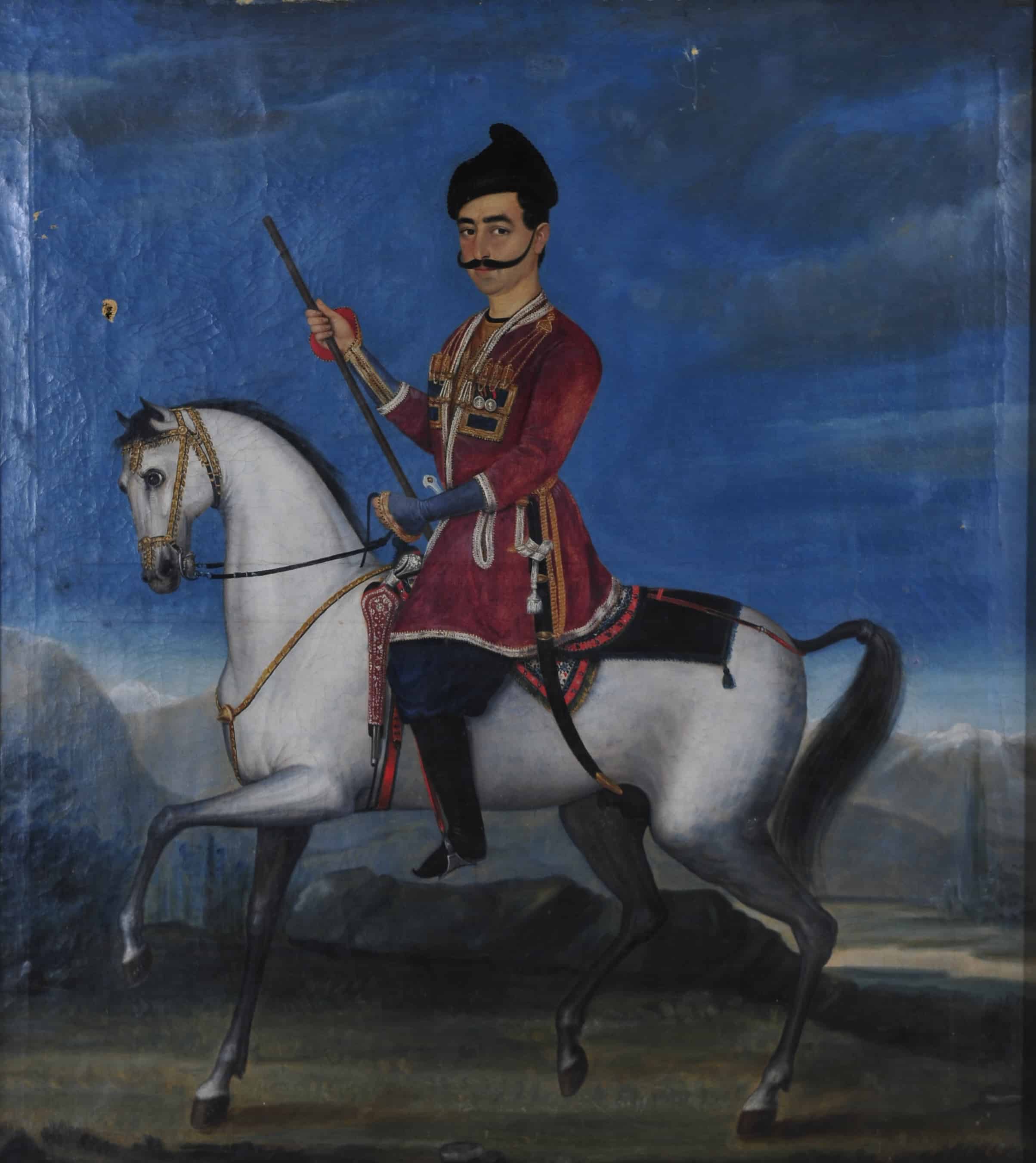
Unknown artist. M.I. Koloubneli. Canvas, oil. 88X65. Early 19th cent. Art Museum of Georgia
It is particularly striking that within the Tiflis Portraiture School, individuals from widely differing social origins, whether of noble birth, princely lineage, artisan background, peasant stock, or even serf status, produced works of equally elevated quality. While formally distinct in certain respects, these portraits share a remarkable refinement. This phenomenon can be understood in light of the fact that the hierarchical structure inherent to feudal society remained deeply entrenched in Georgia during this period. The medieval ethos of Christian icon painters, particularly their conception of authorship and artistic creation, appears not yet to have faded in the former Orthodox kingdom.
The relatively late emergence of Georgian easel painting, its incomplete separation from traditional ecclesiastical art, its sustained dialogue with the icon, the interplay of Eastern and Western artistic influences, and the prevailing spirit and sensibility of the age all contributed to the distinctive character of the Tiflis Portraiture School. A stylistic analysis of these portraits reveals one of the defining traits of the Georgian artistic mentality: a quality that remained central throughout the history of Georgian art, including in the twentieth century; namely, a tendency towards generalization and universality of expression.
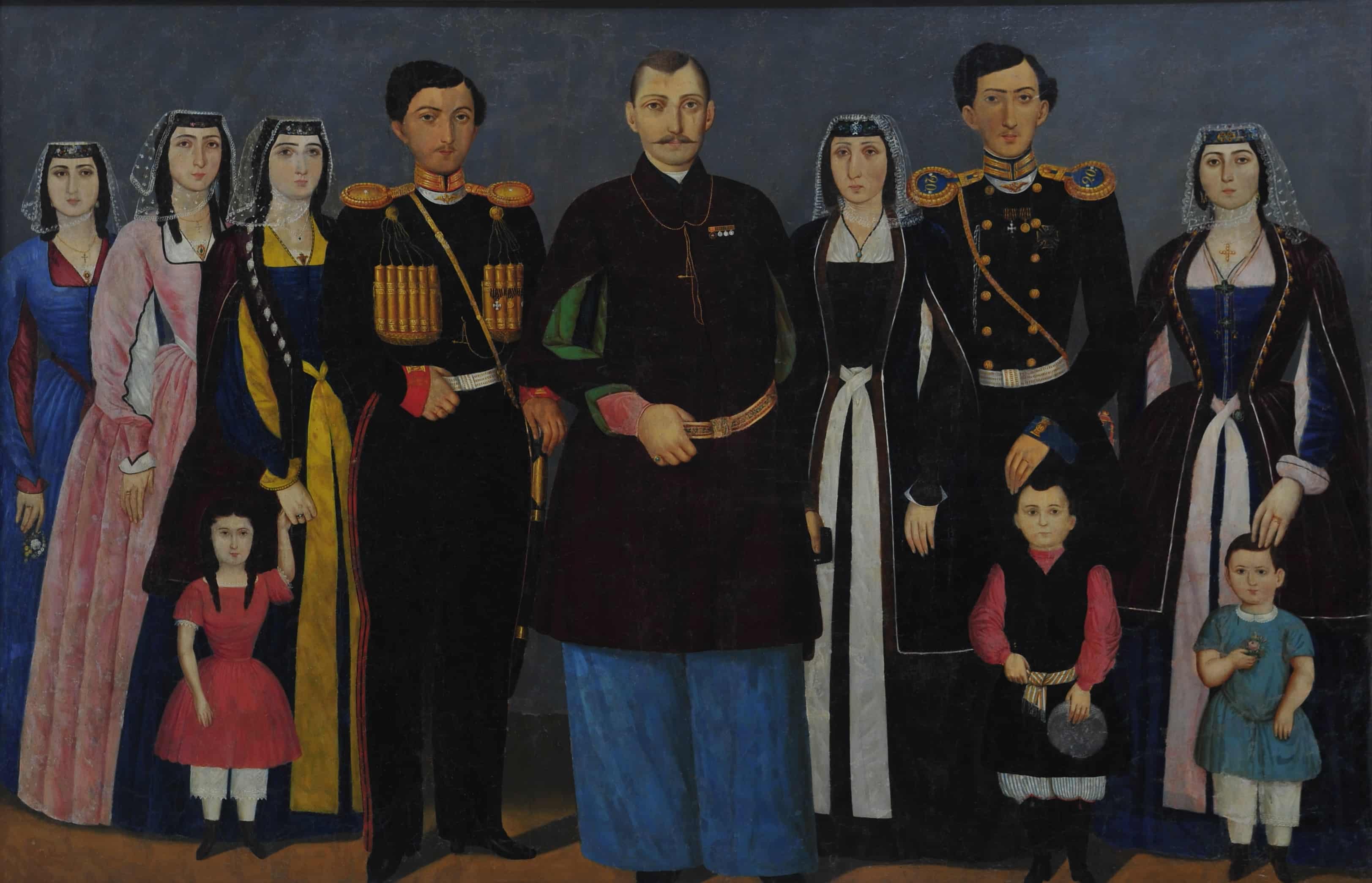
Unknown artist. Nikoloz Edisheri's son, Mukhran-Batoni family. Canvas, oil. 94.5X136. 1862. Art Museum of Georgia
It is not difficult to discern what unites the figures depicted in these portraits. Each, as noted, belongs primarily to a single social stratum: the Georgian nobility. They are connected by a shared worldview and a common system of beliefs; they are, in essence, kindred spirits. Above all, each is troubled by the loss of patrimony, yet all retain a pronounced sense of dignity, confident in the righteousness of their convictions and the integrity of their former way of life. This is entirely understandable, for the feudal-aristocratic spirit still thrived in Georgia at that time. Consequently, the melancholy that hangs over these individuals is neither rationally skeptical nor merely personal. Rather, it is collective and universal, suffused with a profound sense of responsibility grounded in religious faith and estate-bound duty. These are the people who would have felt most acutely the pain brought about by the loss of national independence, for they, more than anyone, bore the weight of their country’s future.
The article was prepared by Nino Chogoshvili, based on the research of art historian Maia Tsitsishvili.